 Birch Bay Siding
 Marietta's Siding Has a Harder Job Than Most
Marietta sits close enough to the water that homes here take a different kind of weathering than siding just a few miles inland in Whatcom County. Salt-laden air off the bay works into seams and fastener heads. Driving rain off Georgia Strait storms hits walls at an angle, not straight down, which means it finds every gap a lazy installation leaves behind. And the long, damp shoulder seasons that stretch from fall through spring give moss and algae months to get established on anything that stays wet longer than it should. Put those three things together and you get a simple fact: siding that would hold up fine in a drier part of the state can fail early here.
That's not a scare story — it's just what the material has to withstand. The right product, installed the right way, handles it without drama for decades. The wrong product, or the right product installed carelessly, shows problems within a handful of years: swelling at the bottom edge, caulk lines that split, paint that blisters, moss that won't stop coming back no matter how often it's washed off.
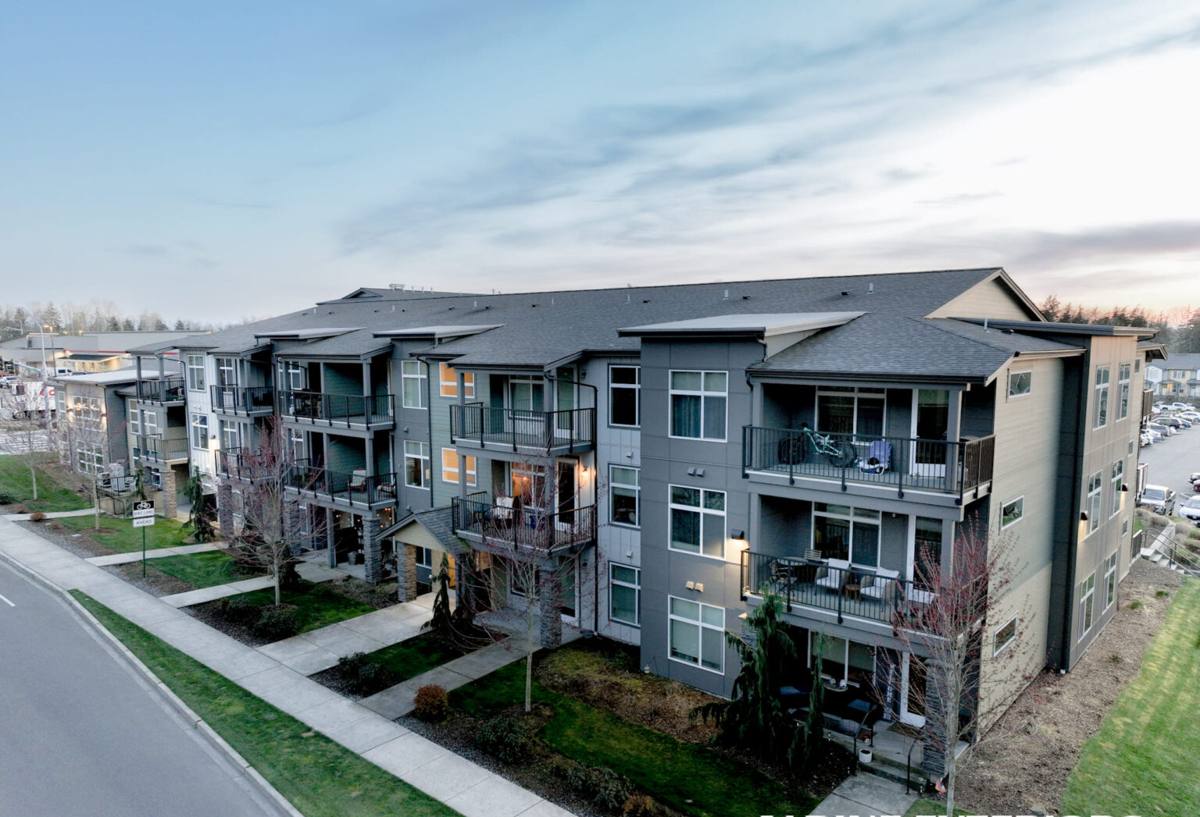
Why Fiber Cement Is the Right Call Here
Fiber cement is cement, sand, and cellulose fiber pressed and cured into a rigid plank. It doesn't rot, it doesn't feed insects, and it doesn't expand and contract with humidity the way wood or wood-composite products do. In a coastal, wet-climate location like Marietta, that stability matters more than almost anywhere else in Whatcom County. Salt air is corrosive and humidity is near-constant for large stretches of the year — a siding material that swells, wicks moisture, or needs regular refinishing is fighting the climate instead of standing up to it.
We install James Hardie fiber cement exclusively, and this is exactly the kind of location that decision is built for. Hardie's HZ5 product line is engineered specifically for climates with extended moisture exposure and freeze-thaw cycling — which describes a Birch Bay winter reasonably well. The factory-applied ColorPlus finish is baked on under controlled conditions, which holds color and resists the chalking and fading that field-applied paint struggles with in salt air. We don't install LP SmartSide, vinyl, Cemplank, Allura, or primed wood siding, and in a location like Marietta the reasons are practical, not brand loyalty: those products either absorb moisture at cut edges, rely on caulk joints that are the first thing salt air degrades, or need a repaint cycle that most homeowners don't want to keep up with a block from the water.
What Salt Air and Moss Actually Do to Siding
- Salt residue accelerates corrosion on exposed fasteners, trim flashing, and any metal siding components
- Persistent damp shade — common under mature trees and on north-facing walls — lets moss and algae colonize siding surfaces and grout lines within a season or two if the assembly can't dry out
- Wind-driven rain pushes water sideways into laps, corners, and butt joints that a straight-down rain would never reach
- Freeze-thaw cycling during cold snaps expands any moisture that's already gotten behind the cladding, stressing seams and fasteners
What a Correct Installation Actually Involves
The material is only half the equation. Most siding failures we get called out to inspect in this area aren't a product problem — they're an installation problem. Fiber cement is unforgiving of shortcuts because it's rigid; it won't flex to hide a bad seam the way vinyl sometimes does, and it won't self-seal the way some newer composite products claim to. Get the details wrong and the climate here will find the gap fast.
The details that matter most in a coastal, high-moisture location
- Drainage plane and rainscreen gap — a vented gap behind the siding lets incidental moisture drain and the wall assembly dry, instead of trapping water against the sheathing
- Flashing at every penetration — windows, doors, hose bibs, light fixtures, and vents all need proper head flashing and kick-out flashing so wind-driven rain can't track behind the plane
- Correct fastener type and placement — corrosion-resistant fasteners driven per Hardie's published fastening schedule, not just "close enough," matter more here than in a dry inland climate
- Proper clearances — siding held above grade, decks, patios, and roof lines per manufacturer spec so it never sits in standing water or gets buried by landscaping over time
- Factory-cut edges preserved wherever possible — field cuts expose raw material, so cut edges get sealed per spec rather than left bare
- Caulk used sparingly, not as a substitute for flashing — caulk is a maintenance item that fails first in salt air; a properly flashed and lapped installation doesn't rely on it to keep water out
Every one of those steps is spelled out in James Hardie's installation manual, and every one of them is easy to skip on a job where the crew is moving fast and nobody's checking the work. In a low-moisture climate, a skipped rainscreen gap might never cause a visible problem. In Marietta, it usually does — often within a few winters.
Signs Your Current Siding Is Losing the Fight
If you're not sure whether it's time to think about replacement, these are the things we look for during an inspection, and the things worth checking yourself before calling anyone:
- Moss or algae that returns within weeks of being cleaned, especially on north and west-facing walls
- Bottom edges of siding boards that feel soft, look swollen, or show dark staining
- Caulk joints that have cracked, pulled away, or gone brittle at corners and trim
- Paint that's peeling, bubbling, or chalking heavily when you run a hand across it
- Visible rust streaking below fastener heads or metal trim
- Soft spots around window and door casings, which often mean moisture has been getting behind the cladding for a while
Any one of these on its own might be minor. Several together, especially on walls that face the prevailing weather, usually mean the assembly behind the siding has been wet longer than it should have been.
Our Process for a Marietta Siding Project
| Step | What Happens |
|---|---|
| Walkthrough & assessment | We inspect the existing siding, trim, and sheathing where accessible, and note problem areas specific to your home's exposure — which walls take the worst weather, where moss keeps coming back, where past patch jobs were done |
| Written estimate | A clear scope covering material, prep, flashing detail, and cleanup — no vague allowances |
| Tear-off & sheathing check | Old siding comes off and we check the sheathing and framing underneath for any moisture damage that needs to be addressed before new siding goes on — this is often where hidden problems surface |
| Weather barrier & rainscreen | House wrap or building paper installed correctly, with a drainage gap behind the new siding so the wall can dry |
| Flashing & trim | All penetrations flashed before a single piece of siding goes up |
| Hardie installation | Installed to manufacturer spec — fastening schedule, clearances, joint treatment — by a crew that installs this product regularly, not occasionally |
| Final walkthrough | We go over the finished job with you before calling it done |
What Drives Cost
Every home is different, and we won't quote a number without seeing the job, but these are the factors that typically move the price on a Marietta-area fiber cement project:
| Factor | Why It Matters |
|---|---|
| Tear-off scope | Removing old siding down to sheathing costs more than siding over an already-sound assembly, but it lets us actually inspect and fix what's underneath |
| Sheathing repair | If moisture has already damaged sheathing or framing, that repair happens before new siding — skipping it just traps the same problem behind new material |
| Home complexity | Roof lines, dormers, and wall penetrations all add flashing detail and labor time |
| Siding profile & trim | Lap width, shingle-style accents, and trim detail affect material cost and install time |
| Color & finish | Factory ColorPlus finishes cost more upfront than field paint but eliminate a repaint cycle |
| Access & site conditions | Tight lots, mature landscaping, or difficult staging add time on any job in a residential neighborhood |
Why Hiring a Crew That Already Works This Area Matters
A crew that's worked Birch Bay and Marietta before already knows which walls on a typical home here take the worst of the weather, what the moss situation looks like under mature trees near the water, and how the local building department handles siding permits and inspections. That's not a small thing. A crew based somewhere dry and inland, working from a generic checklist, is more likely to skip a rainscreen gap or under-flash a window because it's "usually fine" where they normally work. It's not usually fine here.
Questions worth asking any siding contractor before you sign
- Are you a certified James Hardie installer, and can you explain your fastening and flashing approach for a coastal property?
- Do you install a rainscreen/drainage gap behind the siding, or fasten directly to the weather barrier?
- What's your plan if you find damaged sheathing once the old siding comes off?
- Can you walk me through your flashing detail at windows, doors, and roof-to-wall transitions?
- What does your warranty cover, and is it backed by both your labor and the manufacturer's material warranty?
Living With Fiber Cement in Marietta Long-Term
One of the practical advantages of a correctly installed Hardie system here is how little upkeep it asks for compared to alternatives. There's no repainting cycle to plan around, no soft spots developing at butt joints from years of moisture cycling, and the factory finish resists the chalking that field-applied paint shows in salt air. Homeowners still need to do the basics — keep gutters clear so water isn't dumping down a wall face, hose off accumulated grime and moss growth once or twice a year, and keep an eye on caulk joints at trim over time — but that's routine maintenance, not a recurring project.
If you're weighing a full replacement against patching or repainting what's there now, the honest answer depends on how much of the underlying assembly is still sound. That's worth a real look rather than a guess, especially with how this climate treats an assembly that's already been letting moisture in.
If you'd like a straight answer on what your home actually needs, we're happy to take a look. The estimate is free, there's no pressure attached to it, and you'll get a clear explanation of what we see and why — just fill out the form below.