 Birch Bay Siding
 Blaine Sits Right at the Edge of Two Tough Climates
Blaine and the rest of Birch Bay sit close enough to the water that homes here take on a different kind of weathering than houses just a few miles inland in Whatcom County. You get the marine layer off Semiahmoo Bay and the Salish Sea, salt-laden air that rides in on the wind, driving rain that comes at siding sideways instead of straight down, and long stretches of the year where surfaces just don't fully dry out. That combination is harder on exterior siding than most homeowners realize until they've owned a house here through a few winters.
We install siding on homes throughout Birch Bay and Blaine, and the pattern we see is consistent: it's rarely one dramatic storm that causes damage. It's the slow, cumulative effect of salt air, sustained moisture, and shade-driven moss growth working on a material that wasn't built to take it.
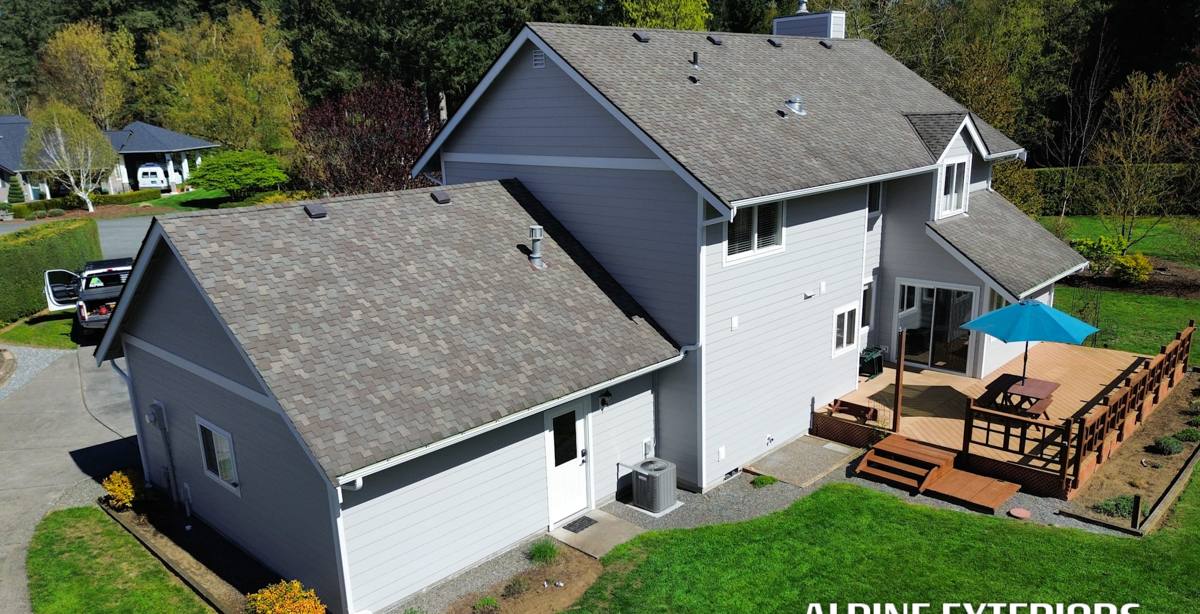
What Blaine's Climate Actually Does to Siding
Salt Air and Corrosion
Proximity to saltwater means airborne salt settles on exterior surfaces and works into seams, fastener heads, and any exposed edges. Over years, that accelerates corrosion on lower-quality fasteners and trim hardware, and it degrades finishes that aren't formulated to resist it. It doesn't destroy a house overnight — it just quietly shortens the life of anything not built for the exposure.
Driving Rain and Wind-Driven Moisture
Wind off the water pushes rain sideways into wall assemblies, not just down. Siding systems that rely on face-sealed caulk joints or that aren't detailed with proper flashing and drainage planes are the ones that eventually let moisture behind the cladding. Once water gets behind siding in a climate this damp, it has very little chance to dry out before the next rain arrives.
Moss, Algae, and the Shade Factor
Birch Bay and Blaine have a long moss season — tree cover, marine humidity, and mild temperatures create ideal conditions for moss and algae to establish on north-facing walls, under eaves, and anywhere siding stays damp and shaded for extended periods. Some siding materials absorb that moisture and let organic growth take hold in the material itself, not just on the surface.
Why We Only Install James Hardie Siding in Blaine
We standardized on James Hardie fiber cement for every home we side, including here in Blaine, and it's a deliberate decision based on how this climate treats different materials over time. We don't install vinyl, LP SmartSide, Cemplank, Allura, primed spruce, or cedar — not because those products have no merit anywhere, but because we've settled on one system we trust to perform correctly in this specific coastal environment, and we'd rather do one thing exceptionally well than spread our crews across several product lines with different installation rules and different long-term behavior.
James Hardie fiber cement is non-combustible, dimensionally stable in swings between wet and dry, and it doesn't feed moss and algae growth the way wood-based products can. The factory-applied ColorPlus finish is baked on under controlled conditions rather than field-applied, which matters a great deal in a climate where paint has to fight salt exposure and near-constant humidity to hold its color and adhesion.
The Right Hardie Product Line for a Blaine Home
James Hardie makes climate-engineered HZ product lines, and homes in this part of Washington fall into the HZ5 zone, engineered for wetter, more temperature-moderate climates like ours. Within that, the right line depends on the house:
- HardiePlank lap siding — the most common choice for Blaine homes, available in several exposure widths and a range of ColorPlus finishes.
- HardiePanel with Board & Batten trim — common on garages, accent walls, and homes going for a more modern or craftsman look.
- HardieShingle — for homes matching a traditional Pacific Northwest cottage or shingle-style look, staggered or straight-edge.
- HardieTrim — used around windows, corners, and fascia to close out the system with matching factory-finished material rather than field-painted wood trim.
The color and texture decision matters too. Darker ColorPlus finishes hold up well but show salt film and moss spotting differently than lighter finishes on shaded elevations — something worth talking through before you commit to a color for a Blaine lot with heavy tree cover or a north-facing wall close to the water.
What a Correct Installation Actually Involves
Fiber cement siding is only as good as its installation. A huge share of the siding problems we get called out to inspect in Birch Bay trace back to installation shortcuts, not the material itself. On every Blaine job, correct installation means:
- Proper weather-resistive barrier and flashing at every window, door, and penetration before a single course of siding goes up
- Kick-out flashing at roof-to-wall intersections so runoff is directed away from the wall assembly, not behind it
- Correct fastener type, placement, and spacing per Hardie's published installation specs — not shortcuts to save time
- Proper clearance between the bottom of the siding and grade, decks, and roof lines to prevent wicking and splashback
- Joints and butt seams treated per Hardie's specification, since over-caulking or under-caulking both cause long-term failures
- Rainscreen or drainage gap detailing where the wall assembly calls for it, especially on more exposed elevations
None of this is exotic. It's published, documented installation practice — but it only protects a house if it's actually followed on every wall, every time, not just on the elevations that are easy to reach.
Our Process for a Blaine Siding Job
1. On-Site Assessment
We walk the home, check the existing wall assembly and sheathing condition, look at drainage patterns around the foundation and roofline, and note anything — moss buildup, past water intrusion, rot — that needs to be addressed before new siding goes on.
2. Detailed Estimate
You get a written scope covering product line, color, trim details, and what's included for flashing, house wrap, and tear-off — not just a lump-sum number.
3. Prep and Tear-Off
Old material comes off, sheathing is inspected and repaired as needed, and any water damage found underneath gets addressed before it's covered back up.
4. Installation to Spec
Siding, trim, and flashing go in following Hardie's installation guidelines for the HZ5 zone, with attention to the details that matter most in a coastal, high-moisture setting.
5. Final Walkthrough
We go over the finished job with you, including care guidance specific to a Blaine property's exposure — shade, wind direction, and proximity to the water all factor in.
What Drives Cost on a Blaine Siding Project
| Factor | Why It Matters in Blaine |
|---|---|
| Home size and wall complexity | More corners, gables, and dormers mean more cutting, trim, and flashing detail work |
| Tear-off and disposal | Removing failed or moss-damaged existing siding adds labor before new material goes up |
| Sheathing repair | Water-damaged sheathing found during tear-off needs to be replaced before re-siding |
| Product line and finish | Lap, panel, and shingle profiles carry different material and labor costs; premium ColorPlus finishes cost more than standard |
| Flashing and drainage detailing | Homes closer to the water or under heavy tree cover often need more thorough flashing and rainscreen detailing |
| Trim scope | Full HardieTrim window and corner packages cost more than reusing existing trim, but hold up better long-term |
Living With Hardie Siding in a Salt-Air Climate
Even a correctly installed, well-chosen siding system benefits from basic upkeep in this environment. For Blaine homeowners, that means:
- Rinsing siding periodically to clear salt film buildup, especially on elevations facing the water
- Trimming back vegetation and tree cover where it keeps a wall shaded and damp for long stretches
- Checking caulk joints at trim and penetrations every year or two and having any gaps re-sealed promptly
- Keeping gutters and downspouts clear so runoff isn't sheeting down wall surfaces
- Addressing moss on adjacent surfaces like roofs and decks before it spreads onto siding
None of this is heavy maintenance — it's the same kind of seasonal attention any coastal Whatcom County home needs, and it goes a lot further when the underlying material and installation were done right in the first place.
Why Local Experience in Blaine Matters
A crew that's already worked houses in Blaine and Birch Bay knows which elevations tend to take the worst of the wind-driven rain, where moss problems show up first, and how the marine layer affects drying time between install stages. That's not something you can fully substitute with a generic installation manual — it's pattern recognition built from working this specific stretch of coastline. It also means we're not learning the local building department's expectations or the area's typical wall assemblies on your project.
If your Blaine home needs new siding or you're dealing with moss, water staining, or aging siding that's not holding up to the salt air, we're happy to come take a look. The estimate is free, there's no pressure, and you'll get a straight answer about what your home actually needs.