 Birch Bay Siding
 Siding Built for What Nooksack Actually Deals With
Homes in the Nooksack area near Birch Bay sit in a stretch of Whatcom County where the weather doesn't do anything halfway. Salt-laden air moves in off the water, driving rain comes sideways for days at a time in the fall and winter, and shaded north-facing walls can carry a green film of moss for months before anyone notices it's there. Siding here isn't decorative — it's the only thing standing between that weather and the framing, insulation, and sheathing underneath. Products that perform fine in a drier inland climate often struggle in this one, and homeowners usually don't find out until there's a soft spot under a window or a section of trim that's swollen and cracking.
This page is specifically about James Hardie fiber cement siding as it applies to homes in the Nooksack area. We're not going to give you a generic rundown of the product — we're going to walk through what this particular climate demands, what a correct installation looks like here, and why the crew doing the work matters as much as the material itself.
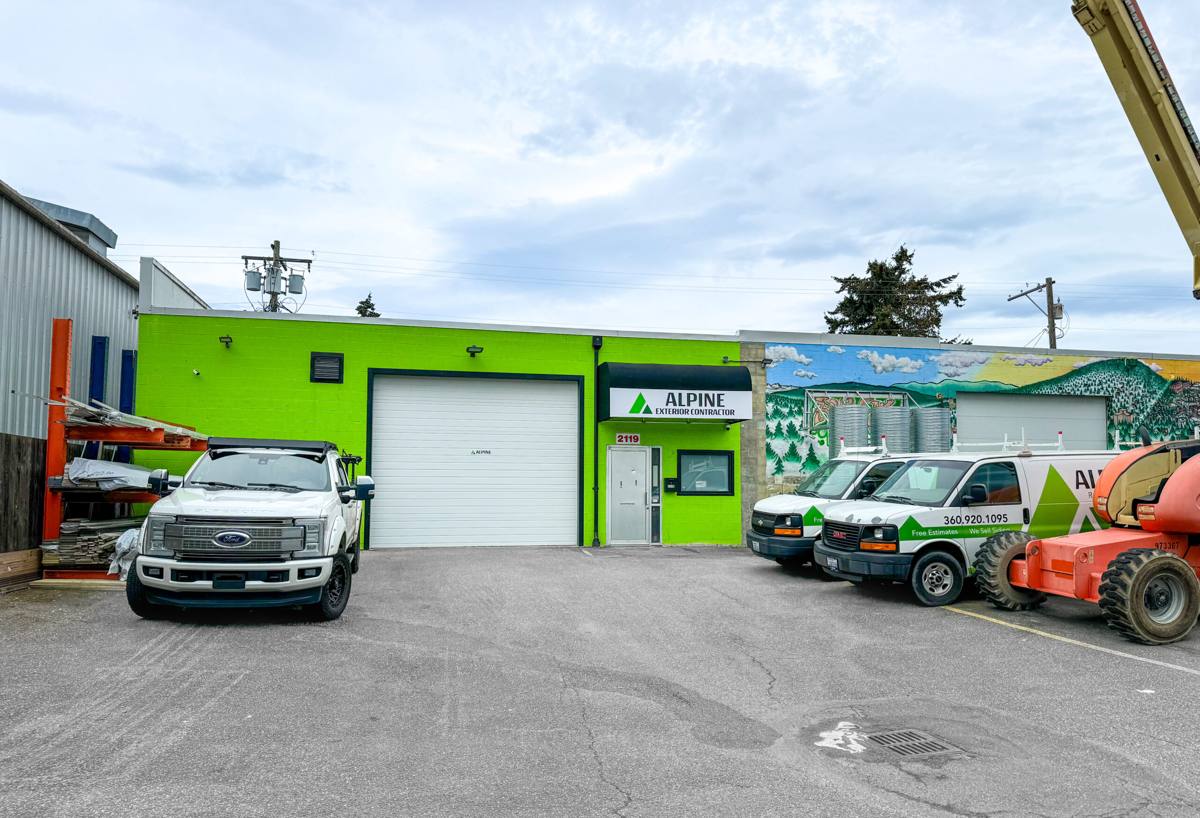
Why We Only Install James Hardie
We install one siding system: James Hardie fiber cement. We don't offer vinyl, LP SmartSide, Cemplank, Allura, or wood options like primed spruce or cedar, and that's a deliberate standard, not a sales pitch. Fiber cement is non-combustible, it doesn't expand and contract with temperature swings the way vinyl does, and it doesn't rely on a factory primer coat the way engineered wood products do to keep moisture out of the substrate. James Hardie's ColorPlus factory finish is baked on and warranted separately from the panel itself, which matters in a climate where sun exposure, salt air, and constant moisture all attack a paint film from different directions.
None of this means other products are junk — vinyl and engineered wood have legitimate uses and plenty of installations that hold up fine in the right climate. Our decision is about what we're willing to put our name behind in a marine environment like Birch Bay and the surrounding Nooksack area, where the combination of salt exposure, rain volume, and moss growth is harder on a wall system than most other parts of the country ever see.
What Salt Air and Driving Rain Do to the Wrong Siding
Salt air accelerates corrosion on fasteners and trim hardware, and it degrades certain paint and coating systems faster than inland UV exposure alone. Driving rain — rain pushed sideways by wind rather than falling straight down — finds every gap in flush trim, every under-caulked seam, and every spot where house wrap wasn't lapped correctly. Vinyl siding can handle rain fine when it's installed correctly, but it's a rain-screen product by design, meaning it's meant to shed water, not seal against it, and any wind-driven moisture that gets behind it needs a properly detailed drainage plane to get back out. Engineered wood siding is more vulnerable at cut edges and fastener penetrations, where the factory coating doesn't reach and untreated wood fiber is exposed directly to moisture.
The Right James Hardie Product Line for This Climate
James Hardie's HZ5 product line is engineered for wetter, cooler climate zones like ours, with a formulation and finish designed to resist moisture intrusion and cracking better than the HZ10 line built for hot, dry regions. For most homes in the Nooksack area, we spec HZ5 by default rather than treating it as an upgrade.
| Product | Best Use | Why It Fits This Climate |
|---|---|---|
| HardiePlank lap siding | Primary wall cladding | Most common profile here; HZ5 formulation resists moisture and holds paint film longer in salt air and rain |
| HardieShingle | Accent gables, dormers | Matches the Pacific Northwest shingle-style look while staying non-combustible and low-maintenance |
| HardiePanel vertical siding | Modern facades, garage gables | Clean lines with fewer horizontal laps for water to work into |
| HardieTrim boards | Corners, window and door casing | Dense, moisture-resistant trim that won't swell or rot like untreated wood trim can |
Color selection matters here too. ColorPlus finishes are factory-cured, which gives a more consistent, longer-lasting bond than field-applied paint, and it means the color goes on before the board ever sees a job-site rainstorm. For homes exposed to more direct salt spray or afternoon sun, we'll talk through which finishes have held up best in similar coastal Whatcom County conditions.
What a Correct Installation Actually Involves
James Hardie siding is only as good as the installation behind it. The product is engineered to perform, but a rushed or careless install can undo most of that engineering. In a high-moisture area like Nooksack, the details matter more than usual.
The Water Management Layer
Before a single piece of siding goes up, there needs to be a correctly lapped weather-resistive barrier (house wrap) with all seams taped, and flashing integrated at every window, door, and horizontal transition so that any water that does get behind the cladding has a clear path down and out. This is the layer that actually keeps a house dry — the siding is the first line of defense, but the water management layer behind it is what protects the structure if that first line is ever breached during a bad storm.
Fastening and Clearances
James Hardie specifies fastener type, spacing, and placement for a reason — corrosion-resistant fasteners driven at the correct depth prevent the kind of hairline cracking that shows up years later as a stress point where water can enter. Ground clearance and clearance from roof lines, decks, and patios also need to follow Hardie's published specs; siding installed too close to grade or to a roof surface stays wet longer and is more exposed to splashback, which matters in an area that gets as much sustained rainfall as this one does.
Caulking and Sealant Joints
Every butt joint, trim intersection, and penetration needs the right sealant, applied correctly, not just enough to look finished. In a driving-rain climate, a joint that looks sealed but isn't backed properly will fail faster than it would somewhere drier, because it's being tested by wind-driven water far more often.
Our Process, Start to Finish
- On-site assessment — we walk the exterior, check for existing moisture damage, and evaluate exposure (which walls take the most wind-driven rain, which stay shaded and are prone to moss).
- Product and color plan — we recommend the HardiePlank, HardieShingle, or HardiePanel combination that fits the home's design and exposure, and walk through ColorPlus options.
- Written estimate — a clear scope covering tear-off, water management layer, trim, siding, and cleanup, with no vague allowances.
- Tear-off and inspection — removing old siding lets us actually see the sheathing and framing underneath before anything new goes up, which is the only reliable way to catch hidden moisture damage.
- House wrap and flashing — installed and inspected before any siding is hung, since this layer is impossible to verify once it's covered.
- Siding, trim, and caulking — installed to Hardie's fastening and clearance specs, not shortcuts.
- Final walkthrough — we go over the finished job with the homeowner before calling it done.
Moss, Mildew, and Long-Term Upkeep in a Marine Climate
Long moss season is one of the quieter challenges of siding in this part of Whatcom County. Moss and algae don't just look bad — on the wrong siding material, sustained moisture retention under a moss mat can soften the surface over time. James Hardie fiber cement doesn't feed mold or moss growth the way wood-based products can, since it's cement-based rather than organic, but moss can still take hold on the surface in shaded, damp areas the same way it would on a roof or a deck.
The upkeep is straightforward: an annual rinse of shaded, north-facing walls keeps moss from building up, gutters and downspouts need to stay clear so water isn't sheeting down a wall face, and any landscaping crowding the siding should be trimmed back to let walls dry out between rain events. None of this is heavy maintenance — it's the kind of light seasonal care that keeps a correctly installed Hardie system looking good for decades in this climate.
What This Costs
Every home is different, but the factors that move the price are consistent. We'll always give you a specific written number after walking your home — nothing here should be read as a quote.
| Factor | Why It Matters |
|---|---|
| Tear-off scope | Removing existing siding down to sheathing costs more than a fresh install, but it's the only way to inspect and repair hidden moisture damage |
| Wall complexity | Dormers, multiple gables, and cut-up facades take more trim and labor than a simple rectangular wall |
| Product mix | Combining HardiePlank fields with HardieShingle accents adds material and labor cost over a single-product job |
| Existing damage | Rot or sheathing damage found during tear-off needs to be repaired before new siding goes on |
| Access and site conditions | Steep grades, limited driveway access, or tight setbacks common on some Whatcom County lots can affect labor time |
Checklist: What to Confirm Before Any Siding Job Starts
- Is the crew James Hardie-trained or certified, not just familiar with the product?
- Does the written estimate specify HZ5 product and ColorPlus finish, not just "fiber cement"?
- Is house wrap and flashing detail included and described, not left as an assumption?
- Does the contract specify fastener type and clearance standards per Hardie's install guide?
- Is tear-off and sheathing inspection included, or is new siding going over unknown conditions?
- Is the warranty structure explained in writing — product warranty versus workmanship warranty?
Why Local Experience in the Nooksack Area Matters
A crew that already works this part of Whatcom County knows which walls in this microclimate take the worst of the driving rain, which yards hold shade long enough to grow moss fastest, and how the salt air off the water changes maintenance timelines compared to siding installed further inland. That's not something you can fully account for from a general installation manual — it comes from seeing how houses in this specific area actually age. Hiring a contractor who's already familiar with Nooksack and Birch Bay conditions means fewer surprises during the job and a system that's set up correctly for the climate it actually has to survive in, not a generic one.
If you're weighing a siding replacement or new construction project in the Nooksack area, we'd rather walk your home and give you a straight answer than sell you on the idea in the abstract. Reach out for a free, no-pressure estimate using the form below, and we'll tell you honestly what your home needs.