 Birch Bay Siding
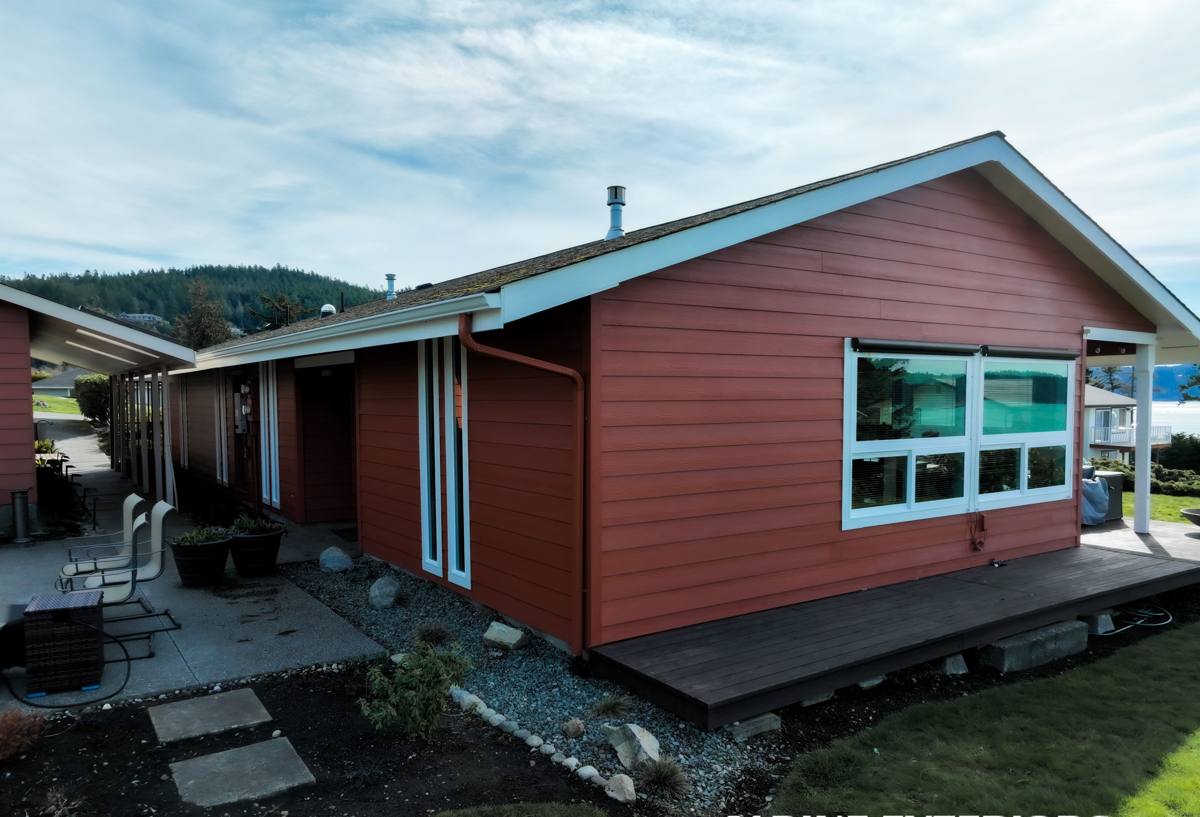
 Board & Batten on Lummi Island: A Style That Has to Earn Its Keep
Board and batten has always been a practical choice before it was a fashionable one. The vertical lines, the strong shadow reveal at every batten, the way it reads from a distance across water or a gravel road — homeowners on Lummi Island gravitate toward it because it fits the setting. But out here, the style has to survive conditions that a lot of siding catalogs don't account for. Salt-laden air off the water, wind-driven rain that hits walls sideways instead of straight down, and a moss season that can run most of the year on shaded or north-facing elevations. A board and batten installation that only looks right isn't good enough. It has to be built to shed water, resist the salt cycle, and stay looking sharp with realistic upkeep.
This page is specifically about board and batten siding for homes on Lummi Island, part of our Whatcom County service area alongside Birch Bay. We're not going to give you a generic rundown of the style — we'll walk through what this climate demands, how we build the assembly, and why the product we standardized on is the one we're willing to put our name behind.
What Lummi Island's Climate Actually Does to Vertical Siding
Salt Air and the Marine Layer
Homes close to the water pick up airborne salt that settles on every exterior surface, including siding. Over years, that salt cycle accelerates corrosion on fasteners and trim, and it speeds up the breakdown of finishes that aren't formulated to handle it. It's not dramatic — it's slow, cumulative wear that shows up as chalking, fading, or fastener bleed long before most homeowners expect it.
Driving Rain and Wind Exposure
Board and batten's vertical seams are only as good as the water management behind them. On an exposed island lot, wind-driven rain doesn't fall straight — it gets pushed sideways and upward into laps, seams, and butt joints. A batten pattern that isn't properly flashed and gapped will eventually let moisture track behind the boards, where it does the most damage because nobody sees it happening.
Moss and Sustained Damp Shade
Whatcom County's tree cover and long wet stretches mean moss and algae get a real foothold on north-facing and shaded walls. Board and batten's vertical grooves can trap organic debris at the base of each batten if the siding isn't detailed with enough standoff and drainage to let things dry out between rains.
What a Correct Board & Batten Installation Involves
The visual style is simple, but the assembly behind it is where quality is won or lost. A correct installation on an exposed Lummi Island lot includes:
- A drainage plane (weather-resistant barrier) installed and lapped correctly, with all penetrations flashed before siding goes on
- A rainscreen gap — a vertical furring strip or engineered drainage mat behind the panels so water that gets past the surface can drain and the wall can dry
- Corrosion-resistant, manufacturer-approved fasteners driven to the correct depth — overdriven or underdriven fasteners are one of the most common failure points in vertical siding
- Proper board and batten spacing and fastening pattern so panels can expand and contract without cracking the finish or splitting at fastener points
- Flashed and back-primed cuts at every window, door, and trim intersection, since a factory finish only protects what it's applied to
- Consistent batten reveal and plumb lines, which matter more on a vertical pattern than almost any other siding style because every imperfection reads at a glance
Skipping any one of these doesn't usually cause an obvious problem in year one. It shows up in year five or eight, as trapped moisture, rot at the base, or a finish that's failing well ahead of schedule — which is exactly the kind of problem that's expensive to diagnose and fix after the fact.
The James Hardie Board & Batten System We Install
We install James Hardie fiber cement exclusively — not vinyl, not LP SmartSide, not cedar, not primed spruce, not any of the other engineered wood or composite alternatives on the market. For board and batten specifically, that means HardiePanel vertical siding paired with Hardie trim battens, finished in a factory-applied ColorPlus finish.
Why Fiber Cement for This Style
Fiber cement doesn't expand and contract with moisture the way wood-based products do, which matters a great deal on a vertical pattern where every batten line is a visible seam. It's non-combustible, which carries real weight for homes near dry brush or wooded lots. And it's engineered specifically for Pacific Northwest moisture exposure through Hardie's HZ10 product line, which is formulated for regions that see sustained rain and humidity rather than a generic national spec.
ColorPlus Finish
The factory-applied ColorPlus finish is baked on under controlled conditions, which gives it more consistent coverage and better fade and chip resistance than field-applied paint. In a salt-air environment, that's not a cosmetic upgrade — it's the difference between a finish that holds its color for years and one that starts breaking down as soon as the salt cycle gets to it.
How Board & Batten Options Compare in This Climate
| Material | Behavior in Salt Air / Driving Rain | Moss & Moisture Resistance | Long-Term Maintenance |
|---|---|---|---|
| James Hardie Fiber Cement | Dimensionally stable, engineered for PNW moisture (HZ10) | Doesn't absorb and swell like wood; correct rainscreen detailing controls moss growth | Occasional wash-down; factory finish holds color for years |
| Cedar / Primed Wood | Attractive but absorbs moisture and moves seasonally | Prone to moss, rot, and checking without diligent upkeep | Regular refinishing and moisture monitoring required |
| Vinyl | Can warp or become brittle under wind and temperature swings | Sheds water at the surface but seams can trap moisture behind panels | Low upkeep but limited repair options and shorter practical lifespan |
| LP SmartSide / Engineered Wood | Wood-based core is sensitive to sustained moisture exposure at cut edges and seams | Requires strict edge sealing to resist moss and moisture intrusion | Installation quality is critical; edge maintenance ongoing |
Every product on that list has a place in the market. We simply made a professional decision that fiber cement's stability and moisture engineering are the right fit for the conditions Lummi Island homes actually face, and we'd rather stand behind one system we know well than install several we have reservations about.
Our Process for Lummi Island Projects
- On-site assessment — we look at wall orientation, tree cover, existing moisture damage, and how exposed the home is to wind and water before recommending anything
- Moisture and sheathing check — we don't cover up an existing problem; if there's rot or trapped moisture behind the current siding, it gets addressed before new siding goes on
- Material staging and delivery planning — island access means factoring ferry schedules into material delivery and crew scheduling so the job runs on the timeline we quote, not around logistics surprises mid-project
- Installation — drainage plane, rainscreen, panel and batten layout, flashing at every penetration, and fastening to manufacturer spec
- Final walkthrough — we check reveal consistency, caulking, and trim details before calling the job finished
Living With Board & Batten Siding Here
Correctly installed fiber cement board and batten is genuinely low-maintenance, but "low-maintenance" doesn't mean "no maintenance" in a marine, moss-prone climate. A simple seasonal routine keeps it looking right for the long haul:
- Rinse the exterior once or twice a year to clear salt residue and organic buildup, especially on shaded or north-facing walls
- Check and re-caulk trim joints and penetrations every few years, since caulk fails before the siding does
- Keep gutters clear and downspouts directed away from the wall base to prevent splash-back staining and localized moss growth
- Trim back vegetation and tree cover where it keeps walls damp longer than they'd otherwise be
- Watch for any soft spots, staining, or discoloration near the ground line and address them early rather than waiting
What Drives the Cost of a Board & Batten Project
| Factor | Why It Matters |
|---|---|
| Home size and wall area | More square footage means more material and labor, straightforwardly |
| Batten spacing and board width | Tighter spacing means more trim pieces, more fastening, and more labor time |
| Trim and corner complexity | Dormers, multiple gables, and detailed trim work all add time |
| Site access | Island logistics, steep grades, or limited staging area can affect scheduling and setup time |
| Existing wall condition | Rot repair or sheathing replacement, if needed, is additional scope beyond the siding itself |
We give firm, itemized quotes after an in-person assessment rather than ballpark numbers over the phone — too much of the real cost depends on what we find on the actual wall.
Why It Matters That We Already Work on Lummi Island
Island jobs aren't the same as mainland jobs with an extra step. Ferry schedules affect when materials and crews can arrive, staging space is often tighter, and homes here tend to see more direct wind and salt exposure than equivalent homes just a few miles inland in Birch Bay or elsewhere in Whatcom County. A crew that already plans around those realities builds a more accurate schedule and fewer surprises. That familiarity is part of what you're hiring, not just the siding itself.
If you're considering board and batten siding for a home on Lummi Island, we're happy to take a look and give you a straight assessment of what your home needs. Reach out below for a free, no-pressure estimate — there's no obligation, just an honest look at your options.