 Birch Bay Siding
 Salt Air, Rain, and Moss: What Lummi Island Does to a Deck
A deck on Lummi Island lives a harder life than one twenty miles inland. Sitting out in the Georgia Strait and Rosario Strait marine air means salt-laden wind is a near-constant presence, and that salt works its way into fasteners, hardware, and any exposed end grain on the lumber. Add Whatcom County's driving, wind-pushed rain — which doesn't just fall straight down but gets forced sideways into railings, stair stringers, and the gap between decking boards — and you have a structure that's fighting moisture from more directions than a typical backyard deck.
Then there's moss. Shaded decks, north-facing decks, and anything under overhanging trees can stay damp for months at a stretch here, and moss doesn't just look bad — it holds water against the wood surface and accelerates rot underneath. On an island where humidity lingers and dry, sunny stretches are limited, that moss season runs longer than most homeowners expect, which is exactly why deck problems on Lummi Island tend to show up in the framing and fasteners before they're obvious on the surface.
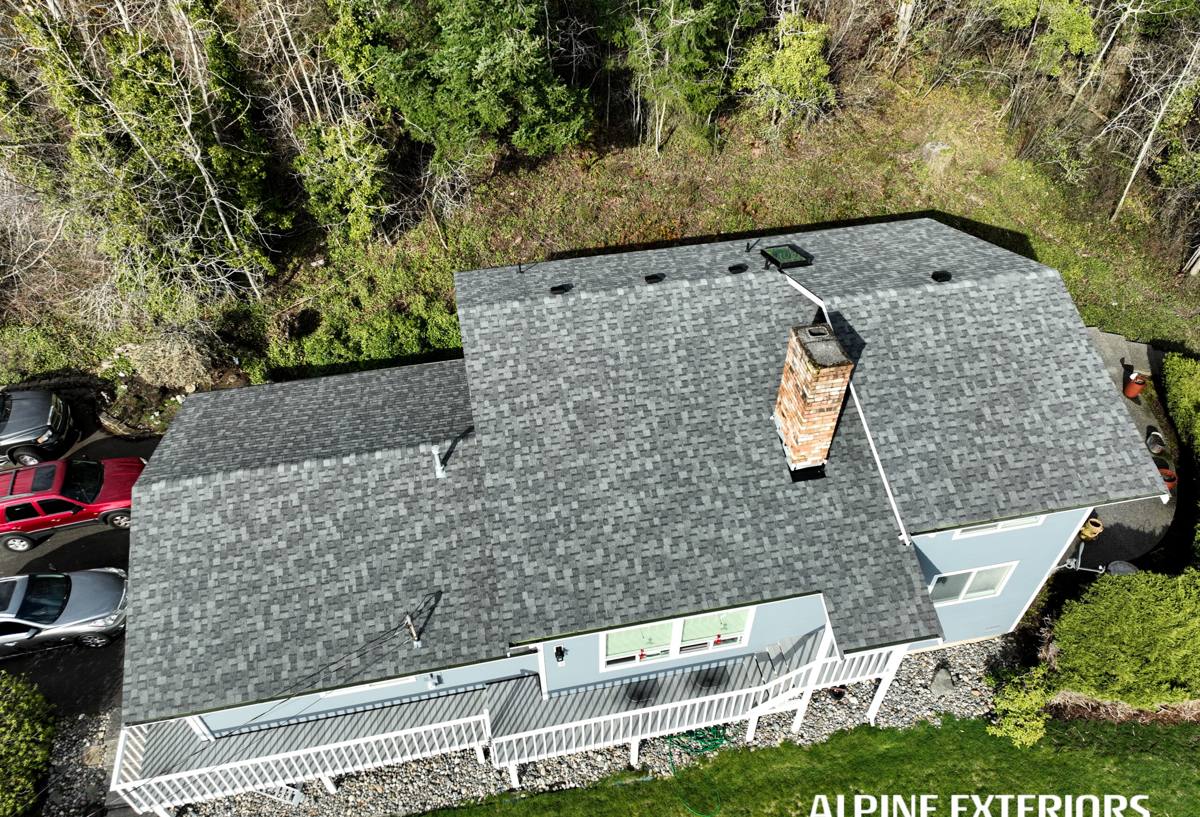
How to Tell a Deck Needs Repair
Structural Warning Signs
These are the issues we treat as priority items, because they affect safety, not just appearance:
- Soft, spongy, or bouncy spots when you walk across the deck
- Any wobble or give in the railings or guard posts when pushed
- Visible gaps, rust streaks, or cracking around the ledger board where the deck attaches to the house
- Stair stringers that flex or feel unstable underfoot
- Fasteners that are rusted, backing out, or leaving dark stains in the wood around them
- Posts or footings that feel loose or have visible movement at the base
Cosmetic Wear That's Still Worth Addressing
Graying wood, moss growth on the boards, and surface splintering aren't emergencies, but they're not purely cosmetic either. Left alone, moss holds moisture against the boards and speeds up the exact rot that eventually becomes a structural problem. Catching this stage early is almost always cheaper than waiting for it to become a framing issue.
What Goes Into a Correct Deck Repair
Ledger Board and Flashing
The ledger board — where the deck bolts into the house — is the single most important connection on the structure, and it's also the part most exposed to water intrusion if the flashing behind it has failed. A repair that only replaces surface boards but ignores a compromised ledger or missing flashing hasn't actually fixed the problem; it's just delayed it.
Framing: Joists, Beams, and Posts
Rot in joists or support posts isn't always visible from above. We check the underside of the deck, probe suspect areas with an awl to feel for soft wood, and look closely at end cuts and any spot where two pieces of lumber meet — those joints trap moisture and are almost always where rot starts first.
Decking Surface and Fasteners
Individual board replacement makes sense when the framing underneath is sound and the damage is isolated. We also pay attention to fastener type during repairs — mismatched or undersized fasteners, or the wrong fastener for a coastal environment, are a common reason a "repaired" deck fails again within a year or two.
Railings, Stairs, and Guards
Railings and guardrails carry a safety-code requirement for height and spacing, and stair stringers need to bear weight without flex. When we repair these components, we bring them up to a standard that holds up, not just a patch that looks fine until it's tested.
Repair or Replace? Cost Factors to Weigh
Not every deck problem calls for a full rebuild, and not every deck is worth patching. Here's how we walk homeowners through that decision:
| Factor | Favors Repair | Favors Replacement |
|---|---|---|
| Ledger board condition | Solid, properly flashed | Rotted or improperly attached |
| Extent of damage | Isolated boards or a few joists | Widespread rot across framing |
| Age of structure | Under 12-15 years, good bones | Original structure decades old |
| Footings and posts | Stable, no movement | Settling, shifting, or undersized |
| Code compliance | Railings and spacing already meet code | Built before current code requirements |
As a rough guideline, if the framing and ledger are sound, repair costs are usually a fraction of full replacement. Once rot has spread into multiple structural members, the labor to selectively replace pieces can approach — or exceed — the cost of rebuilding clean. We'll always tell you honestly which side of that line your deck falls on.
Material Choices That Hold Up in This Climate
What we use for a repair depends on what's already there and what the homeowner wants going forward, but a few principles apply specifically to Lummi Island's exposure:
- Pressure-treated lumber remains a solid, cost-effective choice for framing and structural repairs, but it needs to stay sealed at cut ends and connections to perform well in salt air.
- Cedar looks great and resists rot naturally, but it's a softer wood that needs more frequent maintenance in a high-moisture, high-moss environment — worth knowing before committing to it for a full surface replacement.
- Composite decking trades a higher upfront cost for lower long-term maintenance, since it doesn't absorb water or feed moss the way wood does. It's not maintenance-free — surfaces still need cleaning — but it holds up well against the wet stretches common here.
- Fasteners and hardware matter more here than almost anywhere else in the county. In a marine air environment, standard galvanized screws corrode faster than stainless steel or high-grade coated fasteners rated for coastal or treated-lumber use. We don't cut corners on hardware, because that's usually the first thing to fail.
Our Deck Repair Process
- On-site inspection. We check the ledger, framing, posts, footings, decking, and railings — above and below — and probe any area that looks or feels suspect.
- Honest scope and estimate. We tell you what's failing, what's still sound, and whether repair or replacement makes more financial sense for your specific deck.
- Permit check. Structural repairs, especially involving footings or ledger reattachment, may require a permit through the county — we'll flag this upfront rather than let it surprise you later.
- Repair work. We address the structural issues first — ledger, framing, posts — before moving to surface boards, railings, and stairs.
- Site cleanup and walkthrough. We clear debris and walk the finished repair with you so you know exactly what was done and what to watch for going forward.
Why Hire a Crew That Already Works on Lummi Island
Lummi Island is reached by a short ferry crossing, and that changes how a repair project needs to be scheduled and staged. A contractor who doesn't regularly work the island can underestimate how much that logistics factor affects timing — materials, crew, and equipment all need to move on the ferry schedule, and weather on the water can add delays that don't exist on the mainland. A crew that's used to working here plans around that instead of getting caught off guard by it.
There's also a practical benefit to familiarity with the island's specific exposure patterns. Decks facing open water take a different kind of beating than decks tucked into a more sheltered lot, and knowing which failure points to check first — based on orientation, tree cover, and how exposed a given property is to wind-driven rain — comes from having done this work on similar homes nearby, not from a generic checklist.
Keeping a Repaired Deck Ahead of Moss and Rot
A good repair buys you years, but a little upkeep buys you more. These habits make the biggest difference in this climate:
- Sweep debris and standing water off the deck surface regularly, especially in fall when leaves and needles pile up
- Clean moss and algae off the surface at the first sign of growth rather than waiting until it's established
- Check that gaps between boards stay clear so water can drain instead of pooling
- Inspect the ledger board area and any visible fasteners once or twice a year for rust or staining
- Re-seal or re-stain wood decking on the manufacturer's recommended schedule — don't let it go until it's visibly gray and dry
- Trim back overhanging branches that keep sections of the deck shaded and damp longer than the rest
If you're noticing soft spots, rust stains, wobbly railings, or a deck that just doesn't feel as solid as it used to, we're happy to take a look and give you a straight answer about what it needs. Reach out for a free, no-pressure estimate using the form below.