 Birch Bay Siding
 Point Whitehorn Is a Different Kind of Window Job
Point Whitehorn sits on the shoreline north of the main Birch Bay area, where wooded, bluff-top lots face open water and take wind straight off the Strait of Georgia. That's a very different exposure than a home a few miles inland. Windows here deal with salt-laden air, wind-driven rain that hits horizontally instead of falling straight down, and long stretches of shade and dampness under fir and cedar cover that keep moss and mildew active most of the year. A window that would last decades in a dry, sheltered neighborhood can fail early out here if it wasn't installed with this exposure in mind.
This page is specifically about window installation for Point Whitehorn homes — what the climate actually does to windows, what a correct installation involves, and why the details matter more here than they do in a typical inland Whatcom County install.
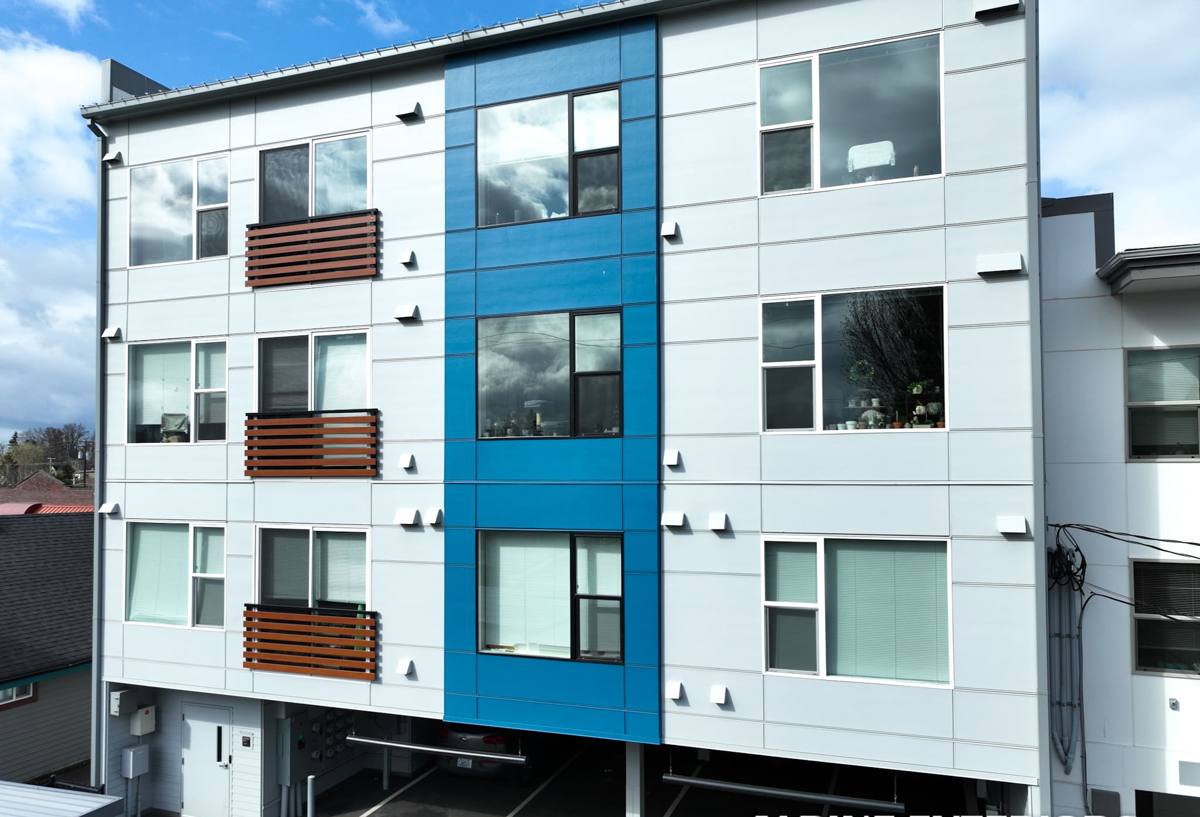
What Salt Air, Driving Rain, and Moss Actually Do to Windows
Homeowners often assume window failure means a cracked pane or a broken lock. Out here, the more common failures are quieter and slower:
- Salt air corrosion — hardware, hinges, and metal cladding components can pit and corrode faster near the shoreline, especially on the weather-facing side of the house.
- Wind-driven rain intrusion — water gets pushed sideways and upward under sills and around trim, finding any gap in flashing or sealant that a calmer climate would never test.
- Moss and mildew buildup — shaded, damp sills and lower sashes stay wet longer, which accelerates wood rot and breaks down some sealants and finishes over time.
- Cyclical wood movement — coastal humidity swings mean wood-frame components expand and contract more, which can loosen fasteners and open small gaps that widen every season.
None of this means windows can't last a long time in Point Whitehorn. It means the installation — not just the window itself — has to account for this exposure from the start.
Signs a Point Whitehorn Home Needs Window Replacement
Because coastal deterioration is gradual, a lot of homeowners live with a failing window for years before it becomes obvious. Here's what we look for during an assessment:
- Fogging or a visible haze between panes (a sign the seal on a double- or triple-pane unit has failed)
- Soft, spongy, or discolored wood at the sill or lower frame corners
- Visible moss, algae, or dark staining that keeps returning even after cleaning
- Drafts or a noticeable temperature difference near the window on windy days
- Hardware that's stiff, corroded, or won't latch tightly anymore
- Paint or finish that's bubbling, peeling, or chalking faster than it should
- Condensation on the interior glass or frame during cold, damp stretches
Any one of these can be minor. Two or three together, especially on the water-facing side of the house, usually means it's time to talk about replacement before the framing behind the window is affected too.
Water Damage vs. Cosmetic Wear
It's worth distinguishing the two, because they call for different responses. Cosmetic wear — chalky finish, minor moss on the sill, faded caulk — is a maintenance item. Actual water damage — soft wood, staining that extends into the wall, a musty smell near the window — means moisture has already gotten past the window's defenses and needs to be addressed at the source, not just papered over with new caulk.
What a Correct Window Installation Actually Involves
The window unit itself is only part of the job. Most window failures we see in coastal Whatcom County homes trace back to installation shortcuts, not a bad product. A correct installation includes:
Removal Without Collateral Damage
Old windows and their surrounding trim come out carefully so we can inspect the rough opening — the framing, sheathing, and any existing flashing — before anything new goes in. This is the point where hidden rot or water damage from years of exposure gets found and dealt with, instead of sealed behind a new window.
Flashing and Water Management
This is the step that matters most in a driving-rain climate. Proper flashing directs any water that gets past the exterior trim back out and away from the wall assembly, using a shingled, overlapping sequence (sill pan, side flashing, then head flashing) so water always sheds downward and outward, never into the wall. Skipping or rushing this step is the single biggest cause of hidden rot behind windows on wind-exposed homes.
Air and Moisture Sealing
Around the frame, we use appropriate sealants and, where needed, a weather-resistant barrier tie-in so the window works with the home's existing moisture barrier rather than against it. A window can be perfectly sealed on its own and still leak if it isn't properly integrated into the wall's water management system.
Leveling, Shimming, and Fastening
An out-of-square or improperly shimmed window stresses the frame, which leads to hardware that won't latch cleanly and seals that wear unevenly. Correct shimming also keeps the window operating smoothly for years instead of binding after the first heavy wind season.
Interior and Exterior Trim
Finish work isn't cosmetic-only — trim and caulking are part of the weather seal. We finish both sides properly rather than leaving gaps that let moisture or drafts in around the frame.
Choosing Window Materials for a Salt Air, High-Wind Exposure
There's no single "best" window material for every home — it depends on the home's exposure, budget, and how much upkeep the owner wants to take on. For Point Whitehorn's shoreline conditions, here's how the common options compare:
| Frame Material | How It Handles Salt Air & Rain | Maintenance | General Cost Position |
|---|---|---|---|
| Vinyl | Won't rust or corrode; performs well against salt air with no coating to fail | Low — occasional cleaning | Most affordable |
| Fiberglass | Very stable in temperature swings and humidity; strong resistance to moisture-related warping | Low | Mid to upper-mid |
| Wood-clad (exterior clad, wood interior) | Good performance if the cladding and flashing details are done right, but any breach in the cladding exposes wood to rot risk | Moderate — cladding seams and sills need periodic checks | Higher |
| Aluminum | Strong and slim-profile, but bare aluminum hardware and frames are more prone to corrosion in salt air unless properly finished | Moderate — watch hardware and finish over time | Mid to higher |
Our general standard for shoreline homes: vinyl and fiberglass tend to hold up with the least maintenance burden against salt air, while wood-clad and aluminum can absolutely work if the installation details — flashing, cladding seams, hardware finish — are done correctly and checked periodically. We'll walk through the trade-offs honestly based on your home's specific exposure rather than pushing one product line.
Energy Performance in a Marine Climate
Whatcom County's marine climate means Point Whitehorn homes deal with persistent damp cold more than deep freezes, so the window performance numbers that matter most are:
- U-factor — how well the window resists heat loss; lower is better for our cool, damp winters
- Air infiltration rating — how tight the window is against wind, which matters directly here given the wind exposure off the water
- Condensation resistance — relevant given the humidity swings between damp winters and drier summer stretches
Double-pane, low-E, argon- or krypton-filled units are the standard baseline we recommend for this area; triple-pane can make sense on the most wind- and weather-exposed elevations of a home, though it adds cost and weight. We'll help you weigh that against your budget and which sides of the house actually take the brunt of the weather.
Our Installation Process, Start to Finish
- On-site assessment — we look at each window's condition, the home's exposure, and the framing behind problem windows before recommending anything.
- Measurement and product selection — exact measurements and a walkthrough of material and glass options based on your home's exposure and budget.
- Scheduling around weather — coastal weather windows matter; we plan installation days to minimize how long any opening is exposed before it's sealed.
- Removal and opening inspection — old units come out, and we check the rough opening for hidden rot or damage before proceeding.
- Flashing and water management — sill pan, side, and head flashing installed in proper sequence.
- Setting, shimming, and fastening the window — leveled and secured per manufacturer specifications.
- Sealing and insulating — appropriate low-expansion foam or insulation around the frame, plus exterior sealant.
- Trim and finish work — interior and exterior trim completed and sealed.
- Cleanup and walkthrough — job site cleaned, and we walk through operation and care with you before we call it done.
Permits and Local Requirements
Window replacement in unincorporated Whatcom County — which includes Point Whitehorn — may or may not require a permit depending on whether you're doing a like-for-like replacement or altering the opening size, and bedroom windows have egress requirements (minimum opening size and sill height) that matter if you're replacing a bedroom window with a different style or size. We handle this conversation as part of the estimate so there are no surprises, and we won't cut corners on egress code just to save a step.
Why a Local Birch Bay Crew Matters for This Job
Window installation quality comes down to details most homeowners never see once the trim is on — how the flashing was sequenced, how the sealant was applied, whether the shimming was done right. A crew that regularly works Birch Bay and the surrounding shoreline neighborhoods, including Point Whitehorn, has already seen how wind-driven rain and salt air behave on homes like yours, and builds those lessons into every install rather than treating this as a generic job. Being local also means being available if a warranty question or a storm-related concern comes up later — not a call center hours away.
A Quick Checklist Before You Hire Anyone
- Do they explain their flashing and water-management approach, not just the window brand?
- Are they licensed and insured to work in Washington State?
- Do they inspect the rough opening before installing, or just swap the window and re-trim?
- Can they speak specifically to coastal or wind-exposed installations, not just standard suburban jobs?
- Do they give you a clear, honest estimate range instead of a vague verbal number?
Caring for New Windows in a Salt Air, Moss-Prone Setting
A correctly installed window still benefits from basic upkeep in this climate. Rinsing salt residue off exterior glass and frames periodically, keeping gutters and nearby foliage from holding moisture against the lower sills, and doing a yearly check of exterior caulking will meaningfully extend the life of the installation. We're happy to walk you through a simple care routine specific to your home's exposure after the job is done.
If you're seeing drafts, fogged glass, soft wood, or persistent moss around your windows — or you're just planning ahead for a home on Point Whitehorn's shoreline — we'll come take a look and give you a straightforward, no-pressure estimate. Use the form below to get started.