 Birch Bay Siding
 Why Lynden Decks Take a Beating
Homes around Lynden sit close enough to Birch Bay and the Strait of Georgia that salt-laden air reaches wood, metal, and fasteners well before most homeowners notice any visible damage. Add Whatcom County's long wet season, driving rain that comes in sideways off the water, and the shaded, moss-friendly conditions common to this part of the county, and you've got a climate that is genuinely hard on outdoor structures. A deck isn't just furniture sitting outside — it's a structural assembly of ledger boards, joists, posts, footings, and fasteners, every one of which is exposed to moisture cycling nearly year-round.
That combination — salt air accelerating corrosion, rain driving into end grain and fastener holes, and moss holding moisture against the surface for weeks at a time — is why decks in this area fail differently than decks in drier climates. Repairs here have to account for all three, not just patch the board that looks bad.
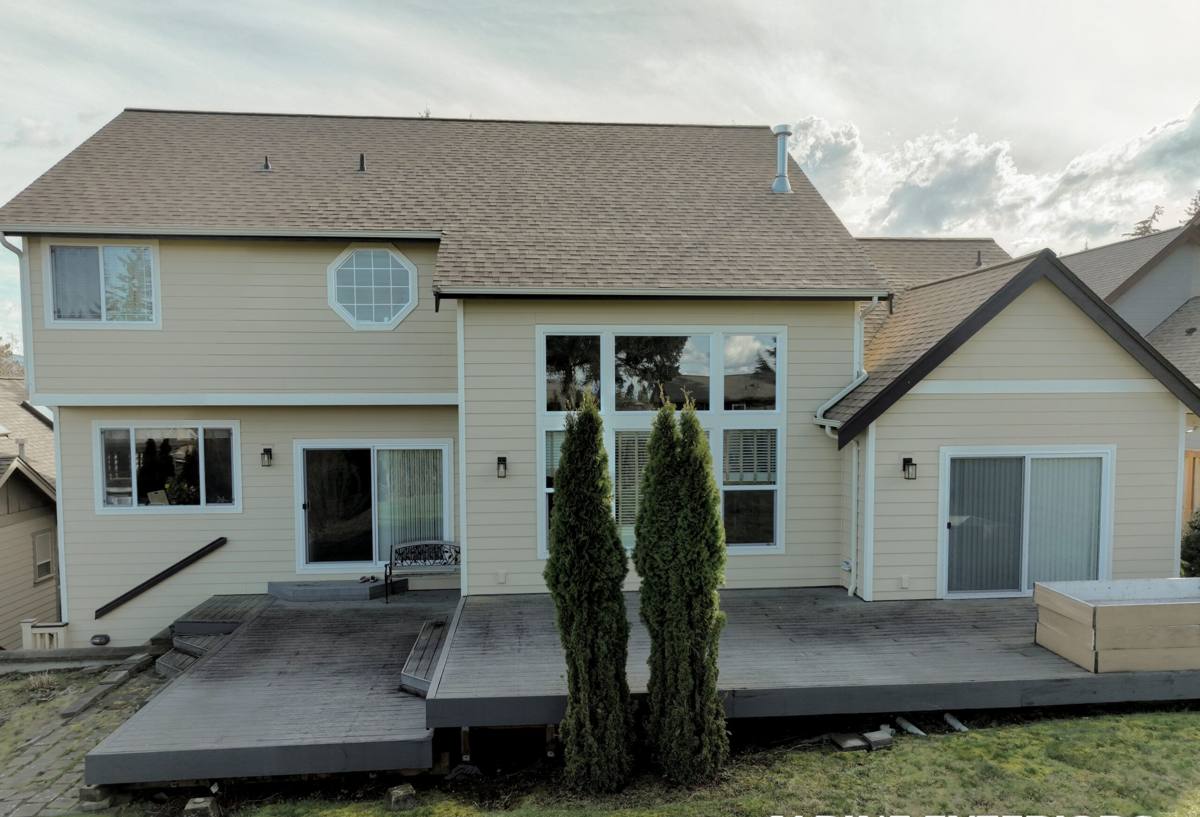
Common Deck Problems We See in This Area
Most of the repair calls we get in this area fall into a short list of recurring issues. None of them are unusual for the Pacific Northwest, but they do need to be caught and corrected properly, or they come back within a season or two.
- Ledger board rot where the deck attaches to the house, usually from missing or failed flashing
- Corroded or rusted-through fasteners and joist hangers, especially on decks built before code required coated or stainless hardware
- Soft, spongy, or delaminating deck boards from prolonged moisture exposure
- Moss and algae buildup on shaded boards and stair treads, which holds water against the wood and creates a slip hazard
- Loose or wobbly railings and posts from post-base rot or undersized original connections
- Cupped, cracked, or checked boards from repeated wet-dry cycling
Individually, most of these look cosmetic. Ledger rot and corroded hangers are not — they affect whether the deck is actually safe to stand on, which is why an honest inspection has to go past the surface.
Signs a Deck Repair Shouldn't Wait
Some deck problems can sit on a to-do list for a season. Others can't. If you notice any of the following, it's worth getting an inspection scheduled rather than waiting for the next dry stretch:
- Boards that feel soft, spongy, or flex noticeably underfoot
- Visible movement or gapping where the deck meets the house at the ledger board
- Rust streaks bleeding out from around fastener heads or joist hangers
- Stairs or railings that wobble or shift under normal weight
- Standing water that doesn't drain off the surface within a few hours after rain
None of these mean the whole deck needs to be torn out. But they do mean the framing underneath deserves a real look before the next heavy rain event pushes a small problem into a bigger one.
On cost, every deck is different, and we won't quote a number without seeing the actual damage. In general terms, a repair limited to a handful of boards and fasteners runs on the lower end, while work that involves reframing, ledger flashing, or full board replacement across a larger deck runs considerably higher. We'll give you a firm, written number after the inspection — not a guess over the phone.
What a Correct Deck Repair Actually Involves
Structural First, Cosmetic Second
A repair that only replaces the boards you can see, without checking what's underneath, is a cosmetic fix on a structural problem. Before we touch a single deck board, we check the framing: are the joists solid where they meet the ledger, is the ledger properly flashed and fastened to the house, are the post bases sound, and are the hanger connections actually rated for the load they're carrying. If any of that is compromised, board replacement alone won't fix the underlying issue.
Matching Repairs to the Real Cause
Where the damage is driven by moisture intrusion — a missing kickout flashing, a gap where water pools against the house, a stair stringer buried in soil contact — we address the cause, not just the symptom. Replacing a rotted board without correcting the drainage or flashing that caused the rot means you'll be back in the same spot in a few years.
Repair vs. Replacement: How We Make the Call
Not every deck problem calls for full replacement, and not every deck is worth patching indefinitely. The table below covers the factors we actually weigh when we're standing on your deck giving you a straight answer.
| Factor | Repair Usually Makes Sense | Replacement Usually Makes Sense |
|---|---|---|
| Framing condition | Joists, beams, and posts are structurally sound | Widespread rot in joists, beams, or ledger framing |
| Age of structure | Deck is within its expected service life | Deck is decades old with original, uncoded hardware |
| Extent of damage | Damage is localized to a few boards or one section | Damage is spread across most of the surface |
| Fastener condition | Hardware is intact or easily upgraded | Hangers and fasteners are corroded throughout |
| Code compliance | Railings and stairs meet current safety spacing | Railing height, spacing, or footings are out of code |
| Budget goal | You want to extend the deck's life a number of years | You want a long-term reset with a full warranty |
We'll tell you plainly if a repair is a short-term patch on a deck that's nearing the end of its structural life. That's not a sales pitch either direction — it's the honest answer based on what we find once we're underneath the boards.
Our Repair Process
The process is straightforward, and we keep it that way on purpose.
- On-site inspection. We walk the deck, check the framing from underneath where accessible, probe suspect boards and posts, and check the ledger connection and flashing.
- Written scope and estimate. You get a clear breakdown of what's structural, what's cosmetic, and what it costs — no vague allowances.
- Repair work. This includes removing and replacing compromised framing or decking, correcting flashing and drainage issues, and upgrading fasteners where the existing hardware is corroded or undersized.
- Finish and protection. Depending on the material, that means sealing, staining, or simply making sure new wood matches and is protected from day one rather than left to weather unsealed.
- Cleanup and walkthrough. We walk the finished repair with you before we consider the job done.
Materials We Use, and Why
For structural framing repairs, we use pressure-treated lumber rated for ground contact where applicable, because that's the standard that holds up to sustained moisture exposure — this isn't a place to save money with untreated stock. For fasteners and hangers, we use hot-dip galvanized or stainless steel hardware rated for treated lumber's chemical makeup, since standard or electroplated fasteners corrode far faster in a coastal, salt-air environment like this one.
For visible decking, homeowners in this area are usually choosing between refinished or replaced wood decking and composite decking. Both are legitimate options, and the right call depends on your priorities:
- Wood decking costs less upfront, repairs board-by-board easily, and needs regular cleaning and refinishing to keep moisture and moss from taking hold.
- Composite decking costs more upfront, resists moss and moisture damage better, but still requires correctly built framing underneath and periodic cleaning — it is not maintenance-free, just lower-maintenance.
We don't push one material over the other. We'll walk you through the real trade-offs — moisture behavior, upfront cost, long-term upkeep, and how each holds up specifically in this climate — so you can make the call that fits your deck and your budget.
Maintenance That Keeps a Repair Lasting
A good repair still needs basic upkeep, especially somewhere with a moss season as long as ours. This checklist covers the maintenance that actually matters:
- Clean moss and algae off boards and stairs at least once a year, before it has a chance to hold moisture against the wood all winter
- Keep gutters and downspouts clear so runoff isn't dumping onto or under the deck
- Check the ledger flashing and any gaps where the deck meets the house for signs of water intrusion
- Reseal or restain wood decking on the manufacturer's recommended schedule, not just when it looks faded
- Tighten or inspect railing connections annually, since these take constant load and weather exposure
- Keep planters, rugs, and furniture that trap moisture off the deck surface, or move them periodically to let boards dry
Why Hiring a Crew That Already Works in Lynden Matters
A deck repair done by someone unfamiliar with this specific climate can miss the details that actually matter here. Crews who already work in Lynden and the surrounding Birch Bay area know which fastener grades hold up to salt air, which flashing details actually keep driving rain out of a ledger connection, and where moss tends to build up fastest based on sun exposure and tree cover. That familiarity shows up in fewer callbacks and repairs that are built for the conditions your deck actually faces, not generic conditions from a different climate.
It also means faster, more accurate estimates. When we've already worked on decks with the same framing styles, the same flashing shortcuts from certain build eras, and the same corrosion patterns common to this area, we're not guessing at what we'll find once we open things up.
Get a Straight Answer on Your Deck
If your deck has soft spots, rusted hardware, a wobbly rail, or just needs an honest look before another wet season sets in, we're happy to come take a look. The estimate is free, there's no pressure to book anything on the spot, and you'll get a straight answer about what's actually going on underneath the boards. Fill out the form below and we'll get in touch to schedule a visit.