 Birch Bay Siding
 Metal Roofing in the Lynden Area: What's Actually Different Here
Homeowners in the Lynden area near Birch Bay ask us a version of the same question every year: does metal roofing actually hold up out here, or is that a claim that only works in drier climates? The honest answer is that metal roofing can be one of the best-performing roof types in this part of Whatcom County — but only when it's specified and installed with this specific climate in mind. A metal roof detailed the same way you'd detail one in eastern Washington or inland will show problems within a few winters. The difference isn't the metal itself. It's the fasteners, the flashing, the underlayment, and the attention paid to moisture that has nowhere fast to go.
This page is about that difference — what local homes need from a metal roof, what a correct installation actually involves, and why it matters to hire a crew that already works this area rather than one passing through.
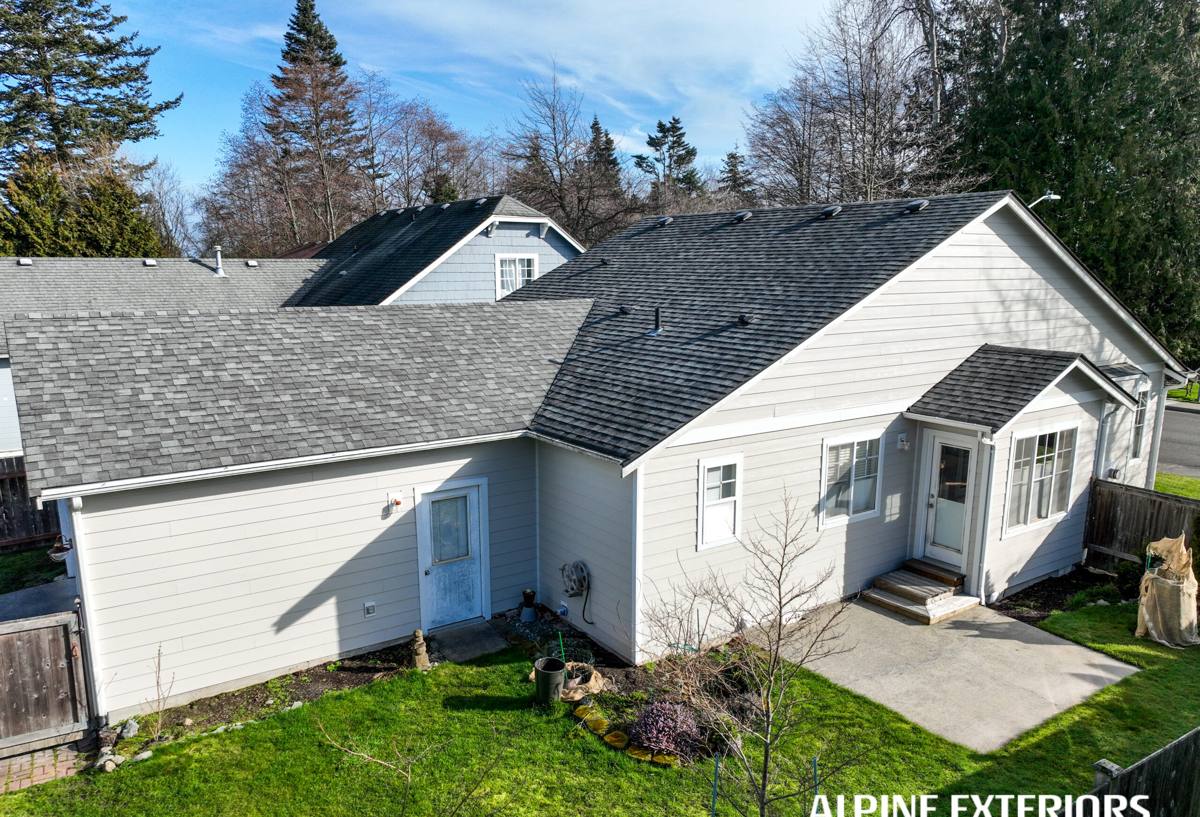
The Climate Factors That Wear on a Roof Here
Salt Air and Coastal Corrosion
Proximity to Birch Bay's shoreline means airborne salt is a constant, low-level factor on exterior metal — fasteners, flashing, gutters, and panel edges all take slow corrosive exposure over the years. It's rarely dramatic; it shows up as rust bleed at fastener heads, pitting on lower-grade coatings, or corrosion starting at cut edges that weren't sealed. The fix isn't avoiding metal roofing — it's choosing coatings and fastener grades built for coastal exposure and making sure every cut edge and penetration is treated, not just the flat panel field.
Driving Rain
Storms coming off the water push rain sideways, not just straight down. That matters because a lot of roofing failures aren't from water landing on the roof — they're from wind-driven rain finding its way under laps, around vents, and behind poorly lapped flashing. A roof that would be fine in a calmer inland location can leak here if the underlayment and flashing details weren't built to handle rain moving horizontally as well as down.
A Long Moss Season
Mild, wet winters and shaded lots mean moss has a long growing window in this area. On a metal roof, moss itself isn't usually the destructive force it can be on shingles — but moss and organic debris holding moisture against panel seams, fasteners, or valleys accelerates corrosion and can trap water against flashing. Roof orientation, tree cover, and how much shade a particular lot gets all factor into how much moss management a homeowner should expect to do.
What a Correctly Installed Metal Roof Includes
A metal roof is only as good as the parts of it you don't see once it's done. The panels get the attention because they're visible, but most of the failures we get called out to inspect trace back to details underneath or around them.
- Underlayment rated for the fastener and panel system being used, lapped correctly for the roof's actual water flow direction — not just downhill, but accounting for wind-driven rain
- Fasteners and clips matched in metal type to the panel, to avoid galvanic corrosion between dissimilar metals
- Flashing at every valley, wall intersection, chimney, and vent penetration — formed and sealed for this climate, not just caulked
- Proper panel overlap and end laps sized for the pitch and exposure of the specific roof plane
- Ventilation that lets the roof deck dry out, since trapped moisture under a metal roof causes rot even when the metal itself is performing fine
- Ice-and-water shield or equivalent protection at eaves, valleys, and low-slope transitions where wind-driven rain concentrates
Skipping any one of these doesn't usually cause an immediate problem. It shows up two, five, or ten years later as a leak that looks like it came from nowhere, when really it came from a detail that was rushed or skipped at install.
Panel Types: What Fits a Coastal Whatcom County Roof
Not every metal roofing system is the right fit for every home. The table below is a general comparison of the two main categories homeowners in this area choose between — it's a starting point for a conversation, not a rule that applies to every roof.
| Factor | Standing Seam | Exposed-Fastener Panel |
|---|---|---|
| Fastener exposure | Concealed, clipped underneath panels | Fasteners penetrate the panel face directly |
| Coastal corrosion risk | Lower — fewer exposed penetration points | Higher — exposed fasteners and washers wear faster in salt air |
| Maintenance over time | Minimal; mainly sealant checks at flashing | Fastener washers typically need checking/replacing periodically |
| Upfront cost | Higher material and labor cost | More affordable upfront |
| Best fit | Long-term ownership, full sun/rain exposure, waterfront-adjacent lots | Outbuildings, budget-driven projects, shorter ownership horizon |
We'll tell you honestly which one makes sense for a given roof and budget rather than defaulting to whichever is easier to sell. On a home closer to the water with more direct wind-driven rain exposure, the reduced number of exposed penetrations on a standing seam system is usually worth the added cost over the life of the roof.
How Our Process Works
For homeowners in the Lynden area, the process looks like this from first call to final walkthrough:
- On-site assessment — we look at the existing roof, deck condition, ventilation, tree cover, and how the specific roof planes are exposed to wind and rain direction.
- Honest scope and estimate — what needs to happen, what it costs, and what the trade-offs are between panel systems for that specific home.
- Tear-off and deck inspection — we don't cover over rotten or compromised decking; if we find it, we'll show you before covering it up.
- Underlayment and flashing first — the parts that determine whether the roof leaks get installed and checked before a single panel goes down.
- Panel installation — fastener spacing, lap direction, and clip attachment done to the manufacturer's coastal-exposure specifications, not just standard spec.
- Final walkthrough — we go over what was done, what maintenance to expect, and what's under warranty.
Why a Crew That Already Works This Area Matters
A lot of what makes a metal roof succeed or fail here isn't in a manual — it's judgment built from seeing how roofs in this specific area actually age. A crew that already works Birch Bay and the surrounding Whatcom County communities has seen where wind-driven rain tends to find weak details, which flashing methods actually hold up against sustained salt exposure, and how much moss and shade management a given lot realistically needs. That's different from following a spec sheet written for a generic climate.
There's also a practical side: local crews know local permitting expectations, don't have to travel far for warranty callbacks, and have a reputation in the community that outlasts any single job. When a roofing crew is driving in from far outside the area, warranty follow-up and honest long-term advice tend to get harder to count on.
Maintenance That Actually Matters for This Climate
Metal roofing is genuinely low-maintenance compared to most other roofing materials, but "low-maintenance" isn't "no-maintenance" in a salt-air, high-moss environment. A short annual routine goes a long way:
- Clear moss, needles, and debris from valleys and low-slope areas where they tend to collect and hold moisture
- Check gutters and downspouts for buildup that can back water up under eave flashing
- Look at exposed fasteners (on exposed-fastener systems) for early rust or loosening
- Trim back overhanging branches that keep sections of roof shaded and damp longer than the rest
- Have flashing and sealant at penetrations checked every few years, since sealant is the one component that ages faster than the metal around it
Signs It's Time to Replace Rather Than Repair
Not every roof issue means a full replacement, but a few signs point that direction: rust that's progressed past surface staining into pitting or thinning metal, repeated leaks at the same location despite repairs, fastener holes that have worked loose across multiple areas of the roof, or a deck underneath that's showing rot when accessed. A straightforward repair is the right call when the underlying deck and flashing are sound and the issue is localized — replacement makes more sense when the problems are spread across the roof or point to a systemic installation issue underneath.
If you're weighing a metal roof for a home in the Lynden area or anywhere around Birch Bay, we're happy to come take a look and give you a straight answer — no pressure, no upsell, just what your roof actually needs. Use the form below to request a free estimate.