 Birch Bay Siding
 Roof Repair Built for Lynden's Weather, Not a National Checklist
Lynden sits inland from Birch Bay but still catches the same weather system that moves off the Strait of Georgia and Puget Sound — long stretches of driving rain, damp marine air, and short winter days that never quite dry a roof out before the next front arrives. Add in the shade from mature trees common on Whatcom County lots, and you get roofs that hold moisture longer than roofs fifty miles inland. Roof repair here isn't just patching a leak; it's understanding why that spot failed in the first place and whether the surrounding roof is heading the same direction.
We work on homes throughout the Birch Bay and Lynden area regularly, which matters more than it sounds. A crew that only sees a roof once knows the symptom. A crew that works this region every week recognizes the pattern — where moss builds up first, which flashing details fail under sustained rain, and which repairs are quick fixes versus which ones are the first sign of a bigger problem coming.
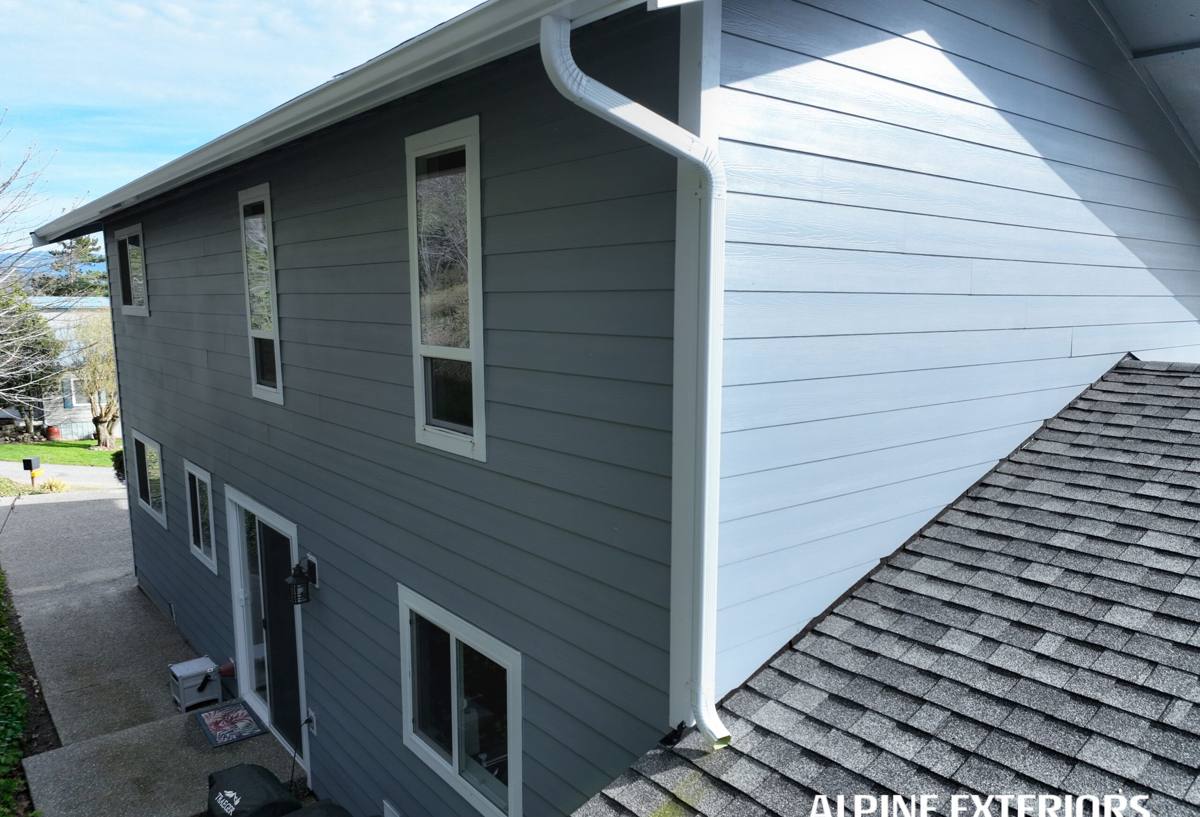
Why Roofs in This Area Fail the Way They Do
Moss and Organic Growth
Whatcom County's moss season runs long — realistically most of the fall, winter, and spring. Moss isn't just cosmetic. It holds water directly against shingles, roots into the granule surface, and lifts shingle edges enough for wind-driven rain to get underneath. On north-facing slopes and anywhere a roof sits under tree cover, moss can take hold within a couple of seasons of the last cleaning.
Driving Rain and Wind-Driven Moisture
Storms coming off the water don't just fall straight down — wind pushes rain sideways, up under shingle tabs, and into any gap in flashing that would stay dry in a calmer climate. This is why so many Lynden-area leaks trace back to flashing and transition points rather than the open field of the roof itself.
Salt-Influenced Air
Birch Bay's proximity to saltwater means the air carrying moisture inland also carries salt content that accelerates corrosion on exposed metal — nail heads, flashing, vent boots, and gutter hardware. A fastener that would last two decades in a dry inland climate can start rusting and losing its seal well before that here.
Temperature Swings and Freeze-Thaw
Whatcom County winters aren't brutally cold, but they do dip below freezing often enough that trapped moisture in a roof deck or underlayment goes through repeated freeze-thaw cycles. That cycle is what turns a small, contained leak into a soft spot in the decking if it goes unaddressed for a season or two.
What a Correct Roof Repair Actually Involves
A roof repair that holds up in this climate has to address the cause, not just cover the symptom. Here's what we look at on every repair call in the Lynden area:
| Inspection Point | What We're Checking | Why It Matters Here |
|---|---|---|
| Shingle field around the leak | Granule loss, curling, cracking, moss rooting | Shows whether the leak is isolated or part of general wear |
| Flashing (chimney, valleys, walls) | Rust, lifted edges, failed sealant | Most common leak source under wind-driven rain |
| Roof deck underneath | Soft spots, staining, delamination | Confirms whether repair or deck replacement is needed |
| Vent boots and penetrations | Cracked rubber collars, loose fasteners | Rubber degrades faster with sustained damp exposure |
| Gutters and drainage path | Clogs, improper pitch, overflow staining | Backed-up water is a leading cause of edge rot |
| Attic or interior access | Moisture staining, insulation condition | Tells us how long the leak has been active |
Skipping any of these steps is how a "repair" ends up being a return visit six months later. We don't quote a fix until we've traced the actual path water is taking — surface leaks and deck leaks require different repairs, and guessing wastes the homeowner's money.
Common Repairs We Handle in the Lynden Area
- Flashing replacement — chimney, wall, skylight, and valley flashing that's corroded or come loose from wind and moisture cycling
- Shingle replacement — spot-replacing damaged or wind-lifted shingles to match existing coverage
- Moss and debris removal — clearing growth and buildup without damaging granules, followed by treatment to slow regrowth
- Vent boot and penetration reseals — replacing cracked rubber collars around plumbing and roof vents
- Deck repair — addressing soft or rotted decking discovered under a leak before it spreads further
- Gutter and drainage correction — fixing pitch or clog issues that are pushing water back under the roof edge
- Ridge and hip repair — resealing or replacing cap shingles that take the brunt of wind exposure
Our Process, Start to Finish
1. On-Site Inspection
We walk the roof and check the attic or interior access point where the leak is showing. We're looking for the actual entry point, which is often several feet from where the water stain appears inside.
2. Honest Diagnosis
We explain what we found in plain terms — what's causing the issue, what it takes to fix it correctly, and whether it's a contained repair or a sign of broader wear that's worth planning for. We're not going to invent urgency where there isn't any, and we're not going to downplay a deck issue to make a repair sound smaller than it is.
3. Written Estimate
You get a clear scope and price before any work starts. No surprise add-ons once we're on the roof unless we find something that genuinely wasn't visible from the ground or attic — and if that happens, we stop and talk to you first.
4. The Repair
We match materials to your existing roofing where possible, use fasteners and flashing rated for coastal moisture and salt exposure, and follow manufacturer installation specs so any remaining product warranty stays intact.
5. Cleanup and Walkthrough
We clear debris, check gutters for anything that fell during the repair, and walk you through what was done so you know exactly what changed on your roof.
Repair or Replace? How We Help You Decide
Not every roof call ends in a repair, and not every roof call needs a full replacement either. The honest answer depends on a few factors:
- Age of the roof — a repair on a roof with several years of life left is a good investment; the same repair on a roof already near the end of its expected lifespan may just be delaying a bigger cost
- Extent of deck damage — isolated soft spots can be cut out and replaced; widespread rot usually points toward a larger project
- How many prior repairs — a roof that's had several patch jobs in different spots is often telling you it's reaching the end of its service life
- Moss and growth history — heavy, repeated moss buildup accelerates wear regardless of the roof's age on paper
We'll give you our honest read on which category your roof falls into. If a repair is the right call, that's what we'll recommend and price. If we see signs pointing toward replacement, we'll tell you why — not to upsell, but because a repair on a roof that's structurally past its point doesn't hold and just costs you twice.
Seasonal Timing for Roof Repair in Whatcom County
Roof leaks tend to get discovered during or right after a heavy rain event, which is often the worst time to actually do the repair work — wet shingles and decking don't seal properly, and safety on a soaked roof is a real concern. Where the situation allows it, we prefer to make a temporary weatherproof measure to stop active water intrusion, then schedule the full repair for the next dry window. Late spring through early fall generally gives the most reliable stretch of dry days in this area, though we handle urgent leak calls year-round when a home needs it.
What to Check Before You Call a Roofer
A little homeowner-side observation helps us diagnose faster and can help you catch a problem before it grows:
- Check your attic or ceiling for new stains, especially after a heavy storm
- Look at your gutters from the ground for visible moss clumps or granules collecting in the trough
- Note whether any interior leak is constant or only shows up during wind-driven rain — that detail helps narrow down flashing versus field leaks
- Check for daylight visible through the attic near roof penetrations if you can safely access it
- Watch for shingle granules collecting at downspout outlets, a sign of accelerating wear
Why Local Experience on This Type of Repair Matters
Roof repair looks straightforward from the ground, but the details that make a repair last in Birch Bay and Lynden's climate are specific to this region — salt-tolerant fasteners, flashing details sized for wind-driven rain rather than straight-down rainfall, and moss treatment that accounts for how long the growing season actually runs here. A crew that mostly works drier inland climates can still do competent work, but they're often applying general practices to a roof that needs regionally specific answers. We work these conditions consistently, which means fewer callbacks and repairs that are built to hold through an actual Whatcom County winter, not just a mild one.
Get a Free, No-Pressure Estimate
If you're dealing with a leak, visible moss buildup, or damage from a recent storm, we're happy to take a look and give you a straight answer on what it needs. Fill out the form below to schedule a free roof repair estimate for your Lynden-area home — no pressure, no obligation, just an honest assessment.