 Birch Bay Siding
 Storm Damage Roof Repair Built for Lynden's Weather
Lynden sits inland from the water but still catches the same weather patterns that move through the rest of Whatcom County: salt-tinged marine air, wind-driven rain that comes in sideways during winter storm systems, and a moss season that runs long and damp for much of the year. A roof that takes a hit in one of those storms doesn't always show it plainly from the ground. Missing shingles are obvious. A cracked seal, a lifted flashing edge, or a bruised shingle mat often isn't, and those are exactly the kinds of damage that turn into a slow interior leak months later if nobody catches them.
This page covers storm damage roof repair specifically for Lynden homes — what to look for after a wind or rain event, what a correct repair actually involves, how we document damage for insurance purposes, and why it matters to hire a crew that's done this kind of repair work in this specific area before.
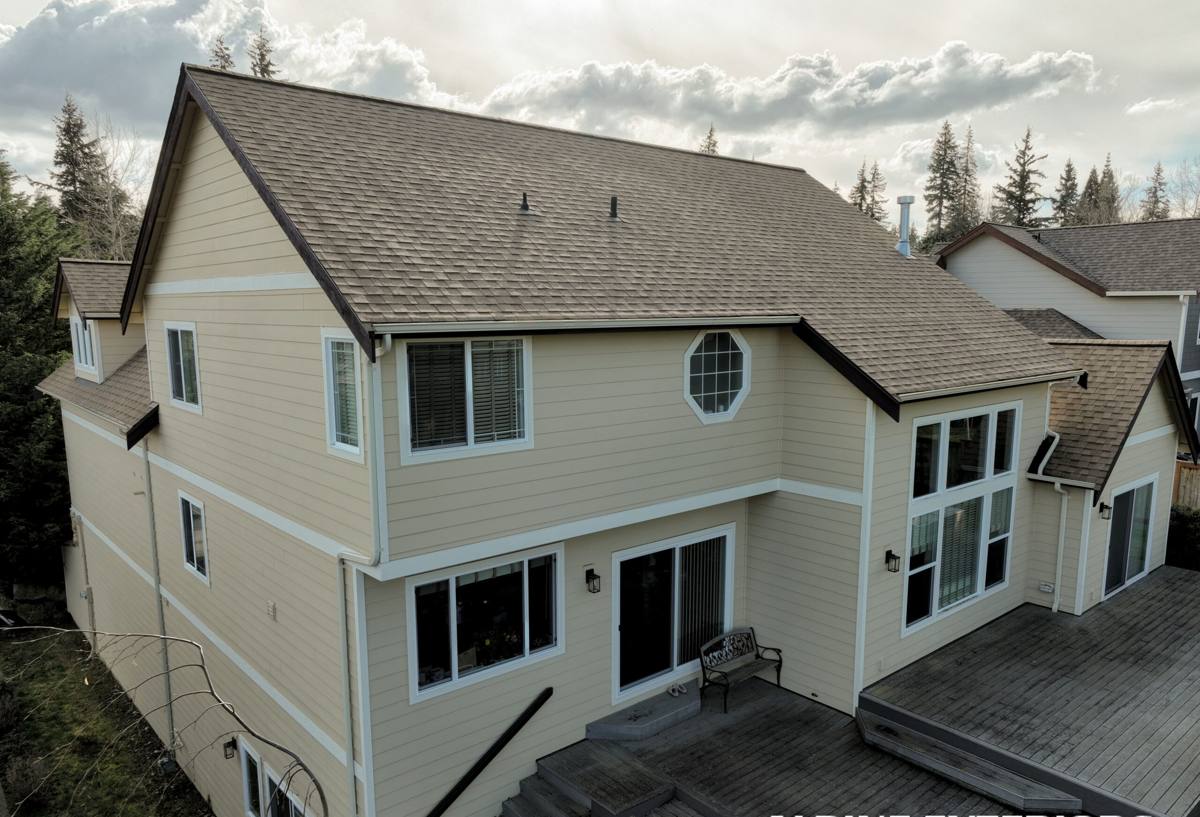
What Storm Damage Actually Looks Like in Lynden
Not all storm damage announces itself. Some of it is visible immediately after a bad windstorm; some of it only shows up as a stain on a ceiling weeks later once enough water has worked its way through. Understanding the difference matters, because waiting for the obvious signs usually means the damage has already spread past the point of a simple repair.
Wind Damage
Sustained or gusting wind can lift shingle tabs, break the sealant bond between shingle layers, or tear shingles off entirely. Even when shingles stay in place, wind can crack the mat underneath the surface granules, which weakens the shingle's ability to shed water even though it still looks intact from a distance.
Wind-Driven Rain Intrusion
Rain that's pushed sideways by wind behaves differently than rain falling straight down. It gets forced up under shingle edges, into gaps at flashing, and through any seam that was sealed for vertical water flow but never tested against lateral pressure. This is one of the more common ways a Lynden roof develops a slow leak without any single obvious point of failure.
Impact Damage
Falling branches and wind-thrown debris are a real factor here given how many mature trees border properties throughout the area. Impact damage can range from an obviously punctured shingle to a bruised spot that only shows up on close inspection, and bruised shingles are notorious for looking fine at first while losing their waterproofing integrity underneath.
Flashing and Seal Failure
Storms put the most stress on the weakest points of a roof, which are almost always the flashing and sealed transitions rather than the open field of shingles. Valleys, chimney flashing, vent boots, and wall-to-roof intersections are where wind uplift and driving rain find existing weaknesses and turn them into active leaks.
Warning Signs Worth Checking After a Storm
- Shingles missing, torn, curled, or visibly lifted at the edges
- Granules collecting in gutters or at downspout outlets, beyond normal gradual wear
- Dented, cracked, or bent flashing around chimneys, vents, or skylights
- Soft or spongy spots on the roof surface when walked, which can indicate deck saturation
- New water staining on interior ceilings or attic framing, especially near valleys
- Debris, branches, or moss buildup pooling in valleys or along the eaves
Any one of these on its own doesn't always mean a major problem, but it's worth a professional look rather than waiting to see if it gets worse on its own.
What a Correct Storm Damage Repair Involves
A rushed storm repair patches the visible symptom and moves on. A correct one treats the damaged area as part of the larger roof system and checks for what the storm might have loosened or weakened nearby, not just the spot that's obviously broken.
Full Inspection Before Any Repair Work
We inspect the entire roof plane, not just the damaged section, since wind and impact damage often has a secondary effect on shingles or flashing nearby that isn't damaged badly enough to be visible yet. We also check the attic side when accessible, because interior staining tells you things the roof surface alone won't.
Matching Materials, Not Just Patching
Repairs should use shingles and flashing that match the existing roof in profile, weight, and where reasonably possible, color, rather than whatever's on hand. A mismatched patch is a cosmetic problem today and can become a performance problem if the replacement material doesn't seal or weather the same way as what's already there.
Underlayment and Deck Check at the Repair Site
Any area where water has intruded gets checked down to the underlayment, and to the deck itself if there's evidence of saturation. Replacing shingles over a compromised deck or soaked underlayment just delays the same failure rather than fixing it.
Flashing Re-Integration
Where flashing is involved, the repair needs to be properly lapped and integrated with the surrounding underlayment and shingle courses, not simply caulked at the edges. Caulk is a short-term seal, not a substitute for correctly lapped flashing, and relying on it is one of the more common reasons storm repairs fail again in the next season.
Repair vs. Full Replacement: How We Make That Call
| Factor | Favors Repair | Favors Replacement |
|---|---|---|
| Extent of damage | Isolated to one section or slope | Spread across multiple roof planes |
| Age of existing roof | Roof is well within its expected lifespan | Roof is already near end of life |
| Deck condition | Deck is dry and sound at the damage site | Widespread deck rot or saturation found |
| Shingle availability | Matching shingles are still available | Discontinued product with no close match |
| Storm severity | Isolated wind or impact event | Repeated storm cycles with cumulative damage |
An honest contractor will tell you plainly when a repair is the right call and when it isn't, rather than defaulting to whichever option is more profitable. Most storm damage on a roof that's otherwise in reasonable shape is a legitimate repair, not a reason to replace the whole thing.
Insurance Documentation Done Right
Storm damage repair often runs alongside a homeowner's insurance claim, and how the damage gets documented affects how smoothly that claim goes. We photograph and describe the damage in enough detail to support a claim, including the likely cause, before any repair work begins that would remove the evidence.
- Dated, detailed photos of the damage from multiple angles before repair starts
- A written description of what happened and the likely storm event responsible
- A clear scope of repair work tied to the documented damage, not a padded estimate
- Availability to speak with your insurance adjuster directly if questions come up
We're not an insurance company and don't promise a specific claim outcome, but we do make sure the documentation on our end holds up and doesn't create unnecessary friction in the process.
How Our Storm Damage Repair Process Works
- Prompt inspection: We look at storm-damaged roofs quickly, since a delayed inspection can mean more water intrusion in the meantime.
- Documentation: We photograph and record the damage before touching anything, in a form that supports an insurance claim if you're filing one.
- Written scope and estimate: You get a clear breakdown of what's damaged, what needs to be repaired or replaced, and what it costs — not a vague verbal number.
- Temporary protection if needed: If there's active water intrusion, we can tarp or otherwise protect the area while repair materials or approvals are pending.
- Repair work: Matching materials go in with proper flashing integration and underlayment attention, not just a surface patch.
- Final walkthrough: We review the completed repair with you and confirm the area is fully sealed before calling the job done.
Why Hiring a Crew That Already Works in Lynden Matters
A crew with regular experience repairing storm damage around Lynden already knows how wind-driven rain finds its way through improperly integrated flashing here, how quickly a bruised or cracked shingle can turn into an active leak once the wet season sets in, and which roof orientations tend to hold moss and moisture longest through the winter. That's the kind of knowledge that shows up in judgment calls during a repair, not just in the finished product.
It also matters for follow-through. Storm damage repair sometimes needs a second look after the next heavy rain to confirm everything held, and a contractor with an established, ongoing presence in the area is the one you can actually reach if that happens.
A Practical Checklist Before You Choose a Storm Repair Contractor
- Do they inspect the full roof, not just the obviously damaged section?
- Do they document damage thoroughly enough to support an insurance claim?
- Does the estimate specify matching materials and flashing scope, not just "patch and seal"?
- Do they carry current WA contractor licensing, liability insurance, and workers' compensation?
- Can they respond promptly, especially if there's active water intrusion?
- Do they separate their own workmanship warranty from manufacturer material warranty coverage?
If a recent storm has left your Lynden roof with missing shingles, visible damage, or a leak you can't quite trace, we're glad to come take an honest look and put together a clear, written estimate — whether or not you end up filing an insurance claim. Use the form below to request a free, no-pressure estimate.