 Birch Bay Siding
 Roof Repair for Marietta Homes Near Birch Bay
Marietta sits close enough to the water that salt air is part of daily life, and that changes how a roof ages. Add Whatcom County's long wet season and the moss that comes with it, and you've got a combination that wears through roofing faster than most manufacturers' literature accounts for. When a Marietta homeowner calls us about a leak, a soft spot, or missing shingles, we're not guessing at what's going on up there — we've seen the same failure patterns on roofs throughout this stretch of coastline for years.
This page is about one thing: roof repair, done right, for homes in and around Marietta. Not a full tear-off, not a sales pitch for a new roof you don't need yet — just an honest look at what repair work actually involves here, and why it matters to hire a crew that already understands this specific corner of Whatcom County.
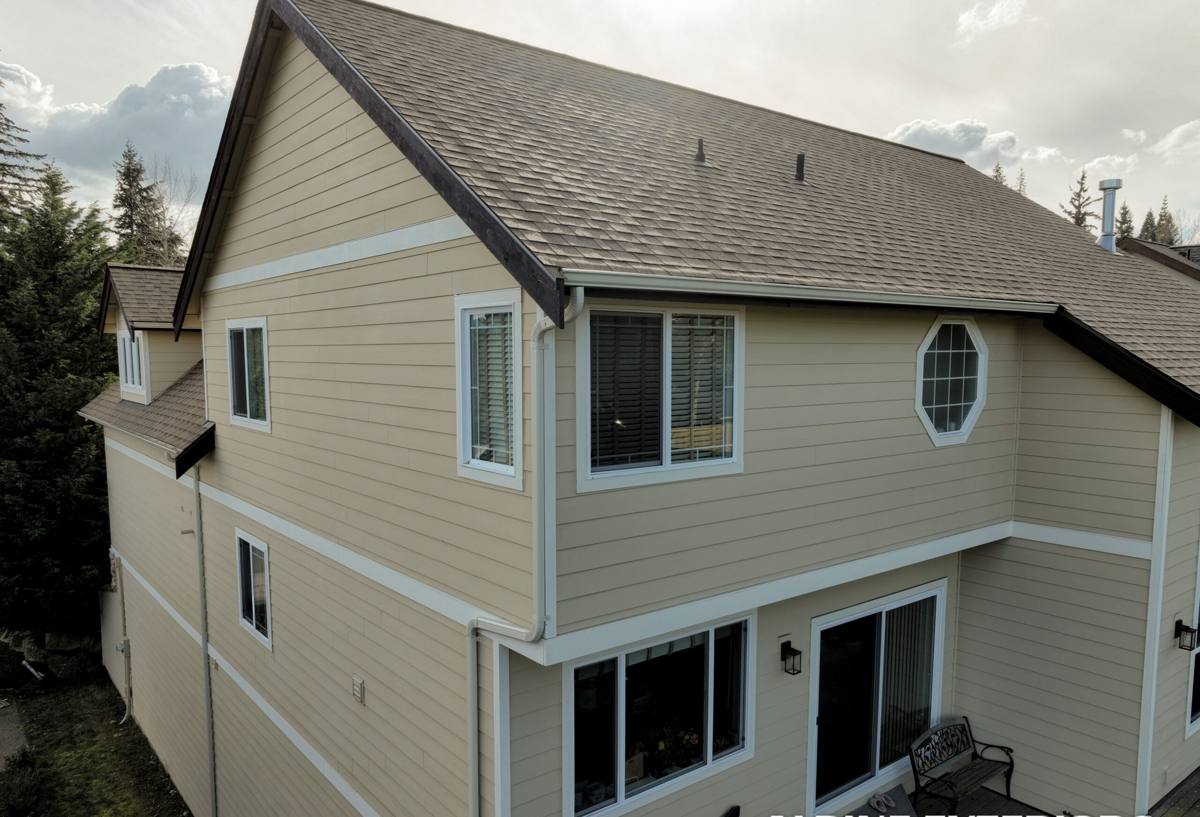
What Marietta's Climate Actually Does to a Roof
Every coastal roof takes abuse, but the specific mix matters. Marietta gets three things working against it at once:
- Salt air corrosion — metal flashing, fasteners, and gutter hardware corrode faster near the water. A galvanized nail that would last decades inland can start weeping rust stains within a handful of years here.
- Driving rain — wind off the water doesn't just drop rain straight down, it pushes it sideways and up under laps, ridge caps, and flashing that would stay dry in a calmer climate. Roofs here need details built for wind-driven water, not just gravity.
- A long moss season — cool, damp, shaded roof sections in this region can stay wet for months at a stretch. Moss and algae take hold, and once established they hold moisture against the roofing material and work their way under shingle tabs and into seams.
None of these alone is unusual for Western Washington. Together, and sustained for most of the year, they're why roofs in Marietta often show wear in different spots and on a different timeline than roofs even twenty miles inland.
Where We Typically Find Trouble
On repair calls in this area, the damage tends to cluster in predictable places:
- Valleys and low-slope sections where moss mats hold water against the roofing surface
- Flashing around chimneys, vents, and skylights where salt-air corrosion has thinned metal or broken the seal
- Eaves and ridge caps exposed to wind-driven rain, where laps and fasteners take the brunt of the weather
- North-facing slopes that stay shaded and damp longest, accelerating moss and granule loss
Signs a Marietta Roof Needs Repair, Not Just a Look
Most roof problems don't announce themselves with a dramatic leak on day one. They show up as smaller signals first, and catching them early is usually the difference between a repair bill and a much bigger one.
- Dark streaking or thick moss growth, especially on shaded or north-facing slopes
- Granules collecting in gutters or at downspout outlets, a sign shingles are wearing thin
- Soft or spongy spots when walked on, which usually mean the decking underneath has taken on moisture
- Rust staining or visible corrosion at flashing, vents, or fastener heads
- Water stains on interior ceilings, especially after a windy rainstorm rather than a calm one
- Curling, cracked, or lifted shingle tabs along ridges and edges
- Daylight visible through the roof deck from inside the attic
If you're seeing any of these, it's worth having someone look before the next big storm rolls through, not after.
What a Correct Repair Actually Involves
A lasting roof repair is not just swapping out the shingles that look damaged. Here's what we consider a complete job:
1. Find the Real Source, Not Just the Symptom
Water travels. A stain on your ceiling in one room can trace back to a flashing failure several feet away, because water follows the roof deck and rafters before it finds a way through drywall. We trace leaks back to their actual entry point before we start any repair — patching the spot where water showed up inside, without finding where it got in, is how the same leak comes back a year later.
2. Check What's Underneath
Once shingles are pulled back, we look at the decking, underlayment, and any existing flashing. Wet decking that's gone soft needs to be replaced, not covered over — roofing material installed over compromised decking won't hold, no matter how well the surface work is done. This step is where a repair either gets done right or gets done fast, and those aren't always the same thing.
3. Match Materials and Method to the Original Roof
Repairs should blend into the existing roofing system, both in material and in how they're integrated with surrounding courses. Mismatched shingle profiles, wrong nailing patterns, or flashing that isn't properly woven into the existing laps are common shortcuts that lead to repeat leaks — they may look fine from the ground but fail at the first real windstorm.
4. Rebuild Flashing and Seals to Handle Wind-Driven Rain
Given Marietta's exposure, we pay particular attention to flashing details — step flashing at walls, counter-flashing at chimneys, and ridge and hip caps sealed against wind-driven water rather than just vertical rainfall. This is where a lot of lower-cost repairs fall short, because it's easy to replace shingles and skip re-sealing the flashing underneath them.
5. Address Moss and Growth, Not Just Cover It
If moss or algae contributed to the failure, we clean the affected area properly rather than shingling over it. Roofing installed over live moss traps moisture underneath and shortens the life of the repair, sometimes dramatically.
Repair vs. Replacement: How We Help You Decide
Not every roof problem needs a full replacement, and not every roof problem should be patched indefinitely either. We walk this decision with you honestly, based on a few practical factors:
| Factor | Leans Toward Repair | Leans Toward Replacement |
|---|---|---|
| Age of roofing material | Under roughly two-thirds of its expected lifespan | Near or past its expected lifespan |
| Extent of damage | Localized — one section, one leak source | Spread across multiple slopes or recurring in several spots |
| Decking condition | Solid, dry, sound underneath | Widespread soft spots or rot |
| Moss/algae history | First occurrence, caught early | Long-term growth with granule loss and material breakdown |
| Flashing condition | Isolated corrosion or failure | Corrosion throughout, especially at multiple penetrations |
If a roof is genuinely a repair candidate, we'll tell you that — a repair that's done correctly can add years of reliable service. If the damage points to something bigger, we'll explain exactly why, so the decision is yours to make with real information rather than a sales pitch either direction.
Our Process for a Marietta Roof Repair
- Inspection — We look at the roof from the surface and, where accessible, from the attic side, to understand both what's visible and what's happening at the deck level.
- Honest assessment — You get a clear explanation of what's causing the problem, what it will take to fix it, and whether repair or replacement makes more sense.
- Written estimate — Scope and cost factors laid out before any work begins, no surprises added midway through.
- The repair itself — Removal of damaged material, inspection and repair of decking, correct flashing integration, and matched roofing material installed to manufacturer specifications.
- Cleanup and walkthrough — Job site cleaned, work reviewed with you before we consider it finished.
Why It Matters to Hire a Crew That Already Works in This Area
Roof repair isn't one-size-fits-all, and a crew that mostly works dry-climate roofs or roofs without heavy salt exposure can miss the details that matter here. Working regularly in Marietta and the surrounding Birch Bay area means we already know:
- Which fastener and flashing materials hold up against salt air, and which corrode too fast to be worth using
- How to detail flashing and laps for wind-driven rain rather than just vertical rainfall
- Which roof orientations and slope types in this area are most prone to moss buildup, and how to treat them properly rather than just papering over the symptom
- Realistic timelines around this region's weather windows, so repairs get done in conditions that let materials seal and cure properly
That local knowledge doesn't show up as a line item on an invoice, but it shows up in how long the repair actually lasts.
A Note on Maintenance Between Repairs
A repaired roof still needs basic upkeep to get its full life out of the fix. A few habits go a long way in this climate:
- Keep gutters and downspouts clear so water isn't backing up under the roof edge
- Have moss and algae addressed early, before it spreads and works its way under shingle tabs
- Trim back overhanging branches that keep sections of the roof shaded and slow to dry
- Schedule a look after any unusually severe windstorm, even if nothing seems wrong from the ground
None of this requires a large investment of time, but it makes a real difference to how long a repair — and the roof around it — holds up against what this stretch of Whatcom County throws at it year after year.
If you're seeing signs of roof trouble at your Marietta home, or you just want an honest opinion on what condition your roof is really in, we're happy to take a look. Fill out the form below for a free, no-pressure estimate.