 Birch Bay Siding
 New-Construction Windows for Marietta Homes
Marietta sits in the same weather corridor as the rest of Birch Bay and the Whatcom County coastline — close enough to salt water that airborne salt reaches siding and window hardware, wet enough that driving rain off the Strait tests every seam around a window opening, and shaded enough in places that moss and algae get a long growing season on north-facing walls. When a house is being framed and the window openings are cut, that's the one chance to get the water management right before siding closes everything up. We install new-construction windows for builders, remodelers, and homeowners in Marietta who want that first install done correctly, not just quickly.
"New construction" windows are different from replacement windows in ways that matter a lot in this climate. They have a nailing flange (also called a nail fin) that gets integrated into the wall's water-resistive barrier during framing, rather than a flush pocket unit dropped into an existing opening. Done right, that flange becomes part of a layered flashing system that sheds water down and out, away from the framing, for the life of the house. Done wrong — even with an expensive window — it becomes a hidden leak path that doesn't show up until there's rot in the sheathing.
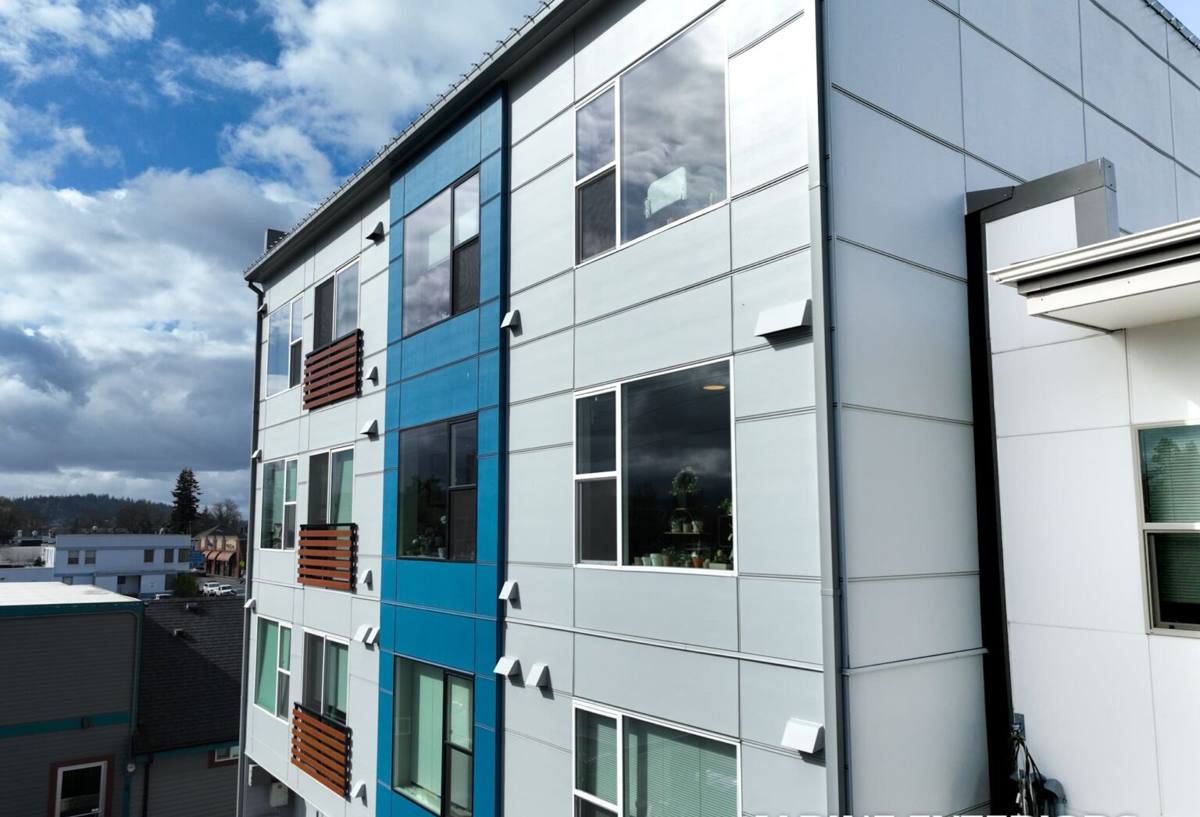
What Birch Bay and Marietta Weather Actually Does to a Window Opening
Homeowners often assume window failures are about the glass or the frame material. In our experience working this stretch of Whatcom County, most early window problems trace back to what happens around the window, not in it:
- Salt-laden air accelerates corrosion on unprotected fasteners, hinges, and lesser hardware — especially on west- and southwest-facing walls that catch onshore wind.
- Driving rain during winter storms pushes water sideways and even slightly upward against a wall, which is why flashing that only relies on gravity (a simple drip cap with no sill pan) tends to under-perform here.
- Long moss and algae season means any spot where water is allowed to sit — a poorly sloped sill, a shaded north corner — stays damp longer each year than it would inland, and organic growth follows.
- Temperature swings between damp mornings and afternoon sun cause repeated expansion and contraction at the window-to-wall joint, which is where sealants and flashing tape either hold up or slowly fail.
None of this means Marietta needs exotic materials. It means the installation details — sill pans, flashing sequence, and sealant selection — carry more weight here than they would in a drier inland climate.
What a Correct New-Construction Install Involves
Sill Pan and Flashing Sequence
Before a window ever goes into the rough opening, the sill should have a sloped, sealed pan — either a manufactured flexible flashing pan or a properly built-up sloped sill — so any water that does get behind the window has somewhere to go besides the framing below. Flashing tape at the jambs and head needs to be installed in the correct shingle-lap order (sill first, then jambs, then head) so every layer overlaps the one below it, the same principle as roof shingles. Skipping or reversing that order is the single most common defect we find when we're called in to fix someone else's leak.
Integration With the Water-Resistive Barrier
The window's nailing flange has to tie into the house wrap or building paper correctly, not just get taped over the top of it. On new builds we coordinate directly with the framing and siding sequence so the WRB, flashing, and window installation happen in the right order — this is much harder to fix correctly after siding is already on.
Fastening and Hardware
In a salt-air environment we use corrosion-resistant fasteners and hardware rated for coastal exposure, and we pay attention to how much flange is actually captured by fasteners versus just tucked under siding trim. A flange that's taped but under-fastened can still move in wind-driven rain events.
Sealant Selection and Joint Design
Not every gap should be sealed solid. Some joints need a sealant bead; others need to stay as a drainage gap so trapped moisture has an exit. Sealing everything airtight without a drainage path is a common shortcut that traps water instead of shedding it — it looks tidy on install day and causes problems two or three winters later.
Choosing Windows That Hold Up in This Climate
Frame material matters less than correct installation, but it's still worth choosing deliberately for a coastal, high-moisture area like Marietta.
| Frame Material | How It Performs Here | What to Watch |
|---|---|---|
| Vinyl | Handles moisture and salt exposure well; no corrosion risk; good value | Quality varies widely by manufacturer — reinforced frames hold up better in wind-driven rain |
| Fiberglass | Very stable in temperature swings and damp cycles; strong long-term option for exposed walls | Higher upfront cost than vinyl |
| Aluminum-clad wood | Attractive interior wood look with an exterior shell resisting weather | Cladding seams and interior wood need protection where any water intrusion could reach them |
| Bare wood | Traditional appearance | Requires the most diligent maintenance in a wet, salt-air climate — we're upfront about that trade-off before anyone commits to it |
Whatever frame material a homeowner or builder chooses, we also talk through glass packages — double or triple pane, low-E coatings, and gas fill — based on which walls of the house face prevailing wind and rain. A window on an exposed west wall in Marietta earns a better weatherstripping and glazing spec than one tucked on a sheltered side.
Our Process for New-Construction Window Installs
- Plan review and rough opening check — we confirm window sizes, orientation, and rough opening dimensions against the actual framing before ordering, so nothing gets force-fit on install day.
- Sill pan and flashing prep — sloped sill pans built or installed, flashing tape sequenced correctly before the window ever goes in.
- Window set and shim — units are set plumb, level, and square, shimmed at the correct load points so the frame doesn't rack over time.
- Flange integration with the WRB — head, jamb, and sill flashing tied into the house wrap in the correct overlap order.
- Fastening — corrosion-resistant fasteners driven per the manufacturer's pattern, not just "enough to hold it."
- Interior and exterior sealant — applied only where it should be, leaving drainage paths where they belong.
- Final check — operation, sightlines, and a walk-through so everyone can see the flashing detail before siding covers it up.
Working Alongside Builders and General Contractors
A lot of our Marietta new-construction work comes in as a subcontract on a build already underway, coordinating with a builder's schedule rather than running the whole project. That means showing up on the day the framing is ready for windows, communicating clearly about sequencing with the siding crew, and documenting the flashing details before they get covered — which matters for both warranty purposes and any future inspection. We treat that documentation step as part of the job, not an afterthought.
Common Mistakes We Fix or Prevent
Most of the repeat problems we see on coastal Whatcom County builds are avoidable with attention to a handful of details:
- Flashing tape applied in the wrong order (head before jambs, or jambs before sill), which defeats the shingle-lap drainage principle.
- No sloped sill pan — water sits against the bottom of the frame instead of draining out.
- Sealant used as the only water barrier instead of as a backup to proper flashing.
- Under-fastened flanges that shift slightly under wind load over the years.
- Standard fasteners used where corrosion-resistant hardware was warranted given proximity to salt water.
What Drives the Cost
Every new-construction window job in Marietta is priced around a few real factors, not a flat per-window rate:
| Factor | Why It Matters |
|---|---|
| Window count and size | Larger units and more openings mean more flashing detail work, not just more glass |
| Frame material and glass package | Vinyl, fiberglass, and clad-wood carry different material costs; upgraded glazing adds cost but pays off on exposed walls |
| Wall exposure | West- and southwest-facing walls exposed to driving rain justify more careful (and slightly more time-consuming) flashing detail |
| Coordination complexity | Working around an active framing and siding schedule takes more planning than a standalone install |
| Access and site conditions | Waterfront lots, slopes, and limited staging area can affect labor time |
We give straightforward, itemized estimates so a homeowner or builder can see what they're actually paying for — materials, flashing detail work, and labor — rather than one bundled number.
Why a Crew That Already Works Marietta Makes a Difference
Correct window flashing isn't exotic knowledge, but it is detail-sensitive, and the right details shift with the climate. A crew that installs windows in dry inland conditions and a crew that installs them a few hundred feet from salt water make different calls on sealant type, fastener choice, and how much drainage gap to leave — and both can be "correct" installers who simply haven't had to think about Birch Bay's specific combination of salt air, driving rain, and moss season. We work this area regularly, which means we're not guessing at how a wall assembly here holds up over five or ten winters — we've seen it. That local pattern recognition is worth more than a brand name on the window itself.
If you're planning new construction or a major addition in Marietta and want windows installed by a crew that treats the flashing detail as seriously as the window itself, we'd be glad to take a look at your plans and walk the site. Reach out for a free, no-pressure estimate — we'll give you a straight answer on scope, materials, and cost before any work begins.