 Birch Bay Siding
 Why Windows Take a Beating in the Nooksack Area
Homes in the Nooksack area near Birch Bay sit in one of the tougher window climates in Whatcom County. It's not one big weather event that wears out a window — it's the slow, steady combination of three things working on the same frame year-round: salt-laden air blowing off the water, wind-driven rain that hits siding and glass sideways instead of straight down, and a moss and algae season that runs longer here than almost anywhere else in the state.
Salt air is corrosive to hardware — hinges, cranks, locks, and screws — long before it does visible damage to the frame itself. Driving rain finds any gap in flashing or sealant and pushes water uphill and sideways, not just down. And moss doesn't just grow on roofs; it colonizes window sills, sash tracks, and the bottom corners of frames where moisture sits and never fully dries out between storms. Put those three together over a few Whatcom County winters and you get soft sills, fogged double-pane glass, sticking sashes, and drafts that no amount of caulk will fix.
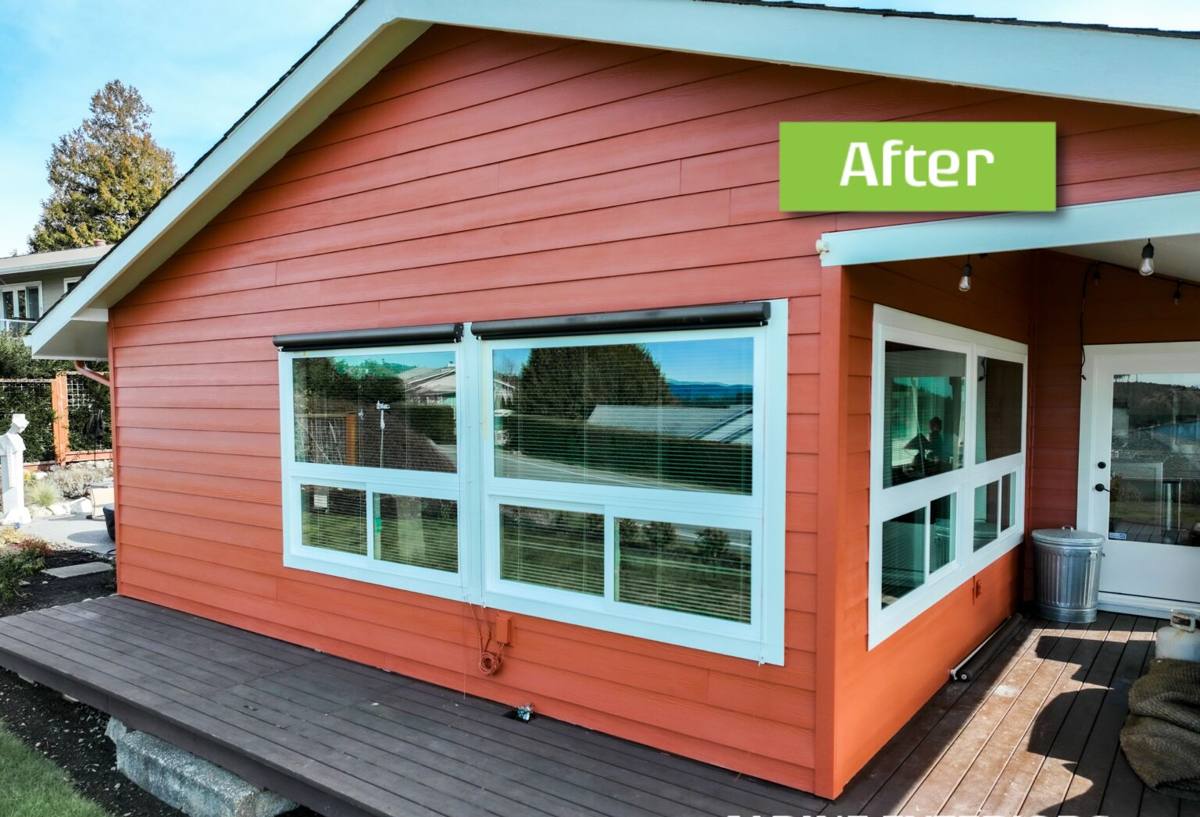
Signs Your Current Windows Are Losing That Fight
Most homeowners don't replace windows because they woke up one day and decided to — they replace them because the signs finally added up. Here's what we look for, and what you can check yourself before calling anyone:
- Fogging or a hazy film between the panes of double-glazed windows — this means the seal has failed and the gas fill (or plain trapped air) has been replaced by moist outside air
- Soft, spongy, or discolored wood at the bottom corners of the frame or sill
- Sashes that stick, drag, or won't stay up without a prop
- Visible moss, algae, or black staining collecting in the sill track or weep holes
- A noticeable draft near the frame edge on windy days, even with the window latched
- Condensation forming on the inside of the glass regularly during cold, damp stretches
- Rust or seizing on cranks, hinges, and locking hardware
Any one of these on its own might just need a repair. Several at once, especially on a window over 15-20 years old, usually means the unit has reached the end of what caulk and weatherstripping can fix.
What "Custom" Actually Means for This Job
"Custom windows" doesn't mean exotic shapes or premium upgrades you don't need — for most Nooksack-area homes it means the window is built to match the exact rough opening in your wall, rather than forcing your house to fit a stock size. Older homes in this area were often built before manufacturers standardized window dimensions, so openings can be an inch or two off from anything sold off the shelf. Custom sizing avoids the shortcuts that cause problems later: shimming a too-small window with excess framing, or worse, cutting a too-large opening down and disturbing siding and flashing that didn't need to be touched.
Custom also covers matching sightlines and grid patterns across a home's façade, matching a specific glass tint or obscure pattern for a bathroom, and choosing a frame color and finish that holds up against salt exposure rather than one that just looks good on day one. None of that is about upselling — it's about the window actually fitting and performing correctly for the specific house it's going into.
Retrofit vs. New-Construction Windows
There are two basic categories of replacement window, and picking the wrong one for the situation is a common source of future leaks:
- Retrofit (pocket) windows — installed into the existing frame, keeping the old frame in place. Faster, less disruptive to siding, and usually less expensive.
- New-construction (full-frame) windows — the old frame is removed entirely, exposing the rough opening down to the framing and weather barrier. More work, but it's the only way to actually inspect and fix what's behind the window.
We'll tell you honestly which one your situation calls for — see the comparison further down for when each makes sense.
Frame Material: What Actually Holds Up Here
Frame material matters more in a salt-air, high-moisture climate than it does in a dry inland location. Here's how the common options compare for a Nooksack-area install:
| Frame Material | Salt Air / Moisture Resistance | Maintenance | Typical Fit |
|---|---|---|---|
| Vinyl | Good — won't corrode or rot; UV-stable finishes hold color | Low — occasional cleaning of tracks | Most homes, best value |
| Fiberglass | Excellent — dimensionally stable, resists both moisture and salt exposure | Low | Homes wanting a longer-term, higher-end option |
| Wood (uncoated) | Poor in this climate without diligent upkeep — prone to rot and moss colonization at joints | High — regular painting/sealing required | Historic homes prioritizing original appearance |
| Wood-clad (aluminum or vinyl exterior) | Good — exterior shell protects the wood core from direct weather | Moderate — interior wood still needs occasional attention | Homes wanting a wood interior look with better weather protection |
| Aluminum | Fair — doesn't rot, but is a poor thermal performer and can show pitting near salt air over time without a marine-grade finish | Low | Less common for residential in this climate |
We don't install bare, uncoated wood frames on homes in this area as a matter of professional standard — not because wood is a bad material, but because the maintenance schedule needed to keep it ahead of this climate's moisture and moss cycle is more than most homeowners want to sign up for. If you want a wood look, wood-clad gets you there without that burden.
Full-Frame Replacement vs. Insert Replacement — When Each Makes Sense
This is one of the most important decisions in the job, and it's not a one-size-fits-all answer.
Insert (retrofit) replacement is the right call when the existing frame is structurally sound, square, and free of rot or water damage. It preserves your siding and trim, keeps the job faster and less messy, and costs less. Most windows we replace in this area that are less than 20-25 years old and haven't had a chronic leak qualify for this approach.
Full-frame replacement is worth the extra time and cost when there's any sign of water having gotten behind the old frame — soft wood, staining on interior trim, or a musty smell near the window. Given how often driving rain finds its way behind poorly flashed frames in this area, we open up the wall on any window with a history of leaking rather than installing a new unit over a wet or damaged opening. Installing a new window into a compromised opening just hides the problem for a few more years instead of fixing it.
Glass and Weatherproofing Details That Actually Matter Here
The glass package and the installation details around it matter as much as the frame material:
- Low-E coatings — help with year-round comfort and reduce fading from UV exposure, useful given how much natural light Whatcom County homes get even on overcast days
- Argon or krypton gas fill — improves insulation between panes; matters more here during the damp, raw stretches of winter than during summer
- Proper flashing integration — the window's flashing has to tie into the house's existing weather-resistive barrier correctly, lapped so water sheds outward and downward, not just caulked at the surface
- Sill pan flashing — a sloped, sealed pan under the window that gives any water that does get past the frame a path back outside instead of into the wall cavity
- Correct sealant selection — not all caulks or sealants are rated for constant salt-air and moisture exposure; using the wrong one is a common cause of early failure
These details are invisible once the job is finished, which is exactly why they're where corners get cut. A window can look perfect from inside the house and still leak within a year if the flashing behind it wasn't done correctly.
Our Process for a Nooksack-Area Window Job
- On-site assessment — we inspect existing frames, sills, and surrounding siding for hidden moisture damage before quoting anything
- Precise measurement — every opening is measured individually; we don't assume openings match each other even on the same wall
- Product selection — we walk through frame material, glass package, and grid/style options based on your home and budget, not a default upsell
- Tear-out — old units are removed carefully, with immediate inspection of the opening for rot or water staining
- Flashing and sill pan installation — done before the new window ever goes in, using materials suited to this climate
- Window installation — shimmed, leveled, and fastened per manufacturer spec, then sealed with climate-appropriate sealant
- Interior and exterior trim-out — finished to match existing trim wherever possible
- Final inspection and cleanup — operation checked on every window, site cleaned, old units hauled away
Why a Crew That Already Works the Nooksack Area Matters
Window installation quality depends heavily on understanding the specific conditions a house faces, and that's harder to get right from a general-purpose crew that doesn't spend regular time in this part of Whatcom County. A crew already familiar with Nooksack and Birch Bay-area homes knows which orientations take the worst wind-driven rain, how aggressively moss establishes itself in sill tracks here compared to drier parts of the county, and which older local homes tend to have out-of-square openings that need extra attention during measurement.
There's also a practical service argument: if a window ever needs a warranty adjustment, a hardware replacement, or a recheck of a seal, a crew based locally can get back out to your home without a half-day drive eating into the appointment. That matters more in a climate where problems tend to show up seasonally — after the first hard fall storms, or partway through a wet winter — rather than immediately after installation.
Keeping New Windows Performing Long-Term
A correctly installed custom window in this climate should need very little upkeep, but "very little" isn't "none." A short seasonal routine goes a long way:
- Clear moss and debris from sill tracks and weep holes at least once a year, ideally before winter storms start
- Rinse accumulated salt residue off frames and glass periodically, especially on wind-exposed walls
- Check that weep holes along the bottom of the frame are draining freely, not clogged with dirt or algae
- Lubricate cranks and hinges annually on operable windows to keep hardware from seizing
- Inspect exterior caulk lines yearly for cracking or separation and have any gaps resealed promptly
None of this is difficult, but skipping it is how a 20-30 year window ends up needing attention at year 12 instead.
Getting an Honest Quote
Every home's exposure is a little different — a wall facing prevailing wind and rain off the water wears differently than a sheltered side of the same house, and that can change our recommendation on frame material or installation approach even within a single project. We'd rather look at your specific windows and openings than quote off a phone description.
If you're seeing fogged glass, sticking sashes, moss buildup, or drafts on a home in the Nooksack area, we're happy to come take a look and give you a straight answer on what's actually needed — no pressure, no obligation. Use the form below to request a free estimate.