 Birch Bay Siding
 Windows in the Nooksack Area Take a Different Kind of Beating
Homes around Nooksack and the wider Birch Bay area sit close enough to Whatcom County's saltwater shoreline that airborne salt is a constant, low-grade stressor on anything metal, painted, or sealed. Add the region's long stretch of driving rain each fall and winter, plus a moss season that can run from October well into spring on north- and west-facing walls, and you have three separate forces working against a window's frame, seals, and hardware at the same time. None of these are dramatic events — no single storm does the damage. It's the accumulation, year after year, that eventually shows up as fogged glass, soft trim, or a window that won't latch true anymore.
A window replacement job done right in this area has to account for all three factors from the start, not just swap in a new unit and hope the old opening was sound. That's the difference between a window that looks good for a season and one that performs for twenty years.
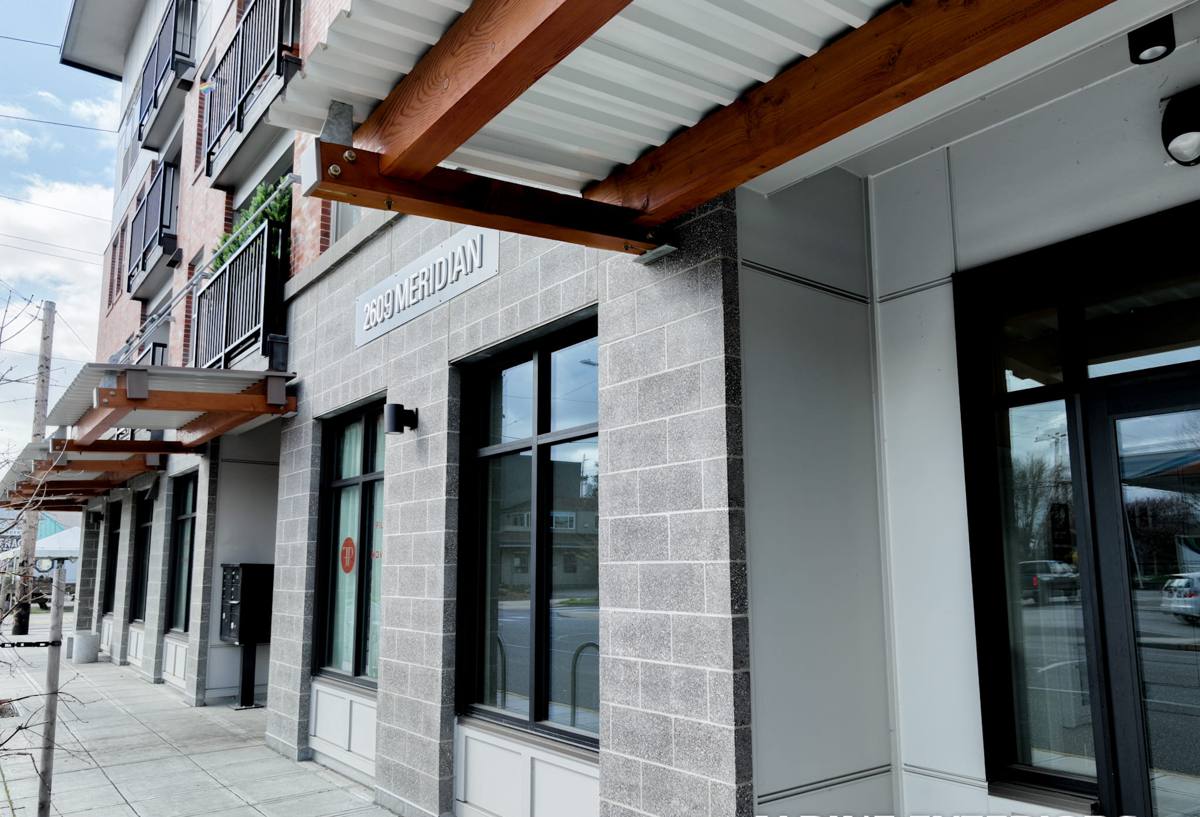
What Salt Air, Rain, and Moss Actually Do to a Window
Salt Air
Salt carried on the wind settles on hardware, weep holes, and any exposed fasteners. Over time it accelerates corrosion on lower-grade aluminum components and steel screws, and it can etch into unprotected finishes. Vinyl and fiberglass frames resist this better than bare aluminum, which is one reason we steer most Nooksack-area homeowners away from aluminum unless it's a high-grade, marine-rated product.
Driving Rain
Wind-driven rain doesn't just hit a window head-on — it gets pushed sideways and upward into gaps that a calmer climate would never test. This is almost entirely an installation issue, not a product issue. A window with excellent factory ratings will still leak if the flashing, sill pan, and sealant details around it aren't built to shed water that's moving at an angle.
Moss and Sustained Moisture
Moss itself doesn't attack a window directly, but it's a marker of a wall that stays damp longer than it should. Where moss builds up around a window opening — on trim, sills, or the siding just above and beside the frame — it holds moisture against the wood or substrate underneath. That sustained dampness is what eventually leads to soft trim, rot at the sill, and interior moisture staining, especially on older single-pane or early dual-pane windows that were never properly flashed.
Signs a Nooksack-Area Home Needs Window Replacement, Not Just a Repair
- Fogging or a cloudy haze between the panes of a dual-pane window — the seal has failed and the gas fill is gone
- Trim or sill wood that feels soft, spongy, or gives slightly when pressed
- A window that's hard to open, won't stay up, or doesn't latch flush anymore
- Visible daylight or a draft around the frame when the window is closed
- Persistent condensation on the inside of the glass in cold, wet weeks
- Chalky, pitted, or corroded hardware and hinges, especially on windows facing the water
- Paint or caulk around the frame that keeps failing no matter how often it's redone
One or two of these on a single window can sometimes be repaired. Several of them, or the same issues showing up across multiple windows on the same wall, usually means the window and its surrounding flashing have reached the end of their useful life together.
What a Correct Installation Actually Involves
The window unit itself is only part of the job. In a climate that pushes rain sideways and keeps moisture around longer than drier parts of the state, the installation details matter as much as the product.
Removing the Old Window Properly
We pull the old unit and inspect the rough opening before anything new goes in. This is where hidden rot, past water intrusion, or old flashing mistakes get found — and it's the point where they need to be fixed, not covered over.
Sill Pan and Flashing
A sloped sill pan directs any water that does get past the window out and away from the wall framing, rather than letting it pool at the sill. Flashing tape integrates with the home's weather-resistive barrier so water is shed in the correct order — over the top, never trapped underneath.
Sealing and Insulation
Low-expansion foam or backer rod and sealant fill the gap between the window frame and the rough opening without bowing the frame out of square. Exterior caulking around the trim is the last line of defense, not the only one — if that's the only thing keeping water out, the installation was done backward.
Finish Work
Trim, casing, and paint or caulk lines get finished cleanly so there are no open joints for wind-driven rain to find. On homes with moss buildup nearby, we'll flag areas where trimming back vegetation or improving drainage would help protect the new window's lifespan.
Choosing a Window Frame Material for This Climate
| Frame Material | How It Handles Salt Air | How It Handles Moisture | Maintenance |
|---|---|---|---|
| Vinyl | Doesn't corrode; color is consistent through the material | Good — won't rot; seams need to be well-fabricated | Low — occasional cleaning |
| Fiberglass | Excellent — very stable in coastal conditions | Excellent — dimensionally stable when wet or dry | Low |
| Wood-clad | Cladding protects the exterior; cut ends and joints need attention | Interior wood needs paint/finish maintained | Moderate to high |
| Standard Aluminum | Prone to corrosion and pitting near saltwater over time | Conducts cold, more condensation risk | Moderate |
We don't tell homeowners a material is wrong for their home — every one of these has a place. But for a property in the Nooksack/Birch Bay area exposed to salt air and sustained wet weather, vinyl and fiberglass consistently need less upkeep and hold up better long-term than standard aluminum, and that's the honest trade-off we'll walk through with you.
What Drives the Cost of a Window Replacement
| Factor | Why It Matters |
|---|---|
| Number and size of openings | More glass and larger units cost more in both material and labor |
| Frame material | Vinyl is typically the most budget-friendly; fiberglass and wood-clad cost more upfront |
| Condition of the rough opening | Hidden rot or old flashing failures found during removal add repair time |
| Glass package | Double vs. triple pane, low-E coatings, and gas fills affect both cost and performance |
| Access and site conditions | Second-story windows, tight side yards, or landscaping near the wall can add labor time |
We won't quote a job over the phone with any confidence — a proper estimate means a walk-around of the exterior and a look at each opening from inside and out. What we can say honestly upfront: budget windows with poor installation cost more in the long run once you factor in the repairs a leaking window eventually requires.
Our Process, Start to Finish
- Walkthrough and assessment — we look at each window from inside and out, note any signs of moisture or rot around the openings, and talk through what you actually need versus what you're being sold elsewhere
- Written estimate — clear pricing for the windows, installation, and any flashing or trim repair the rough openings need
- Scheduling — we work around Whatcom County's wetter months when possible, but when winter work is unavoidable we sequence it so openings aren't left exposed longer than necessary
- Removal and inspection — old units come out, rough openings get inspected before anything new goes in
- Installation — sill pan, flashing, insulation, and the new window, set square and sealed correctly
- Finish and walkthrough — trim, paint or caulk lines finished, and a final check with you before we consider the job done
Why It Matters That We Already Work in Nooksack
A crew that's already replaced windows on homes in this specific pocket of Whatcom County has seen how the salt air, rain patterns, and moss conditions here actually play out on real houses — not in a manufacturer's brochure. That means we're not guessing at flashing details or frame material recommendations; we've already seen what holds up and what doesn't in this exact environment. It also means shorter travel time for the estimate and the install, and a crew that isn't learning the local climate on your dime.
We treat every Nooksack-area home as its own situation. The right window and the right installation details for a place with a lot of moss and wet siding can look different from a more sheltered lot a mile inland, and we'll tell you which situation you're in rather than applying a one-size answer.
Questions Worth Asking Before You Hire Anyone
- Will you inspect the rough opening before installing, and what happens if you find rot or old water damage?
- What flashing and sill pan method do you use, and why?
- Are you licensed and insured to do this work in Washington?
- What's the warranty on the window itself, and separately, what's your warranty on the installation labor?
- Can you explain, in plain terms, why you're recommending one frame material over another for my home?
- Will the same crew that gives the estimate be doing the installation?
If a contractor can't answer the flashing and rough-opening questions clearly, that's worth noticing — it's usually where the difference between a window that lasts and one that leaks in three years actually comes from.
If your windows around Nooksack are fogging, drafting, or just showing their age, we're glad to come take a look. The estimate is free, there's no pressure, and you'll get a straight answer about what your home actually needs — just fill out the form below to get started.