 Birch Bay Siding
 Point Roberts Roofs Work Harder Than Most
Point Roberts sits on its own peninsula at the tip of Whatcom County, surrounded on three sides by saltwater and cut off from the rest of the county by land you can only reach through Canada. That geography is exactly why roofs out here age differently than roofs even a few miles inland. Salt-laden air off the water accelerates corrosion on fasteners, flashing, and any exposed metal. Wind-driven rain off the Strait doesn't just fall on a roof — it gets pushed sideways and upward under shingle edges and around penetrations that would stay dry in a calmer climate. And the long, wet Pacific Northwest shoulder seasons give moss and algae months at a time to take hold on anything north-facing or shaded by trees.
None of that means a roof in Point Roberts needs to be exotic or over-built. It means the details — underlayment choice, fastener material, ventilation, and how the edges and penetrations are flashed — matter more here than they would in a drier, calmer part of the state. A roof replacement done without accounting for that ends up needing repairs again in half the time it should have lasted.
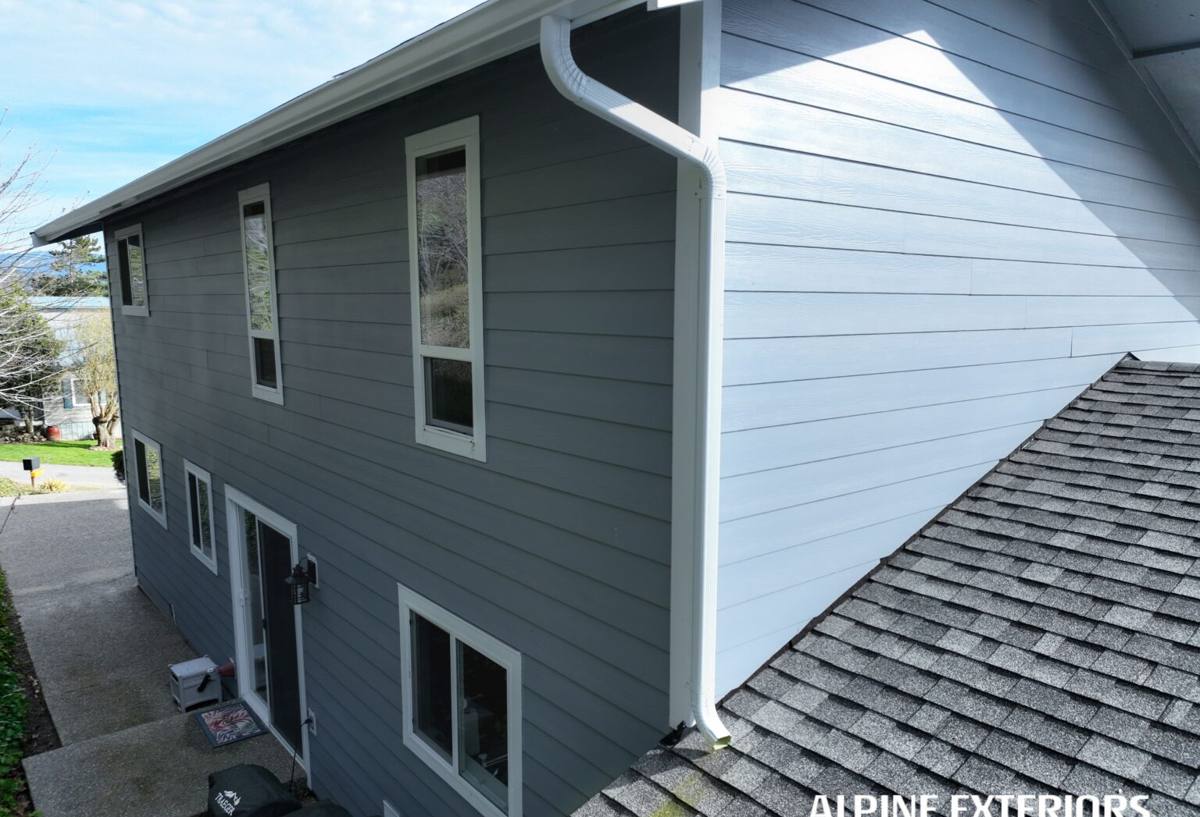
Why This Isn't a One-Size-Fits-All Job
A lot of roofing crews run the same install everywhere they go: same underlayment, same nail schedule, same ventilation approach, regardless of whether the house sits in a dry inland valley or on an exposed waterfront peninsula. That approach isn't dishonest, it's just not calibrated for salt air and driving rain. Homes in Point Roberts benefit from a few adjustments that don't cost much more up front but pay off over the life of the roof:
- Corrosion-resistant fasteners and flashing metals instead of standard-grade hardware
- A synthetic or self-adhered underlayment rated for high wind-driven-rain exposure, not just a basic felt
- Extra attention to valley, eave, and rake flashing, since those are where wind-driven rain finds its way in
- Balanced intake and exhaust ventilation, since trapped moisture combined with salt air speeds up deck and sheathing deterioration
- Shingle or panel selection that resists algae and moss growth rather than just looking good on install day
These aren't upgrades for the sake of upselling — they're the baseline we consider standard for a peninsula roof. A roof that's technically "up to code" but ignores the marine environment it sits in will show premature wear at the flashing and fastener level long before the field material itself fails.
Repair, Recover, or Full Replacement?
Not every roof problem in Point Roberts calls for a full tear-off. Part of an honest estimate is telling a homeowner when a repair or partial section replacement is the right call instead of pushing a full job. That said, there are signs that reliably point to replacement rather than patching:
Signs pointing toward full replacement
- Granule loss heavy enough that you can see bare fiberglass mat on multiple slopes, not just one weathered section
- Soft or spongy decking felt underfoot in the attic, especially near eaves or valleys
- Moss growth thick enough that it's lifting shingle edges rather than just staining the surface
- Repeated leaks at different locations each season rather than one recurring spot
- Roof age at or past the manufacturer's expected service life for this climate, typically shorter here than the labeled lifespan due to salt and moisture exposure
Signs a repair is still reasonable
- An isolated leak traced to a single flashing detail or penetration
- Localized wind damage to a small number of shingles after a storm
- Moss that's staining but hasn't yet compromised the shingle mat underneath
What a Correct Roof Replacement Actually Involves
A roof replacement is more than swapping old shingles for new ones. Done right, it's a sequence where each step protects the one before it:
Tear-off and deck inspection
Full removal of the old roofing down to the deck, followed by an actual inspection of the sheathing — not a glance. Salt air and long-term moisture exposure can soften plywood or OSB from the underside without it being obvious from above. Any soft or delaminated decking gets replaced before anything new goes down.
Underlayment and ice/water protection
A synthetic underlayment across the whole roof, with self-adhered membrane at eaves, valleys, and other vulnerable transitions. Given how much wind-driven rain this stretch of coastline sees, this layer is doing real work, not just serving as a formality between deck and shingle.
Flashing
New flashing at every roof-to-wall transition, chimney, skylight, and valley, in a metal that will hold up to salt exposure rather than pit and corrode within a few seasons. This is one of the most common places we find shortcuts on older roofs in this area — reused or undersized flashing that was never built for a marine environment.
Ventilation
Intake at the eaves and exhaust at the ridge, balanced to move air through the attic without pulling in wind-driven moisture. Poor ventilation combined with salt air is a fast track to premature deck rot and shortened shingle life from the underside.
Field material installation
Shingles or panels installed to manufacturer spec for nail placement and exposure, adjusted for wind exposure common on this peninsula — meaning tighter fastening patterns than a manufacturer's minimum in the areas most exposed to open water.
Comparing Roofing Materials for a Salt-Air, Moss-Prone Climate
There's no single "best" material for every house — it depends on budget, roof pitch, and how exposed the home is. Here's how the common options stack up specifically against Point Roberts conditions:
| Material | Salt air resistance | Moss/algae resistance | Maintenance | Typical lifespan here |
|---|---|---|---|---|
| Standard asphalt composition shingle | Moderate — fasteners and flashing are the weak point | Moderate unless algae-resistant granules specified | Periodic moss treatment recommended | 15-20 years |
| Algae-resistant composition shingle | Moderate to good | Good | Lower than standard shingle | 18-25 years |
| Standing seam metal | Good with proper coating and fastener spec | Very good — moss struggles to grip | Low | 30-45+ years |
| Composite/synthetic shake or slate | Good | Good | Low to moderate | 30-50 years |
We don't push one product over another as a blanket rule — we size the recommendation to the roof, the budget, and how exposed the specific slopes are. A shaded, north-facing slope tucked among trees needs a different answer than an open, wind-exposed slope facing the water, even on the same house.
Our Process, Start to Finish
- On-site inspection — we look at the roof from the ground and, where safe, up close, plus a look in the attic for moisture, ventilation, and deck condition.
- Written estimate — a clear breakdown of material, labor, and any deck repair contingencies, explained in plain terms before you commit to anything.
- Scheduling around weather — we plan tear-off days around forecasted dry windows, since an open roof deck and Point Roberts rain don't mix.
- Tear-off and deck repair — old material removed, deck inspected and repaired as needed, with photos of any issues found underneath.
- Underlayment, flashing, and ventilation — installed to the marine-climate standard described above, not just manufacturer minimums.
- Field material installation — shingles or panels installed with attention to wind exposure specific to the slope and orientation.
- Cleanup and final walkthrough — magnetic sweep for stray fasteners, debris hauled off, and a walkthrough so you know exactly what was done and why.
Why Working Locally in Point Roberts Actually Matters
Point Roberts' geography isn't just a climate factor — it's a logistics one. As an exclave reached by traveling through Canada, material delivery, crew scheduling, and permitting through Whatcom County all take a bit more planning than a typical job elsewhere in the county. A crew that's done work here before already knows how to schedule material drops, how much lead time to build in, and what Whatcom County permitting expects for a reroof in this area. That familiarity shows up as fewer delays and fewer surprises for the homeowner, not as anything flashy — it's just the difference between a crew learning the peninsula on your job and one that already knows it.
It also means we're realistic about weather windows. A tear-off started without enough of a dry stretch planned in is a real risk on this coastline, and a crew unfamiliar with the area's weather patterns is more likely to get caught out.
What Drives the Cost of a Roof Replacement Here
We won't quote a number without seeing the roof, but these are the factors that move the price up or down on most Point Roberts jobs:
| Factor | Effect on cost |
|---|---|
| Roof size and number of slopes/valleys | More area and more flashing detail work raises labor |
| Deck condition | Rotten or soft sheathing found during tear-off adds material and labor to replace it |
| Material choice | Standard asphalt costs less upfront than metal or composite, but the gap narrows over the roof's lifespan |
| Roof pitch and access | Steep or hard-to-access roofs take longer and need more safety setup |
| Ventilation upgrades needed | Adding intake/exhaust where none existed adds modest cost but protects the whole roof system |
| Wind and salt-exposure detailing | Upgraded fasteners, flashing metal, and underlayment add some upfront cost for meaningfully longer service life |
Keeping a New Roof Healthy After Install
A correct install is most of the battle, but a little upkeep goes a long way in this climate. After a replacement, we recommend:
- Clearing overhanging branches that keep a section of roof shaded and damp longer than the rest
- Checking gutters at least twice a year so wind-driven rain has somewhere to drain instead of backing up under the edge
- Treating moss early with a roof-safe treatment rather than letting it establish and lift shingle edges
- Having flashing and fasteners visually checked every couple of years, since salt air corrosion is gradual and easy to miss until it isn't
- Watching the attic for any signs of moisture after major storms, especially in the first year
None of this is complicated, but skipping it is one of the most common reasons a well-installed roof underperforms its expected lifespan on this stretch of coastline.
If your roof in Point Roberts is showing its age, or you just want a straight opinion on whether it's a repair or a replacement, we're happy to come take a look. The estimate is free, there's no pressure attached to it, and you'll get a clear explanation of what we find — just fill out the form below to get started.