 Birch Bay Siding
 Roof Repair in Sumas: Built for What Whatcom County Weather Does to a Roof
Sumas sits at the far northern edge of Whatcom County, close enough to the marine-influenced weather that moves through the rest of the county to see the same pattern year after year: long stretches of steady, driving rain, heavy fog and dew in the shoulder seasons, and a moss season that can run from fall through spring. None of that is dramatic on its own, but roofs don't fail from one big storm — they fail from months of moisture finding the same weak spot over and over. A repair done right in this climate isn't just about patching what's visible. It's about understanding how water moves across a roof here and stopping it before it works its way underneath the surface.
We do roof repair work across Whatcom County, and Sumas homes have their own personality: a mix of older farmhouses, mid-century ranches, and newer builds, many on larger lots with more roof exposed to weather from multiple directions. That variety means there's no one-size-fits-all repair. What we bring to every job is the same: an honest read on what's actually wrong, a repair that matches the existing roofing correctly, and no upsell to a full replacement unless the roof genuinely needs one.
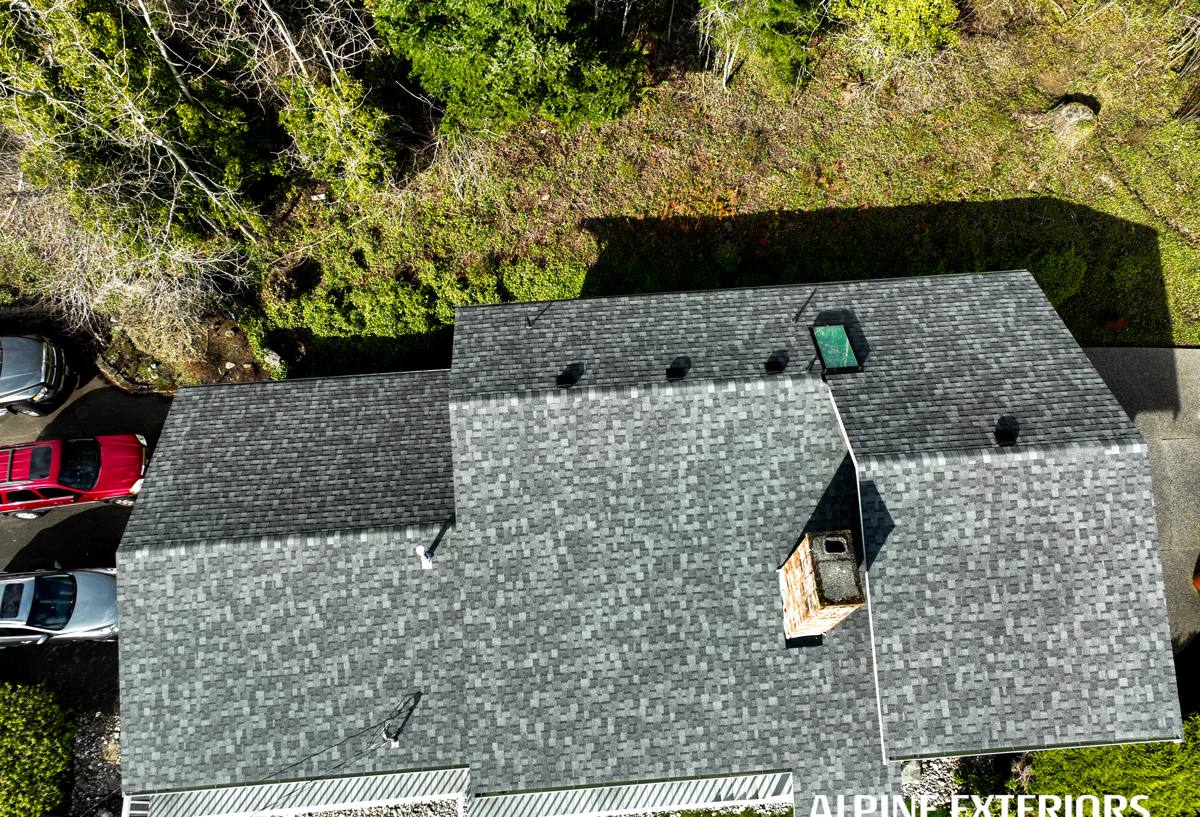
Signs a Sumas Roof Needs Repair
Most roof problems give warning signs well before they turn into an active leak inside the house. Catching them early is almost always cheaper and less disruptive than waiting.
- Dark streaking or thick moss growth on north-facing slopes or shaded valleys
- Granules collecting in gutters or at the base of downspouts
- Curling, cupping, or cracked shingles, especially on the sun-exposed side of the roof
- Soft or spongy spots when walking the roof during an inspection
- Rust staining or gaps around flashing at chimneys, vents, and skylights
- Water stains on interior ceilings or the underside of the roof deck in the attic
- Daylight visible through the roof deck from inside the attic
- Sagging areas along the roofline or at valleys
If you're seeing even one of these, it's worth having someone look before the next wet stretch. A small flashing gap or a handful of lifted shingles is a straightforward repair. The same problem left through a winter of driving rain can turn into rotted decking, which is a much bigger job.
What a Correct Roof Repair Actually Involves
Diagnosing the Real Source of the Leak
Water rarely drips straight down from where it enters. It follows the roof deck, rafters, or underlayment sideways before showing up as a stain on a ceiling, sometimes several feet from the actual entry point. A repair that just patches the spot where the stain appears often misses the real problem entirely. Our process starts with tracing the leak back to its source — checking flashing, penetrations, valleys, and shingle condition upslope from the visible damage — before any repair work begins.
Matching Materials, Not Just Covering the Gap
A repair should blend into the existing roof, both in material and in how it's installed. That means matching shingle type, profile, and as close a color match as the existing roof allows, and tying new underlayment and flashing into the old correctly rather than just layering something on top. Mismatched or poorly tied-in repairs are one of the most common causes of repeat leaks — the new material moves differently than the old, and water finds the seam.
Flashing and Detail Work
Most roof leaks trace back to flashing, not the field of the roof itself — chimneys, skylights, vent pipes, wall-to-roof transitions, and valleys are where two different materials or two different roof planes meet, and that's where a gap of a fraction of an inch lets water in over time. Correct flashing repair means removing and properly reinstalling flashing with the right laps and sealant, not smearing caulk over a gap and calling it fixed. Caulk-only "repairs" are common shortcuts that fail within a season or two, especially under the driving rain typical of this part of Whatcom County.
Common Roof Repair Issues We See in Sumas
| Issue | Typical Cause | What the Repair Involves |
|---|---|---|
| Moss buildup on shaded slopes | Long, damp moss season with limited sun exposure on north/shaded sides | Careful removal, treatment, and repair of any granule or shingle damage moss has caused |
| Flashing leaks at chimneys/vents | Sealant breakdown, rusted step flashing, poor original installation | Remove and reinstall flashing with correct laps; replace failed sealant |
| Curling or cracked shingles | UV and temperature cycling combined with age | Spot replacement of affected shingles with matched material |
| Soft or rotted decking | Long-term moisture intrusion from an undetected leak | Cut out and replace affected decking before re-covering |
| Valley leaks | Worn valley material or debris damming water flow | Clean, inspect, and repair or replace valley flashing/material |
| Ice or wind-driven rain intrusion at eaves | Inadequate underlayment protection at roof edges | Add or repair underlayment and drip edge at vulnerable areas |
Repair or Replace? How We Help You Decide
Not every roof problem calls for a repair, and not every roof problem calls for full replacement either. The honest answer depends on the roof's age, how widespread the damage is, and whether the underlying structure is sound.
| Factor | Leans Toward Repair | Leans Toward Replacement |
|---|---|---|
| Roof age | Well within expected lifespan for the material | At or past the material's typical service life |
| Damage extent | Isolated to one area, flashing, or a section of shingles | Widespread across multiple slopes |
| Deck condition | Solid, no rot found during inspection | Soft spots or rot found in multiple areas |
| Repair history | First or infrequent repair | Repeated repairs to the same or nearby areas |
| Granule loss | Light, localized | Heavy and roof-wide, shingles visibly balding |
We'll tell you plainly which category your roof falls into. If a repair will genuinely hold up, that's what we recommend — a full re-roof isn't the right call just because it's more billable. If the damage is more extensive than it looks from the ground, we'll explain exactly why and show you what we found.
Our Roof Repair Process
- Inspection. We walk the roof and attic (where accessible) to trace the actual source of the problem, not just the symptom.
- Clear explanation. We show you what we found, in plain terms, and explain what caused it.
- Written estimate. A clear scope of work and price before anything is touched.
- Repair. Matched materials, correctly tied-in flashing and underlayment, and cleanup of debris or old materials.
- Final check. We confirm the repair holds and the surrounding roof is sound, not just the immediate spot.
Roofing Materials We Work With
Most Sumas homes we repair are asphalt shingle roofs, which remain the most common and most cost-effective roofing material for this climate when installed and maintained correctly. We also repair metal roofing, which holds up well against moss and driving rain when flashing and fastener details are done right, and we work on cedar and other specialty roofing on older homes, matching repair techniques to what's already there. Whatever the material, our standard is the same: repair it the way it should have been installed the first time, using materials and methods suited to sustained wet weather rather than shortcuts that only hold up in dry climates.
Why a Crew That Already Works Sumas Matters
Roofing crews who mostly work drier climates sometimes underestimate what sustained Pacific Northwest moisture does to a roof over years, not days. A repair that would be fine in a low-humidity region can fail here within a season if it doesn't account for moss regrowth, extended damp periods, and driving rain that pushes water sideways under poorly sealed edges. Working across Whatcom County, including Sumas and the Birch Bay area, means we see the same failure patterns repeatedly and know which shortcuts don't hold up locally. That's the difference between a repair that lasts and one you're paying for again in two years.
We also know that Sumas properties tend to be spread out with more roof surface exposed to wind and rain from multiple directions than a tightly packed subdivision, which changes where problems tend to show up first — usually the windward slopes and any valleys that collect debris. That local pattern recognition saves time during inspection and means less guesswork in the estimate.
Get a Free, No-Pressure Estimate
If you've noticed a stain on the ceiling, moss creeping across a slope, or just want a second opinion on a roof issue before it turns into something bigger, we're happy to take a look. Use the form below to request a free estimate — no pressure, no obligation, just a straight answer about what your roof needs.