 Birch Bay Siding
 Roofing on an Island Changes the Math
Lummi Island homes deal with a version of Whatcom County weather that's a notch more aggressive than what you'll find a few miles inland. Salt-laden air off the water, wind-driven rain that comes in sideways off the Sound, and a long, damp moss season that never fully lets up between fall and spring — all of it works on a roof harder and faster than mainland exposure does. A roof replacement out here isn't just "the same job with a ferry ride attached." The materials, the fastening, the ventilation, and the flashing details all need to account for conditions that punish shortcuts.
We've done enough roofs in and around Birch Bay and the surrounding water-adjacent parts of Whatcom County to know what actually fails first out here, and it's rarely the shingle itself. It's the details around it — the flashing, the underlayment, the ventilation — that give out early when they're installed to a generic spec instead of a coastal one.
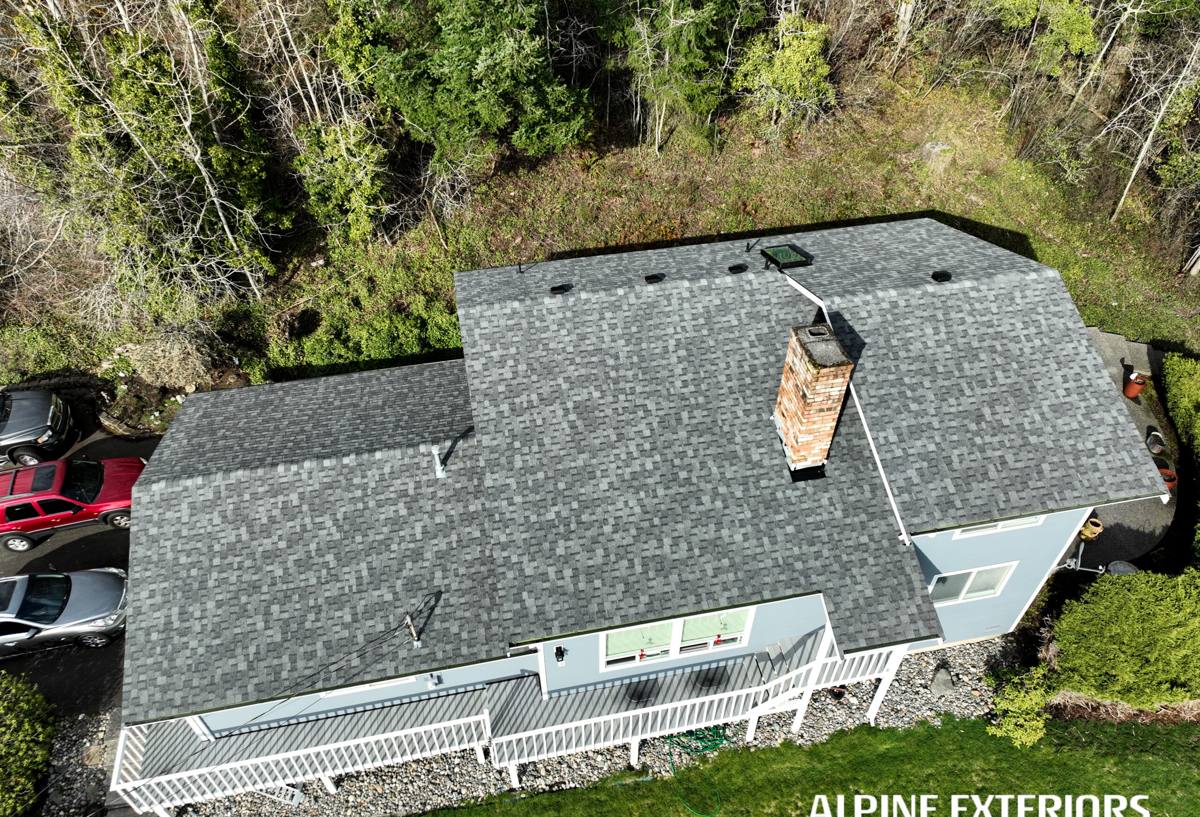
What Salt Air, Rain, and Moss Actually Do to a Roof
Salt Air
Airborne salt accelerates corrosion on anything metal: nails, flashing, vent stacks, gutter fasteners. On a roof built to a standard inland spec, exposed or lower-grade fasteners can start showing rust streaks and early wear years before they would elsewhere. It also degrades the surface granules on some roofing materials faster, which shortens the UV-protective life of the shingle itself.
Driving Rain
Wind off the water doesn't just fall — it pushes rain sideways and upward under shingle edges, ridge caps, and flashing laps that would stay dry in calmer weather. Roofs here need every horizontal joint — valleys, chimney flashing, wall-to-roof transitions — sealed and lapped with wind-driven rain specifically in mind, not just standard gravity-fed shingle overlap.
Moss
Persistent shade, moisture, and mild temperatures make Whatcom County one of the more moss-friendly climates in the country, and island exposure with tree cover only extends the growing season. Moss holds moisture against the roof surface, works into shingle tabs and granules, and over years can lift edges and trap water exactly where you don't want it sitting.
Signs Your Lummi Island Roof Needs Replacement, Not Another Repair
- Granules collecting in gutters or at downspout outlets — a sign the shingle surface is wearing thin
- Moss or dark streaking covering large sections rather than isolated spots
- Curling, cupping, or cracked shingles, especially on the sides facing prevailing wind
- Soft spots, sagging, or visible daylight in the attic at deck seams
- Repeated leaks around the same flashing point despite past patch repairs
- Roof is past or nearing the end of its rated material life and repairs are becoming frequent
If you're only seeing one or two of these and the roof is still within its expected lifespan, a targeted repair may genuinely be the better call — we'll tell you that if it's true. Replacement makes sense once the underlying material is broadly worn out rather than locally damaged.
What a Correct Replacement Involves Out Here
Full Tear-Off, Not Overlay
We don't recommend laying new shingles over old ones on coastal and island homes. An overlay traps whatever moisture and moss residue is already in the old layer and hides deck problems instead of fixing them. A full tear-off lets us actually see the roof deck.
Deck Inspection and Repair
Once the old roofing is off, we check the sheathing for soft spots, rot, or delamination — common wherever moss has been holding moisture against the deck for years. Any compromised sheathing gets replaced before anything new goes down; installing new roofing over a weak deck just resets the clock on the same failure.
Underlayment Built for Wind-Driven Rain
We use synthetic or ice-and-water-style underlayment at eaves, valleys, and other vulnerable transitions rather than a minimal single-layer felt spec, specifically because of how much sideways moisture this area sees compared to more sheltered inland lots.
Flashing Done Right
Chimneys, skylights, sidewalls, and valleys are where coastal roofs actually fail. We install new flashing rather than reusing old pieces, and we detail every lap and termination for wind-driven rain, not just standard runoff.
Ventilation That Matches the Climate
Balanced intake and exhaust ventilation keeps the underside of the deck drier, which matters in a climate this damp. Poor ventilation traps moisture in the attic, which feeds rot and shortens the life of the new roof from underneath — often before the surface shows any wear at all.
Material Considerations for Water-Adjacent Exposure
There's no single "best" roofing material for every home here — it depends on your roof's slope, your budget, and how much long-term maintenance you're willing to take on. Here's how the common options stack up specifically against salt air, moss, and wind-driven rain:
| Material | Moss Resistance | Salt Air / Corrosion | Wind-Driven Rain | Relative Maintenance |
|---|---|---|---|---|
| Architectural asphalt shingle | Moderate — benefits from algae-resistant granules | Good if fasteners and flashing are corrosion-rated | Good with proper underlayment and sealing | Low to moderate |
| Standing seam metal | Very good — sheds moisture, little surface for moss to grip | Requires coated or marine-grade fasteners and finish | Excellent when properly fastened | Low |
| Wood shake/shingle | Poor — moisture-retentive, moss-prone without regular treatment | Fair, but hardware corrodes faster | Fair — depends heavily on install quality | High |
| Composite/synthetic shingle | Good — engineered surfaces resist moss growth | Good | Good | Low to moderate |
We'll walk you through which option fits your roof's pitch, your home's style, and your budget honestly — including the maintenance trade-offs — rather than pushing one product across every job.
Our Process for Lummi Island Projects
Working on Lummi Island means planning logistics that a mainland job doesn't require. We account for this up front rather than discovering it mid-project:
- Ferry scheduling: Material deliveries, dumpster drop-off/pickup, and crew transport are all planned around the county ferry, so the project timeline reflects that reality from day one — not a surprise delay halfway through.
- Material staging: We plan deliveries in fuller loads rather than frequent small trips, which keeps the project efficient and minimizes extra crossings.
- Site assessment first: Before we quote, we look at your roof's slope, current material, deck condition where visible, and exposure to prevailing wind and rain.
- Permitting: We handle whatever permitting Whatcom County requires for the scope of work involved.
- Clear written estimate: You'll know the material, the scope, and the price before anything starts — no surprise change orders for things we should have caught during inspection.
What to Expect During the Project
Most single-family roof replacements run a few days to about a week depending on size, pitch, and weather windows — and on Lummi Island, we build in a bit of buffer for ferry timing and marine weather rather than promising a schedule we can't control. We protect landscaping and siding during tear-off, keep the site cleaned up daily (nails and debris matter more on a property you can't just run to the hardware store from), and walk the finished roof with you before we call the job done.
Why Hiring a Crew That Already Works Out Here Matters
A roofing crew that mostly works inland, dry-side jobs will often spec a roof correctly for that climate and under-spec it for this one — lighter flashing, standard fasteners, minimal underlayment at vulnerable points. None of that shows up as a problem in year one. It shows up in year four or five, as the salt air and moss season do their slow work on details that were fine for a different climate. Crews who regularly work Birch Bay and the surrounding water-adjacent parts of Whatcom County build the coastal margin into the spec by default, and they've also already solved the logistics of getting a full crew and materials on and off the island efficiently, which keeps your project moving instead of stalling on scheduling.
Protecting the Investment After Installation
A correctly installed roof still benefits from basic upkeep in this climate. A short annual routine goes a long way toward getting full value out of the new roof:
- Clear debris and overhanging branch litter from the roof surface and valleys each fall
- Keep gutters and downspouts clear so water isn't backing up under the roof edge
- Have moss growth treated early rather than letting it establish across a full slope
- Check attic ventilation isn't blocked by insulation or storage
- Have flashing and sealant points inspected every couple of years, especially after major windstorms
If you're weighing a roof replacement on Lummi Island or elsewhere near Birch Bay, we're happy to take a look and give you a straight, no-pressure estimate — including telling you if a repair would genuinely serve you better than a full replacement. Use the form below to get started.