 Birch Bay Siding
 Why Ferndale Roofs Age Differently Than Roofs Inland
Ferndale sits close enough to the water that homes here take on a different kind of weathering than roofs 30 or 40 miles inland. Salt-laden air moves in off the coast and settles into every exposed metal fastener, flashing seam, and gutter edge. Add in driving rain that comes sideways during winter storms, and a moss season that can stretch from late fall through spring, and you've got three separate forces working against a roof at the same time instead of one.
None of that means Ferndale roofs fail faster across the board. It means they fail differently — moss holds moisture against shingles longer than a dry-climate roof ever experiences, driving rain finds gaps in flashing that would stay dry in a straight-down rain, and salt air accelerates corrosion on nails, vents, and drip edge years before the shingles themselves are worn out. A roof replacement here has to account for all three, not just swap old shingles for new ones.
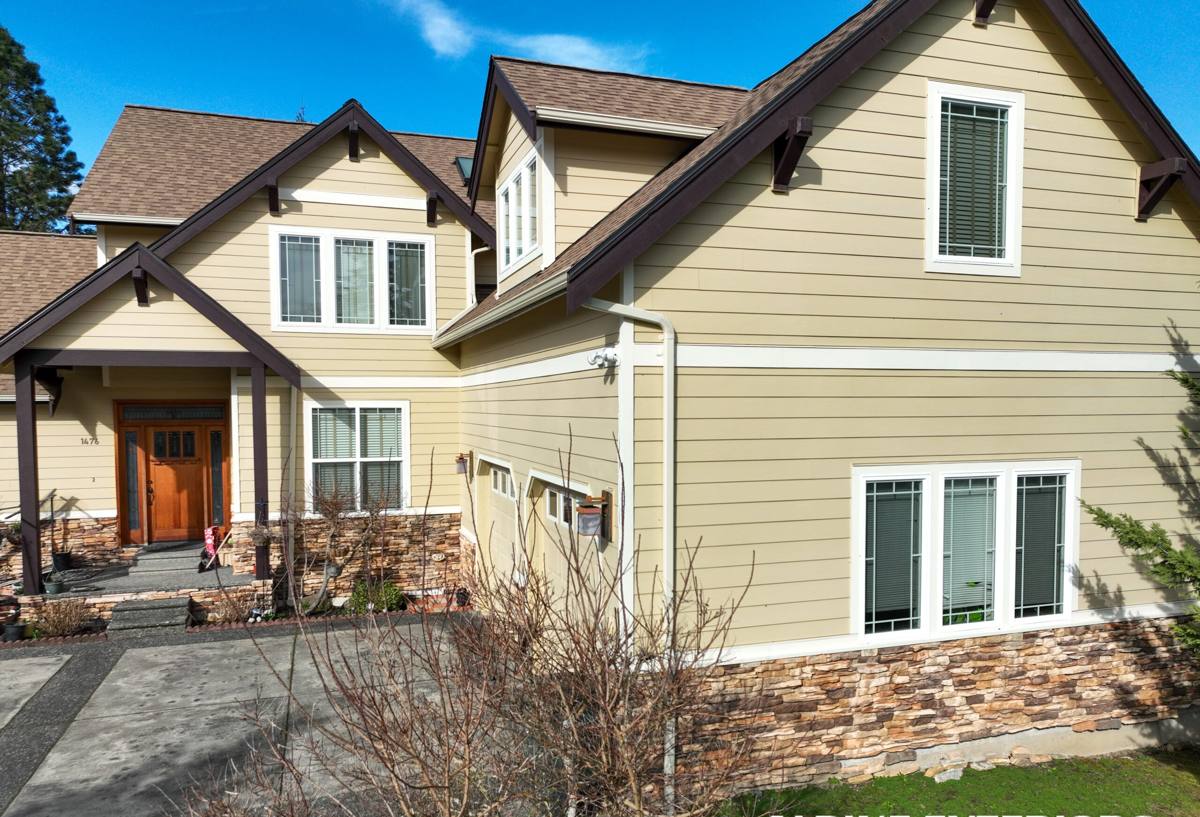
Signs a Ferndale Home Needs Replacement, Not a Repair
Homeowners often call us after a repair that didn't hold, or after noticing something and wondering if it's serious. A few signs consistently point toward replacement rather than another patch:
- Moss established in the granule layer, not just sitting on the surface — by the time it's rooted in, it's already lifted shingle edges
- Granule loss heavy enough that you can see bare asphalt in the gutters or downspouts after a rain
- Multiple past repairs in different areas of the same roof, which usually signals the underlayment is failing, not just the shingles above it
- Soft or spongy decking felt underfoot during an inspection — a sign moisture has been getting through for a while
- Shingles that are curling, cupping, or cracking, especially on the sides of the roof that catch the most wind-driven rain
- A roof approaching or past the 20-25 year mark for standard asphalt shingles in this climate, even if it looks okay from the ground
If only one or two of these apply, a repair may genuinely be the right call. We'll tell you that directly if it's true — a roof replacement isn't the answer to every roofing problem, and we'd rather earn the bigger job later than talk you into one you don't need yet.
What a Correct Roof Replacement Actually Involves
A roof replacement is more than pulling off old shingles and nailing down new ones. In a climate that deals with sustained moisture and moss the way Whatcom County does, the parts you don't see matter as much as the parts you do.
Full Tear-Off and Deck Inspection
We remove existing roofing down to the deck rather than layering over it. That's the only way to actually see the plywood or plank decking underneath and confirm it hasn't been compromised by moisture that worked its way in over the years. Any soft, delaminated, or rotted decking gets replaced before anything new goes down — covering over a bad deck just hides the problem for the next owner to deal with.
Underlayment Built for Wind-Driven Rain
Standard felt underlayment does a job, but in areas that see sideways rain off the water, a synthetic underlayment with better water resistance at seams and fastener penetrations makes a real difference over the life of the roof. Ice and water shield along eaves, valleys, and any low-slope transitions adds another layer of protection where water is most likely to back up or pool.
Flashing Done Right, Not Reused
Flashing around chimneys, skylights, sidewalls, and roof-to-wall transitions is where most leaks actually start — not in the open field of shingles. Reusing old flashing to save time is a shortcut that shows up as a leak two or three winters later. We replace flashing as part of the job, not as an upsell.
Moss-Conscious Material Choices and Ventilation
Given how long moss season runs here, the materials and airflow behind them matter more than they would in a drier region. That means algae-resistant shingle options where it makes sense, and ridge and soffit ventilation sized correctly so the attic isn't holding onto moisture that feeds moss growth from underneath.
Roofing Material Options for Ferndale Homes
There's no single "best" roofing material — the right choice depends on your home's roof pitch, your budget, and how much long-term maintenance you're willing to take on. Here's how the common options compare for a home dealing with coastal moisture and moss pressure:
| Material | Typical Lifespan Here | Moss/Moisture Behavior | Maintenance |
|---|---|---|---|
| Architectural asphalt shingle | 20-30 years | Good with algae-resistant granules; needs periodic moss treatment | Low to moderate |
| 3-tab asphalt shingle | 15-20 years | More prone to moss holding moisture at butt edges | Moderate |
| Standing seam metal | 40-50+ years | Sheds moisture fast; moss struggles to gain a foothold on smooth panels | Low |
| Synthetic/composite shingle | 30-50 years | Resists moisture absorption better than asphalt | Low |
We install a range of these depending on what a homeowner wants and what the roof structure supports. Our default recommendation for most Ferndale homes is a quality architectural shingle with algae-resistant granules — it balances upfront cost, appearance, and moss resistance well for typical residential roofs. Metal and synthetic options make sense for homeowners planning to stay long-term and wanting to minimize maintenance calls over the decades ahead.
How Our Roof Replacement Process Works
- On-site inspection and honest assessment — we get on the roof, check the decking where accessible, and tell you plainly whether you need a full replacement, a partial, or just a repair
- Written estimate with material options — no vague ranges; you see what's included, what materials are proposed, and why
- Scheduling around Whatcom County weather — we plan tear-off and dry-in days around forecast windows so your home isn't exposed to open sky longer than necessary
- Tear-off, deck repair, and dry-in — old materials removed, deck inspected and repaired as needed, underlayment installed the same day whenever possible
- Flashing, ventilation, and final install — flashing replaced, ventilation corrected if undersized, then the finish material goes on
- Final walk-through — we go over the completed roof with you before we consider the job done, not before
Ventilation and Moisture: The Step Homeowners Don't See
Because moss season runs long here, attic ventilation deserves more attention than it gets on a typical roofing job. An attic that can't breathe holds warm, moist air against the underside of the roof deck, which does two things: it shortens shingle life from below, and it creates exactly the damp conditions moss and algae need to establish on the surface above.
Part of a proper roof replacement is checking that intake ventilation (soffit vents) and exhaust ventilation (ridge vents) are balanced. Plenty of older Ferndale homes have one or the other but not both working together, which limits how much good a new roof can do on its own. We flag ventilation issues during the estimate, not after the shingles are already down.
What Affects the Cost of a Roof Replacement
Every roof is priced based on its own specifics, but the same handful of factors drive most of the variation from one Ferndale home to the next:
- Roof size and number of squares (100 sq ft = 1 square) being replaced
- Roof complexity — number of valleys, dormers, chimneys, and roof-to-wall transitions requiring flashing
- Pitch and accessibility, since steep or hard-to-reach roofs take more time and safety setup
- Decking condition once the old roof comes off — hidden rot adds material and labor that can't be quoted sight unseen
- Material choice, from standard architectural shingle up through metal or synthetic systems
- Ventilation corrections, if soffit or ridge venting needs to be added or upgraded
We'd rather walk you through these factors on your specific roof than throw out a broad number that doesn't hold up once we're actually on the deck. A written estimate after inspection is the only number worth trusting.
Why Local Experience in Ferndale Matters
A crew that regularly works Ferndale and the surrounding Whatcom County area isn't guessing at how a roof needs to perform here — they've already seen how moss builds up on north-facing slopes, how wind-driven rain finds weak flashing during a real winter storm, and how salt air chews through cheap fasteners over a handful of seasons. That experience shapes real decisions: which underlayment gets specified, how ventilation gets balanced, and which details around flashing and edges get extra attention instead of being treated as an afterthought.
It also means straightforward scheduling and follow-up. A local crew is around after the job is finished, not just for the install. If a question comes up two winters from now about how the roof is handling a particularly wet season, you're calling someone who already knows your home rather than starting from scratch with a new company.
Questions Worth Asking Before You Sign a Contract
Whoever you hire for a roof replacement, these are worth confirming in writing before work starts:
- Is this a full tear-off, or is anything being layered over existing material?
- What happens if the decking is found to be damaged once the old roof is removed — is that priced separately, and how?
- Is flashing being replaced or reused?
- What underlayment is specified, and is ice and water shield included at eaves and valleys?
- Is attic ventilation being assessed and corrected as part of the job, or only the visible roofing?
- What's the manufacturer's warranty, and what's covered under the installer's own workmanship warranty?
- How is the property protected during tear-off — landscaping, siding, gutters?
A contractor who answers these clearly and in writing is worth trusting more than one who just quotes a low number and moves fast.
If your Ferndale roof is showing its age, holding moss, or you're just not sure whether it needs a repair or a full replacement, we're happy to take a look and give you a straight answer. Reach out for a free, no-pressure estimate using the form below.