 Birch Bay Siding
 Roofing Built for Lynden's Weather, Not a Generic Climate
Lynden sits inland from Birch Bay but it doesn't escape what Whatcom County throws at a roof. Storm systems that roll in off the Salish Sea carry moisture and, on windier days, a trace of salt content that settles on every exterior surface in the area, roofs included. Add the long, wet fall-through-spring stretch typical of this part of Washington, and you get a roof that's under near-constant low-grade stress: saturated shingles, slow-drying valleys, and shaded slopes that never fully dry out between rains.
That combination is exactly why moss season here runs longer than most homeowners expect — often eight months or more depending on tree cover and roof orientation. A roof replacement done right in Lynden has to account for that reality from the decking up, not just swap old shingles for new ones and call it done.
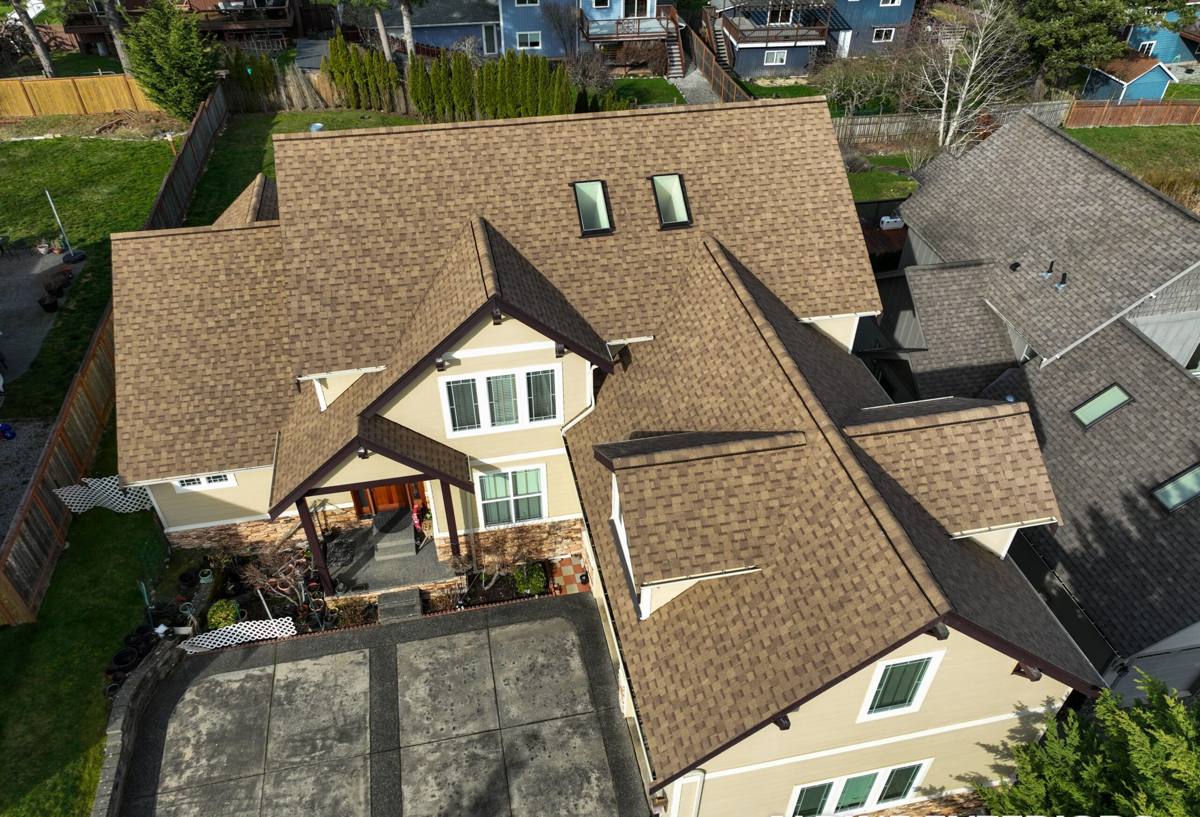
Signs a Lynden Roof Has Reached Replacement, Not Repair
Repair makes sense when the damage is isolated. Replacement becomes the honest recommendation when the roof's underlying systems — decking, underlayment, ventilation — are compromised broadly enough that patching one area just shifts the problem to the next.
What we look for during an inspection
- Granule loss heavy enough to expose the shingle mat across multiple slopes, not just one weathered section
- Soft or spongy decking found through more than a spot check, usually from long-term moisture intrusion
- Moss and lichen that has worked under shingle tabs rather than just sitting on the surface
- Valley and flashing corrosion, especially on older galvanized flashing that's been exposed to years of damp cycling
- Curling, cracking, or missing shingles concentrated on north-facing or heavily shaded slopes, where drying time is shortest
- Daylight or water staining visible in the attic along the ridge, valleys, or around penetrations
If two or more of these show up during a walk of the roof and attic, we'll tell you straight whether repair still makes sense or whether you're better off putting the money into a full replacement instead of chasing recurring leaks.
What a Correct Roof Replacement Actually Involves
A roof is a system, not a single layer of shingles. Skipping steps here is where most premature failures start, especially in a climate that gives moisture every opportunity to find a way in.
Tear-off and deck inspection
Full tear-off to bare decking, every time, on a replacement. This is the only way to actually see what's underneath — soft plywood, old nail patterns, or hidden rot from a slow leak that never showed up inside the house. Any compromised sheathing gets replaced before anything new goes down.
Underlayment and ice-and-water protection
Synthetic underlayment across the full deck, with self-adhered ice-and-water shield at eaves, valleys, and penetrations. In a county that sees driving rain and occasional wind-driven wet weather, these detail areas are where water backs up and finds its way under shingles if they're under-protected.
Flashing
New flashing at all valleys, walls, chimneys, and roof penetrations. Reusing old flashing to save time is one of the most common shortcuts in this trade, and it's also one of the most common causes of a "new" roof leaking within a few years.
Ventilation
Balanced intake and exhaust ventilation, sized to the attic. This matters as much for moss and moisture control as it does for energy efficiency — a poorly ventilated attic keeps the underside of the deck cooler and damper, which is exactly the environment moss and algae favor.
Field material installation
Shingles, panels, or the chosen material installed to manufacturer specification and local building code, with proper nailing patterns and exposure — not just "close enough," which is where a lot of warranty claims get denied later.
Material Options for Lynden Homes
There's no single "best" roofing material — the right choice depends on your roof's pitch, your budget, and how much long-term maintenance you're willing to take on. Here's how the common options stack up for this climate specifically.
| Material | Moss & Moisture Resistance | Typical Lifespan | Maintenance |
|---|---|---|---|
| Architectural asphalt shingle | Good with proper ventilation and periodic cleaning | 25–30 years | Low to moderate — occasional moss treatment |
| Standard 3-tab shingle | Fair — wears faster under constant moisture cycling | 15–20 years | Moderate |
| Standing seam metal | Very good — sheds moss growth medium and drains fast | 40–50+ years | Low |
| Cedar shake | Requires the most upkeep in this climate; moisture and moss pressure is highest | 20–25 years with regular maintenance | High — regular treatment and inspection needed |
We install architectural asphalt and metal roofing as our primary recommendations for Lynden because both hold up well against sustained moisture without demanding constant upkeep from the homeowner. We're upfront that cedar shake can look excellent but carries a maintenance burden — regular cleaning, moss treatment, and closer inspection — that's a harder sell in a climate that stays damp as long as this one does. That's a maintenance and moisture-behavior tradeoff, not a knock on the material itself.
Moss Season Is a Design Problem, Not Just a Cleaning Problem
Homeowners often treat moss as something you scrape off once a year. In reality, moss growth is a symptom of a roof that isn't shedding and drying the way it should. A correctly installed replacement reduces how much moss takes hold in the first place:
- Proper slope and valley design so water doesn't pool or slow down in low-drainage spots
- Balanced ventilation so the deck's underside stays drier and cooler air keeps circulating
- Zinc or copper strips at the ridge on request, which release trace metal ions that inhibit moss growth as rain washes over them
- Trimming back overhanging branches where practical, since shade and debris are the biggest moss accelerants on any roof in this area
None of this eliminates moss entirely — nothing does in Whatcom County — but it slows it down significantly and keeps it from working its way under shingles where it causes real damage.
Our Process, Start to Finish
- On-site inspection: We walk the roof and check the attic, not just look from the ground, and give you a straight answer on repair versus replacement.
- Written estimate: Material options, scope of work, and a clear price — no vague allowances that turn into change orders later.
- Scheduling: We plan around the weather window realistically, since a rushed tear-off in an unpredictable forecast is how decking gets exposed to rain it shouldn't see.
- Tear-off and deck repair: Full removal, deck inspection, and any necessary sheathing replacement before anything new goes on.
- Installation: Underlayment, ice-and-water shield, flashing, ventilation, and the finish material installed to spec.
- Final walk-through: We review the finished roof with you, cover warranty details, and answer questions before we consider the job done.
Why It Matters That We Already Work in Lynden
A roofing crew that works Whatcom County regularly already knows how local building departments handle permitting, what ventilation requirements actually get enforced, and how the moss-and-moisture cycle behaves on different roof orientations across the season. That's not something you pick up from a single job — it comes from repeatedly seeing which details hold up here and which ones don't.
It also means we're not guessing on material performance. We see how architectural shingles and standing seam metal actually age in this specific climate — the salt-influenced air near the coast, the shaded lots common around town, the long stretch of wet months — and we build our recommendations around what actually holds up, not just what looks good on a spec sheet.
What to Have Ready Before Your Estimate
A little preparation makes the estimate visit more useful and the eventual proposal more accurate.
- Note any rooms with ceiling stains, drips, or musty smells, even if they seem minor
- Know the rough age of your current roof if you have it — original install date or the last replacement
- Mention any past attic condensation or ice buildup you've noticed in winter
- Clear vehicle and equipment access to the driveway and yard for the day of installation
- Have a rough idea of your timeline, especially if you're trying to get ahead of the wetter months
Cost Factors Worth Understanding
Roof replacement pricing varies with roof size, pitch, number of layers to remove, deck condition, and material choice. Broadly, straightforward architectural shingle replacements on a typical Lynden home tend to fall in a moderate range, while standing seam metal runs higher upfront due to material and labor, offset by decades of lower maintenance. Steep or complex rooflines, extensive deck repair, or add-ons like zinc strips and upgraded ventilation will move the number. We'll walk through exactly what's driving your price during the estimate rather than handing you a number with no explanation behind it.
If your roof is showing its age or you just want an honest read on where it stands, we're glad to come take a look. The estimate is free, there's no pressure attached, and you'll get a straight answer either way — use the form below to get started.