 Birch Bay Siding
 Roofing in Point Whitehorn's Coastal Climate
Point Whitehorn sits right up against the Strait of Georgia, which means homes here take on a version of weather that inland Whatcom County properties simply don't deal with. Salt-laden air moves in off the water and settles on every exposed surface, including your roof. Combine that with the wind-driven rain that comes through in fall and winter storms, plus the deep shade many of these lots have from surrounding conifers, and you get a roofing environment that's genuinely tougher on materials than most manufacturers' warranty testing accounts for.
A roof replacement out here isn't just about swapping old shingles for new ones. It's about choosing a system, and installing it, in a way that accounts for salt exposure on metal components, prolonged moisture retention under tree cover, and moss that can take hold within a single wet season if the roof isn't set up to shed it. We've worked enough roofs along this stretch of Birch Bay to know which shortcuts show up as leaks two winters later.
What Point Whitehorn's Climate Actually Does to a Roof
Salt Air and Metal Components
Flashing, fasteners, vents, and gutters all have metal in them somewhere, and not all metal handles salt air the same way. Standard electro-galvanized fasteners and unprotected steel flashing can start showing corrosion in a fraction of the time they'd last twenty or thirty miles inland. This matters most at the details — valleys, chimney flashing, pipe boots — because that's where a roof actually fails. The field of the roof is rarely the problem; the edges and penetrations are.
Driving Rain and Wind Uplift
Storms coming off the water don't just drop rain straight down — they push it sideways, up under shingle tabs and around poorly sealed laps. A roof detailed for a calmer climate can hold up fine in ordinary rain and then leak the first time wind-driven rain hits it from an angle. Wind uplift is a separate concern: gusts off open water put more lateral load on roof edges and ridges than a sheltered inland roof will ever see.
Moss, Shade, and Moisture Retention
A lot of Point Whitehorn properties have mature tree cover, which is part of the appeal of living out here — but shaded, north-facing roof sections stay damp far longer after a storm than sun-exposed ones. That extended dampness is exactly what moss and moss-adjacent algae need to establish. Once moss gets a foothold, it holds moisture against the roofing material continuously, which shortens the service life of shingles, shakes, or underlayment far faster than sun and rain alone would.
Signs a Point Whitehorn Roof Needs Replacing, Not Patching
- Granule loss heavy enough that you're finding grit in gutters and downspouts every time it rains
- Moss establishing on multiple roof planes, not just one shaded corner
- Soft or spongy decking felt underfoot when walking the roof, especially near valleys or eaves
- Flashing that's visibly rusted, pulling away, or was never properly stepped at wall intersections
- Daylight visible through the roof deck from inside the attic
- Shingles curling, cupping, or cracking, particularly on the sides that catch the most wind-driven rain
- Interior ceiling stains that reappear after every heavy storm, even after past "spot repairs"
- A roof that's already had two or more patch repairs in the last five years
Any one of these on its own might still be repairable. Several at once, or a roof in the 20-25+ year range showing any of them, is usually a sign that patching is just delaying a full tear-off — often at greater total cost than doing the replacement now.
What a Correct Roof Replacement Involves Here
Tear-Off and Deck Inspection
We remove the old roofing down to the deck rather than layering over it, because you can't properly evaluate — or fix — deck damage you can't see. Any soft, delaminated, or water-stained sheathing gets replaced before anything new goes down. Skipping this step is the single most common reason a "new" roof leaks within a couple of years.
Underlayment Built for Wind-Driven Rain
Given how much sideways rain this area sees, we don't treat underlayment as an afterthought. Synthetic underlayment with properly lapped and sealed seams, along with ice-and-water shield membrane at eaves, valleys, and penetrations, gives the roof a second line of defense if wind ever drives water up under the primary roofing material.
Flashing and Fasteners Matched to Salt Exposure
Where budget allows, we favor corrosion-resistant flashing and fastener options over the cheapest standard-grade parts, specifically because of the salt air off the Strait. This is a small percentage of total project cost but a disproportionately large factor in how long the edges and details of the roof actually last.
Ventilation That Accounts for Shade
Balanced intake and exhaust ventilation matters everywhere, but it matters more on shaded roof sections that already stay damp longer. Proper attic ventilation helps the deck dry out between storms instead of staying perpetually moist, which is one of the best long-term defenses against both moss and premature deck rot.
Material Options for This Climate
| Material | How It Handles This Climate | Trade-Offs to Know |
|---|---|---|
| Architectural asphalt shingles | Good performance when paired with proper underlayment and ventilation; algae-resistant granule options help with moss/algae growth in shaded areas | Still needs periodic moss and debris removal on shaded planes; lifespan shortened by prolonged dampness if ventilation is inadequate |
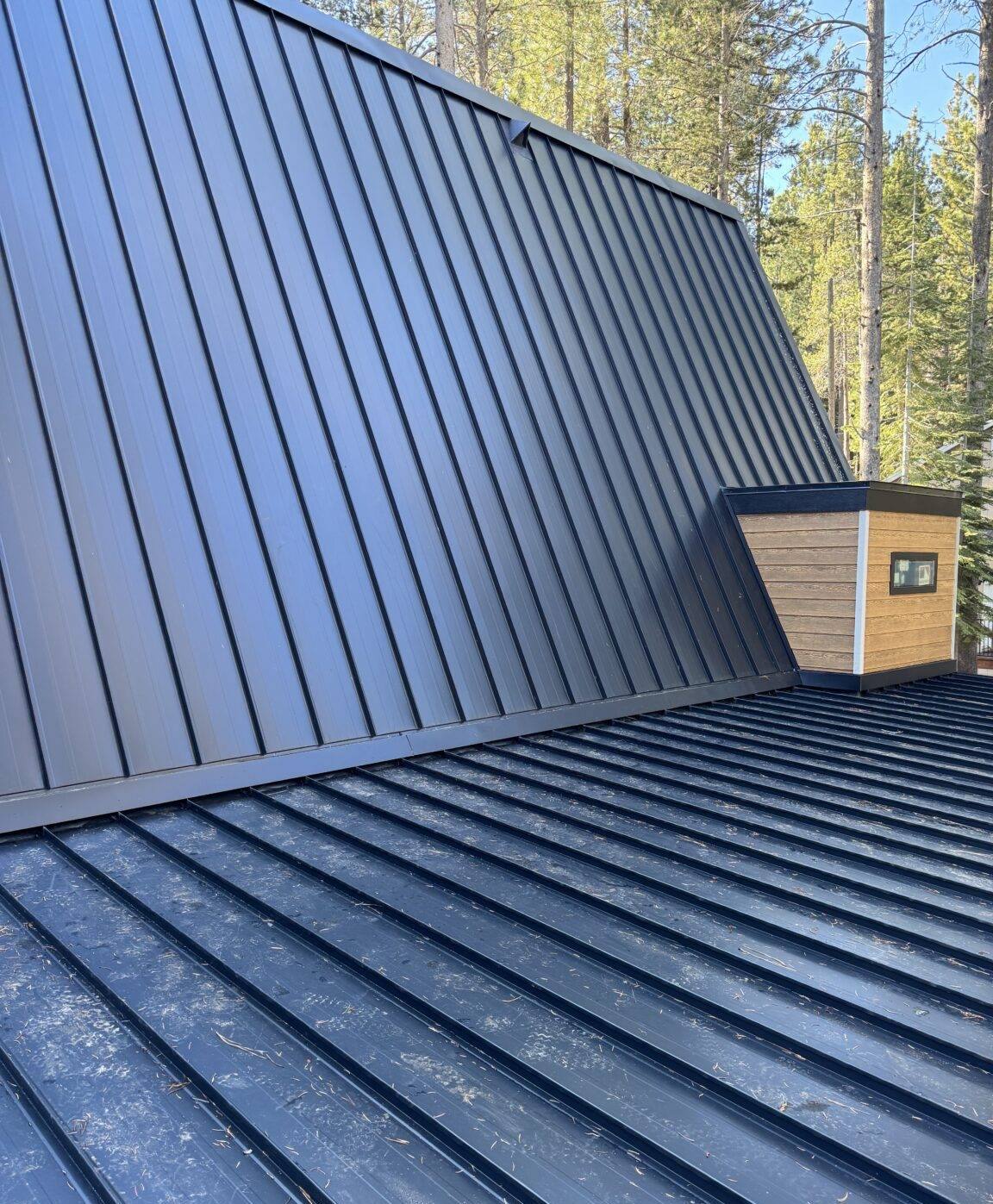
| Standing seam metal | Sheds wind-driven rain well and resists moss growth better than most roofing types once installed correctly | Requires corrosion-resistant fastener and flashing details near the coast; higher upfront cost; installation sensitivity is high — poor seaming shows up as leaks |
| Cedar shakes | Traditional look that fits the Pacific Northwest aesthetic | Highest maintenance burden in a damp, shaded, salt-air environment; needs diligent moss control and periodic treatment to reach expected lifespan |
| Synthetic/composite shingles | Resists moisture absorption and moss better than wood; consistent appearance | Higher material cost than asphalt; product quality varies significantly by manufacturer, so warranty terms matter |
We don't push one material as universally "best" — we walk the specific roof with you, look at sun exposure, tree cover, and roof pitch, and talk through which option actually fits that property's conditions and your budget.
Our Process for Point Whitehorn Roof Replacements
- On-site inspection — we walk the roof and attic, checking deck condition, ventilation, flashing, and moss/moisture patterns specific to your lot's tree cover and sun exposure
- Written estimate — a clear scope covering tear-off, decking allowance, underlayment, flashing, ventilation, and material choice, with the reasoning behind each recommendation
- Scheduling around the weather — we plan installation windows with an eye on Birch Bay's rain patterns to keep the deck exposed for the shortest time possible
- Tear-off and deck repair — full removal, with any compromised sheathing replaced and documented before covering it
- Installation — underlayment, flashing, ventilation components, and roofing material installed to manufacturer specs plus our own coastal-climate detailing
- Final walkthrough — we review the finished roof with you, including what routine maintenance (like moss checks) will keep it performing as designed
Why Local Experience on This Stretch of Coast Matters
A roofing crew that mostly works drier, more sheltered inland neighborhoods can still do competent work — but they may not default to salt-resistant fasteners, or think to prioritize ventilation on a shaded north slope, simply because it's not a problem they run into often. A crew that regularly works Birch Bay and the surrounding Whatcom County coastline builds those decisions into the estimate and the install from the start, not as an upsell after something fails.
We also know what "normal" looks like for roofs out here versus what's an early warning sign, which matters when you're deciding between a repair and a full replacement. That judgment only comes from having actually worked on roofs facing this exact combination of salt air, wind-driven rain, and moss pressure.
Cost Factors to Expect
Every roof is different, so we won't quote a number without seeing the property, but a few things consistently move the price on Point Whitehorn jobs:
- Roof size, pitch, and complexity (number of valleys, dormers, and penetrations)
- Extent of deck repair needed once old roofing is removed
- Material choice, from standard architectural asphalt up through metal or composite systems
- Upgraded corrosion-resistant flashing and fastener packages for salt exposure
- Access — tree cover, steep grades, and limited staging space can add labor time
- Ventilation upgrades if the existing attic system is undersized or unbalanced
We lay out these factors line by line in the estimate so you can see exactly what you're paying for, and where there's room to adjust scope if budget is a concern.
If your roof is showing wear, moss, or storm damage, we're happy to come take a look. A free, no-pressure estimate gets you a straight assessment of what your roof actually needs — use the form below to get one scheduled.