 Birch Bay Siding
 Decking in Sandy Point Has to Answer to the Weather First
Sandy Point sits close enough to the water that salt air is part of daily life, not an occasional nuisance. Add Whatcom County's long wet season, driving rain off the Strait, and months of shade-driven moss growth, and you've got a set of conditions that will find every weak point in a deck within a few winters. A deck that looks fine on installation day in July can be a different story by February — soft spots, green film on the walking surface, fasteners bleeding rust, railing posts that have started to loosen.
We work on decks throughout Birch Bay, and Sandy Point comes with its own version of these problems because of its proximity to the water and the tree cover on many lots. A deck built here needs to be specified and installed differently than one going in on a dry inland lot 40 miles away. That's the frame for everything below.
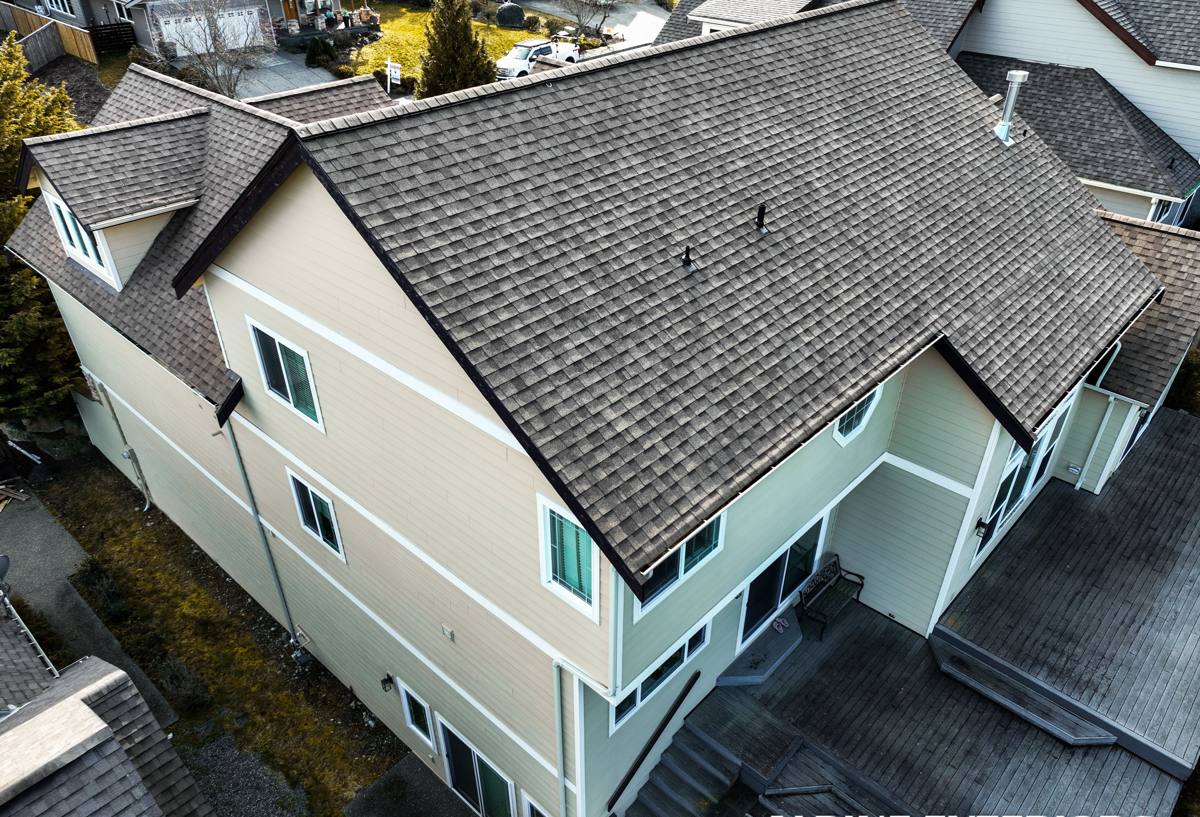
What Salt Air and Moss Actually Do to a Deck
Salt air and metal
Airborne salt accelerates corrosion on anything metal — fasteners, joist hangers, railing hardware, post bases. Standard coated screws and generic hardware will show rust streaks and pitting well before a composite deck board itself shows any wear. Once a fastener starts corroding, it loses holding strength long before it looks obviously bad, which is part of why so many "why is my railing wobbly" calls trace back to hardware, not the decking material.
Moss, algae, and moisture
Shaded and low-airflow areas of a deck — under overhangs, along the house wall, beneath built-in benches — stay damp far longer here than on an open, sun-exposed deck. That damp, shaded combination is exactly what moss and algae need. On wood decking this means surface rot starting in exactly those spots. On composite decking, it means a slick, slippery film that has to be cleaned off regularly or it builds up season over season.
Driving rain and water intrusion
Rain here doesn't fall straight down — wind off the water pushes it sideways, which drives moisture into gaps, ledger connections, and any spot where flashing or fastening was done casually. A deck built without real attention to water management at the ledger board and post bases will trap moisture where you can't see it, and the damage shows up as structural softness, not just cosmetic wear.
Why Composite Makes Sense for This Location
Composite decking doesn't rot, and it doesn't need annual staining or sealing the way wood does — which matters in a climate where the maintenance window (a real stretch of dry weather) is short. That said, composite is not maintenance-free, and we tell every Sandy Point homeowner the same thing: it still needs periodic cleaning to keep moss and algae from taking hold, especially in shaded sections. The material resists the underlying damage that ruins wood decks; it doesn't repel biological growth on its own.
Where composite earns its cost here is in what it doesn't do: it won't splinter, cup, or soften from repeated wet-dry cycles the way lower-grade or poorly maintained wood will. In a spot where the deck spends a good chunk of the year damp, that's a real, practical advantage — not a marketing point.
Composite vs. wood vs. PVC — the honest trade-offs
| Factor | Pressure-treated wood | Composite | PVC/capped polymer |
|---|---|---|---|
| Moisture/rot resistance | Requires ongoing sealing to hold up | Core resists rot; surface needs cleaning | Fully synthetic, highest moisture resistance |
| Moss/algae resistance | Low — porous surface holds growth | Moderate — capped boards resist staining, still need cleaning in shade | Higher — smoother, less porous surface |
| Upfront cost | Lowest | Mid-range | Highest |
| Maintenance routine | Annual cleaning/sealing/staining | Periodic washing, no sealing | Occasional washing |
| Fastener/hardware sensitivity | High — exposed fasteners corrode faster | Moderate — hidden fastener systems help | Moderate |
None of these is universally "right" — it depends on budget, how much shade the deck gets, and how much upkeep a homeowner actually wants to do. We'll walk through this honestly during an estimate rather than push one product across the board.
What a Correct Composite Deck Build Looks Like Here
Substructure first
The framing underneath is what determines whether the deck is still solid in ten years, regardless of how good the surface boards are. In a salt-air, high-moisture environment, that means:
- Corrosion-resistant fasteners and connectors rated for coastal or treated-lumber exposure — not generic hardware store screws
- Joist tape or a moisture barrier on top of joists so standing water doesn't sit against the wood core
- Proper ledger flashing where the deck meets the house, so wind-driven rain can't work its way behind the siding
- Post bases set to keep wood posts off standing water, with real drainage underneath
- Joist spacing tightened up where composite manufacturers call for it — composite boards flex differently than wood and need the right span
Surface installation
Hidden fastener systems keep the walking surface clean and reduce the number of exposed metal points that salt air can attack. Board gapping has to account for our wetter climate's expansion and contraction, and picture-framing (trim boards around the perimeter) needs mitered corners sealed properly so water doesn't wick into open end grain.
Railing and stairs
Railing posts and stair stringers take the brunt of wind and moisture exposure. We use hardware rated for the exposure level, not just what's cheapest at the local supplier, and we make sure post attachment points are blocked and flashed so they're not a hidden water entry point into the framing below.
Our Process for a Sandy Point Deck Project
- On-site assessment: We look at sun/shade exposure, drainage around the foundation, existing deck condition if there is one, and how close the site is to direct wind and salt exposure.
- Honest product conversation: Composite board options, color/finish tradeoffs, and a straightforward comparison of maintenance expectations versus wood or PVC.
- Written estimate: Clear scope — substructure work, fastener/hardware spec, decking material, railing, and any demo of an existing deck.
- Permitting: Deck work at this scope typically requires a permit through Whatcom County; we handle that so it's not left to the homeowner to sort out.
- Build: Substructure and moisture management done right, then surface and railing installation.
- Walkthrough: We go over basic care — cleaning frequency for shaded sections, what to watch for at fastener points, and what's covered under the manufacturer's warranty versus our workmanship.
What to Ask Before Hiring Anyone for This Job
Composite decking is a forgiving-looking product that hides a lot of bad substructure work underneath it — problems that don't show up until year three or four. A few questions separate a crew that knows coastal installation from one that doesn't:
- What fastener and hardware grade do you use, and is it rated for coastal/salt exposure?
- Do you install joist tape or another moisture barrier under the decking?
- How do you flash the ledger board connection to the house?
- Will you pull the required Whatcom County permit, or is that on me?
- What's the manufacturer's warranty on the boards, and what's your separate workmanship warranty?
A crew that already works in Birch Bay and Sandy Point specifically will have direct answers to these — not generic ones — because they've already dealt with what this climate does to a deck that was built the "normal" way for a drier region.
Maintenance Realities Homeowners Should Plan For
Even the best composite deck in this location needs a maintenance rhythm that matches the climate, not a one-size-fits-all schedule:
- Wash shaded and low-airflow sections more often than sun-exposed ones — moss and algae take hold fastest there
- Keep gutters and downspouts clear so runoff isn't dumping directly onto or near the deck surface
- Check railing hardware annually for early corrosion signs, especially near the water-facing side of the property
- Clear leaf and debris buildup between boards before it holds moisture against the substructure
This isn't a heavy workload compared to wood decking, but skipping it in a climate like this shortens the deck's life regardless of what material sits on top.
Get a Straight Answer on Your Sandy Point Deck Project
If you're planning a new composite deck or replacing one that's showing its age, we're happy to come take a look and give you an honest assessment — what your site actually needs, what it'll cost, and what maintenance to expect. No pressure, no upsell script. Fill out the form below and we'll set up a time to walk the property with you.