 Birch Bay Siding
 Why Sandy Point Roofs Wear Differently Than Roofs Inland
Sandy Point sits close enough to the water that every roof out here is doing double duty — shedding rain like any Pacific Northwest roof has to, while also standing up to salt-laden air moving off Birch Bay and the Strait. That combination is harder on roofing materials than most homeowners realize until they're up on a ladder looking at fastener corrosion or granule loss they didn't expect this early. A roof replacement here isn't just "put new shingles on the same deck" — it's a chance to fix the specific weaknesses that show up in this microclimate before they force an emergency repair.
We've worked enough roofs in and around Sandy Point to know the pattern: north- and west-facing slopes that never fully dry out, valleys that collect wind-driven rain, and shaded sections that grow moss faster than the rest of the roof. None of that is unusual for Whatcom County, but Sandy Point's proximity to open water pushes it a notch further, especially on homes that catch wind straight off the bay.
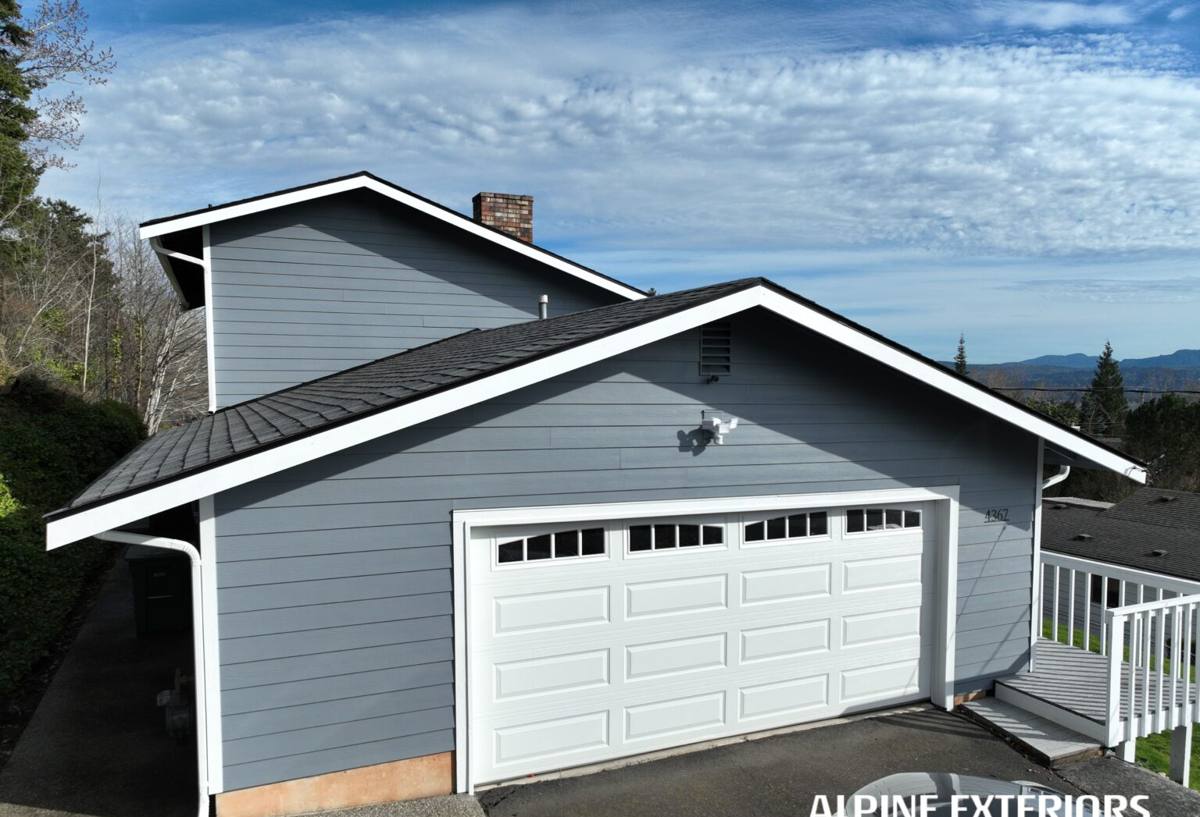
What Salt Air, Rain, and Moss Actually Do to a Roof
Salt Air and Metal Components
Salt in the air accelerates corrosion on anything metal — nails, flashing, vents, and drip edge. Cheaper electro-galvanized fasteners can start rusting years before a properly specified roof would show any wear. Once fasteners corrode, they lose holding power, and that's how shingles start lifting in wind long before the roofing material itself is actually worn out.
Driving Rain
Wind off the water doesn't just fall on a roof, it drives into it — up under shingle tabs, sideways into vents, and hard into any exposed valley or step flashing. A roof that's fine in a calm rain can still leak in a Sandy Point wind event if the underlayment, valleys, and flashing details weren't built for wind-driven water in the first place.
Moss and Sustained Moisture
Whatcom County's long wet season gives moss and moss-adjacent growth months to establish itself, and shaded or north-facing roof sections in Sandy Point rarely get enough sun to dry out between rains. Moss holds moisture against the roofing material, works its way under shingle edges, and can lift granules and shorten the life of the roof well before its rated years are up.
Signs a Sandy Point Roof Is Due for Replacement, Not Another Repair
- Granule loss heavy enough that you can see bare, shiny patches on shingles, especially on the water-facing slope
- Rusted or lifting fasteners, flashing, or vent boots — visible corrosion is a sign the whole fastener set may be compromised, not just the ones you can see
- Moss buildup that comes back within a season or two of cleaning, especially on shaded roof planes
- Curling, cupping, or cracked shingles concentrated on the wind-exposed side of the roof
- Soft spots, staining, or sagging in the decking visible from the attic — a sign moisture has been getting past the roofing for a while
- A roof approaching or past its expected lifespan that's already had two or more repairs in recent years
One or two of these on their own might mean a targeted repair is enough. Several together, especially fastener corrosion plus recurring moss plus a roof that's already a couple decades old, usually means repair spending is going toward a roof that's not going to make it much further anyway.
What a Correct Roof Replacement Looks Like Out Here
Tear-Off and Deck Inspection
We remove the existing roofing down to the deck rather than layering over it. That's the only way to actually see the plywood or plank sheathing underneath — soft, delaminated, or water-stained decking has to be replaced, not covered up, or the new roof is sitting on a compromised base from day one.
Underlayment Built for Wind-Driven Rain
Given how much wind-driven rain Sandy Point sees, we don't treat underlayment as a formality. Ice-and-water shield style membrane goes in valleys, around penetrations, and along eaves where wind-driven water is most likely to get pushed uphill under the shingle line, with synthetic underlayment across the rest of the field.
Flashing and Fastener Selection
This is where salt-air durability actually gets decided. We use corrosion-resistant flashing and fasteners rated for coastal-adjacent exposure rather than the cheapest standard-grade hardware, because the fasteners and flashing are typically the first things to fail on a Sandy Point roof — long before the shingles themselves wear out.
Ventilation
Proper intake and exhaust ventilation keeps the attic dry and temperature-balanced, which matters twice over here: it prevents moisture buildup that feeds rot, and it helps the roof shed heat and cold evenly so ice and condensation issues don't concentrate on one side of the house.
Moss-Resistant Detailing on Shaded Slopes
On roof planes we know will stay shaded and damp — the same ones prone to moss — we pay extra attention to shingle selection and, where it makes sense, zinc or copper strips near the ridge that limit moss regrowth over time. It won't stop moss forever, but it meaningfully slows it down on the sections that need it most.
Material Options for Sandy Point Homes
| Material | Salt Air / Moisture Behavior | Maintenance | Typical Lifespan |
|---|---|---|---|
| Architectural asphalt shingle | Good with corrosion-resistant fasteners and flashing; standard choice for the area | Periodic moss removal on shaded slopes | 25-30 years |
| Standing seam metal | Excellent once properly coated/fastened; sheds water and moss buildup well | Low; occasional fastener and seam check | 40-50+ years |
| Composite/synthetic shingle | Strong moisture and impact resistance; less prone to granule loss | Low to moderate | 30-50 years |
| Wood shake | Higher maintenance burden in sustained moisture; not our default recommendation for shaded, damp Sandy Point roof planes | High; regular treatment and moss management | 20-30 years with upkeep |
We're not going to steer you toward a product that fights the climate it's going into. For most Sandy Point homes, a quality architectural asphalt shingle with the right underlayment and flashing package is the honest value pick, and metal roofing earns its higher upfront cost on homes where long-term, low-maintenance performance in wind and salt air matters more than initial price.
Our Process, Start to Finish
- On-site assessment — we walk the roof and attic, check the deck condition, note fastener and flashing wear, and look specifically at how wind and moisture are hitting this particular home
- Written scope and estimate — what's being torn off, what's being replaced, materials and fastener grade, and a clear price before any work starts
- Tear-off and deck repair — full removal, any compromised sheathing replaced, deck inspected before anything new goes down
- Underlayment, flashing, and ventilation installed — per the details above, matched to the wind and shade exposure of each slope
- Roofing material installed — per manufacturer spec, with fastener pattern and spacing suited to coastal wind exposure
- Final walkthrough — we go over the finished roof with you, including how to spot early moss regrowth or wear so small issues get caught early
Why a Crew That Already Works Sandy Point Matters
A roofer who mainly works inland jobs isn't wrong about roofing in general, but they may not default to corrosion-resistant fasteners, they may underbuild the valleys for wind-driven rain, or they may not think twice about moss-prone shaded slopes because it's not what they see every week. A crew that's already replaced roofs around Birch Bay and Sandy Point specifically knows which slopes on this stretch of coastline take the worst of the wind and salt, and builds the roof accordingly from the first fastener.
That local pattern recognition is also why we don't upsell a coastal-grade spec to every homeowner in Whatcom County. Homes further inland and better sheltered from the bay may not need the same fastener and flashing upgrades — we scope each roof to the actual exposure it gets, not a blanket package.
What to Expect for Cost
Roof replacement pricing depends on roof size, pitch, current layer count, deck condition, and material choice, so we're not going to throw out a number that doesn't mean anything until we've actually seen your roof. In general terms, a straightforward architectural shingle replacement on an average Sandy Point home runs in the broad range most Whatcom County homeowners expect for a mid-range shingle roof, with metal roofing costing more upfront in exchange for a much longer service life and lower long-term maintenance. Deck repair, if the tear-off reveals soft or rotted sheathing, is priced as its own line item since it's impossible to know the extent until the old roofing is off.
Questions Worth Asking Before You Sign a Roofing Contract
- Will you fully tear off the existing roof, or is this a layover?
- What fastener and flashing grade are you using, and is it rated for coastal/salt-air exposure?
- What underlayment goes in the valleys and along the eaves?
- How is deck damage handled if you find it during tear-off — is it a change order or built into the estimate as a possibility?
- What's the ventilation plan for the attic?
- Is the warranty on materials only, or does it also cover workmanship?
If a contractor can't answer these clearly before work starts, that's worth noting before you commit.
If your Sandy Point roof is showing granule loss, recurring moss, rusted flashing, or you're just not sure how much life it has left, we're glad to take a look. We offer a free, no-pressure estimate — walk the roof with us, get a straight answer on what it needs, and decide from there. Use the form below to get started.