 Birch Bay Siding
 Semiahmoo's Roofs Take a Different Kind of Beating
Semiahmoo sits right where Whatcom County meets the water, and that location shapes everything about how a roof ages here. The same salt air that makes the views worth it also works its way into fasteners, flashing, and shingle granules year-round. Add in wind-driven rain off the Strait and a moss season that can run from fall through spring, and you've got a climate that punishes a roof far faster than the same materials would age twenty or thirty miles inland.
Most of the roof repair calls we get in Semiahmoo aren't dramatic. They're small failures that got a head start because the local conditions never really let a roof dry out or rest. A weak spot that would sit quietly for years in a drier climate becomes an active leak here in one or two wet seasons.
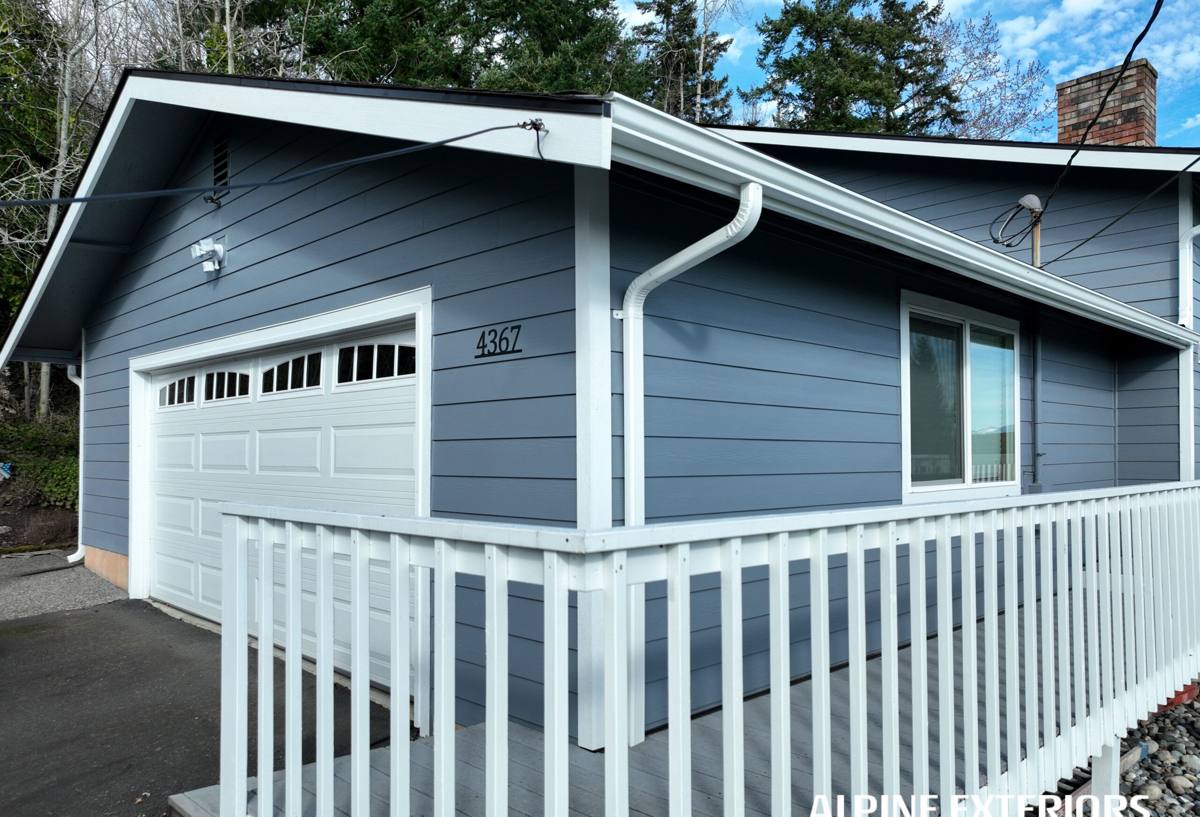
Signs a Semiahmoo Roof Needs Attention
Because so much of Semiahmoo's roof damage develops slowly, homeowners often don't notice a problem until it shows up inside the house. By that point, the roof-level issue has usually been building for a while. Watch for:
- Dark streaking or green-black patches on north-facing or shaded slopes (algae and moss growth)
- Granules collecting in gutters or at downspout outlets
- Soft spots, sagging, or discoloration on interior ceilings after a hard rain
- Lifted, curling, or missing shingles, especially on the side of the roof that faces prevailing wind and rain
- Rusted or discolored flashing around chimneys, vents, and skylights
- Moss growing in a visible mat rather than scattered spots — a sign it's been established for more than one season
None of these mean the whole roof is failing. Most of the time they point to a specific, repairable trouble spot. The risk is waiting long enough that a contained problem turns into decking damage or interior repair work.
Why Salt Air Speeds Up the Damage
Airborne salt is mildly corrosive to exposed metal — nail heads, flashing, drip edge, and fastener caps all take the hit over time. Once a fastener corrodes and loosens, water finds a path underneath the shingle instead of running off it. It's a slow process, which is exactly why it tends to get discovered late.
What a Correct Roof Repair Actually Involves
A roof repair done right isn't just patching the spot where water is currently getting in. It starts with figuring out why that spot failed in the first place, because in a climate like Semiahmoo's, the visible leak and the actual cause are often in different places on the roof.
Diagnosis Before Patching
Water travels. A stain on a bedroom ceiling might trace back to a cracked pipe boot, a flashing gap at the chimney, or wind-driven rain forcing its way under shingles several feet upslope. We trace the path before we touch a single shingle, because a patch placed at the wrong spot just delays the same leak.
Matching the Repair to the Cause
Once we know the source, the fix has to match it. A failed pipe boot gets a new boot, not a smear of sealant over the old one. Corroded flashing gets replaced, not caulked. Storm-lifted shingles get properly re-secured or replaced, with attention to how they'll seal back down given local wind and rain patterns, not just nailed flat and left.
Common Semiahmoo Repair Types
| Issue | Typical Local Cause | What the Repair Involves |
|---|---|---|
| Leak at chimney or skylight | Flashing corrosion from salt air, sealant breakdown from UV and moisture cycling | Remove and replace flashing, reseal properly, check underlying decking for moisture damage |
| Wind-lifted or missing shingles | Driving rain and gusts off the water loosening the seal strip | Re-secure or replace affected shingles, inspect underlayment for water intrusion |
| Moss and algae growth | Shaded slopes, persistent moisture, long wet season | Careful removal, treatment, and addressing the moisture source (usually poor airflow or shade) |
| Granule loss / thinning shingles | Age combined with accelerated wear from salt and rain exposure | Assess remaining shingle life; patch isolated areas or recommend a full section replacement |
| Corroded fasteners or drip edge | Ongoing salt air exposure over years | Replace corroded metal components, re-fasten with corrosion-resistant hardware |
Moss Isn't Just a Cosmetic Problem
Moss on a Semiahmoo roof is common enough that a lot of homeowners treat it as a nuisance to power-wash off once a year. That's a mistake. Moss holds moisture directly against the shingle surface, and as it grows it works its rhizoids into the shingle mat, lifting the edges slightly. That small lift is enough to let wind-driven rain get underneath during the next storm.
A proper approach isn't just removal — it's figuring out why moss is establishing there in the first place. Usually it's a shaded slope, poor attic ventilation keeping the roof deck cooler and damper than it should be, or overhanging vegetation. Removing the moss without addressing the cause just means it comes back within a season or two.
Our Repair Process
1. Inspection
We walk the roof (or use a ladder and binoculars where a walk-on inspection isn't safe or appropriate) and check flashing points, valleys, penetrations, and the slopes most exposed to wind and rain.
2. Honest Assessment
We tell you what we actually find — including when a repair is the right call and when the roof is old enough or damaged enough that a repair would just be a short-term patch. We're not going to talk you into a full re-roof when a targeted fix will hold up.
3. The Repair Itself
Work is scheduled around the weather. Roof repair in this area means working with a narrower window of dry days than most contractors inland deal with, and we don't cut corners by sealing over damp decking or rushing a flashing job between rain bands.
4. Follow-Up
We'll tell you what to watch for afterward and, if the repair was tied to a bigger issue like ventilation or shading, what longer-term steps would prevent a repeat.
Repair or Replace? What Actually Decides It
Not every damaged roof needs a repair, and not every aging roof needs full replacement. The honest answer depends on a few factors:
| Factor | Leans Toward Repair | Leans Toward Replacement |
|---|---|---|
| Age of roofing material | Well within expected lifespan | At or past the end of its service life |
| Extent of damage | Isolated to one area or component | Widespread across multiple slopes |
| Underlying decking | Dry and sound | Soft, rotted, or water-stained in multiple spots |
| History of repairs | First or second repair on the roof | Repeated patches in the same areas over past years |
| Ventilation and moss history | Good airflow, moss is a manageable annual task | Chronic moisture and moss tied to structural ventilation problems |
We'll walk you through where your roof falls on each of these before recommending anything.
Why It Matters to Hire a Crew That Already Works Semiahmoo
A roofing crew that mostly works drier, inland areas doesn't always account for how much faster salt air and coastal rain age a roof's flashing, fasteners, and shingle mat. That shows up as call-backs — repairs that looked fine on a dry day and failed within a year because the crew didn't build in the extra margin this climate demands.
Working Whatcom County's coastline regularly means we've seen how these roofs actually fail over time, not just how they're built on paper. That's the difference between a repair that holds through a few more wet seasons and one that needs redoing.
Quick Checklist Before You Hire Anyone
- Do they inspect the whole roof, or just the spot where the leak showed up inside?
- Do they explain what caused the failure, not just what they're patching?
- Do they use corrosion-resistant fasteners and flashing appropriate for a coastal environment?
- Are they willing to tell you if repair isn't the right call?
- Do they have local experience with Whatcom County's coastal wear patterns, not just general roofing experience?
Protecting the Rest of the House
A roof repair doesn't happen in isolation. Gutters, fascia, and siding all interact with how water moves off a roof, and in Semiahmoo's wetter months, a roof repair is often the moment to also check that water is being carried away from the house properly rather than pooling near flashing or running down siding. We'll flag anything we notice in those areas during the inspection, even if it's outside the original scope of the call.
If you're seeing moss buildup, a slow leak, or just want an honest read on where your roof stands, we're glad to take a look. Fill out the form below for a free, no-pressure estimate — we'll give you a straight answer about what your roof actually needs.