 Birch Bay Siding
 Why Siding Repair in Cherry Point Is Its Own Problem
Cherry Point sits close enough to the water that homes here take a different kind of beating than siding fifteen miles inland in Whatcom County. Salt-laden air off the Strait works on fasteners, trim, and any exposed wood or seam year-round. Driving rain off Georgia Strait doesn't fall straight down — it hits siding sideways, which means laps, corners, and butt joints that would stay dry in a calmer climate take on water here. And the long, damp moss season in this part of the county means anything that traps moisture against a wall — a failed caulk joint, a gap behind a J-channel, a low spot where two courses don't shed water cleanly — has months to do damage before anyone notices.
That combination is why we treat siding repair calls from Cherry Point differently than a routine patch job. A crack in siding thirty miles from the water might just be cosmetic. The same crack here is often a moisture entry point that's already been open through a wet fall and winter by the time it's spotted.
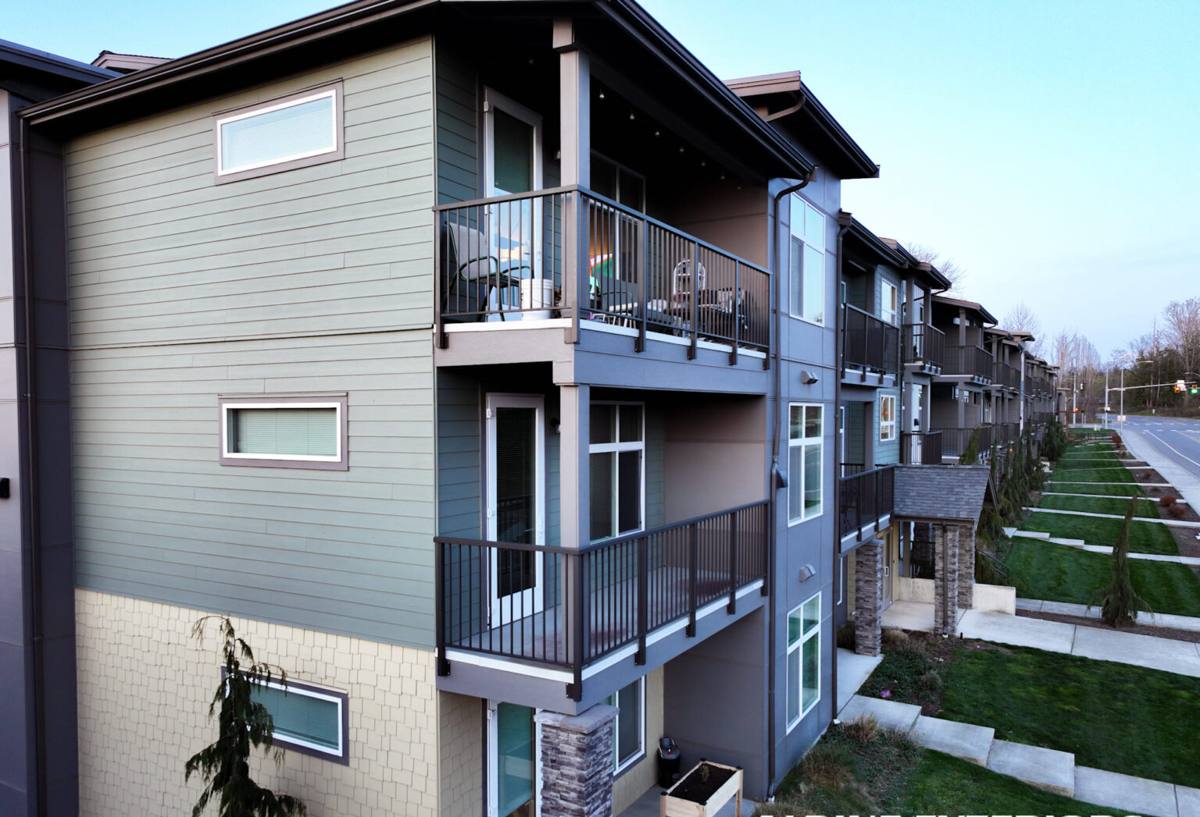
What We Actually Find When We Inspect Cherry Point Siding
Most repair calls in this area fall into a handful of categories. Knowing which one you're dealing with matters, because the fix — and the urgency — is different for each.
Moisture Intrusion at Seams and Penetrations
Wind-driven rain finds the weak points: butt joints that weren't properly flashed, siding installed too close to grade or a deck surface, and areas around window and door trim where caulk has failed. Once water gets behind the siding plane, it can sit against sheathing and framing for weeks between dry spells.
Fastener and Hardware Corrosion
Salt air accelerates corrosion on nails, screws, and any exposed metal trim or flashing. We regularly find siding that looks intact from the ground but has fasteners that have backed out, rusted through, or lost their holding power — which shows up as boards that flex, rattle in wind, or have started to separate at the laps.
Moss and Organic Growth Damage
Moss itself doesn't eat siding the way it can degrade a roof, but it holds moisture against the surface for long stretches, and its root structure works into any existing crack or gap. On wood-based products, sustained moss contact softens and eventually rots the substrate. On any siding, moss buildup at laps and trim is usually a sign that water isn't draining the way it should.
Impact and Wear Damage
Cracked or dented boards from storm debris, tree branches, or age — straightforward to identify, but the repair still has to match the surrounding material's profile, reveal, and finish, or it stands out for years.
Substrate Failure Behind the Siding
The one homeowners can't see: soft or delaminated sheathing under siding that's been letting water through for a long time. This is why we don't just patch the visible surface — we check what's underneath before calling a repair "done."
Repair vs. Replace — How We Make That Call
Not every damaged section needs full replacement, and not every crack should just get caulked over. We look at scope, cause, and what's happening behind the surface before recommending either path.
| Situation | Typical Approach | Why |
|---|---|---|
| Isolated cracked or dented board, sound substrate | Spot repair / board replacement | Localized damage with no underlying moisture issue |
| Failed caulk or flashing at one or two penetrations | Re-flash and re-seal | Addresses the entry point before it spreads |
| Repeated moisture staining across multiple courses | Open up and inspect sheathing | Surface symptoms usually mean a pattern, not an isolated spot |
| Soft or delaminated sheathing found behind siding | Section or full replacement, sheathing repair first | Patching over rotten substrate just hides the problem |
| Widespread fastener corrosion or board separation | Full elevation or full-house replacement | Aging fastener systems fail gradually across the whole wall, not one board at a time |
Honest scoping up front saves money. We'd rather tell a Cherry Point homeowner "this is a $400 repair, not a $15,000 re-side" when that's the truth — and just as importantly, tell them when a repair would just be delaying a bigger cost.
What a Correct Repair Actually Involves
A siding repair that's done right isn't just swapping a bad board for a new one. Here's what we check and do on every repair visit, regardless of the size of the job:
- Confirm the cause of the damage before fixing the symptom — a cracked board caused by trapped moisture will crack again if the moisture path isn't addressed first
- Remove enough surrounding material to inspect the housewrap or building paper and the sheathing underneath, not just the visible damaged section
- Replace or repair any compromised flashing, especially at window heads, deck ledgers, and roof-to-wall transitions
- Re-establish correct lap and overlap dimensions so water sheds the way the original installation intended
- Use fasteners rated for coastal exposure, set correctly — not overdriven, not underdriven
- Match reveal, profile, and finish so the repair doesn't stand out from the surrounding wall
- Reseal penetrations with a sealant appropriate for the substrate and this climate, not a generic caulk that will fail again in a season or two
Our Process, Start to Finish
1. On-Site Assessment
We walk the affected elevation, not just the spot you called about. Damage from salt air and driving rain rarely stays isolated to one board — we check adjacent areas, trim, and penetrations while we're already there.
2. Probe Before We Quote
Where there's any sign of moisture staining, soft material, or fastener failure, we open the area enough to see the sheathing. A quote based only on what's visible from the ground isn't a complete quote.
3. Written Scope, Plain Language
You get a clear explanation of what's damaged, what's causing it, and what we recommend — spot repair, section replacement, or a conversation about broader replacement if the damage points that way. No pressure to upsize the job.
4. The Repair Itself
We fix the cause first — flashing, sealant, drainage — then the visible damage. Materials are matched as closely as possible to what's already on the wall, or, where the existing siding is a product we don't stand behind long-term, we'll tell you that directly and lay out what replacing that section with James Hardie fiber cement would look like.
5. Follow-Up
We tell you what to watch for afterward, particularly around moss season, so a repair doesn't quietly turn into a bigger problem again a year or two later.
Why We Only Install James Hardie Fiber Cement
When a repair calls for board replacement, or when the damage is widespread enough that patching stops making sense, the material choice matters as much as the workmanship. We install James Hardie fiber cement exclusively — we don't install vinyl, LP SmartSide, primed spruce, cedar, or other fiber cement brands. That's a deliberate standard, not a default.
In a coastal, high-moisture environment like Cherry Point, the reasons are practical:
- Fiber cement doesn't rot. It's not a wood-based product, so the moss-and-moisture cycle that degrades wood substrates over a Whatcom County winter doesn't apply the same way.
- ColorPlus factory finish holds up to salt air and UV exposure better than field-applied paint, and it means repaired or replaced sections can be matched without a full repaint of the wall.
- HZ5 product lines are engineered for the kind of freeze-thaw and moisture cycling this region sees, rather than a generic national spec.
- It's non-combustible — a real factor for insurance and long-term durability, independent of the coastal climate concerns.
- Warranty structure is transferable and backed by a manufacturer with a long track record, which matters if you sell the house before the siding's service life is up.
We're not going to tell you every other siding product on the market is worthless — vinyl and engineered wood both have legitimate uses and plenty of installed examples that hold up fine in the right conditions. But for the specific combination of salt air, driving rain, and moss exposure that Cherry Point deals with, we've made fiber cement the only product we put our name behind.
What Happens If Damaged Siding Gets Left Alone
The reason we push for prompt inspection rather than "keep an eye on it" isn't sales pressure — it's how moisture damage actually progresses in this climate. A small gap that lets in wind-driven rain during one fall storm season can, by the following spring, have saturated the sheathing behind it. Add a moss season on top of that and the same spot stays damp for months longer than it would somewhere drier. What starts as a $300–$600 repair can become a several-thousand-dollar sheathing and framing repair if it sits through two or three wet seasons unaddressed. Catching it early is the single biggest cost lever a homeowner has.
What Repairs Typically Cost, and What Drives the Range
| Factor | How It Affects Cost |
|---|---|
| Scope of visible damage | One board vs. a full elevation changes labor and material significantly |
| Condition of sheathing underneath | Sound sheathing keeps a repair simple; rotted sheathing adds carpentry work |
| Accessibility | Second-story or hard-to-reach walls add setup time and equipment |
| Material match | Matching existing siding profile and finish, or transitioning a section to Hardie |
| Flashing and trim work required | Fixing the actual water path, not just the board, adds scope but prevents repeat failures |
We don't quote from a distance for anything beyond the most minor cosmetic fix — the range is too wide to be useful until someone's actually looked at what's behind the damage.
Why It Matters That We Already Work in Cherry Point
A crew that's repaired siding on other Cherry Point and Birch Bay homes already knows what this exposure does over time — which elevations take the worst of the wind-driven rain, how fast moss reestablishes on a north-facing wall here, and what a five-year-old repair looks like when the underlying cause wasn't fixed. That's not something you get from a general contractor who repairs siding across the whole county without a concentration in this specific coastal exposure. It shows up in the assessment — we're not guessing at what's behind a wall, because we've opened up enough of them nearby to know what to expect.
Get a Straight Answer on Your Siding
If you've got a soft spot, a cracked board, staining, or siding that just doesn't look right anymore, it's worth a look before another wet season passes. We'll give you a clear, no-pressure assessment of what's actually going on and what it would take to fix it right — whether that's a small repair or something bigger. Reach out for a free estimate using the form below.