 Birch Bay Siding
 Siding Built for Terrell Creek's Shoreline Climate
Terrell Creek sits low, close to water, and close to wind. The creek and its wetlands feed into Birch Bay just north of the main shoreline, which means homes in this pocket of Whatcom County deal with a specific combination of moisture problems: humid air off the water, standing dampness under tree canopy, and driving rain that comes sideways off the Strait more often than most homeowners expect. Siding here doesn't fail because it's old. It fails because it was never matched to this environment in the first place.
We replace siding on Terrell Creek and greater Birch Bay homes with one product: James Hardie fiber cement. This page covers what local homes actually need from a siding replacement, what a correct installation looks like, and why the climate here punishes shortcuts faster than it does in drier parts of the county.
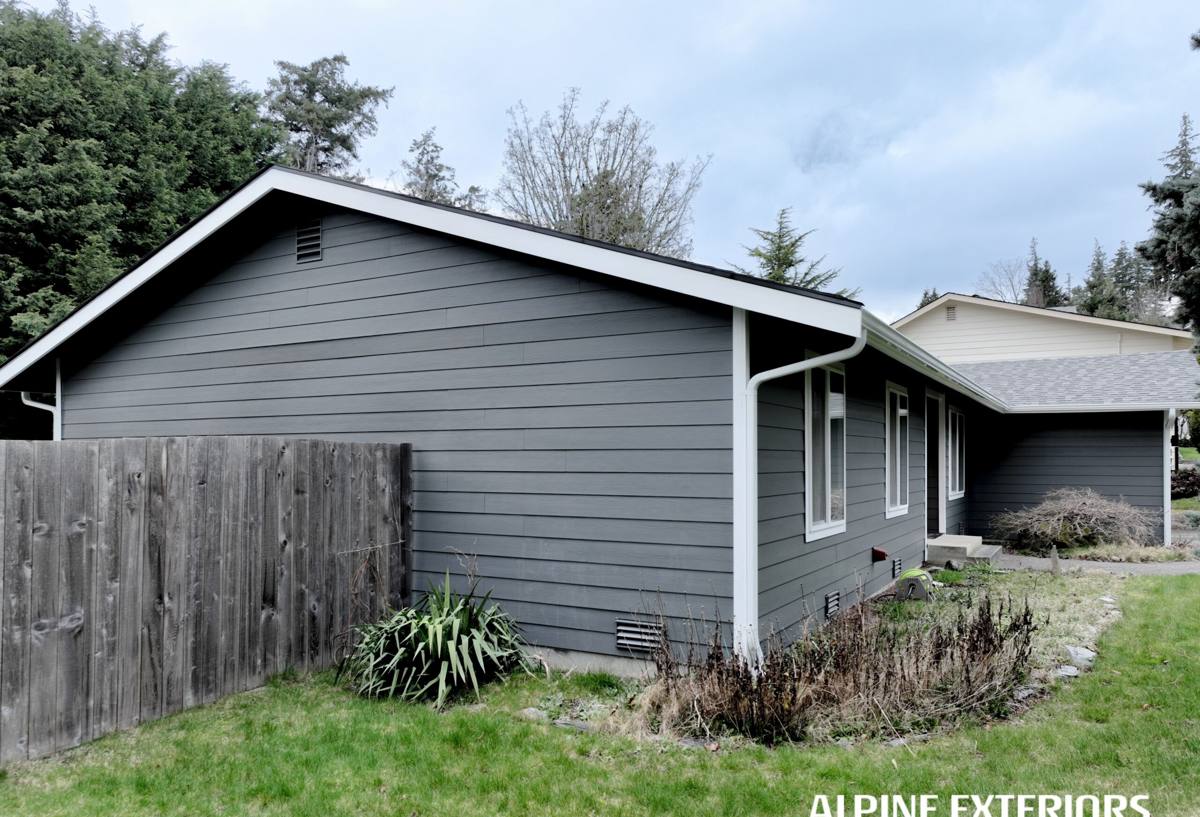
What Makes Terrell Creek Different From Other Birch Bay Neighborhoods
Every neighborhood along the Whatcom County coastline deals with salt air and rain, but Terrell Creek adds a few variables that change how siding behaves and how fast it wears out.
Moisture That Doesn't Dry Out
The creek corridor and surrounding wetlands keep humidity higher and sun exposure lower than open shoreline lots. Siding on the shaded, creek-facing sides of a home can stay damp for days after a storm passes, which is exactly the condition that lets moss, algae, and rot take hold.
Salt-Laden Wind
Birch Bay's proximity to the water means airborne salt settles on exterior surfaces year-round, not just during storms. Salt accelerates the breakdown of caulking, fasteners, and any siding material that isn't engineered to resist moisture intrusion at the seams and edges.
A Long Moss Season
Between the tree cover common around the creek and the region's extended wet season, moss and algae growth can start earlier in the fall and persist later into spring than in more open, sun-exposed parts of Birch Bay. Once moss gets a foothold on siding, it holds moisture against the surface and works its way into any weak seam.
Signs Your Terrell Creek Home Needs New Siding
- Soft or spongy spots when you press on the siding, especially near the bottom courses or around window trim
- Visible moss or algae staining that keeps coming back within weeks of cleaning
- Paint that's peeling, bubbling, or chalking faster than a normal repaint cycle
- Warped, cupped, or delaminating boards, particularly on north- and creek-facing walls
- Gaps opening up at seams, corners, or trim where caulking has failed
- A musty smell or visible staining on interior walls that share an exterior wall with damaged siding
- Rising energy bills that suggest the siding and its underlying moisture barrier are no longer doing their job
Why We Install Only James Hardie Fiber Cement Here
We don't install vinyl, LP SmartSide, primed spruce, cedar, or other fiber cement brands like Cemplank or Allura. That's a deliberate standard, not a lack of options. In a climate like Terrell Creek's, the material choice matters more than almost anywhere else in the county, and we've made our call based on how each option actually holds up against sustained moisture and salt exposure.
| Material | How It Handles This Climate | Why It's Not What We Install |
|---|---|---|
| Vinyl siding | Doesn't rot, but expands and contracts with temperature swings, and seams can loosen over time, letting wind-driven rain behind the panels | Seams and fastening are vulnerable to the sideways rain common here; damaged panels are hard to color-match years later |
| LP SmartSide | Engineered wood product that performs reasonably when perfectly maintained, but wood-based cores are more moisture-sensitive than fiber cement | Edge and cut-end sealing is critical and easy to get wrong; a damp, shaded climate leaves little room for installation error |
| Primed spruce / cedar | Natural wood, attractive, but needs regular repainting and is a food source for moisture-loving organisms like moss and mildew | Maintenance burden is high in a long wet season; rot risk increases every year coatings are allowed to lapse |
| Other fiber cement (Cemplank, Allura) | Similar core material to Hardie, generally durable | We standardized on one product line so our crews, warranty process, and installation detailing stay consistent and proven |
| James Hardie fiber cement | Non-combustible, dimensionally stable, engineered moisture resistance, factory-applied ColorPlus finish | This is what we install — built for damp, salt-air climates like Whatcom County's coastline |
James Hardie's HZ5 product line is engineered specifically for climates with freeze-thaw cycles and sustained moisture exposure, which describes Terrell Creek's winters well. The factory-applied ColorPlus finish also matters here: a baked-on finish resists the chalking and fading that salt air and UV exposure cause faster on field-painted materials.
What a Correct Siding Replacement Involves
Swapping old siding for new boards is the easy part. What actually determines whether a Terrell Creek home stays dry for the next 30 years happens underneath the siding, at the seams, and around every penetration in the wall.
Tear-Off and Wall Inspection
We remove the old siding down to the sheathing and inspect for rot, soft spots, or existing moisture damage. Any compromised sheathing gets repaired before anything new goes up — covering damaged wood with new siding just hides a problem that keeps growing.
Weather-Resistive Barrier and Flashing
A correctly installed moisture barrier, paired with proper flashing at windows, doors, and every wall penetration, is what actually keeps water out. This detail work matters more in Terrell Creek's driving-rain, high-humidity conditions than the siding material itself.
Fastening and Gapping
James Hardie siding has specific fastening patterns and gapping requirements at joints and corners to allow for expansion and prevent water from pooling at seams. Skipping or rushing this step is the single most common cause of premature siding failure we see on this stretch of coastline.
Trim, Caulking, and Finish Details
Corner boards, trim, and caulking joints are finished to shed water rather than trap it, with attention to the low, shaded, creek-facing walls that dry more slowly than sun-exposed elevations.
Our Process From Estimate to Finished Job
- On-site inspection — we walk the exterior, check for existing moisture damage, and assess how the home's orientation to the creek and prevailing wind affects wear patterns
- Written estimate — a clear scope of work and price, with no pressure to sign on the spot
- Material selection — choosing the right James Hardie product line, profile, and ColorPlus color for the home
- Tear-off and repair — removing old siding and repairing any damaged sheathing before new material goes up
- Installation — moisture barrier, flashing, and Hardie siding installed to manufacturer spec
- Final walkthrough — reviewing the finished job with the homeowner before we consider it done
Cost Factors for Terrell Creek Siding Replacement
Every home is different, so we don't quote prices without seeing the job, but these are the main factors that move the number up or down.
| Factor | Why It Matters |
|---|---|
| Extent of existing damage | Rotted sheathing or framing found during tear-off adds repair work before new siding can go on |
| Home size and wall complexity | More corners, trim, and penetrations mean more detail work and material |
| Siding profile and product line | HardiePlank, HardiePanel, and shingle-style profiles differ in material and labor cost |
| Access and site conditions | Tree cover, tight lot lines, or difficult staging near the creek can affect labor time |
| Trim and accessory work | Replacing trim, fascia, or soffit alongside siding is often more efficient than doing it separately later |
Why Hiring a Crew That Already Works Terrell Creek Matters
Siding installation instructions are the same everywhere, on paper. What changes is how much margin for error a climate allows. A crew that mostly works drier, inland parts of Whatcom County can install siding correctly by the book and still see it fail early here, because they're not accounting for how long walls stay damp near the creek, how far salt air travels inland from the bay, or how early moss sets in under tree cover.
We work Birch Bay and the surrounding shoreline neighborhoods regularly, which means we know which walls on a Terrell Creek home are going to take the brunt of the weather before we even start the estimate — and we detail the flashing, gapping, and moisture barrier accordingly. That's the difference between siding that looks right for a season and siding that actually holds up through a full Whatcom County winter.
If your Terrell Creek home has siding that's showing its age, or you just want a straight answer about what shape it's in, we'll come take a look. The estimate is free, there's no pressure, and you'll get an honest read on whether replacement makes sense now or can wait.