 Birch Bay Siding
 Building Decks That Actually Hold Up in Sumas
A deck in Sumas doesn't live an easy life. Whatcom County sees a long wet season, and homes out here deal with salt-laden air drifting in off the water, driving rain that comes in sideways more often than straight down, and a moss season that can stretch from October well into spring. A deck that was built for a drier climate, or built fast by a crew that doesn't work this area regularly, tends to show it within a few years: soft spots at the ledger, black streaks on the boards, railings that wiggle, fasteners bleeding rust through the finish.
We build and repair custom decks for homeowners in and around Sumas and Birch Bay, and the design choices we make are shaped directly by what this climate does to wood, fasteners, and finishes over time. This page walks through what a deck built for this area actually needs, what our process looks like, and what to expect if you're planning a new deck or replacing one that's failing.
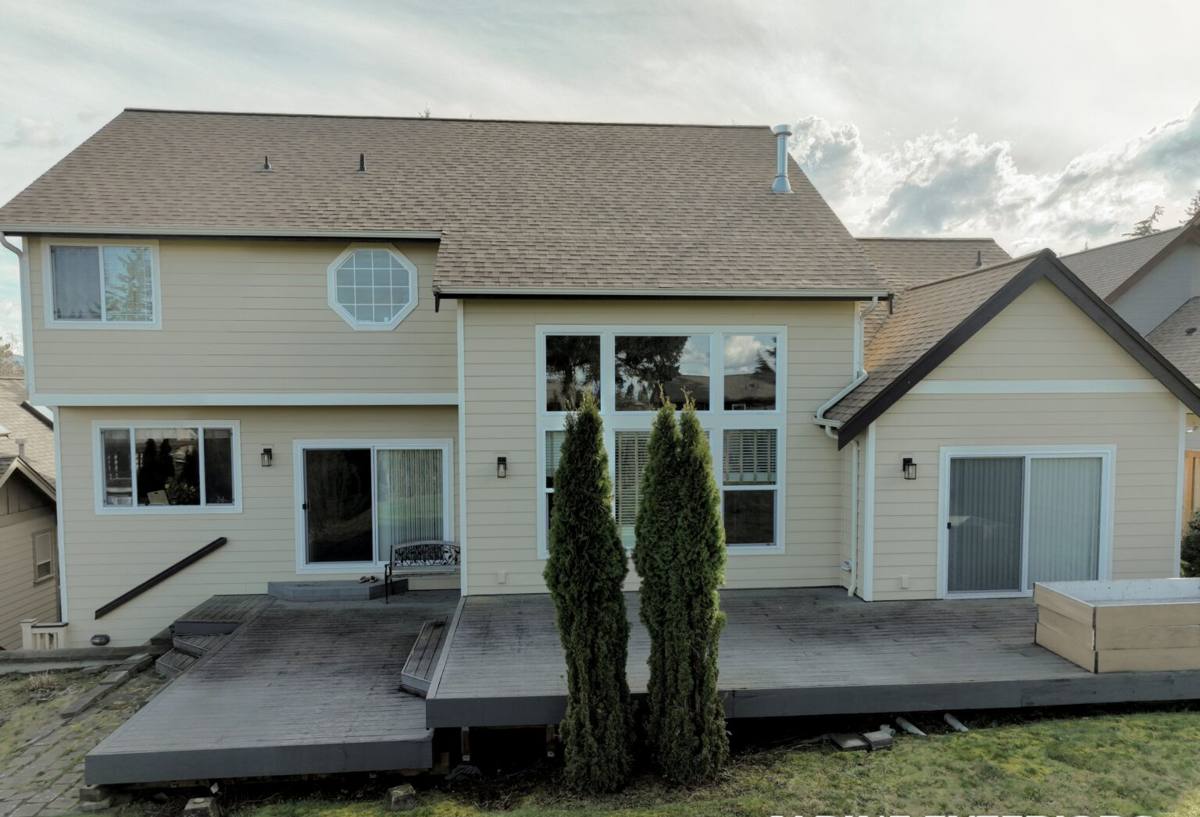
What the Local Climate Does to an Unprotected Deck
Before we talk about materials and process, it's worth being clear on what we're actually building against. This isn't abstract — it's the specific set of stresses that show up on decks in this part of Whatcom County:
- Moisture that doesn't dry out quickly. Long stretches of overcast, damp weather mean wood surfaces and end grain can stay wet for days at a time, which is exactly the condition moss, algae, and rot organisms need.
- Salt air. Proximity to the water accelerates corrosion on exposed fasteners, hinges, and any bare metal hardware — this shows up as rust streaking on deck boards long before the structure itself is actually compromised.
- Freeze-thaw cycling. Winter temperatures here swing above and below freezing repeatedly rather than staying frozen for months. That cycling is hard on concrete footings, caulked joints, and any fastener that isn't seated correctly.
- UV exposure in summer. It's easy to forget, but the summer months here still put real UV stress on finishes and composite decking surfaces, which is part of why the wrong sealant or an unrated composite product fades and chalks faster than expected.
None of this means a deck can't last decades in Sumas. It means the details — flashing, fastener choice, drainage, board spacing — matter more here than they would in a drier climate, and cutting corners on any one of them shows up faster.
Where Decks in This Area Typically Fail First
The Ledger Board Connection
The ledger board — where the deck attaches to the house — is the single most common failure point we find on older decks in wet climates like ours. If it wasn't flashed correctly when it was built, water gets behind it, tracks down between the ledger and the rim joist, and rots both from the inside out. This is almost always invisible from the outside until the deck starts to feel spongy or actually pulls away from the house.
Footings and Post Bases
Footings poured too shallow, or post bases that sit directly on concrete without a proper standoff, trap moisture against the post end grain. Combined with our freeze-thaw cycling, that's a recipe for heaving footings and rotted post bottoms years before the rest of the structure shows wear.
Fasteners and Hardware
Standard coated deck screws and joist hangers are a false economy near the water. Once the coating is breached — which happens fast with salt air — corrosion spreads from that point. We see this most on decks built with mixed hardware, where a few non-rated fasteners become the weak point in an otherwise solid structure.
Material Choices for a Sumas Deck
There's no single "right" decking material — the right call depends on budget, how much upkeep you actually want to do, and how the deck will be used. Here's how the common options hold up specifically under our conditions:
| Material | How it handles our climate | Maintenance |
|---|---|---|
| Pressure-treated wood | Affordable and strong, but end grain and fastener holes need real attention to sealing or it takes on moisture and grays fast | Annual cleaning and re-sealing recommended |
| Cedar | Naturally more rot- and insect-resistant than most softwoods, ages to a silver-gray patina if left unfinished, but still needs moss and mildew management | Periodic cleaning; refinishing if a stained look is wanted |
| Capped composite | Handles moisture and moss far better than wood since it doesn't absorb water; performs well in our wet-season conditions | Occasional washing, no staining or sealing |
| Uncapped composite (older-style) | More prone to surface mold and moisture wicking at cut edges than modern capped products — we're selective about which of these we'll install | Regular cleaning to prevent staining |
We're upfront with homeowners about trade-offs rather than pushing one product line. Real wood costs less up front and can look great, but it asks for more attention. Capped composite costs more initially but largely removes moss and rot from the maintenance conversation, which matters a lot in a climate that gives moss every advantage.
What a Correctly Built Deck Includes Here
Whatever material sits on top, the structure underneath needs to account for our conditions. On every custom deck we build, that means:
- Proper ledger flashing with flashing tape and a drip edge, so water is directed away from the house band joist rather than behind it
- Footings set to the depth required by local frost-depth and setback rules, not just poured to a convenient depth
- Post bases with a standoff so post ends never sit in standing water against concrete
- Stainless steel or coated fasteners rated for exterior and coastal-adjacent use, not general-purpose hardware
- Joist tape or a protective barrier on top of framing lumber to slow moisture absorption into the structural wood
- Board spacing and airflow underneath the deck sized to actually let the structure dry out between rain events, instead of trapping moisture
These aren't upgrades — they're the baseline for a deck that's actually built for Whatcom County weather rather than a generic spec sheet.
Our Process for a Custom Deck in Sumas
1. On-Site Assessment
We walk the site with you, look at drainage patterns, sun and shade exposure, and how the deck will connect to the house. If we're replacing an existing deck, we check the ledger and framing for hidden rot before quoting the new build.
2. Design and Material Selection
We talk through layout, railing style, and material options honestly, including what each choice will actually cost you in upkeep over the years, not just at installation.
3. Permitting
Most new decks and many deck replacements in Whatcom County require a building permit, particularly once you're above a certain height or attaching structurally to the house. We handle that process as part of the job so you're not left guessing about compliance.
4. Construction
Footings, framing, flashing, and decking go in with the fastener and moisture-management details above — not shortcuts that only show up as problems after year two or three.
5. Final Walkthrough
We walk the finished deck with you, cover care and cleaning specific to whatever material you chose, and make sure railings, stairs, and fastenings are solid before we consider the job done.
Railings, Stairs, and Finishing Details
Railings and stair stringers take a disproportionate amount of weather exposure because they're more exposed to wind-driven rain than the deck surface itself. We pay particular attention to end-grain sealing on wood railing posts and to keeping metal hardware corrosion-resistant, since a railing that gets loose or rusts at the connection points is both a maintenance headache and a safety issue. Composite or metal railing systems can reduce this maintenance burden considerably if a lower-upkeep look fits the home.
Keeping a Sumas Deck in Good Shape Year-Round
Whatever deck you end up with, a little seasonal attention goes a long way in this climate. A simple annual routine:
- Sweep debris and standing leaves off the deck surface regularly through fall, when moss and algae growth accelerates fastest
- Rinse or gently wash the surface at least once or twice a year to interrupt moss and mildew before it takes hold
- Check railings and stair connections for looseness each spring
- Inspect fasteners for early rust staining, which usually signals a fastener that needs replacing before it fails
- Re-seal or re-stain wood decking on the schedule appropriate to the product — don't wait until it's visibly gray and dry
- Clear leaves and debris from under the deck so airflow underneath isn't blocked
Why Local Experience Matters for This Job
A deck contractor who mainly works inland or in a different climate zone will often default to generic construction details that don't account for salt air or our particular wet-season moss pressure. Crews who work Sumas and the greater Birch Bay area regularly already know which footing depths and setbacks local permitting expects, which fastener grades actually hold up here, and which material choices tend to disappoint homeowners a few years in. That local track record is the difference between a deck that needs real attention by year five and one that's still solid well past year fifteen.
If you're planning a new deck or need an honest look at one that's showing its age, we're happy to come take a look and walk you through your options. Reach out for a free, no-pressure estimate using the form below.