 Birch Bay Siding
 Fiber Cement Siding Built for Sumas Conditions
Sumas sits out at the edge of Whatcom County on the flat valley floor near the Canadian border, and it deals with the same core weather pattern that shapes exterior work across this part of the Pacific Northwest — wind-driven rain that hits siding sideways more than it falls straight down, a damp valley climate that holds moisture against a home longer than better-drained ground would, and a moss season that stretches across much of the year. When homeowners in Sumas ask us about siding, fiber cement is almost always where the conversation lands, and it's worth explaining specifically why, rather than just repeating the sales pitch.
We install James Hardie fiber cement siding exclusively, and this page focuses on what that looks like for a fiber cement siding project on a Sumas property specifically — what the local climate demands from the material, what correct installation actually involves, and how our process works from first look to finished wall.
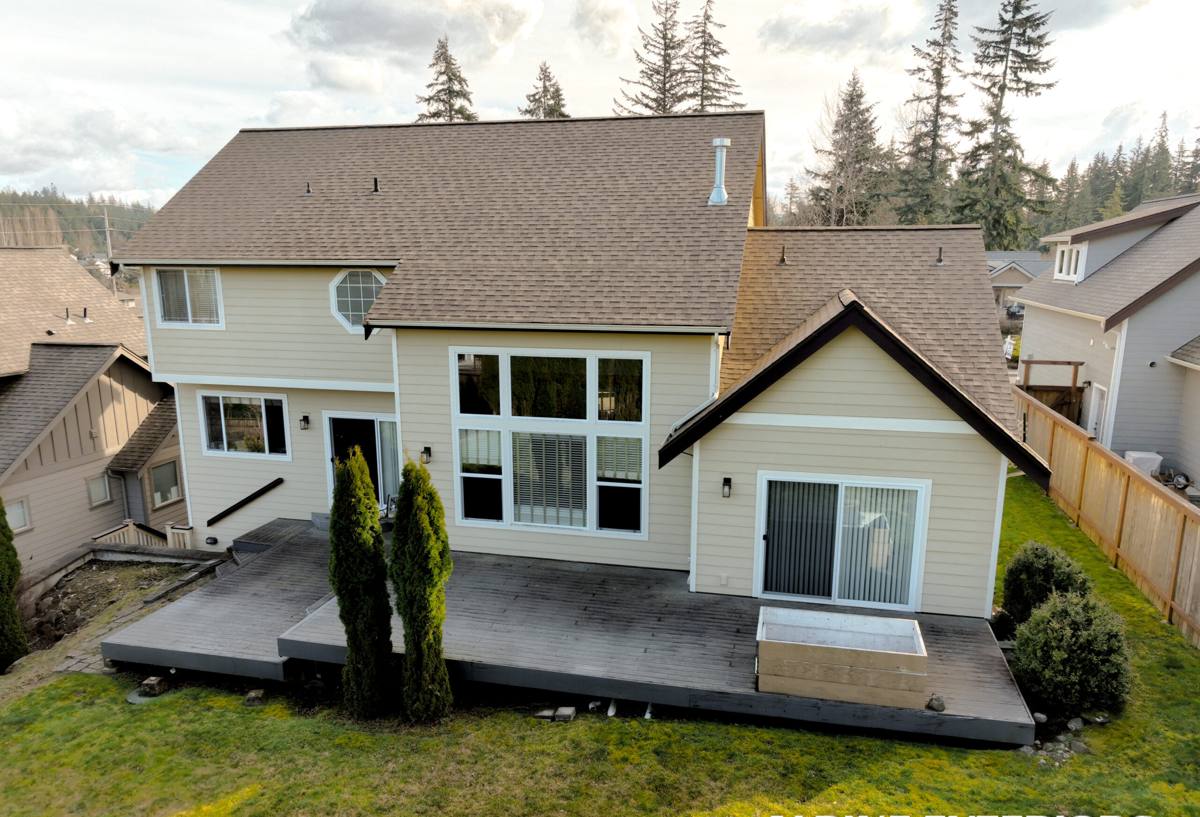
What Sumas Weather Actually Does to Siding
Salt Air and Sustained Moisture
Whatcom County's proximity to the water means salt-laden air is a real factor across the region, and combined with the valley's persistent dampness, it accelerates corrosion on fasteners and finishes that aren't built to handle it. Siding materials that rely on a thin painted surface to keep moisture out tend to show that wear first — chalking, fading, or fastener staining that shows up faster here than it would in a drier inland climate.
Driving Rain on a Low-Lying Property
Sumas sits low in flat agricultural terrain, and storms moving through the valley push rain sideways into walls, trim, and window openings rather than letting it run cleanly off a roofline. On flat ground, that water also doesn't drain away as fast as it would on a sloped lot. Siding and flashing details that aren't built to shed wind-driven rain — not just straight-down rain — tend to fail first at seams, corners, and butt joints.
A Long Moss and Mildew Season
Mild temperatures, persistent dampness, and shaded or north-facing wall exposure add up to a moss and mildew season that runs long in this part of the county. It usually shows up as green staining or organic growth on shaded siding, and it's not just cosmetic — sustained moss growth holds moisture directly against the wall, which is exactly the condition that leads to hidden rot behind the siding if it's left unaddressed.
Freeze-Thaw Swings
Sumas, being further from the moderating effect of the water than towns right on Birch Bay, sees sharper temperature swings and more frequent hard frosts. Any moisture that's already worked its way into a porous or poorly sealed material expands when it freezes, which speeds up cracking and material failure faster than a purely wet-but-mild climate would.
Why Fiber Cement Specifically — and Why Only James Hardie
Fiber cement is a cement-and-cellulose composite, and that composition is what makes it behave differently than wood-based or vinyl products in a climate like this. It doesn't swell or cup with repeated wet-season moisture cycles, it doesn't feed a fire the way wood-derived products can, and it holds a factory-applied finish far longer than a field-painted surface does. We narrowed our installs to James Hardie specifically — not fiber cement in general — because Hardie builds climate-engineered HZ product lines for different regions, backs the material with a strong transferable warranty when installed to spec, and applies its ColorPlus finish under controlled factory conditions rather than relying on job-site paint.
We don't install LP SmartSide, vinyl siding, Cemplank, Allura, primed spruce, or cedar. Each has its place in the broader market, and we're not here to tell another homeowner elsewhere that their choice was wrong. But on a Sumas property dealing with salt air, driving rain, and a moss season that doesn't let up, we made a professional call that one system we trust completely — installed correctly — beats a cheaper option that quietly pushes maintenance risk onto the homeowner a few years down the road.
What a Correct Fiber Cement Installation Involves
Material choice is only half the job. The other half is installation detail, and on a Sumas property this is where a lot of siding jobs quietly go wrong — usually invisibly, until a wet season or two exposes it.
- House wrap and flashing first: A continuous weather-resistant barrier and correctly lapped flashing around every window, door, and penetration — done before a single piece of siding goes up, not patched in around it.
- Proper clearance from grade: Siding kept the specified distance above grade, decking, and roof lines so it isn't wicking moisture up from wet ground or a low-lying yard.
- Correct fastening pattern: Nails or screws placed and spaced to Hardie's specification, accounting for local wind exposure rather than a generic pattern.
- Lapped, sealed joints: Panel and plank joints lapped or backed and sealed correctly instead of simply butted together and caulked over.
- Factory-cut edges where possible: Minimizing field cuts that expose unsealed edges, and properly sealing any cut edge that is unavoidable.
Skipping any one of these steps rarely shows up on install day. It shows up eighteen months later as a soft spot at a corner, staining below a window, or a section that's started to separate — usually after the wet season has had a chance to work on the gap.
How Our Process Works for a Sumas Project
1. On-Site Assessment
We look at the whole wall assembly, not just the visible siding — grade clearance, existing flashing condition, any trim or window details that might already be letting water in, and how much shaded or north-facing wall area the home has, since that's usually where moss and moisture problems concentrate first.
2. Honest Scope Recommendation
Some Sumas homes need a full re-side; others have isolated damage that can be repaired and matched into sound existing Hardie siding without tearing off a whole wall. We'll tell you plainly which situation you're actually in, including when a full replacement is the more honest long-term answer even if a patch looks cheaper up front.
3. Prep and Moisture Barrier
Old siding and trim come off, the wall sheathing gets inspected for hidden rot or damage before anything new goes up, and a continuous house wrap and flashing system goes on correctly — the step that does the real work of keeping water out, rather than relying on caulk to cover gaps later.
4. Installation to Spec
Hardie panels, planks, or trim go up following manufacturer fastening and clearance specifications, with joints lapped and sealed and attention paid to the details — window and door surrounds, corner boards, and transitions — that determine how the wall performs over the next several wet seasons, not just how it looks on install day.
5. Final Walkthrough
We walk the finished job with the homeowner, cover basic care and what to watch for, and stand behind the installation.
What Drives Cost on a Sumas Siding Job
| Factor | Why It Matters |
|---|---|
| Extent of existing damage | Hidden rot found once old siding comes off can add scope that wasn't visible during the initial estimate |
| Home size and wall complexity | More corners, window openings, and roof intersections mean more flashing detail and labor |
| Product line and profile | Lap siding, panel siding, and shingle-style Hardie products carry different material and labor costs |
| Trim and accent work | Factory-finished HardieTrim around openings and corners adds cost but matches the siding's moisture resistance |
| Access and site conditions | Multi-story sections, tight lot lines, or limited staging area all affect labor time |
We don't quote a per-square-foot number sight unseen because the factors above genuinely move the total. What we can promise is a clear, itemized estimate after we've actually looked at the property, not a number designed to get a signature before you know what you're paying for.
What to Look For When Vetting a Sumas-Area Siding Contractor
- Active Washington contractor license and current liability insurance, verifiable on request
- Manufacturer training or certification specific to fiber cement installation, not just general siding experience
- A written scope that specifies flashing, house wrap, and fastening details — not just "siding replacement"
- Willingness to explain repair vs. full replacement honestly rather than defaulting to the bigger job
- Local familiarity with Whatcom County permitting and inspection requirements
- A warranty that covers workmanship separately from the manufacturer's material warranty
Living With Fiber Cement Siding in Sumas
Once it's installed correctly, Hardie fiber cement is genuinely low-maintenance, but "low-maintenance" doesn't mean zero attention, especially in this climate. An annual rinse-down helps keep moss and mildew from taking hold on shaded walls, and it's worth a periodic walk-around to check caulking at trim joints and around windows, since sealant is the one component that does wear out over time even when the siding itself isn't going anywhere. Catching a failed caulk joint early is a five-minute fix; ignoring it through a wet season can let moisture behind the wall before anyone notices.
If you're weighing a siding project on a Sumas home, we're glad to take a look and give you a straight answer about what your walls actually need — no pressure, no inflated scope. The form below gets you a free estimate with someone who works this area regularly.