 Birch Bay Siding
 Deck Building in Terrell Creek's Coastal Climate
Terrell Creek sits close enough to the water that homes here take a different kind of weather beating than decks built further inland. Salt-laden air moves in off Birch Bay and works on fasteners, flashing, and any metal hardware that isn't rated for it. Driving rain comes in sideways during winter storms, finding its way into every joint and seam that wasn't sealed correctly the first time. And for a good chunk of the year, low sun angles and tree cover keep parts of the yard damp long enough for moss and algae to take hold on any deck surface that doesn't shed water well.
A deck built without those three things in mind — salt exposure, wind-driven rain, and moss — will look fine for a season or two and then start showing problems: rust streaks at the fasteners, soft spots where water sat against the framing, and a slick green film on the boards by late winter. We build and replace decks in Terrell Creek and the surrounding Birch Bay area with those specific conditions as the starting point, not an afterthought.
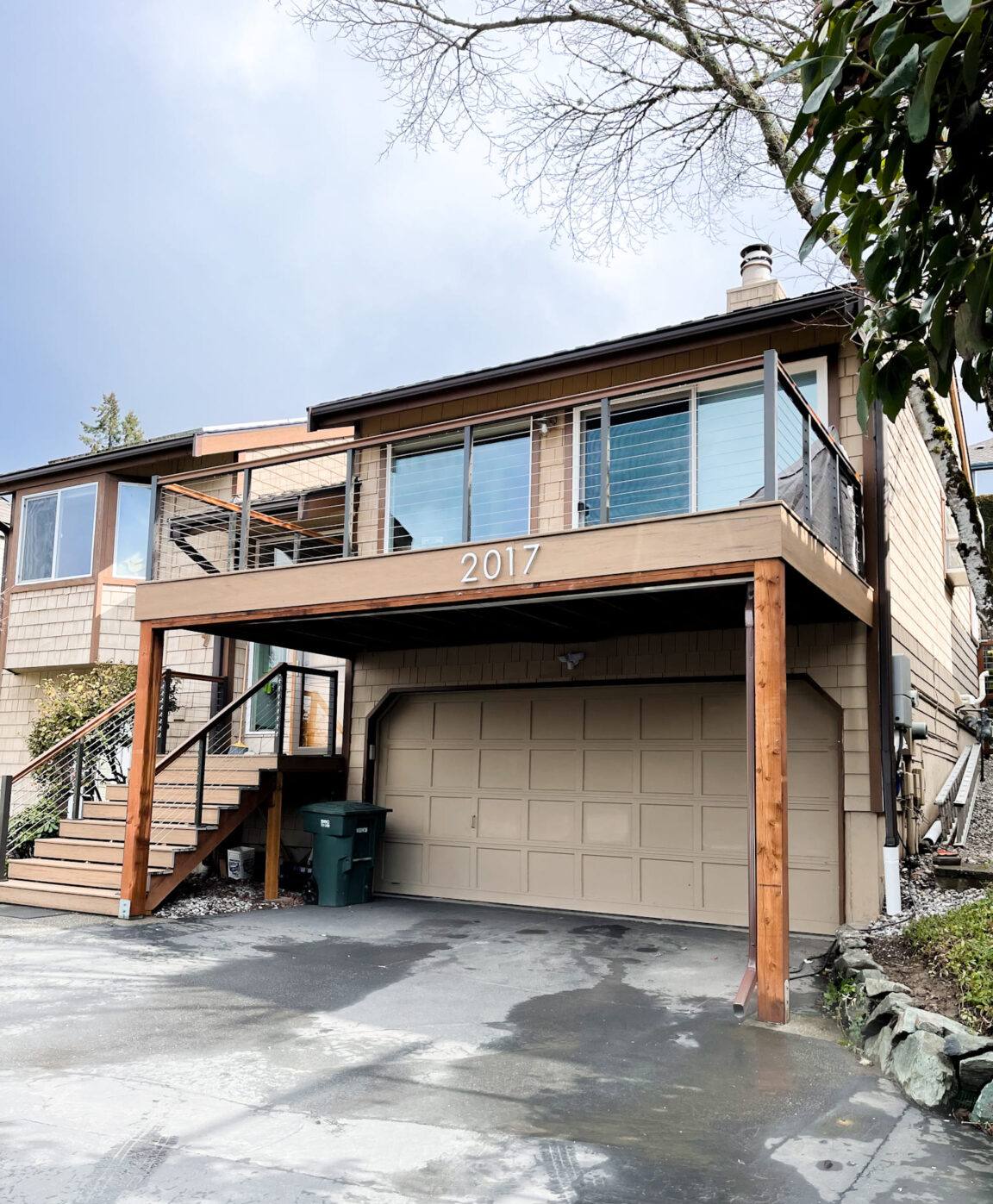
What Terrell Creek Homes Actually Need From a Deck
Hardware and Fasteners That Won't Rust
Standard galvanized fasteners hold up fine in a lot of the country. Close to Whatcom County's salt water, they corrode faster than most homeowners expect, and once a fastener starts rusting inside the wood, it weakens the connection from the inside out where you can't see it. We use stainless steel or high-grade coated fasteners and hardware rated for coastal exposure on every deck we build here, including joist hangers, structural screws, and any brackets tying the deck to the house.
Drainage That Actually Moves Water Off the Structure
Driving rain doesn't just fall on a deck — it gets pushed under railings, into ledger board connections, and behind any trim that isn't flashed properly. The framing underneath needs a clear path for water to run off rather than pool. That means correct board spacing, proper slope away from the house, and flashing at the ledger board that actually sheds water instead of trapping it against the rim joist, which is one of the most common rot points we find on older decks in this area.
Surface Materials That Resist Moss and Algae
Moss doesn't just look bad — it holds moisture against the deck surface and makes boards dangerously slick underfoot. Surface choice, board spacing, and how much sun and airflow a deck gets all factor into how fast moss becomes a problem. We talk through this with every Terrell Creek homeowner up front, because the right answer depends on where the deck sits on the property, not just personal preference.
Decking Material Options
There's no single "right" decking material — the right choice depends on budget, how much upkeep you want to take on, and how exposed the deck is to weather. Here's how the common options stack up for this climate specifically.
| Material | Moisture & Moss Behavior | Maintenance | Typical Lifespan |
|---|---|---|---|
| Pressure-treated wood | Absorbs water, needs sealing to resist moss buildup | Annual cleaning and re-sealing | 10-15 years with upkeep |
| Cedar | Naturally moisture-resistant, still needs sealing near salt air | Periodic staining/sealing | 15-20 years with upkeep |
| Composite decking | Doesn't absorb water; surface texture affects moss grip | Occasional washing, no sealing | 25-30 years, manufacturer warranty |
| PVC decking | Fully moisture-resistant, sheds algae easiest | Low — occasional rinse | 25-30+ years, manufacturer warranty |
We install all of these. Our job is to lay out the honest trade-offs — composite and PVC cost more up front but ask almost nothing of you afterward, while wood costs less initially but needs real annual attention to keep moss and rot at bay in this climate. Homeowners who don't want to be out there scrubbing and re-sealing every year in Terrell Creek's damp shoulder seasons tend to lean composite or PVC; homeowners who want a natural look and don't mind the maintenance often stick with cedar.
What a Correct Deck Build Involves
Framing and Structure
Everything starts with the framing. Joist spacing, beam sizing, and footing depth all need to match the load the deck will actually carry — furniture, a hot tub, or just regular foot traffic. In this soil and climate, footings need to be set below frost depth and properly compacted, and any ledger board attachment to the house needs correct flashing and bolting, not just lag screws driven into siding.
Railing and Code Compliance
Whatcom County building code sets specific requirements for railing height, baluster spacing, and stair guards on any deck above a certain height. We build to code as a baseline, not a stretch goal, and pull permits where required so you're not stuck with an unpermitted structure if you ever sell the house.
Fastening and Flashing Details
This is where most deck problems actually start. Ledger board flashing, joist tape over exposed cuts, and corrosion-resistant fasteners throughout aren't optional extras — they're the difference between a deck that lasts two decades and one that needs structural repair in five years because water got into the framing.
Deck Build Checklist — What We Confirm Before Calling a Job Done
- Footings set to proper depth and correctly compacted for the soil
- Ledger board flashed and bolted correctly at the house connection
- All structural hardware rated for coastal/salt-air exposure
- Joist tape or equivalent protection over exposed framing cuts
- Proper slope and board spacing for drainage
- Railing height and baluster spacing meeting Whatcom County code
- Stairs built with correct rise/run and secure stringer attachment
- Surface material matched to the deck's sun/shade exposure for moss resistance
New Deck Builds vs. Deck Replacement
Some Terrell Creek homeowners are starting from scratch with a new deck; others are replacing an aging structure that's showing rot, soft boards, or rusted hardware. The approach differs. A new build starts with site evaluation — grade, drainage, sun exposure, and how the deck ties into the house. A replacement starts with an honest look at what's underneath: if the framing is sound and it's just the surface boards that have failed, we can often replace decking without rebuilding the structure. If the ledger board or joists show rot, that's a structural issue that needs to be addressed before new boards go down, because covering rotten framing with nice new decking just hides the problem for a while.
We'll tell you straight which situation you're in during the estimate — we're not going to sell a full rebuild if a surface replacement will hold up fine, and we're not going to slap new boards over compromised framing just to make the job faster.
Our Process for Terrell Creek Projects
- On-site evaluation: We walk the property, assess sun/shade exposure, drainage, and — for replacements — the condition of the existing structure.
- Design and material discussion: We go over layout, railing style, and material options with the actual trade-offs for your site, not a generic sales pitch.
- Written estimate: Clear scope and pricing before any work starts.
- Permitting: We handle the Whatcom County permit process where the project requires it.
- Build: Framing, flashing, and fastening done to the standards that hold up in this climate, followed by decking, railing, and stairs.
- Final walkthrough: We go over the finished deck with you before calling the job complete.
Why Local Experience Matters for This Job
A deck contractor who mostly works inland doesn't run into salt-air corrosion or the moss problems that show up in shaded, damp spots near the water. Those are the details that separate a deck that looks good on install day from one that still looks good in year ten. We work Birch Bay and the surrounding Whatcom County communities regularly, including Terrell Creek, so we're not guessing at how a deck here will hold up — we've seen what fails and what doesn't, and we build accordingly from the first footing.
We also know the practical side of building here: how frost depth affects footing schedules, what Whatcom County inspectors look for on framing and railing, and which material and hardware choices actually earn their keep against salt air and winter storms rather than just looking good in a showroom.
Get a Free, No-Pressure Estimate
If you're planning a new deck or need to replace one that's showing its age, we're happy to come take a look, answer questions honestly, and put together a written estimate — no pressure, no obligation. Fill out the form below to get started.