 Birch Bay Siding
 Why Terrell Creek Decks Wear Differently Than Decks Inland
Terrell Creek sits close enough to Birch Bay and the water that homes here deal with a different set of conditions than a deck built twenty miles inland in Whatcom County. Salt-laden air moves through the area on a regular basis, and it doesn't just sit on the surface of your decking boards — it works its way into fastener heads, hinge points, and any spot where two pieces of wood or metal meet. Add in driving rain that comes in sideways during fall and winter storms, and you've got moisture finding its way into joints that were never designed to stay wet for days at a time.
Then there's moss season, which in this part of Washington runs longer than most homeowners expect. Shaded decks, north-facing stairs, and any surface that doesn't get a few hours of direct sun each day will grow moss almost year-round. Moss holds moisture against the wood surface, and that moisture doesn't evaporate the way it would on a dry, sunny deck. Over a few seasons, that combination — salt exposure, driving rain, and moss — is what actually breaks decks down, not any single dramatic event.
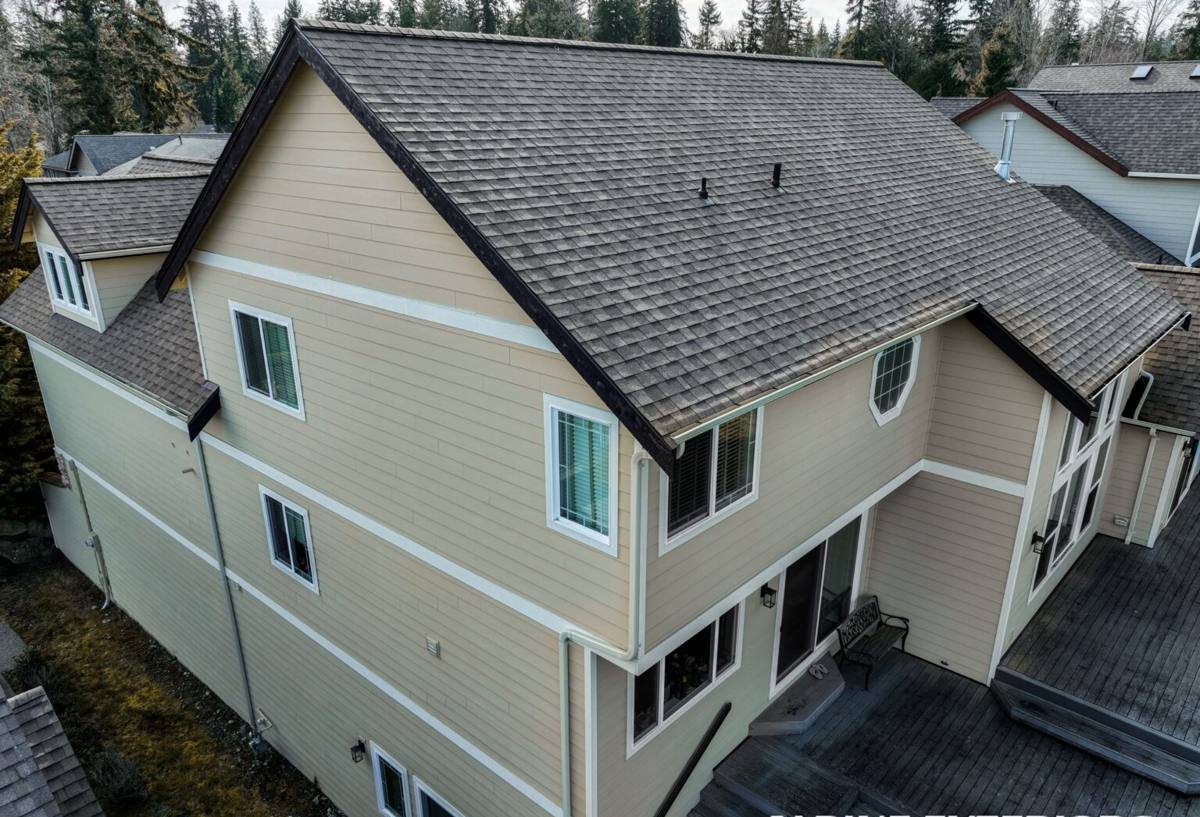
Signs a Terrell Creek Deck Needs Repair — Not a Full Rebuild
Most decks in this area don't fail all at once. They show warning signs first, and catching those signs early is usually the difference between a repair bill and a full replacement bill. Here's what we look for, and what you should be looking for too:
- Soft or spongy spots underfoot, especially near stair landings or the deck's edge
- Fastener heads that have popped up, rusted, or left dark streaks running down the board
- Green or black film that keeps coming back on the same boards no matter how often you scrub it
- Gaps opening up where the deck meets the house, or flashing that's visibly pulled away
- Railings or stair stringers that flex more than they used to
- Ledger board area (where the deck attaches to the house) showing discoloration or swelling
Any one of these on its own might just need a targeted fix. Several of them together, especially around the ledger board or the main support posts, usually means we need to open things up and take a closer look before quoting anything.
Why the Ledger Board Gets Special Attention
The ledger board is the piece that bolts your deck to the house, and it's also the piece most exposed to water running off the roofline or siding above it. In a climate with this much driving rain, a ledger board without proper flashing will trap water against the house framing — which is a structural problem, not a cosmetic one. Any deck repair here that skips a real inspection of the ledger connection isn't a complete repair, no matter how good the new boards look.
What a Correct Deck Repair Actually Involves
A repair that's going to hold up through another Whatcom County winter needs to address more than the visible surface. Here's what we check and address on every deck repair job in the Terrell Creek area:
- Structural framing — joists, beams, and posts checked for rot, especially anywhere water has been pooling or running
- Fasteners — corroded or failing screws and bolts replaced with hardware rated for coastal exposure, not standard interior-grade fasteners
- Flashing and ledger connection — verified or corrected so water is directed away from the house framing, not into it
- Decking boards — individual boards replaced where soft, cupped, or split, rather than assuming the whole surface needs to come out
- Railings and stairs — checked for flex, loose connections, and code-relevant spacing
- Drainage underneath — grading and gaps checked so water isn't sitting under the deck structure long-term
Skipping any of these to save time on a repair usually just means the same problem reappears in a year or two, in the same spot.
Repair or Replace? A Straight Answer, Not a Sales Pitch
Homeowners in Terrell Creek often ask us this directly, and the honest answer depends on where the damage is and how far it's spread. This table covers the factors we actually weigh when we're standing on your deck:
| Factor | Leans Toward Repair | Leans Toward Replacement |
|---|---|---|
| Structural framing (joists, beams, posts) | Solid, only surface issues present | Soft or rotted in multiple locations |
| Ledger board condition | Sound, properly flashed | Water-damaged or improperly attached originally |
| Age of the deck | Under 12-15 years | Original build is decades old with outdated fastening methods |
| Extent of surface damage | Isolated boards or sections | Widespread across most of the decking surface |
| Moss/moisture history | Recent or first occurrence | Long-term recurring problem affecting the substructure |
| Budget priority | Lower upfront cost, targeted fix | Willing to invest once for a longer-term solution |
We'll tell you plainly which side of this table your deck falls on. If a repair is the honest answer, that's what we'll quote — a full replacement isn't automatically the "better" recommendation just because it's a bigger job.
How Our Process Works
1. On-Site Inspection
We start by walking the deck with you, checking the areas you're concerned about and the areas homeowners usually don't think to check — the ledger connection, the underside of the joists, and any spot where moss has been persistent. We'll point out what we find as we go, not just at the end.
2. Straight Assessment and Written Estimate
You get a clear breakdown of what needs to happen, why, and what it costs — broken down by task where it's useful, so you can see what's driving the price rather than one flat number.
3. The Repair Work
We do the structural and moisture-related work first, then move to fasteners, decking boards, and railings. Nothing gets closed up or covered over until the parts underneath are actually sound.
4. Final Walkthrough
Before we consider the job done, we walk it with you again. If something doesn't look right or feel right underfoot, we address it before we leave.
Materials and Fasteners That Make Sense for This Climate
Not every fastener or board sold for deck repair is a good fit for a property this close to salt air. Standard zinc-coated screws, for example, hold up fine in drier inland climates but corrode faster here, which is exactly why you see rust streaks on older decks in the area. Our standard is to use fasteners and hardware rated for coastal or marine-grade exposure on repair work in Terrell Creek — it costs a bit more upfront, but replacing corroded fasteners every few years is a worse long-term deal for the homeowner.
On decking material, we'll talk through the real trade-offs rather than pushing one option. Wood decking is more affordable up front but needs more consistent maintenance, especially moss and moisture control, to get a long service life in this environment. Composite decking costs more initially and handles moisture and moss growth with less upkeep, but it's less forgiving if the underlying structure isn't installed correctly — any settling or moisture trapped underneath shows up differently than it would with wood. We'll help you weigh that against your budget and how much maintenance you actually want to do.
Moss, Mildew, and Ongoing Maintenance
Repair work solves the immediate problem, but moss season in this region means maintenance doesn't stop once we leave. A few habits go a long way toward protecting the repair:
- Sweep debris and organic buildup off the deck surface regularly, especially in shaded areas
- Keep gutters and downspouts clear so runoff isn't dumping directly onto or under the deck
- Address moss growth as soon as it appears rather than letting it establish over a full season
- Check fastener heads and railing connections once or twice a year for early corrosion
- Reseal or refinish wood decking on the schedule recommended for the product, not just when it looks worn
We're happy to walk you through a maintenance schedule specific to your deck's orientation and exposure when we're on site.
Why It Matters to Hire a Crew That Already Works Terrell Creek
A deck repair crew that mostly works drier, inland parts of Whatcom County will often treat every deck the same way, using the same fasteners and the same assumptions about moisture exposure. That approach doesn't hold up here. Knowing how fast moss establishes on a shaded Terrell Creek deck, how far salt air travels inland from Birch Bay on a given day, and which fastener grades actually last in this environment isn't guesswork — it's the result of doing this specific work in this specific area, repeatedly, and seeing what fails and what doesn't.
That local experience shapes every part of how we approach a repair: what we check first during inspection, what fasteners we default to, and where we tell a homeowner a repair is enough versus where we're honest that it isn't. It's also why we can generally give you a realistic estimate on-site rather than needing multiple visits to figure out what your deck actually needs.
Get a Free, No-Pressure Estimate
If your deck in Terrell Creek is showing soft spots, corrosion, recurring moss, or you just want an honest read on its condition before another wet season sets in, we're glad to come take a look. The estimate is free, there's no pressure to move forward, and you'll get a straight answer about whether repair or replacement makes sense for your situation. Use the form below to get started.