 Birch Bay Siding
 Siding Installation in Bellingham: Getting the Job Right the First Time
A siding installation is one of those projects where the finished wall can look identical whether it was done correctly or not — and the difference only shows up two, five, or ten winters later. In Bellingham, that gap matters more than it does in a lot of places. Whatcom County's marine climate brings salt-tinged air off Bellingham Bay, rain that gets driven sideways by wind instead of falling straight down, and a moss season that can stretch across most of the calendar year on shaded walls. A siding job that's installed loosely will eventually let that combination in, no matter how good the material is. We install James Hardie fiber cement siding specifically for Bellingham homes, and we treat the installation process itself, not just the product choice, as the part of the job that actually determines how long it lasts.
This page is about the installation service itself: what Bellingham's climate demands from it, what a correct job actually involves step by step, and why the details of how siding goes onto a wall matter as much as what siding goes on.
What Bellingham's Climate Demands From an Installation
Salt Air and Sustained Moisture
Bellingham's setting on the bay means exterior surfaces are exposed to a near-constant flow of moisture-laden, salt-tinged air, not just occasional storm exposure. That kind of sustained condition is hard on fasteners, flashing, and any finish that isn't built for it. An installation has to account for that from the first fastener driven, not treat it as an afterthought once the siding is up.
Wind-Driven Rain
Rain in this part of Whatcom County frequently arrives at an angle, pushed by wind rather than falling straight down. That matters specifically at the installation level: lap joints, trim seams, and wall penetrations that would shed a vertical rainfall just fine can still take on water when it's being driven sideways into them. Getting the overlaps, caulking, and flashing sequence right is what actually stops that water, not the siding material by itself.
A Long Moss and Mildew Season
Mild temperatures, shade from mature trees, and persistent dampness combine to give Bellingham an extended moss and mildew season, especially on north-facing and shaded walls. An installation that leaves gaps, poor drainage paths, or trapped moisture behind the siding gives that growth somewhere to take hold. Correct rain-screen or drainage detailing behind the panels, where called for, is part of what keeps a wall drying out between wet spells instead of staying damp.
What a Correct Siding Installation Actually Involves
The material is only half of a siding job. The installation is the other half, and it's the half that determines whether the material performs the way it's engineered to for the next few decades or starts failing early. A correct installation includes:
- House wrap and flashing installed as one integrated water-management system, not as separate steps done in isolation
- Correct fastener type, spacing, and depth, matched to the substrate and to James Hardie's published installation specifications
- Proper clearance from grade, roofline, and any hard surfaces like decks or patios, so siding isn't sitting in standing water or splash-back
- Joints that are lapped, sealed, or factory-mitered correctly, especially at corners, window and door trim, and butt joints
- Drainage detailing behind the panels where the wall assembly calls for it, so any moisture that does get past the outer layer has somewhere to go
Skipping or rushing any one of these doesn't usually show up as a problem on day one. It shows up two or three winters later as soft trim, a stain migrating out from behind a seam, or moss taking hold where drainage should have kept a wall drier. Most of the siding failures we see on tear-offs and repair calls trace back to an installation shortcut, not a material defect.
Why We Only Install James Hardie Fiber Cement
We don't offer a menu of siding brands for a homeowner to choose between on price. We install James Hardie fiber cement, and that decision came out of what we've consistently seen on repair calls and tear-offs in this exact climate.
- Non-combustible core: Fiber cement doesn't feed a fire the way wood-based siding products can, which matters for household safety and can matter for insurance as well.
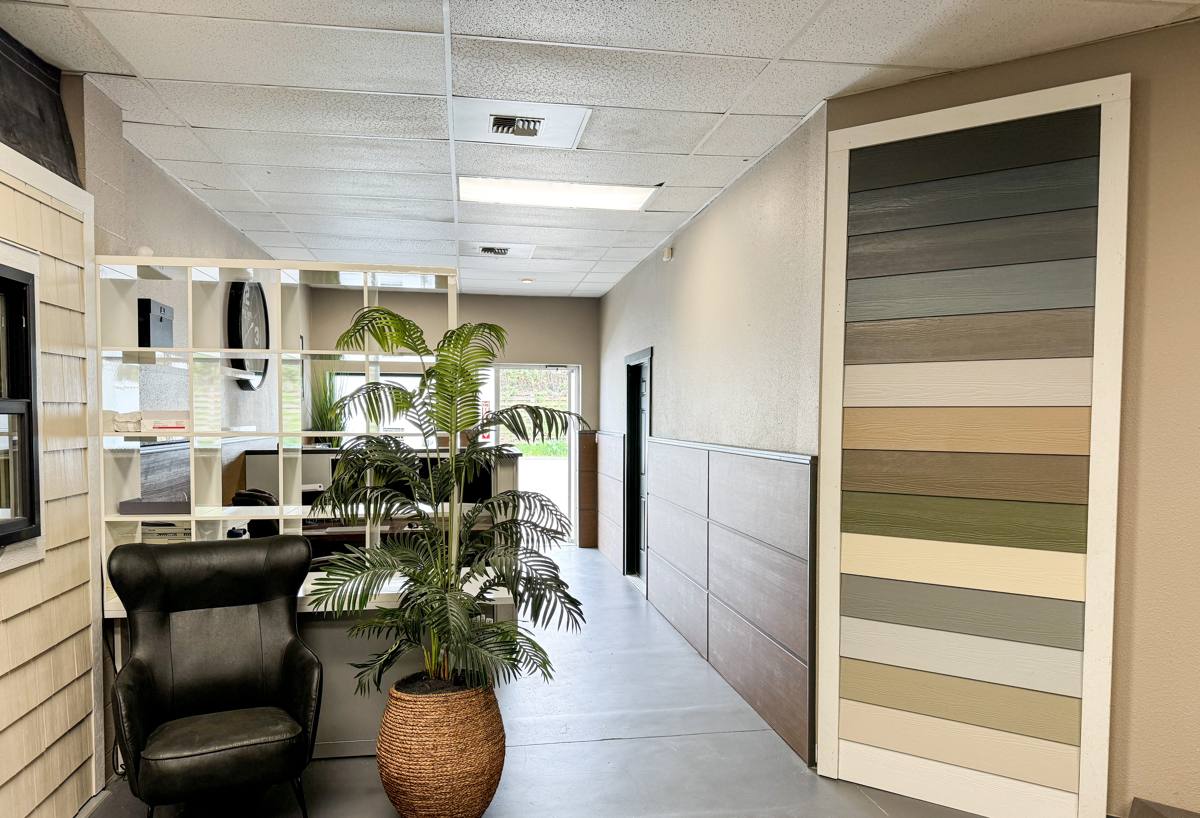
- Factory-applied ColorPlus finish: The color coat is cured under controlled factory conditions rather than brushed on at the job site, so it holds up against fading and moisture far longer than field-applied paint.
- Climate-engineered HZ product lines: Hardie's HZ5 formulation is built for regions with heavy sustained moisture and freeze-thaw cycling, which fits Bellingham and the rest of coastal Whatcom County better than a generic national spec.
- Dimensional stability: Fiber cement doesn't swell, cup, or warp the way engineered wood products can after repeated wet-season moisture cycles, which keeps joints and reveals consistent over time.
- Strong transferable warranty: Hardie backs its products with one of the more substantial warranty structures in the industry, provided the installation follows spec — which is exactly why we hold our own installation work to that standard.
We don't install LP SmartSide, vinyl siding, Cemplank, Allura, primed spruce, or cedar. Those are legitimate products, and other contractors install them well. LP SmartSide is an engineered wood product that performs reasonably in drier climates, but in a marine environment with this much sustained rain and humidity, it's more sensitive to moisture intrusion at cut edges and fastener penetrations than fiber cement. Vinyl is affordable and low-maintenance in a general sense, but it can warp in direct sun, crack in a cold snap, and trap moisture behind the panel if the house wrap and flashing underneath aren't detailed with real care — a mistake that's easy to make and hard to spot once the siding is up. Cedar and primed spruce are attractive natural materials, but they need ongoing painting or sealing to keep moisture out, and in a climate this wet, that maintenance schedule tends to slip in a way that shortens the material's real-world lifespan. We made a professional call to install one system we can fully stand behind rather than offer a cheaper alternative that quietly shifts maintenance risk onto the homeowner.
Our Installation Process, Start to Finish
A siding installation on a Bellingham home generally follows the same sequence, though the details shift with the house:
- On-site assessment: We walk the exterior, check the condition of the existing siding and substrate, and look specifically at how the current wall assembly has handled moisture and salt exposure over time.
- Written scope and estimate: Before any work starts, we put together a clear, written plan covering material, timeline, and what the tear-off is likely to expose.
- Tear-off: Removing the old siding is also when we find out what's actually happening behind it — trapped moisture, rotted sheathing, or failed house wrap that wasn't visible from outside.
- Substrate repair: Any damaged sheathing or framing found during tear-off gets addressed before new siding goes on. Installing over a compromised substrate just buries the problem.
- House wrap and flashing: This is the water-management layer that does the real work. It gets installed and integrated with window and door flashing as one continuous system, not patched together piecemeal.
- Siding installation: Panels or planks go on to James Hardie's fastening and clearance specifications, with joints, corners, and trim detailed for this climate's wind-driven rain.
- Trim, caulking, and finish work: The details that determine whether water tracks in at a seam or gets shed cleanly.
- Final walkthrough: We go over the finished job with the homeowner and address anything before calling it complete.
Not every siding concern in Bellingham requires this full sequence. Isolated impact damage or a section that failed around a single window can sometimes be repaired and matched into existing Hardie siding. But once moisture has been tracking behind a wall assembly for a while, or the existing siding has simply reached the end of its service life, a patch usually just delays a bigger job. We'll tell you plainly which situation you're actually in before recommending a full installation.
Siding Installation Cost Factors in Bellingham
| Factor | What It Affects | Why It Matters Here |
|---|---|---|
| Home size and wall complexity | Total material and labor | Bellingham's older hillside homes often have more dormers, trim, and roof intersections where wind-driven rain can work its way in |
| Tear-off vs. installing over existing siding | Labor scope and substrate access | Tear-off exposes hidden moisture damage that's common under decades-old siding in this climate, but is usually the more reliable long-term approach |
| Substrate condition found at tear-off | Repair costs before new siding goes on | Years of trapped moisture behind failing siding can rot sheathing and framing before it's ever visible from outside |
| Trim, corners, and color selection | Material cost and finish longevity | ColorPlus factory finishes outlast field-applied paint against salt air and UV exposure |
| Site access and lot terrain | Labor time and equipment needs | Sloped hillside lots and mature tree cover common in Bellingham neighborhoods can add staging and setup time |
Real numbers depend on the specific house and what tear-off finds underneath, which is why we walk the property before quoting rather than pricing off square footage alone.
Signs an Existing Installation Wasn't Done Correctly
- Moss or dark staining that returns quickly after cleaning, especially on shaded or north-facing walls
- Soft or spongy siding near the base of the wall or around window and door trim
- Visible gaps or open seams at corners, trim joints, or butt joints where water can track in
- Warping, cupping, or boards that no longer sit flat against the wall
- Peeling paint or bubbling that keeps coming back in the same spots after repainting
- Rising heating bills that may point to a wall assembly that's no longer sealing properly
Why a Crew That Already Works Bellingham Matters
An installation crew that works this stretch of Whatcom County regularly has already seen how salt air, wind-driven rain, and moss actually behave on real Bellingham houses across a full year, not just how a product performs on paper. That shows up in specific installation decisions: where extra flashing attention pays off, which wall orientations stay wet longest and need more drainage detailing, and which corners are worth the extra time so the homeowner isn't dealing with a callback two winters later. Bellingham's mix of hillside terrain, bay exposure, and older housing stock means the same general climate problem shows up differently from one property to the next, and a crew with hands-on local experience accounts for that instead of installing every job the same way regardless of the site.
If you're planning a siding installation in Bellingham, or you want an honest read on whether your current siding was installed correctly, we're glad to take a look. Reach out using the form below to schedule a free, no-pressure estimate.