 Birch Bay Siding
 Metal Roofing Built for Birch Bay Village's Coastal Climate
Birch Bay Village sits close enough to the water that homes here take a different kind of weathering than roofs a few miles inland. Salt-laden air drifts off Birch Bay itself, wind-driven rain comes in sideways during winter storms, and the tree cover that gives the neighborhood its shade also keeps roofs damp longer than they'd like to be. Add in Whatcom County's long gray season, and you've got a climate that's genuinely hard on a roof year-round, not just during the occasional storm.
Metal roofing holds up well against most of that when it's specified and installed correctly for this exact environment. But "metal roofing" isn't one product — it's a category with real differences in coating, fastening method, and detailing, and those differences matter more here than they would in a drier, inland climate. This page is about what a metal roof needs to actually deliver on its promise in Birch Bay Village, not a generic rundown of metal roofing in general.
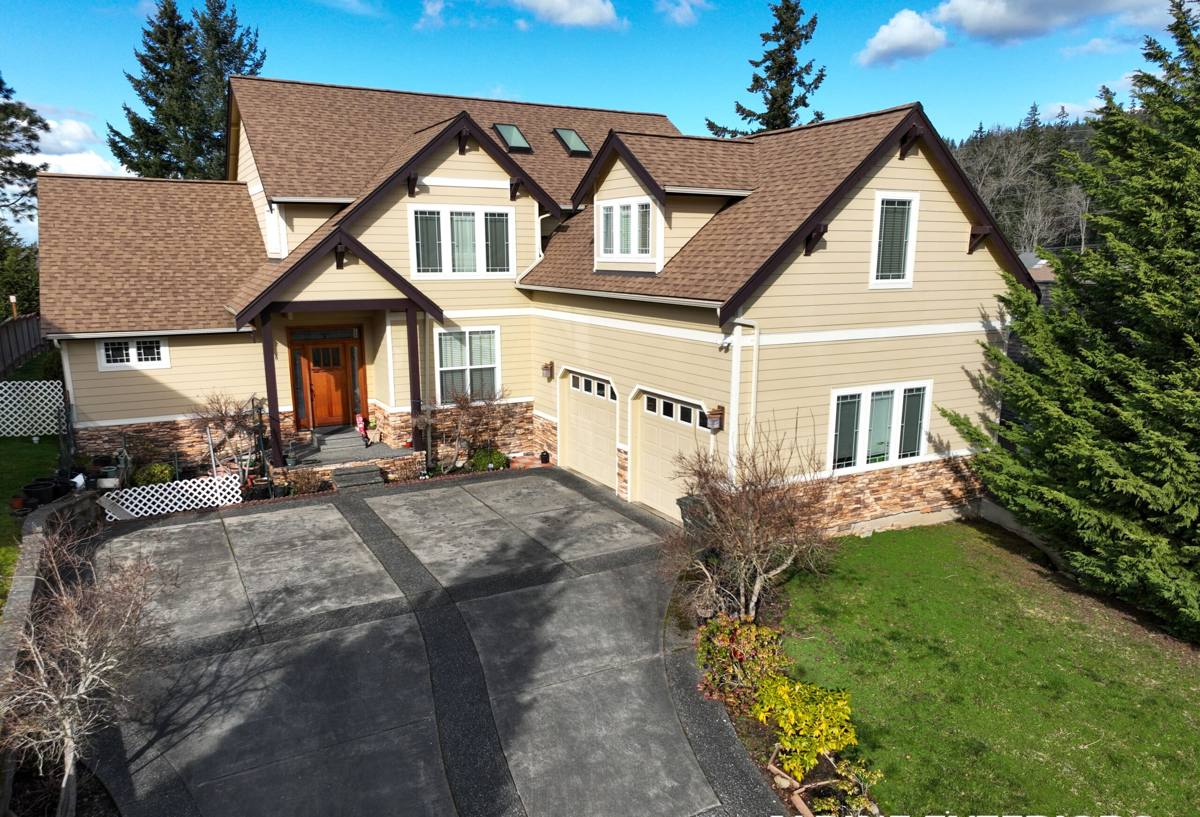
What Salt Air and Marine Moisture Actually Do to a Roof
Salt air isn't just an inconvenience — it's a corrosion accelerant. Airborne salt settles on exposed metal, and combined with the moisture that never fully leaves this climate, it speeds up oxidation at cut edges, fastener heads, and any spot where a coating has been scratched or worn through. Homes closer to the water get more of this exposure than homes set back, but the whole village sees more salt-driven wear than a comparable roof in a dry inland town.
The Specific Failure Points We Watch For
- Fastener heads: exposed-fastener systems rely on a rubber washer that hardens and cracks over time, letting salt moisture reach bare steel underneath.
- Cut edges: anywhere a panel was field-cut, the protective coating is gone and bare metal is exposed unless it's properly sealed or capped.
- Dissimilar metals: mixing metal types (like the wrong screws or flashing) can set off galvanic corrosion that eats through the weaker metal fast.
- Low-slope valleys and transitions: areas where water and salt spray sit longest are always the first to show wear.
None of this means metal roofing is a bad fit for Birch Bay Village — it means the coating system, fastener choice, and detailing have to be matched to a marine-influenced climate, not a generic spec sheet.
Choosing the Right Metal Roofing System for This Location
There are three broad categories of residential metal roofing, and they perform differently in salt air and heavy rain. We walk homeowners through the real tradeoffs rather than pushing one option by default.
| System | Fastening | Coastal/Salt Performance | Best Fit |
|---|---|---|---|
| Standing seam | Concealed clips, no exposed fasteners | Strongest — no exposed screw heads for salt to attack | Full roofs in higher-exposure spots, long-term ownership |
| Exposed-fastener panel | Screws through the panel face | Weaker — washers and fastener heads are the first failure point | Lower-budget projects, outbuildings, shorter hold periods |
| Metal shingle/shake panels | Often concealed, interlocking | Good, depends on coating and underlayment quality | Homeowners who want a traditional look with metal's durability |
For most primary residences in Birch Bay Village, we lean toward standing seam or a well-engineered interlocking panel because concealed fasteners remove the single biggest weak point in a salt-air environment. Exposed-fastener panels aren't wrong for every project, but we're upfront that they carry more long-term maintenance in this climate, and we say so before a homeowner commits.
Coating and Gauge Matter as Much as the Panel Style
A thin panel with a weak coating will underperform a thicker panel with proper coating even if they look identical from the ground. We spec coatings rated for coastal exposure and steel gauges that hold their shape under wind load, rather than defaulting to whatever is cheapest to move. This is a case where the visible product looks the same on install day and the difference only shows up five or ten years later.
Moss, Algae, and Shade — The Other Half of the Equation
Birch Bay Village's tree cover is part of what makes the neighborhood pleasant to live in, but shaded roof sections stay damp far longer after rain than open, sun-exposed roofs. That extended dampness is exactly what moss and algae need to get established. On a metal roof, moss itself isn't going to root into the panel the way it can work into shingle mat — but moss buildup traps moisture against seams, fasteners, and paint finishes, which speeds up the corrosion and coating breakdown described above.
What Actually Prevents Moss Buildup on Metal
- Correct panel overlap and slope so water sheets off instead of sitting
- Keeping valleys and low-slope transitions clear of debris that holds moisture
- Trimming back overhanging branches where practical, since shade and leaf litter are what feed the problem
- Choosing finishes and colors that don't hide early growth, so it gets addressed before it spreads
We don't sell moss treatments as a one-time fix. On a well-installed metal roof in this climate, moss control is mostly about geometry and drainage done right the first time, plus the occasional debris clearing — not chemical treatments applied on a schedule.
What a Correct Metal Roof Installation Involves Here
The panels themselves get most of the attention, but the parts underneath and around them are what determine whether a metal roof actually performs through a Whatcom County winter.
Underlayment
Given how much wind-driven rain this area sees, we don't treat underlayment as an afterthought. A high-temperature, self-adhering underlayment at eaves, valleys, and penetrations gives the roof a second line of defense if wind ever forces water up under a seam — which happens during the harder coastal storms that roll through in fall and winter.
Flashing and Penetrations
Chimneys, vent stacks, and any roof-to-wall transitions are where most metal roof leaks actually originate — not the field panels. Flashing has to be formed and sequenced correctly, not just caulked over, because sealant is a backup, not the primary water barrier.
Fastening and Clip Systems
On standing seam, clip spacing has to account for local wind exposure, which is higher near open water and in gaps between tree lines. We don't use a one-size-fits-all fastening schedule across every lot in the village — homes with more direct exposure get tighter clip spacing and heavier-gauge panels where it's warranted.
Ventilation
A metal roof over a poorly ventilated attic can trap moisture underneath the deck, which leads to condensation problems that have nothing to do with the roofing material itself and everything to do with airflow. We check ridge and soffit ventilation as part of any metal roofing project, not as a separate line item people skip to save money.
Repair, Recover, or Full Replacement — How We Help You Decide
Not every metal roof problem in Birch Bay Village calls for a full tear-off. We look at a few things before recommending the more expensive option:
- Localized corrosion: if it's confined to a few fasteners or one flashing detail, targeted repair is usually the honest answer.
- Coating failure: chalking or fading paint doesn't always mean the metal underneath has failed — sometimes a recoat extends service life meaningfully.
- Structural panel damage: denting, oil-canning, or widespread fastener backout across the roof usually points to replacement rather than patchwork.
- Age against the coating warranty: a roof approaching the end of its coating's rated life is a reasonable point to plan replacement before failures start rather than after.
We'd rather tell a homeowner their roof has a few good years left with a minor repair than sell a replacement that isn't needed yet. It's a smaller job today, but it's the kind of call that keeps people calling us back when the roof does eventually need real work.
Our Process for Birch Bay Village Projects
Because we already work regularly in this part of Whatcom County, we're familiar with the general exposure conditions of the area — proximity to the water, the tree cover common to the neighborhood, and the kind of weather that moves through in the fall and winter. That familiarity shapes the estimate itself:
- An on-site inspection of the existing roof, decking condition, ventilation, and any visible corrosion or moss buildup
- A straightforward conversation about which system fits the home's exposure, budget, and how long you plan to own it
- A written scope covering underlayment, flashing details, fastener or clip system, and ventilation — not just "metal roof, X square feet"
- Installation sequenced around the weather window, since we don't want a partially open roof deck sitting through an unexpected coastal storm
- A final walkthrough covering what maintenance, if any, the specific system needs going forward
Maintenance That Actually Extends the Life of a Metal Roof Here
Metal roofing is genuinely low-maintenance compared to most alternatives, but "low-maintenance" doesn't mean "zero-maintenance" in a marine climate. A short annual check catches most problems while they're still cheap to fix.
- Clear debris from valleys and low-slope areas where moisture and moss tend to collect
- Look at fastener heads and washers for cracking or rust streaking, especially on exposed-fastener systems
- Check flashing around chimneys, vents, and any roof-to-wall transitions for gaps or lifted sealant
- Watch for moss buildup in shaded sections and clear it before it packs into seams
- Note any oil-canning, dents, or panel movement after a hard windstorm
Most of this is a fifteen-minute visual check from the ground or a ladder, not a full roof-access inspection every time. We're glad to walk a homeowner through what to look for so small issues get caught before they turn into repairs.
Why It Matters That We Already Work This Neighborhood
A metal roof spec that works fine in a dry inland climate can underperform on a home a few miles from Birch Bay's shoreline. A crew that hasn't worked this specific stretch of coastline may not automatically account for the salt exposure, the moss-feeding shade cover, or the wind-driven rain patterns that show up here more than in other parts of Whatcom County. We're not guessing at what this climate does to a roof — it's the environment we install and repair in regularly, and the details in this page reflect what we've actually had to account for on jobs in and around Birch Bay Village.
If you're weighing metal roofing for a home in Birch Bay Village — whether it's a full replacement, a repair on an existing metal roof, or you're just trying to figure out which system makes sense for your specific lot — we're happy to take a look and give you a straight answer. Use the form below to request a free, no-pressure estimate.