 Birch Bay Siding
 Why Windows Take a Beating in Custer's Coastal Climate
Custer sits just inland from the Birch Bay shoreline, close enough to catch the same salt-laden air, driving rain, and long gray stretches that define Whatcom County winters. Windows here don't fail because of one bad storm. They fail slowly, from years of small exposures that add up: salt air working into hardware and fasteners, wind-driven rain testing every seal along the frame, and a moss season that can stretch from October into April, keeping moisture sitting against trim and sills long after a storm has passed.
A window that was installed correctly for a drier inland climate often isn't detailed the same way a coastal Whatcom County home needs. The frame material, the flashing, the sealant, even the hardware finish all matter more here than they would fifty miles east. That's the starting point for any honest conversation about replacing windows in Custer — not the style or the brand, but whether the job accounts for what this specific stretch of coastline does to a house year after year.
What "Custom" Actually Means for a Custer Home
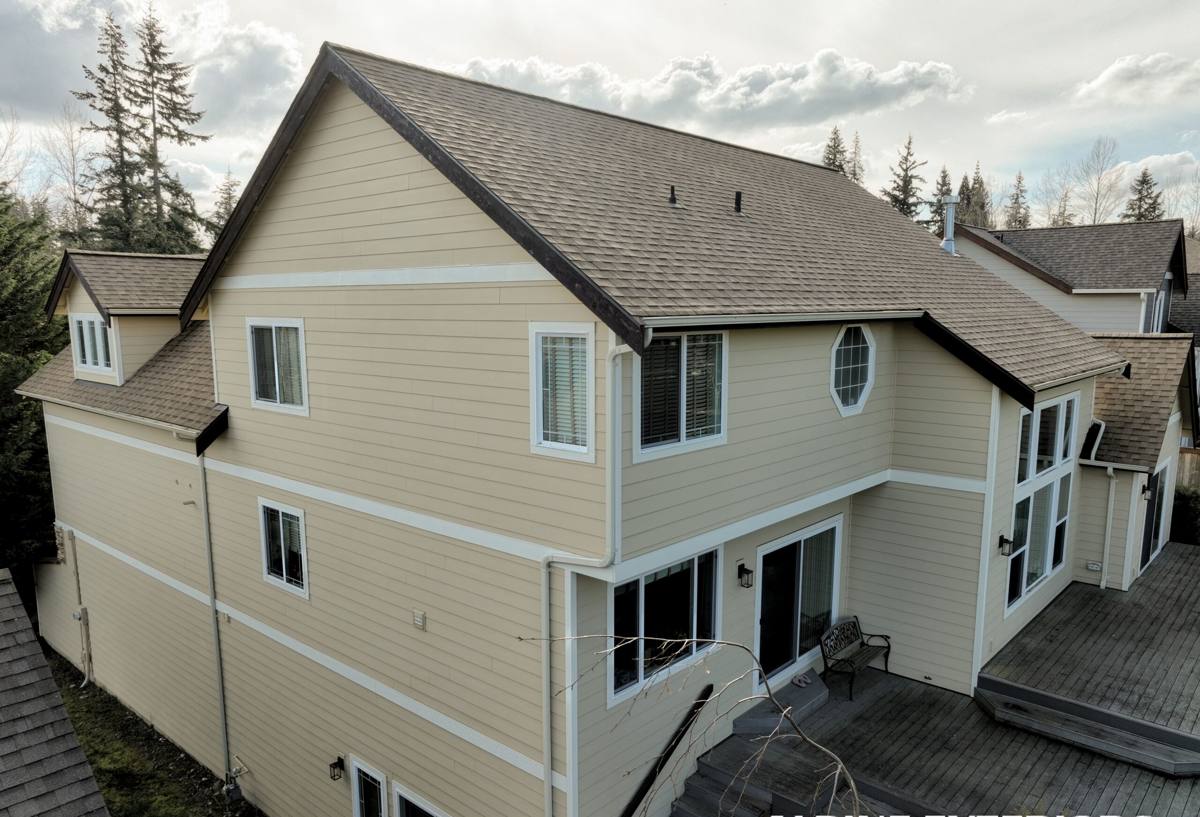
A lot of Custer's housing stock is older and site-built rather than tract-built, which means openings have settled, shifted, or were never perfectly square to begin with. "Custom" isn't a marketing word here — it's a practical requirement. Every opening gets measured individually, out-of-square conditions get accounted for, and the replacement window is sized and shimmed to that specific opening rather than forced into a standard frame.
Skipping this step is one of the most common causes of early window failure we see. A window that's slightly undersized or forced into an out-of-square opening will have gaps that no amount of caulk fully solves. Those gaps are exactly where wind-driven rain finds its way in, and exactly where salt-laden moisture sits and works on the frame material over time.
What Custom Sizing Actually Involves
- Measuring width and height at multiple points (top, middle, bottom) since older openings are rarely perfectly consistent
- Checking the opening for square and plumb, not just size
- Confirming the depth of the opening against the frame profile being installed
- Noting any existing rot, soft framing, or moisture staining before ordering — not after removal
Signs Your Current Windows Are Losing the Battle
Most homeowners in Custer don't call about windows until something is visibly wrong. By the time you notice a few of these, the window has usually been struggling quietly for a while.
- Fogging or a hazy film between the panes of a double-pane window — the seal has failed and the gas fill is gone
- Drafts you can feel near the frame on a windy day, even with the window latched
- Soft or discolored wood at the sill or bottom corners of the frame
- Windows that are difficult to open, close, or lock — a sign the frame has shifted
- Visible gaps or cracked caulking around the exterior trim
- Moss, algae, or a persistent green tint forming on the frame or sill
- Condensation forming on the inside of the glass during cold, wet weeks
Frame Material Options for a Coastal Property
There's no single "right" frame material for every Custer home — it depends on your budget, how much maintenance you want to take on, and how exposed the specific side of the house is to weather off the water. Here's how the common options actually compare in this climate.
| Material | Moisture & Salt Air Resistance | Maintenance | Typical Lifespan |
|---|---|---|---|
| Vinyl | Good — won't rot or corrode, though color can fade with years of sun and salt exposure | Low — occasional cleaning | 20-30 years |
| Fiberglass | Excellent — very stable in wet, salty conditions, minimal expansion/contraction | Low | 30-40+ years |
| Aluminum-clad wood | Good on the exterior face, but any breach in the cladding exposes wood underneath | Moderate — watch cladding seams | 25-35 years |
| Solid wood | Poor without diligent upkeep — the material most sensitive to sustained coastal moisture | High — regular painting/sealing | Varies widely with maintenance |
For most Custer homes we work on, vinyl and fiberglass are the practical choices — they hold up against salt air and driving rain without demanding ongoing upkeep. Wood-framed windows can still look great, but we're upfront that they're a bigger maintenance commitment this close to the water, not a "install and forget" product.
Glass and Weatherproofing Choices That Matter Here
Pane Count
Double-pane windows with a quality low-E coating and argon gas fill are the standard baseline for this area, and they perform well. Triple-pane adds meaningful value mainly where a wall faces directly into prevailing wind and rain, or where interior condensation has been a chronic problem — otherwise it's often a bigger cost increase than the practical benefit justifies.
Coatings and Seals
Low-E coatings reduce heat loss and help cut down on the interior condensation that shows up during Whatcom County's long, damp, cool stretches. The seal quality between panes matters just as much as the coating — a cheap seal will let gas fill escape within a few years regardless of what glass package you chose, which is why fogged double panes are one of the most common failures we replace.
Installation Details We Never Skip
The window itself is only part of the equation. In a climate with regular wind-driven rain, how the window is integrated into the wall determines whether it lasts fifteen years or thirty-five.
- Sill pan flashing — a sloped, sealed pan under the window directs any water that gets past the frame back outside instead of into the wall cavity
- Proper integration with the house wrap or building paper — flashing tape needs to shingle correctly with the existing weather-resistive barrier, not just sit on top of it
- Back-caulking — sealant applied behind the nailing fin before the window is set, not just around the visible exterior trim afterward
- Correct fastening — enough fasteners, in the right locations, so the frame doesn't rack or bow over time
- Weep holes left clear — so any incidental moisture in the frame can drain rather than pool
Every one of these steps is invisible once the trim goes back on. That's exactly why they're the details that separate a window replacement that lasts through a couple decades of Birch Bay winters from one that starts leaking within a few years.
Our Process, Start to Finish
- On-site estimate — we measure every opening individually and check for existing rot, moisture damage, or square issues before quoting anything
- Straightforward proposal — frame material, glass package, and installation scope laid out clearly, no pressure to upsize the job
- Ordering and scheduling — custom windows are built to your exact openings, so we schedule installation once product is confirmed and in hand
- Removal and prep — old windows come out carefully, and we address any rot or damage found in the opening before the new window goes in, not after
- Installation and flashing — sill pan, flashing integration, back-caulking, and fastening done to spec, not shortcuts
- Exterior and interior finish — trim, caulking, and sealant finished cleanly on both sides
- Final walkthrough — we test operation on every window with you before calling the job done
Why Hire a Crew That Already Works in Custer
A window crew that regularly works this stretch of Whatcom County already knows what a typical Custer home from a given era tends to look like behind the trim, how exposed a given wall orientation usually is to weather off the water, and which details actually matter here versus a drier inland job. That's not a sales pitch — it's the difference between a crew that treats every job as generic and one that already knows what questions to ask before pulling the first window.
We're not going to tell you a product or a competitor's approach is "bad" — plenty of materials and methods work fine in the right conditions. What we will do is tell you honestly when something is a poor fit for a house that sits in salt air and driving rain for months at a time, and explain why, so you can make an informed call rather than guess.
Timing a Window Project Around Local Weather
Window replacement can happen most of the year here, but scheduling around the wettest stretches makes for a cleaner install and less risk of exposed openings during a storm. We plan installs to keep openings covered and protected for as short a window as possible, and we watch the forecast rather than pushing through a job when conditions work against a good seal.
If you're noticing drafts, fogged glass, or trim trouble on a Custer property, we're happy to take a look and give you a straightforward, no-pressure estimate — just fill out the form below.