 Birch Bay Siding
 Composite Decking for Blaine Homes
Blaine sits right up against the water, and that changes what a deck has to survive. Between salt-laden air off the bay, long stretches of driving rain, and a moss season that can run from October well into spring, a deck here works harder than one built forty miles inland. Composite decking has become the go-to choice for homeowners who want to stop fighting that climate every year — but only when it's specified and installed correctly for coastal Whatcom County conditions. Get the details wrong, and even a "low-maintenance" composite deck can trap moisture, stain, or loosen at the fasteners within a few seasons.
This page covers what we look at specifically for composite decking jobs in the Blaine area: material selection, hardware, framing, and the ongoing care that keeps a deck looking right through wet winters and salty summers.
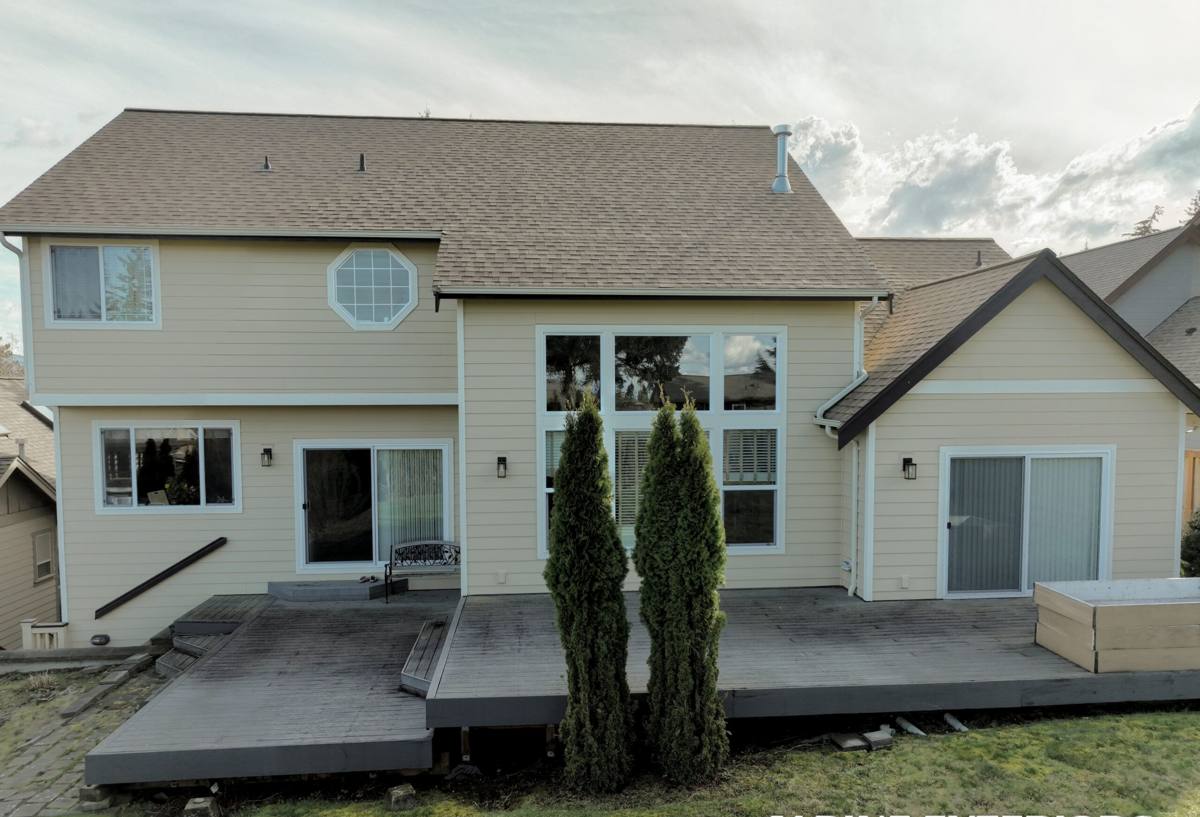
What Blaine's Climate Actually Does to a Deck
Salt Air
Proximity to the bay means airborne salt settles on everything outdoors, including your deck's fasteners, railing hardware, and any exposed metal flashing. Standard zinc-coated screws and brackets corrode faster here than they would in a drier, inland yard. Corrosion doesn't just look bad — a rusted-out fastener under a board is a structural weak point you can't see until something moves underfoot.
Driving Rain
Storms coming off the water tend to arrive sideways, not straight down. That pushes water into places a calmer rain wouldn't reach: under ledger boards, behind fascia, into end-grain cuts, and along any gap in flashing. A deck that isn't detailed for wind-driven rain will show water intrusion at the house connection long before the decking surface itself fails.
Moss Season
Whatcom County's long damp stretch is exactly what moss, algae, and mildew need to take hold. Shaded decks, north-facing decks, and any area near overhanging trees or dense landscaping stay damp longer and grow organic buildup faster. Composite decking resists rot the way wood can't, but the surface can still host moss and algae if it isn't cleaned or if drainage underneath is blocked.
What a Correct Composite Deck Build Involves
The decking boards get the attention, but most of the failures we get called out to fix trace back to what's underneath or around them, not the boards themselves.
- Joist spacing set to the manufacturer's spec for your specific board and installation angle — composite typically needs tighter spacing than lumber, especially on diagonal or picture-frame layouts
- Proper ledger flashing where the deck meets the house, sized and lapped to shed wind-driven rain rather than just vertical rain
- Ventilation and drainage maintained under the deck surface so trapped moisture can escape instead of sitting against joists
- Corrosion-resistant fasteners and hardware rated for coastal or high-moisture exposure
- Expansion gapping between boards set correctly for the temperature at time of install, since composite moves seasonally
- Cut ends and drilled holes sealed or capped per manufacturer instructions, especially on uncapped composite products
Skip any one of these and you can end up with a deck that looks fine from the top for a year or two while problems build underneath.
Choosing the Right Composite Board for This Area
Not all composite decking is built the same way, and the differences matter more here than in a mild, dry climate. The main choice is between capped composite and uncapped (or "budget-tier") composite, with PVC decking as a related but distinct option.
| Material | Moisture Handling | Maintenance | Best Fit |
|---|---|---|---|
| Uncapped composite | Can absorb moisture at cut ends and edges over time | Periodic cleaning; more prone to staining and mold in damp conditions | Budget-conscious projects, covered or drier locations |
| Capped composite | Polymer shell resists moisture absorption and staining | Occasional wash-down; holds up well to sustained damp weather | Most Blaine yards, especially shaded or bay-exposed decks |
| PVC decking | Fully synthetic, essentially impervious to moisture | Lowest maintenance; can run warmer underfoot in direct sun | High-moisture or heavy-shade sites, pool and waterfront decks |
| Pressure-treated wood | Absorbs water readily; needs sealing to resist it | Annual cleaning, sealing, and inspection for rot | Lower upfront cost, owners willing to maintain it yearly |
For most Blaine properties, especially anything close to the water or shaded by trees, we steer people toward capped composite or PVC. It's not that uncapped composite is a bad product — it's that the moisture profile of this area punishes materials that aren't built to shed water at the cut ends and fastener holes.
Railings, Fasteners, and Hardware: The Detail Most Jobs Get Wrong
A composite deck is only as durable as its hardware, and hardware is where salt air does the most damage. We spec stainless steel or coated fasteners rated for coastal exposure, along with corrosion-resistant joist hangers, post bases, and railing brackets. Aluminum or properly coated steel railing systems hold up far better here than untreated steel, which can start showing rust streaks down the decking within a season or two.
This is also where cutting corners is easiest to hide. Standard interior-grade screws look identical to coastal-rated ones on installation day — the difference only shows up two or three winters later, once corrosion has already started under the board surface.
Keeping Moss and Algae Off a Composite Deck
Even the best capped composite board will grow surface algae or moss if it sits damp and shaded long enough. The fix isn't a different material — it's a combination of build details and simple upkeep:
- Sweep debris and standing leaves off the deck regularly during fall and winter
- Rinse or wash the surface a few times a year, more often in shaded or north-facing areas
- Keep gaps between boards clear so water drains through rather than pooling
- Trim back overhanging branches and dense landscaping that keep the deck surface damp
- Address any standing water or poor drainage under the deck before it becomes a moss source
A deck built with the right ventilation and drainage from the start needs far less of this than one where water has nowhere to go.
Our Process for Composite Decking Projects in Blaine
We approach every deck as a system, not just a set of boards to install.
1. On-Site Assessment
We look at sun exposure, wind direction, shading, drainage, and how exposed the site is to salt air off the bay before recommending a board tier.
2. Material and Layout Selection
We walk through capped composite, PVC, and framing options honestly, including trade-offs on cost, appearance, and long-term maintenance, so you're choosing based on real information for your yard.
3. Framing and Flashing
Joists, ledger connections, and flashing get built to handle wind-driven rain, not just vertical rainfall — this is the part of the job that determines whether a deck stays dry at the house connection for the next twenty years.
4. Installation
Boards go down with correct spacing, gapping, and fastening for the specific product, using coastal-rated hardware throughout.
5. Final Walkthrough
We go over drainage, care recommendations specific to your deck's sun and shade pattern, and what to expect from the material through the wet season.
Permits and Site Considerations
Deck projects in Whatcom County commonly involve permitting, and requirements can shift depending on deck height, guardrail needs, and proximity to property lines or shoreline setback rules, which matter more for waterfront and near-waterfront lots around Blaine. We handle the permitting conversation as part of the estimate so there are no surprises once the project starts.
Why Hire a Crew That Already Works This Area
A contractor who mainly builds decks in drier, inland climates can still do competent framing — but they may not default to coastal-rated fasteners, may not size flashing for driving rain, or may not think about moss and shade patterns when recommending a board tier. Those aren't exotic details; they're the specific things that determine whether a Blaine deck still looks and performs well after five or six wet seasons instead of two or three. A crew that regularly works Whatcom County's coastal properties builds those decisions in from the start rather than learning them from a callback.
Get a Free Estimate
If you're planning a new composite deck or replacing one that hasn't held up to the weather here, we're happy to walk the site, talk through material options honestly, and give you a straightforward estimate. There's no pressure and no obligation — just a clear look at what your deck actually needs. Use the form below to get started.