 Birch Bay Siding
 Blaine's Exterior Walls Work Harder Than Most
Blaine sits right on the water in northern Whatcom County, close enough to Semiahmo Bay that salt-laden air is just part of daily weather. Add in the long stretch of driving rain that rolls off the Strait of Georgia through fall and winter, and a shaded, moisture-holding moss season that can run half the year, and you've got a set of conditions that wears down exterior siding faster than most manufacturers' glossy brochures admit. We see it constantly on repair calls: siding that looked fine from the street but had been quietly failing behind the surface for a year or more.
This page is about one thing specifically — repairing siding on homes in and around Blaine — not a general overview of siding repair everywhere. The climate here, the housing stock, and the way salt air and moss interact with different siding materials all shape how a repair should actually be done.
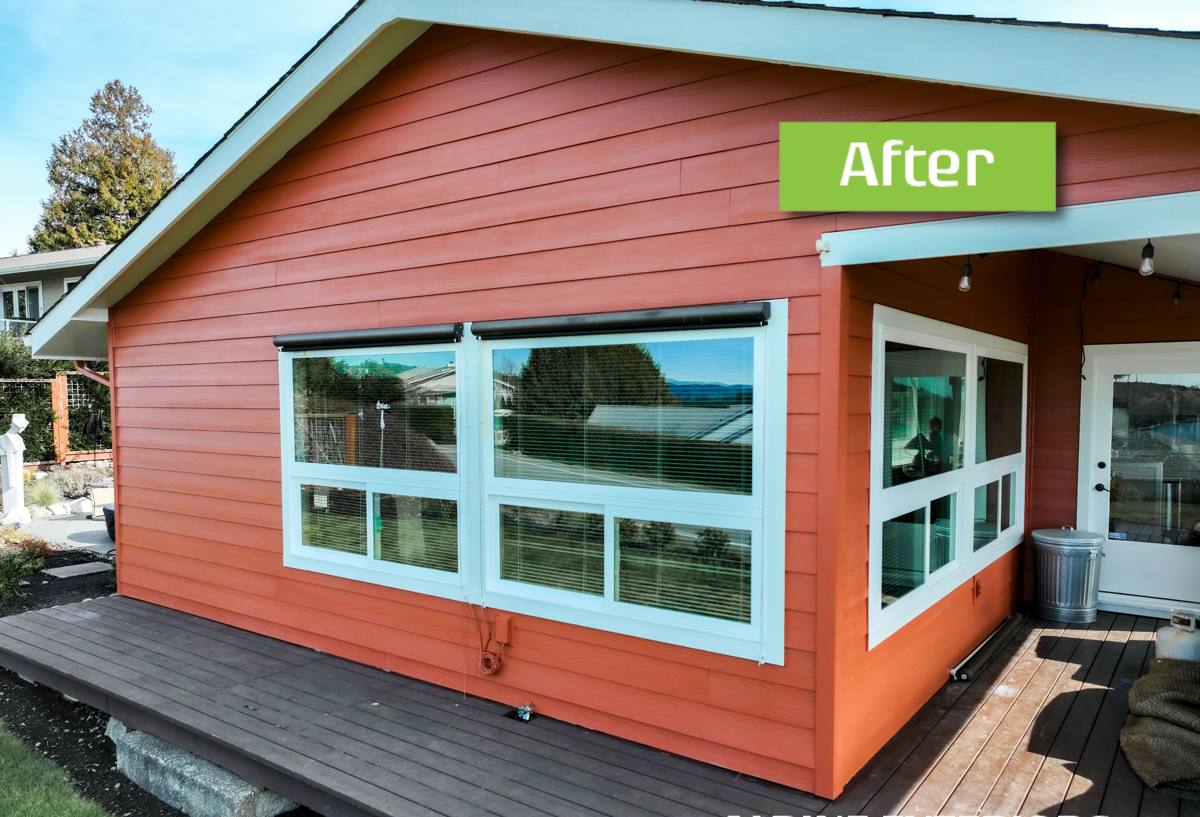
What Blaine's Climate Does to Siding Over Time
Three factors drive most of the repair work we do in this part of Whatcom County:
- Salt air: Airborne salt from the bay accelerates corrosion on fasteners, trim flashing, and any metal components tucked behind or around siding panels. It also breaks down some paint and coating systems faster than inland exposure would.
- Driving rain: Wind-driven rain doesn't just wet the surface — it pushes moisture sideways into seams, laps, and butt joints that were never designed to handle water moving horizontally. Over time, that's where rot and swelling start.
- Moss and prolonged dampness: Shaded north walls and tree-lined lots in this area stay damp for extended stretches. Moss and algae hold moisture against the siding surface long after a storm has passed, which is exactly the condition that lets water find its way into any gap or crack.
None of these factors act alone. A small caulking failure that would be a cosmetic non-issue in a dry inland climate becomes a real moisture-entry point here, because the exposure is near-constant for months at a stretch.
The Warning Signs We Look For
Moisture and Rot Indicators
Soft spots when you press on the siding, dark staining that spreads outward from seams, paint that's bubbling or peeling in a localized area, and a musty smell near exterior walls inside the home are all signs that moisture has gotten behind the siding — not just on it. By the time these are visible from the outside, there's often already damage to the sheathing or framing underneath.
Impact and Mechanical Damage
Cracked or chipped panels, siding that's pulled away from the wall at a corner or edge, and fasteners that have backed out or rusted through are common after wind events or simply from age. These are usually more straightforward fixes if caught before water gets a chance to work its way in.
Caulking, Trim, and Flashing Failure
Cracked or shrunken caulk joints, gaps around window and door trim, and flashing that's lifted or corroded are the quiet failures. They rarely look urgent, but in a driving-rain climate they're often the actual source of a moisture problem that shows up somewhere else entirely.
What a Correct Repair Actually Involves
A siding repair that just covers the visible problem is a repair that comes back. Here's what we consider non-negotiable on every job:
- Diagnose before cutting. We check for moisture intrusion behind the visible damage, not just at the spot the homeowner pointed out. Damaged siding is often a symptom, not the whole problem.
- Address the water path, not just the panel. If a flashing detail or caulk joint let water in, that gets corrected as part of the repair — otherwise the new siding fails the same way the old siding did.
- Match material and profile. Patching in a different siding type, thickness, or exposure than what's already on the wall creates a visible seam and, worse, can create new water-entry points where the materials meet.
- Refasten and seal to spec. Correct fastener type, spacing, and caulk selection matter more in a salt-air, high-rain environment than almost anywhere else — corner-cutting here is exactly what shows up as a callback in eighteen months.
- Finish so the repair disappears. Color and sheen matching on the patched section, cleaned-up trim lines, and proper touch-up are part of the job, not an afterthought.
Repair or Replace? How We Help You Decide
Not every damaged section needs full replacement, but not every repair is worth doing either. We walk homeowners through this honestly rather than defaulting to whichever option is more profitable for us.
| Factor | Leans Toward Repair | Leans Toward Replacement |
|---|---|---|
| Extent of damage | Isolated section, one or two wall areas | Damage recurring across multiple elevations |
| Underlying material | Sound sheathing behind damaged panels | Rot or soft sheathing found once panels are opened up |
| Siding age | Mid-life siding with a few isolated failures | Siding at or past its expected service life |
| Product match | Same product line still available to match | Discontinued product with no clean match possible |
| Root cause | Cause identified and fixable in place | Systemic moisture issue affecting the whole wall assembly |
When repair makes sense, we'll say so and price it accordingly. When it doesn't — when we open up a section and find the underlying problem is bigger than the visible symptom — we'll show you what we found before recommending replacement.
Why Material Choice Matters When You're Repairing
We install James Hardie fiber cement siding exclusively, and that shapes how we approach repair work too. Fiber cement doesn't absorb water the way wood-based siding products can, and it holds up to salt air and sustained dampness better than materials that rely on a surface coating alone to keep moisture out. That matters in Blaine specifically, where the combination of salt exposure and a long wet season punishes anything with a weak point in its moisture defense.
When we're repairing existing James Hardie siding, we can typically match the ColorPlus factory finish and HZ5 product profile closely enough that the repair blends in rather than standing out. When we're called to a home with vinyl, primed wood, or another fiber cement brand and the damage is more than a spot patch, we'll be straightforward about the tradeoffs: those products each have their own maintenance rhythm, moisture behavior, and repair limitations, and in some cases a lasting fix means transitioning the affected area — or eventually the whole home — to a system built for this climate rather than chasing the same failure year after year.
Our Process, Start to Finish
- Site visit and inspection. We look at the damage, check surrounding areas for related issues, and if needed, open up a small section to assess what's happening behind the siding.
- Honest scope and estimate. You get a clear explanation of what's actually wrong, what it will take to fix it correctly, and a price — no vague allowances.
- Material sourcing. We confirm the closest available match for existing siding, or discuss replacement panel options if an exact match isn't possible.
- Repair execution. Removal of damaged material, correction of any underlying moisture path, proper flashing and fastening, and installation of new siding to manufacturer spec.
- Finish and cleanup. Caulking, paint or finish matching, and a final walkthrough so you know exactly what was done and why.
Seasonal Checklist for Blaine Homeowners
- Look for moss or algae buildup on shaded, north- and west-facing walls each fall and spring
- Check caulk joints around windows, doors, and trim for cracking or shrinkage once a year
- Watch for paint bubbling, staining, or discoloration that spreads rather than staying fixed in one spot
- Press-test any siding section that looks discolored or has visible gaps at seams
- Have fastener corrosion checked after several years of exposure, especially on walls facing the water
- Address small caulk or trim gaps promptly — in this climate, small gaps don't stay small
Why Hiring a Crew That Already Works in Blaine Matters
A repair crew that mostly works inland doesn't always think about salt air corrosion on fasteners or how driving rain off the bay pushes water sideways into laps and joints. Crews that work Whatcom County's coastal towns regularly see these patterns often enough to know where to look first and what corners genuinely can't be cut here. That familiarity shows up in fewer callbacks and repairs that actually hold up through another wet season, not just through the next dry stretch.
We're based in Birch Bay and work this stretch of coastline regularly, which means we're not learning Blaine's climate on your dime. If you've got siding damage — whether it's a single cracked panel or a wall that's been quietly taking on water for longer than you'd like — we're happy to come take a look, explain what we find in plain terms, and give you a straightforward, no-pressure estimate using the form below.