 Birch Bay Siding
 Building a Deck That Belongs on California Creek
California Creek sits close enough to the water that every exterior structure on your property answers to it — siding, fences, and especially decks. A deck here isn't just a backyard amenity; it's an outdoor structure that has to survive salt-laden air, wind-driven rain coming in sideways off the strait, and a wet season that stretches on long enough to grow moss on almost anything that holds moisture. We've built and repaired decks throughout this stretch of Birch Bay, and the pattern is always the same: decks designed like they'd be built inland fail here years before they should. Decks designed for this specific corner of Whatcom County hold up.
This page covers what a deck actually needs to survive in California Creek, what a correct build looks like from the ground up, and how we approach the job differently because of where it sits.
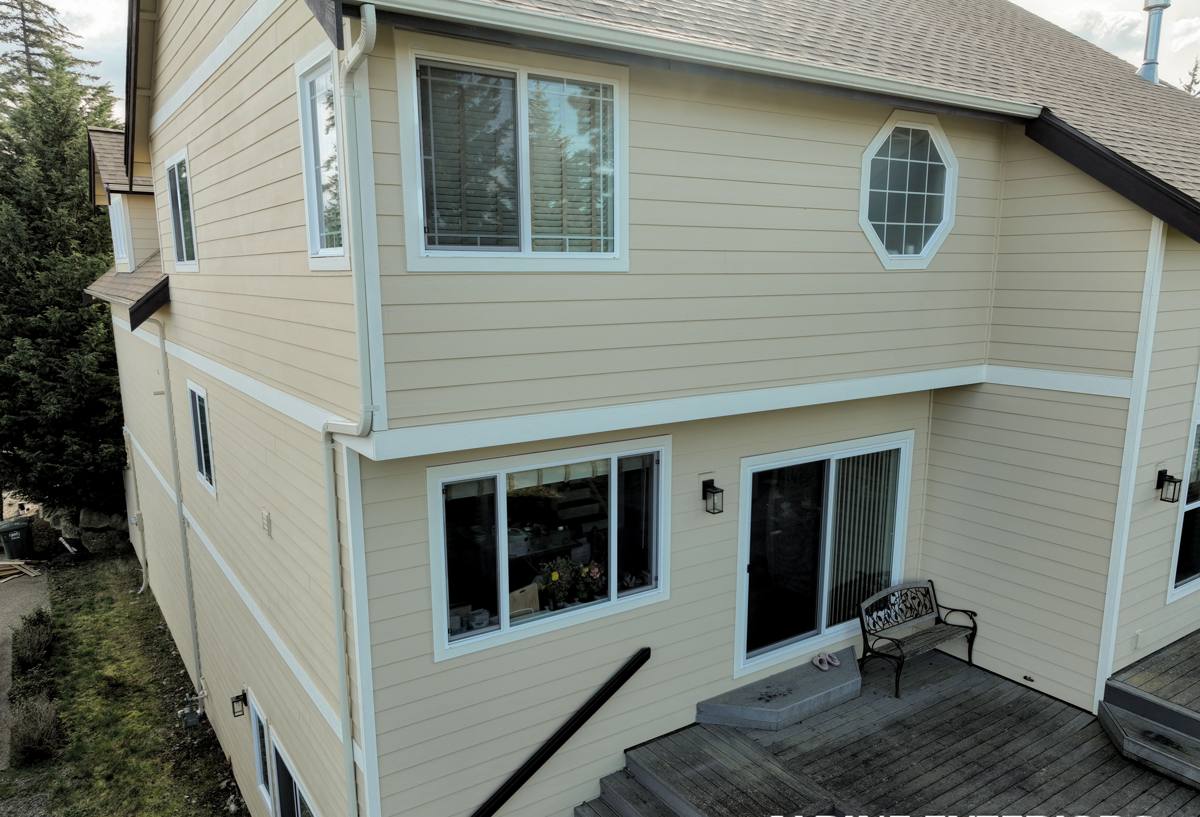
What This Climate Actually Does to a Deck
Three things drive almost every deck problem we see in this neighborhood:
Salt Air
Airborne salt from the bay accelerates corrosion on anything metal — fasteners, joist hangers, railing hardware, even the coating on some flashing products. A screw or bracket that would last decades in a drier inland yard can start rusting within a few seasons here if it isn't rated for coastal exposure.
Driving Rain
Rain in Birch Bay doesn't just fall straight down. Wind off the water pushes it sideways, which means it gets up under railing caps, behind ledger boards, and into joints that would stay dry in a calmer climate. A deck built with standard drainage assumptions ends up with water sitting where it shouldn't.
Long Moss Season
Shade, moisture, and mild temperatures mean moss and algae get a long runway here — often most of the year. Any deck surface, railing top, or stair tread that doesn't shed water quickly becomes a moss farm, and moss holds moisture against the wood or composite surface underneath it, which speeds up rot and staining.
None of this means a deck can't be built well here. It means the design, materials, and fasteners all need to account for these three conditions from day one, not as an afterthought.
Choosing the Right Decking Material
The decking surface is the most visible decision, and the one homeowners ask about most. There's no single "correct" answer — it depends on budget, maintenance tolerance, and how close to the water your lot sits. Here's how the common options actually perform in a California Creek setting:
| Material | Moisture & Moss Behavior | Maintenance | Typical Lifespan Here |
|---|---|---|---|
| Pressure-Treated Fir/Pine | Absorbs water readily; needs sealing to resist moss and cupping | Annual cleaning and re-sealing recommended | 10-15 years with upkeep |
| Western Red Cedar | Naturally rot-resistant but still needs sealing near the water; grays and can host moss if untreated | Sealing every 1-2 years | 15-20 years with upkeep |
| Capped Composite | Sheds water well; capped surface resists moss growth better than uncapped boards | Periodic washing, no sealing or staining | 25+ years |
| Uncapped/First-Gen Composite | Can absorb moisture at cut edges and fastener holes over time | Low, but edge sealing matters | 15-20 years |
| Tropical Hardwood (e.g., Ipe) | Very dense and naturally moisture-resistant; still needs oiling to prevent graying and surface checking | Oiling every 1-2 years | 25-30+ years |
For most California Creek homeowners, we lean toward capped composite or a well-sealed cedar deck, depending on budget. Composite costs more up front but removes the sealing and staining cycle entirely, which matters in a climate where a missed maintenance year lets moss get a foothold fast. Cedar is a reasonable choice if you're comfortable staying on top of sealing — but "set it and forget it" cedar is how decks end up gray, spongy, and moss-covered within a few years out here.
The Parts of a Deck That Fail First Near the Water
Ledger Board and House Connection
Where the deck attaches to the house is the single most important — and most commonly under-built — connection on the whole structure. Wind-driven rain finds its way behind poorly flashed ledger boards, and once water gets between the ledger and the house rim joist, rot sets in where you can't see it until it's serious. Correct flashing (and keeping the ledger properly fastened with corrosion-resistant hardware) is not optional here.
Fasteners and Metal Hardware
Standard galvanized fasteners are undersized for this environment. We use stainless steel or heavy hot-dip galvanized fasteners and connectors rated for coastal/high-moisture exposure throughout the structure — not just on the visible surface boards. The hardware you can't see (joist hangers, structural screws, post bases) takes the same salt exposure as everything else.
Footings and Post Bases
Soil around Birch Bay and California Creek varies block to block, and ground moisture retention affects how footings perform over time. Post bases that hold standing water against the wood post are a common failure point — we keep posts elevated off the concrete with proper post base hardware so wood never sits in a wet pocket.
Railings and Stair Treads
Horizontal surfaces — railing tops and stair treads — are where moss shows up first because they hold moisture longest. Detailing these with a slight pitch and choosing materials that shed water quickly cuts down on moss and the slip hazard that comes with it.
How We Build a Deck for California Creek
- Site assessment. We look at sun exposure, prevailing wind and rain direction, existing drainage patterns, and how close the structure sits to salt air exposure before we design anything.
- Design and material selection. Decking, framing lumber, and hardware are chosen together as a system rated for this environment, not picked separately.
- Permitting. We handle the permit and setback requirements that apply to your specific lot in unincorporated Whatcom County before work starts.
- Framing. Ledger flashing, joist hangers, and post bases go in with corrosion-resistant hardware throughout — this is the step that determines how the deck ages, even though it's invisible once the decking goes down.
- Decking and railing installation. Boards are laid with proper gapping for drainage and expansion, and fastener choice matches the decking material's manufacturer specs.
- Final grading and drainage check. We confirm water moves away from posts and footings rather than pooling underneath the deck.
Permits and Setbacks in Whatcom County
Most deck additions in Birch Bay require a building permit through Whatcom County, and depending on your lot's proximity to the water, shoreline setback rules may also apply. This isn't a step worth skipping or guessing on — an unpermitted deck can complicate a future home sale, and shoreline-adjacent lots sometimes have additional review requirements tied to their location. We pull the permit and handle inspections as part of the job rather than leaving that on the homeowner's plate.
Maintaining a Deck Once It's Built
Even a well-built deck needs some seasonal attention in this climate. The good news is that the maintenance list is short if the deck was built right the first time:
- Sweep debris off the deck surface regularly, especially under overhanging trees where organic material collects and feeds moss
- Rinse the surface and railing tops a few times a year to knock back early moss and algae growth before it takes hold
- Check and re-seal wood decking (cedar or pressure-treated) on the schedule the product calls for — don't wait until it looks gray and dry
- Inspect the ledger board area and post bases once a year for any signs of water staining or soft wood
- Keep gutters and downspouts near the deck clear so roof runoff isn't dumping extra water onto or near the structure
- Address any moss buildup promptly rather than letting it sit through a wet season
Composite decking cuts most of this list down to just cleaning, which is a big part of why it's a popular choice for homeowners who want less upkeep in a climate that otherwise demands a lot of it.
Why Local Experience on This Specific Stretch of Coastline Matters
A deck contractor who mostly works inland jobs will design and fasten a deck the way it's done in a drier climate — and that deck will show problems within a few years near the water. Working regularly in California Creek and the rest of Birch Bay means we already know which fastener grades hold up, how the wind and rain typically hit a given lot orientation, and which framing details actually keep water out of a ledger connection here. That local pattern recognition is the difference between a deck that needs real repair work in year five and one that's still solid in year twenty.
We also know the practical side: which permit steps apply to Whatcom County shoreline-area lots, what inspectors here look for, and how to sequence a build around this region's wet-season weather windows so framing isn't sitting exposed to driving rain longer than it needs to be.
Get a Straight Answer About Your Deck Project
If you're planning a new deck, replacing an aging one, or just want an honest opinion on whether your current deck's framing and hardware are holding up, we're glad to take a look. We offer free, no-pressure estimates for homeowners in California Creek and the surrounding Birch Bay area — fill out the form below and we'll get back to you with a straightforward assessment of what your project needs.