 Birch Bay Siding
 Roof Repair Built for the California Creek Climate
Homes in the California Creek area sit in a stretch of Whatcom County that takes weather from two directions at once. Salt-laden air drifts in off Birch Bay and the Salish Sea, while the surrounding tree cover and low-lying terrain keep roofs shaded, damp, and slow to dry out after every storm. That combination is hard on a roof in ways that inland homes never deal with. Fasteners corrode faster near the shoreline, moss gets a longer growing season under the tree canopy, and driving rain off the water finds its way into any gap that a drier climate would never expose.
A roof repair here isn't just patching a leak. It's addressing why that leak happened in the first place, and making sure the fix holds up through the next twenty wet seasons, not just the next one.
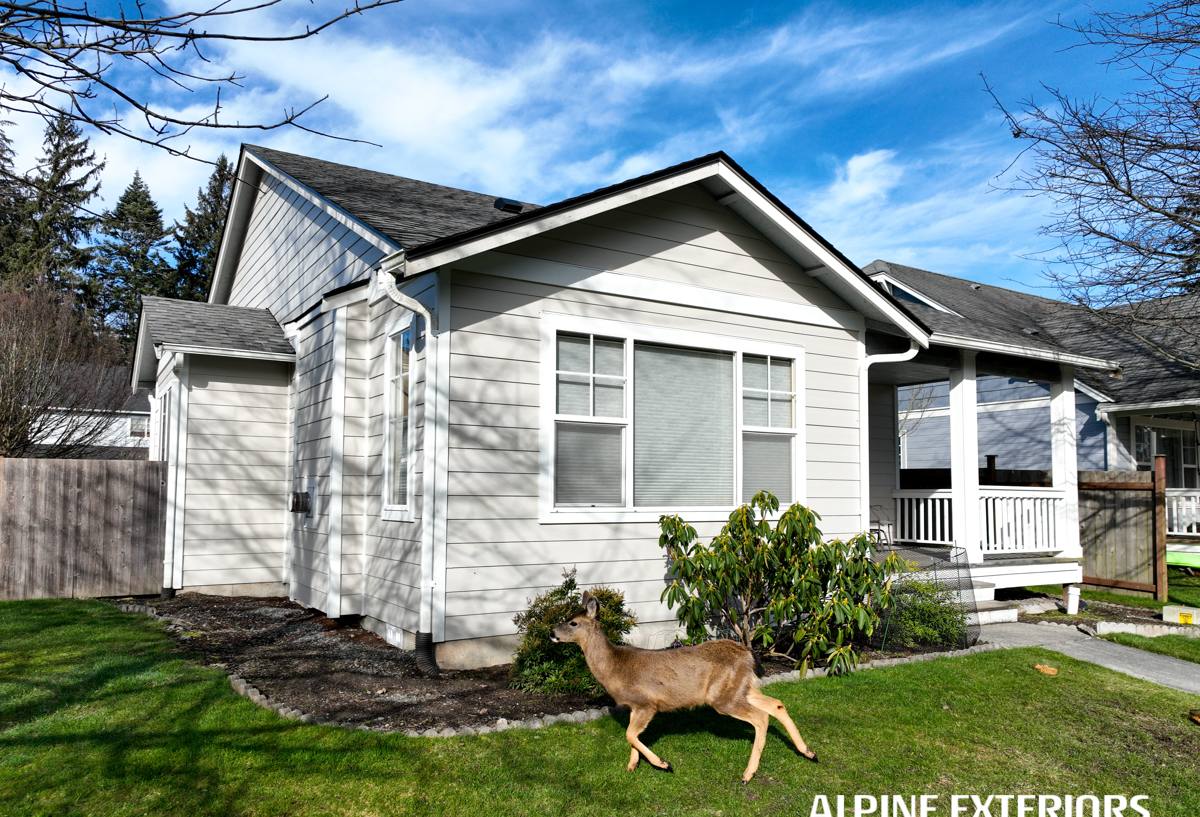
What This Climate Does to a Roof Over Time
Most of the repair calls we get in this part of Whatcom County trace back to a handful of recurring causes. Understanding them helps homeowners spot trouble before it turns into a bigger repair.
Moss and Organic Growth
The tree cover around California Creek keeps roofs shaded and damp longer than open, sun-exposed lots. Moss doesn't just sit on top of shingles — its root structure works down into the granule layer and lifts shingle edges, which is exactly where water gets in. Left alone through a full moss season, a small patch of growth can turn into curled, cracked shingles that need full replacement instead of a simple cleaning.
Salt Air and Corrosion
Being close enough to Birch Bay to catch salt-carrying wind means exposed metal ages faster. Nails, flashing, and fasteners that would last decades inland can start showing rust and pitting years earlier here. Once a fastener corrodes, it loses its grip and shingles or panels start to lift in wind.
Driving Rain and Wind-Driven Water
Storms coming off the water don't fall straight down — they hit roofs at an angle, which pushes water sideways into flashing, valleys, and any place where two roof planes meet. Standard installation tolerances that work fine in calmer climates sometimes aren't enough here. This is why so many "mystery leaks" trace back to valleys, chimney flashing, and vent boots rather than the open field of the roof.
Freeze-Thaw and Prolonged Moisture
Whatcom County doesn't get brutal winters, but it does get repeated cycles of rain, cold snaps, and thaw. Wood sheathing and underlayment that stay damp for extended periods are more prone to rot and to losing their grip on fasteners, which shows up later as soft spots or sagging in the roof deck.
Common Repair Needs We See in California Creek
| Problem | Typical Cause Here | What Happens If Ignored |
|---|---|---|
| Curled or missing shingles | Moss lift, wind, age | Water intrusion, deck rot |
| Rusted flashing or fasteners | Salt air corrosion | Loosened flashing, active leaks |
| Leaks around chimneys or vents | Wind-driven rain, worn boots/flashing | Interior water stains, mold |
| Soft or spongy roof deck | Prolonged moisture from slow-drying shade | Structural repair, higher cost |
| Heavy moss buildup | Tree cover, shaded exposure | Shingle degradation, faster aging |
What a Correct Roof Repair Actually Involves
A repair done right isn't just replacing what's visibly broken. It starts with figuring out how water is actually getting in, because the entry point and the damage point aren't always the same spot — water can travel along the underlayment or decking before it shows up as a stain on a ceiling.
- Inspect the full roof plane, not just the area near the reported leak
- Check flashing at every penetration — chimneys, vents, skylights, and roof-to-wall transitions
- Assess moss and organic growth for both surface cleaning and underlying shingle damage
- Pull back shingles or panels to check the condition of the underlayment and decking underneath
- Confirm fastener condition, especially in areas exposed to salt air
- Match repair materials to the existing roof system so the patch performs and ages consistently
Skipping any of these steps is how a homeowner ends up paying for the same repair twice — once now, and again in a year or two when the real cause resurfaces.
Our Roof Repair Process
- On-site assessment. We walk the roof (or use a ladder inspection where access is limited) and document what we find — not just the leak, but the roof's overall condition.
- Honest diagnosis. We explain what's actually causing the problem, in plain terms, before recommending a fix. If it's a straightforward flashing or shingle repair, we say so. If we see signs the roof is closer to the end of its service life, we'll tell you that too.
- Written scope and estimate. You get a clear description of the work and the cost before anything starts.
- Repair work. This includes removing damaged material, addressing any wet or compromised decking, installing correctly lapped flashing and underlayment, and matching shingles or panels as closely as possible.
- Cleanup and final check. We clear debris, check gutters and downspouts for anything that fell during the repair, and do a final walk-through of the work.
Materials and Methods We Rely On
We don't chase every new roofing product on the market. Our standard is choosing materials and methods that hold up specifically to salt air, moss pressure, and wind-driven rain, since that's what actually determines how long a repair lasts here.
| Component | What We Prioritize | Why It Matters in This Climate |
|---|---|---|
| Fasteners | Corrosion-resistant nails and screws | Salt air accelerates standard fastener corrosion |
| Flashing | Properly lapped, sealed at all transitions | Wind-driven rain exploits any gap or shortcut |
| Underlayment | Water-resistant barrier at valleys and eaves | Backup protection when wind pushes water under shingles |
| Shingle/panel matching | Closest available match to existing roof | Mismatched repairs age unevenly and stand out |
We stick to manufacturer-specified installation methods rather than shortcuts, because a repair that isn't installed to spec can also affect what's covered under the material warranty. That's a maintenance and liability trade-off we're not willing to make on a homeowner's behalf.
Signs You Need a Roof Repair Now
- Visible moss or dark streaking across shingles, especially on shaded sections of the roof
- Curling, cracking, or missing shingles anywhere on the roof
- Rust staining running down from flashing, vents, or metal roof components
- Water stains or discoloration on interior ceilings, especially after a windy storm
- Granules collecting in gutters or at downspout outlets
- Daylight visible through the roof deck from inside the attic
- Soft or spongy spots noticeable when walking the roof
Any one of these on its own isn't necessarily an emergency, but they're all worth a look before the next round of storms.
Repair vs. Replacement: How We Help You Decide
Not every roof problem needs a full replacement, and not every leak can be fixed with a patch. We base the recommendation on the roof's age, how widespread the damage is, and whether the underlying decking is still sound.
| Factor | Repair Usually Makes Sense | Replacement Should Be Considered |
|---|---|---|
| Roof age | Well within expected service life | Nearing or past typical lifespan for the material |
| Damage extent | Isolated to one area or component | Spread across multiple roof planes |
| Decking condition | Solid, no rot detected | Soft, rotted, or repeatedly wet |
| Moss history | First occurrence, caught early | Recurring, heavy buildup over multiple seasons |
We'll never push a full replacement when a repair will genuinely hold up, and we'll never patch something that's going to fail again in six months just to make the estimate smaller. Either way, the reasoning behind the recommendation is something we can walk you through in plain language.
Why a Crew That Already Works California Creek Matters
A roofer who mainly works drier, inland areas doesn't always think about salt-air corrosion or extended moss seasons as first-order concerns — because where they usually work, those issues barely register. Around Birch Bay and the California Creek area, they're a normal part of every job. That shapes which fasteners we reach for, how we handle flashing at transitions, and how seriously we treat a moss problem that might look cosmetic anywhere else.
It also means fewer surprises about access, drainage patterns, and how a given property's tree cover or exposure to the water affects the roof. Local knowledge doesn't replace a proper inspection, but it does mean the inspection starts from the right assumptions instead of generic ones.
After the Repair: Keeping It From Happening Again
A good repair buys you time, but a few habits stretch that time further in this climate:
- Keep gutters and downspouts clear so water isn't backing up under the roof edge
- Trim back overhanging branches where practical to reduce shade and debris buildup
- Have moss addressed early in the season rather than letting it establish over a full wet cycle
- Schedule a periodic roof check, especially after major windstorms off the bay
None of this is complicated, but it's the difference between a repair that lasts and one that needs revisiting sooner than it should.
If you're dealing with a leak, visible moss, storm damage, or you just want an honest read on your roof's condition, we're happy to take a look. Reach out for a free, no-pressure estimate using the form below.