 Birch Bay Siding
 Deck Repair Built for Cherry Point's Coastal Conditions
Cherry Point sits right on the water along Whatcom County's shoreline, and that location shapes everything about how a deck ages here. Homes in this stretch near Birch Bay deal with a combination that inland Washington properties simply don't see as often: salt-laden air off the Strait of Georgia, driving rain that comes in sideways during winter storms, and a moss and algae season that can run most of the year. A deck built or repaired without that in mind will show problems years before it should. Our deck repair work in Cherry Point is done with that climate as the starting point, not an afterthought.
This page focuses specifically on deck repair for Cherry Point homes — not new deck construction, and not a generic list of services. If your deck has soft spots, loose railings, surface rot, or fasteners that are bleeding rust stains down the boards, this is what we deal with and how we approach fixing it right.
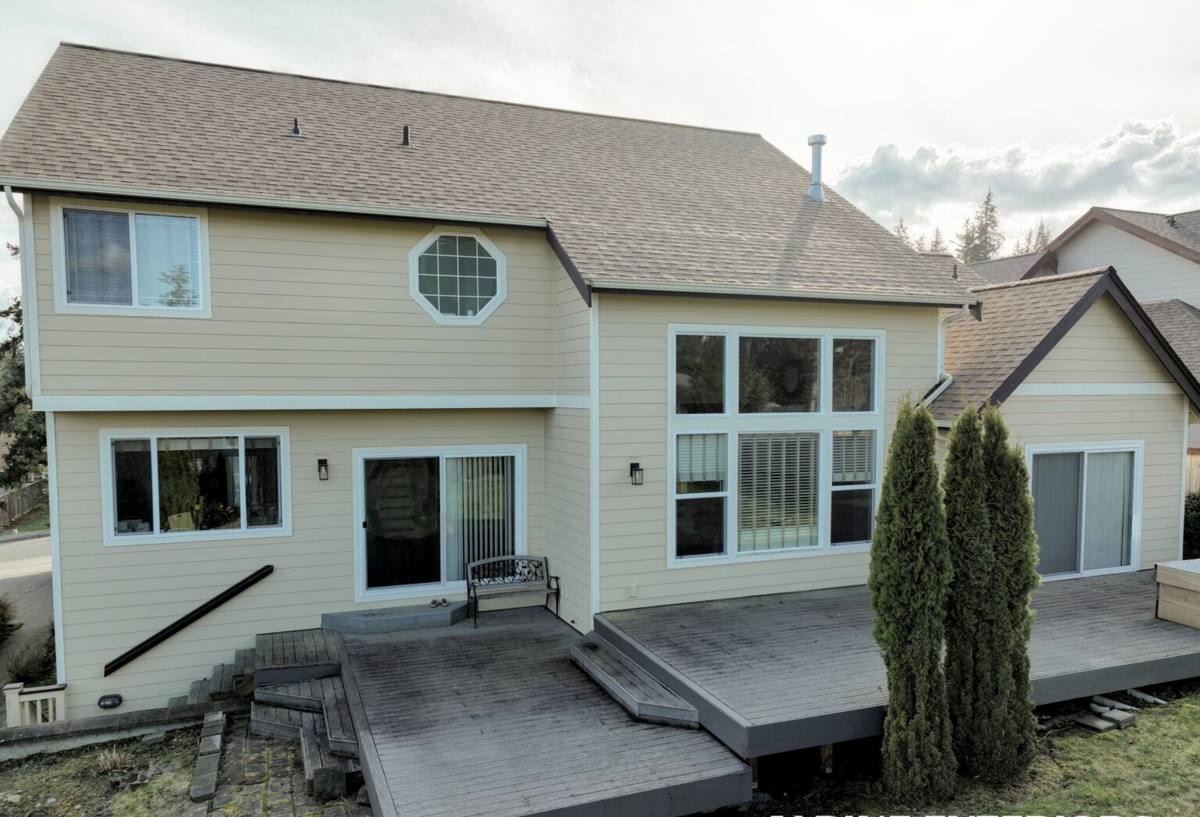
What Salt Air, Rain, and Moss Actually Do to a Deck
Every part of a deck is exposed to the weather, but not every part fails the same way. Understanding the failure pattern is what separates a real repair from a patch job.
Salt Air and Metal Fasteners
Airborne salt accelerates corrosion in nails, screws, brackets, and joist hangers. Standard galvanized coatings that hold up fine 20 miles inland can start breaking down noticeably faster this close to the water. Once a fastener starts corroding, it loses grip strength long before it looks obviously bad — which is why a deck can feel "solid" right up until a board or railing gives way.
Driving Rain and Water Intrusion
Wind-driven rain doesn't just fall on a deck, it gets pushed into joints, under flashing, and along the ledger board where the deck attaches to the house. That's the single most common place we find hidden rot, because it's the hardest area for water to escape once it gets in and the easiest area for a homeowner to miss during a visual check.
Moss, Algae, and Surface Decay
A long moss season means organic growth holds moisture against the wood surface for extended stretches, especially on the shaded or north-facing sections of a deck. That constant dampness softens wood fiber, feeds rot fungus, and makes painted or stained surfaces peel faster. It also makes decks genuinely slippery, which is a safety issue as much as a maintenance one.
Signs Your Cherry Point Deck Needs Repair
Most deck failures don't happen suddenly — there are warning signs for months or years before a board breaks or a railing fails. Homeowners in this area should check for these on a regular basis, not just when something feels obviously wrong.
- Boards that feel spongy, springy, or noticeably softer underfoot in one area
- Rust streaking below screws, nails, or metal brackets
- Gaps opening up where the deck meets the house (ledger board area)
- Railings or posts that wiggle when pushed, even slightly
- Persistent green or black staining that doesn't wash off with normal cleaning
- Stair stringers that feel uneven or have visible splitting
- Fasteners backing out or heads that have sheared off
- Discoloration or darkening around joist ends or under the decking boards
Any one of these on its own might not be urgent. Several together, or anything involving the ledger board connection or stair structure, should get looked at soon — those are the areas where a small problem turns into a safety issue fastest.
Common Repair Issues We See in This Area
Because of the coastal exposure, Cherry Point decks tend to develop a fairly consistent set of problems, more so than decks further inland in Whatcom County.
Ledger Board Rot
The ledger is the board that bolts the deck to the house framing, and it's the load-bearing connection the whole structure depends on. Flashing that's undersized, missing, or improperly lapped lets water track behind it, and in a climate with this much wind-driven rain, that shows up as rot faster than most homeowners expect.
Corroded Hardware
Joist hangers, bolts, and screws that were adequate when installed can corrode enough over time to lose real structural capacity, especially on decks more than 10-15 years old that weren't built with marine-grade or stainless fasteners.
Surface Board Failure
Cupping, splitting, and soft spots in the decking boards themselves, usually concentrated in shaded areas or spots where moss and debris collect and hold moisture against the wood.
Railing and Post Movement
Loosening at the base of posts, often from the same fastener corrosion and moisture cycling that affects the rest of the structure — this is also one of the more serious safety concerns since railings take direct load when someone leans on them.
What a Correct Deck Repair Actually Involves
A proper repair isn't just swapping out the board that looks bad. It starts with figuring out why that board failed, because if the underlying cause — a flashing gap, a moisture trap, undersized hardware — isn't addressed, the replacement board will fail the same way on the same timeline.
Structural Inspection First
Before any board comes off, we check the framing underneath: joists, beams, posts, and especially the ledger connection. Surface damage is often just the visible symptom of a moisture problem happening below deck level.
Matching or Upgrading Fasteners
Where corrosion is part of the problem, we replace fasteners with hardware rated for the exposure, not just whatever matches what's already there. In a salt-air environment, this is one of the most cost-effective upgrades you can make during a repair.
Fixing the Water Path, Not Just the Symptom
If rot traces back to a flashing or drainage issue, that gets corrected as part of the repair. Replacing rotted wood without fixing how water was reaching it just resets the clock on the same failure.
Board Replacement and Blending
New boards are installed to match spacing, fastening pattern, and where possible, the existing material, so the repaired section performs and weathers consistently with the rest of the deck rather than aging at a different rate.
Repair or Replace? A Cost-Factor Comparison
Not every deck problem calls for a full rebuild, but not every deck is worth patching indefinitely either. These are the factors that actually drive that decision.
| Factor | Leans Toward Repair | Leans Toward Replacement |
|---|---|---|
| Framing condition | Joists and beams solid, only surface issues | Widespread rot in structural framing |
| Ledger board | Sound, properly flashed | Rotted or improperly flashed at the house connection |
| Age of deck | Under 15 years, built with decent materials | Older deck nearing typical service life |
| Extent of damage | Localized to a few boards or one area | Spread across most of the deck surface |
| Fastener condition | Isolated corrosion | Widespread corrosion throughout the structure |
| Budget goal | Extend usable life affordably | Want a longer-term reset and possibly a design change |
In many cases, a thorough repair that addresses the actual moisture source can add meaningful years to a deck's life at a fraction of replacement cost. We'll tell you honestly which situation you're in — there's no benefit to us talking a homeowner into a bigger job than the deck actually needs.
Decking Material Considerations for This Climate
If a repair involves replacing a significant portion of the surface, it's worth thinking about material, since salt air and constant moisture treat wood and composite differently.
| Material | How It Handles This Climate | Maintenance Reality |
|---|---|---|
| Pressure-treated wood | Affordable, but needs consistent sealing to resist moisture and moss | Regular cleaning and re-sealing, more upkeep over time |
| Cedar | Naturally moisture-resistant, ages well visually | Still benefits from periodic sealing near salt air |
| Composite decking | Resists rot and doesn't absorb moisture like wood | Lower upkeep, but still needs cleaning to prevent moss/algae buildup on the surface |
We don't push one material as universally "best" — it depends on your budget, how much upkeep you want to do, and what the rest of your home's exterior looks like. Our job is to lay out the honest trade-offs for your specific deck and let you make the call.
Our Deck Repair Process in Cherry Point
- On-site inspection. We look at the deck surface, framing, ledger connection, railings, and stairs — not just the area you called about, since related problems often hide nearby.
- Honest assessment. We tell you what's actually wrong, what's driving it, and whether repair or replacement makes more sense for your situation and budget.
- Clear estimate. You get a written scope of work before anything starts, so there are no surprises partway through the job.
- The repair itself. Structural issues get fixed first, then fasteners and flashing where needed, then surface boards and railings.
- Cleanup and walkthrough. We clear debris and walk the finished repair with you so you know exactly what was done and what to watch for going forward.
Why It Matters That We Already Work in Cherry Point
A crew that repairs decks across a range of inland climates will still do decent carpentry, but they won't necessarily know which fastener grade actually holds up here, which corners of a deck collect moss first in this exposure, or how aggressively flashing needs to be detailed against this kind of driving rain. Working regularly in Birch Bay and the surrounding Whatcom County coastline means we're not guessing at how this climate behaves — we're seeing the same failure patterns repeatedly and repairing accordingly, not applying a one-size-fits-all approach built for a drier or more sheltered area.
It also means faster, more accurate estimates. We're not learning the local climate on your project — we already know what to check first.
After the Repair: Keeping Your Deck in Good Shape
A good repair holds up longer with a little basic upkeep, especially in a climate that doesn't give a deck much of a break.
- Sweep off debris and standing moss regularly, especially in shaded areas
- Rinse salt residue off periodically, particularly after storms
- Check fasteners and railings for movement once or twice a year
- Keep gutters and downspouts clear so runoff isn't draining onto the deck
- Reseal or refinish wood surfaces on the schedule appropriate to that material
None of this requires special equipment or expertise — it's mostly about not letting moisture and organic growth sit on the deck for long stretches.
If your deck in Cherry Point is showing any of the signs above, or you just want an honest read on its condition, we're happy to take a look. Use the form below to request a free, no-pressure estimate.