 Birch Bay Siding
 Cherry Point's Marine Climate Asks More of Your Windows
Cherry Point sits right up against the marine air of the Salish Sea, and that location shapes what a window has to survive here that most manufacturers never test for. Homes in this part of Whatcom County deal with a combination most window lines are not built around: salt-laden air moving in off the water, driving rain that hits siding and glass sideways instead of straight down, and a long stretch of the year — fall through spring — when everything stays damp long enough to grow moss and algae. Any one of those on its own is manageable. Together, over years, they wear out ordinary windows faster than homeowners expect, and they punish poor installation work even faster than that.
Salt Air and Corrosion
Airborne salt is corrosive to metal hardware, fasteners, and some finishes long before it does anything visible to glass or frames. Locks, cranks, hinges, and screws on the ocean-facing side of a house show pitting and stiffness years ahead of the same hardware on an inland property. Aluminum components are especially vulnerable unless they're specifically rated for coastal exposure.
Driving Rain and Water Intrusion
Wind-driven rain off the water doesn't just run down a window — it gets pushed sideways and upward into gaps that would stay dry in calmer weather. A window that seals fine on a still day can leak during a winter storm if the flashing and sealant details around it weren't done with that wind direction in mind. Most window failures we see in this area aren't glass problems at all; they're installation problems that only show up when the wind blows a certain way.
Moss Season and Trapped Moisture
Washington's wet season keeps window sills, tracks, and the wood or trim around older frames damp for months at a time. That constant moisture is exactly what moss, algae, and eventually rot need to take hold. Once moss gets a foothold on a sill or in a frame joint, it holds even more water against the material, and the cycle accelerates.
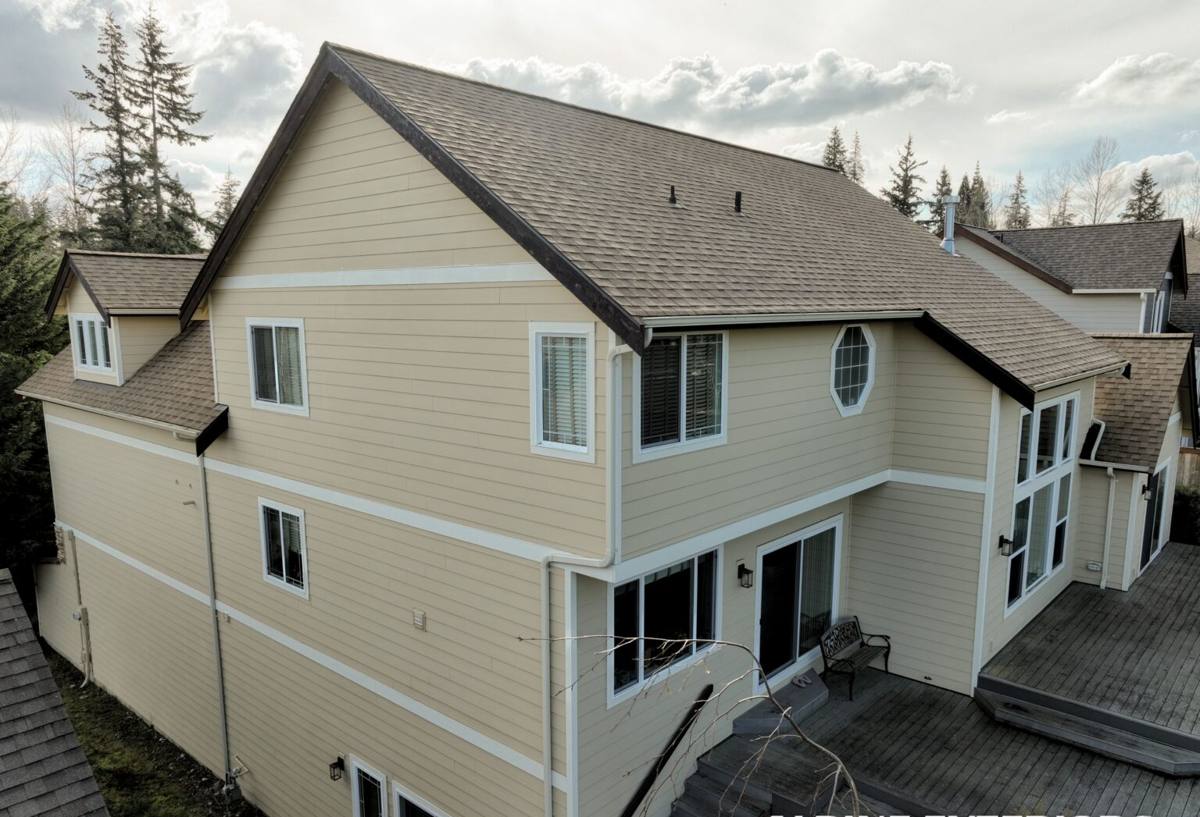
What "Energy-Efficient" Actually Means in This Climate
Energy-efficient windows are usually marketed around heating and cooling bills, and that's a real benefit here too — Whatcom County winters mean furnaces run for months. But in Cherry Point, "efficient" also has to include how well a window keeps out wind-driven moisture and resists the specific wear of salt exposure. A window that scores well on paper but was engineered for a dry inland climate isn't the right fit for a house three miles from open water.
Reading a Window's Performance Numbers
Three numbers matter most for this location: U-factor (how well the window resists heat loss — lower is better for our winters), Solar Heat Gain Coefficient (how much sun-driven heat passes through — relevant for west and south-facing rooms), and air infiltration rating (how much air leaks through the assembly itself, independent of installation quality). Low-E glass coatings and gas fills like argon between panes improve the first two numbers without changing how the window looks.
Why Standard Ratings Aren't the Whole Story Near the Water
None of those efficiency numbers tell you how a window's hardware, weep systems, and seals will hold up under years of salt air and horizontal rain. That's a separate question — mostly about frame material, hardware grade, and installation detail — and it matters just as much for long-term performance as the energy rating on the label.
Frame Materials: What Holds Up in a Coastal Whatcom County Climate
There's no single "best" frame material for every house — it depends on exposure, budget, and how the home is used. Here's how the common options actually perform in a salt-air, high-rain environment like Cherry Point.
| Frame Material | Coastal/Moisture Performance | Maintenance Needs | Where It Fits Best |
|---|---|---|---|
| Vinyl | Good — won't rust or rot; seams and weep holes need to be well-designed | Low; occasional cleaning | Most homes; strong value for the performance |
| Fiberglass | Very good — dimensionally stable in temperature swings and damp conditions | Low | Exposed elevations facing the water or prevailing wind |
| Wood or wood-clad | Fair — needs an intact exterior cladding or finish to keep moisture off the wood core | Higher; finish needs monitoring in a wet climate | Homes prioritizing a traditional interior look, away from direct salt spray |
| Aluminum | Poor to fair in salt air unless specifically coastal-rated; prone to corrosion and condensation | Moderate to high | Limited use; we're selective about where we'll recommend it here |
Our default recommendation for most Cherry Point homes is vinyl or fiberglass, simply because both shed water well, don't corrode, and hold up with minimal upkeep through a wet, salty winter. Wood-clad windows can still be the right call for the right house — we just make sure the homeowner understands the maintenance commitment going in.
Our Installation Process
Most window energy loss and water intrusion problems trace back to installation, not the window unit itself. That's especially true here, where the margin for error on flashing and sealing is smaller than in a dry inland climate.
Removal and Inspection
We remove the old window carefully and inspect the rough opening before anything new goes in. This is where we find hidden problems — soft sheathing, old water staining, or moss growth inside the wall cavity — that a straight swap-and-caulk job would just seal back in.
Flashing and Water Management
Proper flashing directs any water that gets past the window itself back out, rather than letting it sit against the framing. Given how often wind pushes rain sideways here, we pay particular attention to head flashing and the way it integrates with the house wrap or building paper above the window — that detail is what actually stops leaks during a real storm, not just a light rain test.
Sealing, Insulation, and Finish
We insulate the gap between the window frame and the rough opening properly — not overpacked, not left with gaps — and seal the exterior with a sealant rated for this climate's temperature and moisture range. Interior and exterior trim goes back cleanly, and we check operation and the seal on every unit before we consider the job done.
Signs Your Current Windows Are Costing You Money
Homeowners often live with underperforming windows for years simply because the decline is gradual. A few things worth checking before the next wet season:
- Condensation or fogging between panes of double- or triple-pane glass (a sign the seal has failed)
- Windows that are hard to open, close, or lock — often swelling or hardware corrosion from moisture
- Visible rust or pitting on cranks, hinges, or latches
- Moss, algae, or black staining on sills or in frame corners
- A noticeable draft or cold spot near the window when it's windy outside
- Single-pane glass anywhere in the house that hasn't been updated
- Heating bills that seem high relative to the size and age of the home
- Soft or discolored wood trim around the window frame
What Affects the Cost of a Window Project
Every home is different, so we don't quote a whole-house number until we've actually looked at the openings. In general, window replacement costs range from a modest per-window investment for smaller vinyl units up to significantly more for large fiberglass or wood-clad windows with custom sizing. The factors below explain most of the difference between a low and high estimate.
| Factor | Why It Matters | Typical Effect on Cost |
|---|---|---|
| Frame material | Vinyl, fiberglass, and wood-clad differ in material and manufacturing cost | Moderate to significant |
| Window size and style | Large or custom-shaped windows and operable styles (casement, awning) cost more than fixed or standard double-hung units | Moderate |
| Full-frame vs. insert replacement | Replacing just the sash into an existing frame is cheaper than a full tear-out when the old frame is sound | Significant |
| Condition of the rough opening | Rot or water damage found during removal adds repair work before the new window goes in | Variable — can be significant |
| Number of windows and access | Whole-house projects have better per-window pricing than one-off replacements; upper-story access adds labor | Moderate |
| Glass package | Upgraded Low-E coatings, gas fills, or laminated/impact glass add cost over standard glazing | Minor to moderate |
Why Hiring a Crew That Already Works Cherry Point Matters
A contractor who mostly works drier, inland areas can install a technically correct window and still get the flashing detail wrong for a house that takes rain from a direction their usual jobs never see. Working regularly in Cherry Point and the surrounding Birch Bay area means we're used to sizing up a home's actual wind and rain exposure before we recommend a frame material or glass package — not just applying a one-size answer. It also means we know what "normal wear" looks like on a coastal Whatcom County home versus what's actually a sign of a failed seal or a bad prior installation, which matters when we're inspecting existing windows and giving an honest opinion on repair versus replacement.
Living With New Windows: Maintenance in a Salt-Air, Moss-Prone Climate
Good windows still need a little upkeep in this environment. Rinsing salt residue off exterior glass and frames a few times a year — especially after storms — keeps it from building up on hardware and finishes. Keeping weep holes and tracks clear of debris and moss lets the window drain the way it's designed to. Checking exterior sealant for cracking every year or two, particularly after a hard winter, catches small gaps before they become leaks. None of this is heavy maintenance, but skipping it is how even a good window ends up performing like a cheap one after a decade near the water.
If your windows are original to the house, showing condensation between the panes, or just feel drafty when the wind picks up, we're happy to take a look and give you an honest read on what's actually going on — no pressure, no obligation. Reach out below for a free estimate on energy-efficient window replacement for your Cherry Point home.