 Birch Bay Siding
 Cherry Point's Exposure Puts Real Demands on Siding
Cherry Point sits on open, wind-exposed shoreline just up from Birch Bay, and that location matters more than most homeowners realize when it comes to picking exterior siding. Homes here face marine air off the water, wind-driven rain that hits walls from angles a more sheltered lot never sees, and a long stretch of the year where surfaces stay damp instead of drying out between storms. Whatcom County gets its share of steady Pacific Northwest rain generally, but shoreline-adjacent areas like Cherry Point add salt-laden air and near-constant wind exposure on top of that. Siding that would hold up fine a few miles inland can start showing problems here years earlier if it isn't suited to the exposure or installed correctly for it.
This page is specifically about fiber cement siding for Cherry Point homes — what the climate demands from the material, what a correct installation actually involves, and why we approach these jobs the way we do.
What Siding Has to Handle at Cherry Point
Salt Air
Proximity to open water means airborne salt settles on exterior surfaces more than it would further inland. Salt exposure doesn't destroy fiber cement the way it can attack bare metal fasteners or degrade some paints and coatings over time — but it does mean fastener selection, trim materials, and the factory finish on the siding itself all need to be chosen with that exposure in mind, not treated as an afterthought.
Driving Rain
Wind off the water pushes rain sideways into walls, not just straight down. That changes how water behaves at every seam, corner, and penetration on the house. Flashing details and overlap dimensions that are marginal in a sheltered location aren't marginal here — they're the difference between water shedding off the wall and water finding its way behind it.
A Long Moss Season
Cool, damp conditions for much of the year favor moss and algae growth, especially on north- and shade-facing walls, under overhangs, and anywhere airflow and sun exposure are limited. Moss holds moisture against the siding surface far longer than an exposed, sun-warmed wall does, and that prolonged dampness is what causes problems — not the moss itself, but what sits underneath it.
Why We Install Only James Hardie Fiber Cement Siding
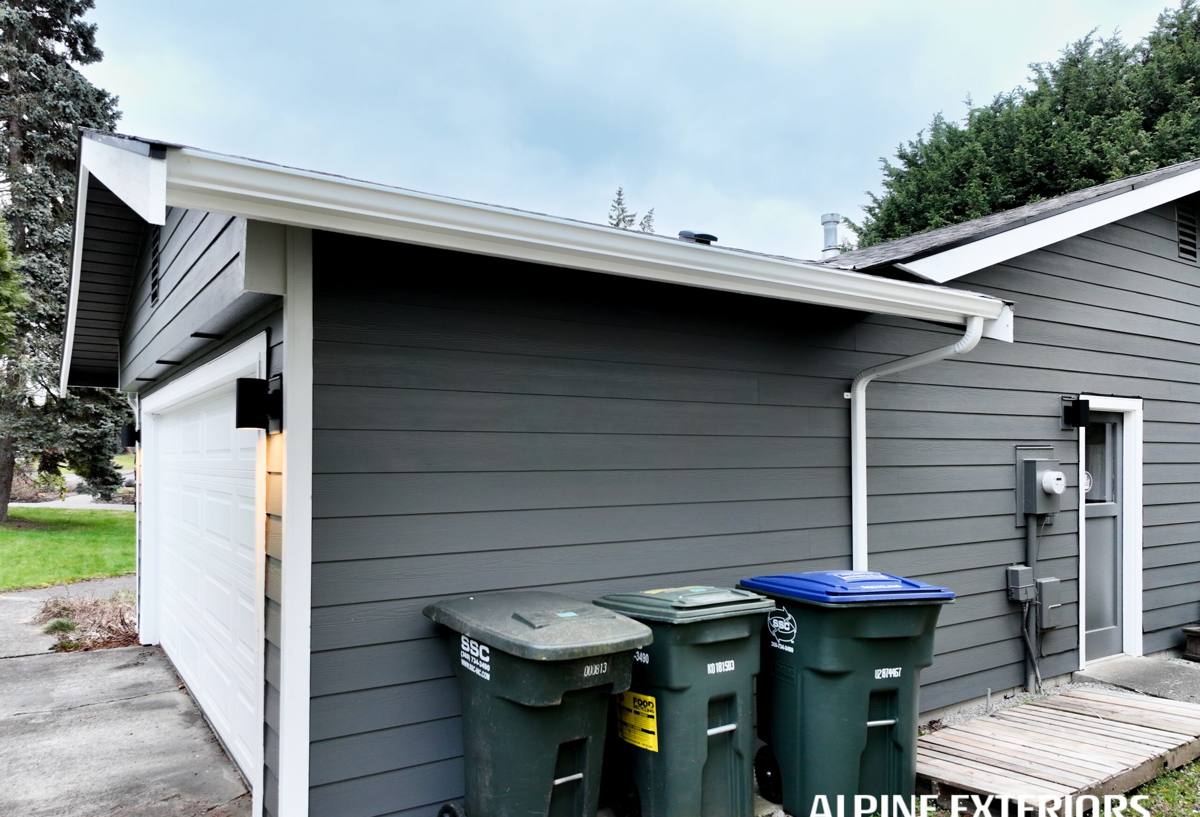
We standardized on James Hardie fiber cement and don't install vinyl siding, LP SmartSide, primed spruce or cedar, or other fiber cement brands like Cemplank or Allura. That's a deliberate call, not a lack of options. Hardie's HZ product lines are engineered for specific climate zones, including the wetter, cooler conditions typical of the Pacific Northwest. The material itself is non-combustible fiber cement, and it comes from the factory with a ColorPlus finish baked on rather than field-painted — which matters a lot in an area where sun, salt air, and constant moisture cycling all work against a paint job over time.
We're not going to tell you every alternative product is worthless — vinyl is inexpensive and low-maintenance in mild conditions, and wood has real appeal for homeowners who want that look. But for the exposure Cherry Point homes deal with, we've seen enough of how these materials perform over the long run in this climate to stop installing them and put our name behind Hardie instead. It holds paint (when repainting is ever needed), resists moisture-driven damage better than wood-based products, and comes with a warranty structure that's transferable if you sell the home.
What a Correct Fiber Cement Installation Actually Involves
Fiber cement siding's reputation is only as good as the installation behind it. A rushed or spec-ignoring install can fail in a wet, wind-driven climate even with the right material on the wall. The details that matter most on a Cherry Point job:
Flashing and Water Management
Every window, door, and penetration needs flashing that directs water out and away from the wall assembly, not just a bead of caulk covering a gap. Housewrap laps have to run the correct direction (upper courses over lower) so wind-driven rain can't work its way behind the siding at a seam.
Fastening and Gaps
James Hardie specifies exact nailing patterns, fastener types, and clearance gaps at butt joints, corners, and trim — including minimum gaps to allow for the board's normal expansion and contraction. Skipping these specs is one of the most common causes of premature siding problems, regardless of how good the material itself is.
Sealing Field-Cut Edges
Any edge cut on site — not factory-finished — needs to be primed and sealed before installation. An unsealed cut edge is a direct path for moisture into the board, and in a damp, salt-air climate that's not a detail worth skipping.
Comparing Siding Materials for This Kind of Exposure
| Factor | James Hardie Fiber Cement | Vinyl | Untreated/Primed Wood |
|---|---|---|---|
| Salt air / marine exposure | Engineered for coastal and marine climates in HZ product lines | Can become brittle and fade faster under constant salt-laden wind | Prone to accelerated weathering without diligent upkeep |
| Moisture behavior | Doesn't rot; moisture management depends on correct install | Won't rot, but can trap moisture behind panels if not detailed well | Absorbs moisture readily; rot risk if coating fails or moss holds dampness |
| Moss / algae resistance | Hard, dense surface sheds growth more easily with routine cleaning | Textured panels can hold organic growth in grooves | Porous surface gives moss more to hold onto |
| Finish longevity | Factory ColorPlus finish, engineered for UV and weather cycling | Color molded in but can chalk and fade over years of sun exposure | Field-applied paint or stain, needs repainting on a recurring cycle |
| Fire resistance | Non-combustible | Combustible | Combustible |
Our Process for Cherry Point Siding Projects
We start every job with a walk-around that's specific to the lot, not a generic checklist. That means looking at which walls take the brunt of the wind and rain off the water, where moss and staining already show up, and what condition the sheathing and existing water management details are in once the old siding comes off. Tear-off is when problems hiding behind the old siding — soft sheathing, missing or failed flashing, past water intrusion — actually surface, and we deal with those before anything new goes up, not after.
From there, installation follows James Hardie's published specs for fastening, gapping, and flashing, matched to the HZ product line appropriate for this climate zone. We finish with a walkthrough so you know what was found, what was repaired, and what the finished assembly looks like before we consider the job done.
Maintenance Checklist for Homes Near Cherry Point
- Rinse accumulated salt spray and grime off siding periodically, especially on wind-facing walls
- Keep gutters and downspouts clear so runoff doesn't sheet down over siding or pool near the base of walls
- Trim back vegetation that shades walls and blocks airflow, since that's where moss establishes fastest
- Check caulking at trim, windows, and penetrations annually and re-caulk where it's cracked or pulling away
- Watch north-facing and shaded walls for early moss growth and clean it off before it spreads or thickens
- Have any impact damage or cracked boards repaired promptly rather than left exposed to moisture
Why Local Experience in Birch Bay and Cherry Point Matters
A crew that already works this stretch of Whatcom County knows which walls on a Cherry Point home are going to take the worst of the wind and rain before they even walk the property, because they've seen the same exposure pattern on the house down the road. That translates into fewer surprises during tear-off, flashing details that account for the actual weather this area gets rather than a textbook average, and a contractor who's realistic about maintenance expectations because they've followed up on jobs here before.
It also matters for warranty service. If a question comes up two or five years down the line, you want a contractor who's still local, still working this area, and easy to reach — not a company that did one job in the region and moved on.
Cost on a fiber cement re-siding project depends mostly on the size and shape of the home, how much trim and detail work is involved, and how much of the existing wall assembly needs repair once the old siding is off — that last factor is the one that's hardest to know in advance, which is exactly why we inspect before quoting rather than pricing off a drive-by.
If you're weighing siding options for a home in Cherry Point or elsewhere around Birch Bay, we're happy to take a look and walk you through what we find — no pressure, no obligation. Request a free estimate using the form below.