 Birch Bay Siding
 Cherry Point sits close enough to the water that every roof out here earns its keep. Between winter southwesterlies coming off the Strait of Georgia, salt-laden air, and a moss season that barely takes a break, roofs in this pocket of Whatcom County take a different kind of beating than roofs twenty miles inland. When a storm knocks loose shingles, lifts flashing, or drives rain under a ridge cap, the repair has to account for all of that — not just patch the visible damage and move on.
We work Cherry Point and the rest of Birch Bay regularly, which matters more here than in a lot of areas. A roof repair that looks fine on a dry, calm day can fail the first time wind-driven rain hits it sideways off the water. Storm damage repair in this area isn't just about matching shingles — it's about understanding how wind, salt, and moisture move across a roof this close to the shoreline.
What Makes Storm Damage Different in Cherry Point
Most storm damage calls we get from this area fall into a few consistent categories, and they're rarely random. The geography and climate here create predictable failure points.
Wind Exposure Off the Strait
Cherry Point and the surrounding Birch Bay shoreline get direct exposure to wind coming off the water, with fewer trees and structures to break it up compared to inland neighborhoods. That wind doesn't just rip off loose shingles — it gets up under ridge caps, hip caps, and the edges of fields that are already slightly compromised, then peels them back from the inside out. A repair that only replaces what's visibly missing, without checking the surrounding courses for wind-lifted nails and cracked sealant strips, tends to fail again in the next storm.
Salt Air and Fastener Corrosion
Salt air accelerates corrosion on exposed metal — nails, flashing, drip edge, and fastener heads all age faster this close to the water than they would further inland. On a storm repair, this shows up as fasteners that back out or shear off years before they should, and flashing that's thinned enough to crack under stress instead of flexing. Part of doing this job right in Cherry Point is recognizing when storm damage is really salt-accelerated wear that a storm simply exposed.
Moss, Trapped Moisture, and Long Wet Seasons
Whatcom County's moss season runs long, and Birch Bay's shaded lots and marine humidity keep roofs damp longer than drier inland areas. Moss holds water against shingles and around penetrations, which softens the roofing material and undermines the seal well before a storm does anything. When we open up storm damage here, it's common to find moss or built-up organic debris that was already compromising the roof underneath — meaning the "storm damage" is really a storm finishing off a spot that was already weakened.
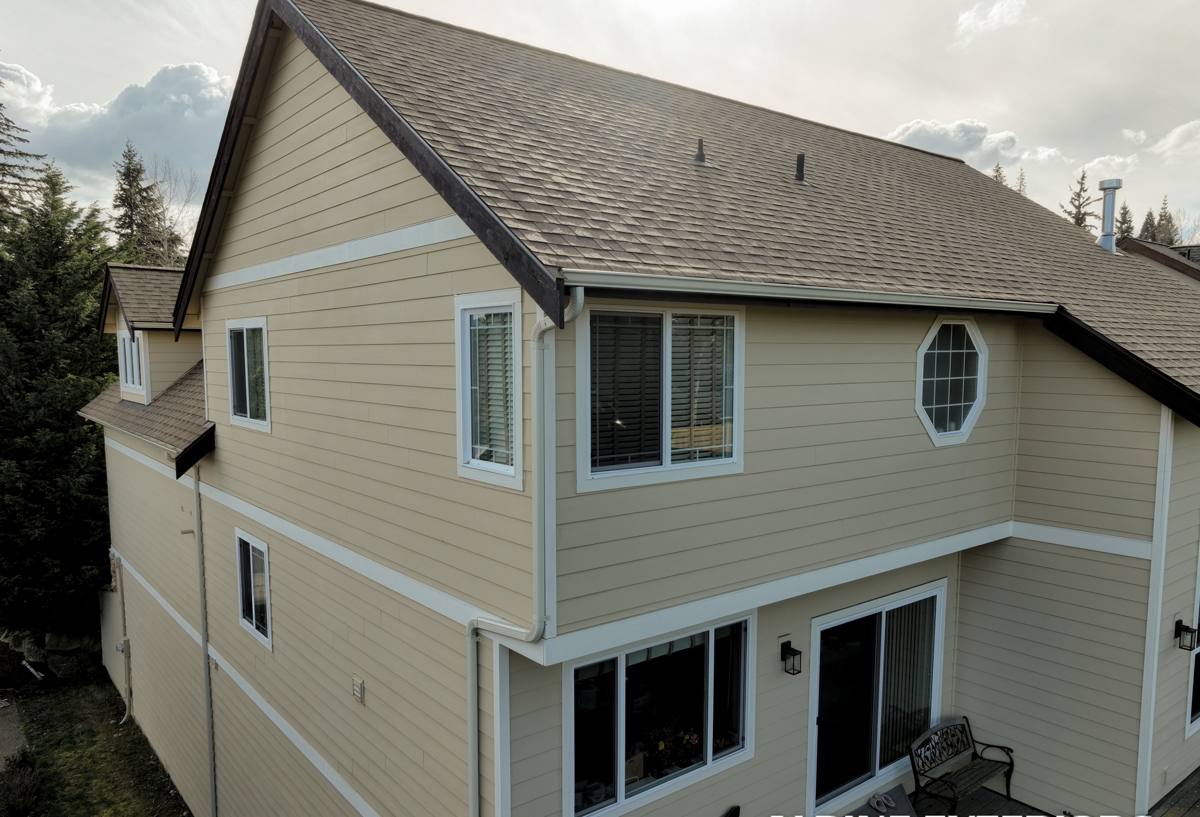
What a Correct Storm Damage Repair Actually Involves
A rushed storm repair covers the hole and calls it done. A correct one treats the visible damage as a starting point, not the whole job.
- Inspect beyond the obvious damage — adjacent courses, ridge and hip caps, and any nearby penetrations (vents, chimneys, skylights) that took the same wind load
- Check the underlayment and decking where shingles were lifted or torn away, since wind-driven rain often gets underneath before the shingle itself is even gone
- Inspect and, where needed, replace flashing around chimneys, valleys, and wall intersections — corroded or bent flashing is a common hidden cause of leaks after a storm
- Clear moss and organic debris from the repair area and surrounding roof plane so the new material isn't sealed against something that's already holding moisture
- Match materials as closely as possible in type, color, and exposure so the repair doesn't become the weak point of the next storm
- Re-seat or replace fasteners in the surrounding field if they show wind-lift or corrosion, not just in the immediately damaged section
- Document what was found and what was repaired, especially anything relevant to an insurance claim
Our Process for Cherry Point Storm Calls
1. Fast, Honest Inspection
After a storm, we walk the roof (or inspect from a ladder and drone pass when conditions call for it) and look at the whole roof plane, not just the spot the homeowner noticed from the ground. Storm damage in Cherry Point often has a companion problem nearby — a lifted cap a few feet from the obvious tear, a cracked pipe boot near the chimney — that gets missed if the inspection stops at the first thing you can see from the yard.
2. Clear Scope Before Any Work Starts
We tell you what we found, what we recommend fixing now, and what's worth keeping an eye on. If the damage is limited, we say so. If it's more extensive than it looks — which happens more often than people expect with wind and salt-air damage — we explain why, in plain terms, before any tarps come off or shingles go on.
3. Repair with Materials Suited to the Site
We match shingle type, weight, and exposure rating to what's already on the roof and what the site demands. In a marine-exposure area like Cherry Point, that often means paying closer attention to fastener corrosion resistance and flashing material than you would on a comparable inland job.
4. Verify the Fix Holds Under Load
Before we call a repair finished, we check that ridge and hip caps are properly sealed, that flashing laps correctly for water shedding, and that the repaired section ties into the surrounding roof cleanly. A patch that stands out as a weak seam is a patch that fails in the next windstorm.
Emergency Tarping vs. Permanent Repair
When a storm causes an active leak, the first priority is stopping water intrusion — not doing a full permanent repair on the spot, especially in bad weather. We'll tarp and stabilize the area to protect the interior of the home, then schedule the permanent repair once conditions allow proper material installation and sealing. Doing a "permanent" repair in the middle of a storm, on a wet roof, in poor light, almost always costs the homeowner more later because it wasn't done under the right conditions.
| Situation | What We Do First | Why |
|---|---|---|
| Active leak during/after storm | Emergency tarp and stabilize | Stop interior water damage immediately; shingles need dry, stable conditions to seal properly |
| Missing shingles, no active leak | Schedule inspection and repair | Assess underlayment and decking before it becomes an active leak |
| Lifted ridge/hip caps | Re-seal or replace promptly | These are common re-entry points for wind-driven rain if left alone |
| Suspected hidden damage (no visible tear, but leak inside) | Full roof-plane inspection | Salt air and moss can mask underlying wear that a storm only exposes |
Cost Factors for Storm Damage Repair
Every storm repair is different, but the price generally comes down to a handful of factors. We won't quote a number without seeing the roof, but here's what actually moves the estimate.
| Factor | Why It Matters |
|---|---|
| Extent of the damaged area | A single lifted section costs far less than damage spread across multiple roof planes |
| Underlayment and decking condition | If wind-driven rain got underneath, decking may need drying out or partial replacement |
| Flashing condition | Corroded or bent flashing around chimneys and valleys adds material and labor beyond the shingle repair itself |
| Roof pitch and access | Steeper roofs and harder-to-reach areas of a Cherry Point property take more time and safety setup |
| Material matching | Older roofs with discontinued shingle lines sometimes need a broader color-blend approach to avoid a patchwork look |
| Moss and debris removal | Roofs with heavy moss buildup need cleaning before repair, which adds time but protects the new work |
Insurance and Documentation
Most storm damage repairs in this area involve a homeowner's insurance claim. We document damage with photos and a written scope before starting work, which gives you something concrete to bring to your adjuster. We're not an insurance company and we don't handle the claim for you, but we'll give you an honest, specific description of what happened to your roof and what it takes to fix it correctly — not an inflated scope written to maximize a payout, and not a minimized one written to make the job faster for us.
What to Have Ready Before an Adjuster Visit
- Photos of visible damage, taken as soon as it's safe to do so
- A written repair estimate that separates emergency mitigation (tarping) from permanent repair
- Notes on when the damage occurred, if known (which storm date, roughly)
- Any history of prior roof work or known problem areas on the roof
Why a Crew That Already Works Cherry Point Matters
Storm damage repair isn't a generic skill applied the same way everywhere. A crew that regularly works Cherry Point and the Birch Bay shoreline has already seen how wind off the Strait behaves on roofs in this specific area, knows what salt-air corrosion looks like at different stages, and recognizes moss-related soft spots before they become emergency calls. That familiarity shortens the inspection, sharpens the scope, and reduces the chance of a repair that looks right but fails the next time weather turns — which, in Whatcom County, doesn't take long.
If a recent storm left you with missing shingles, a new leak, or damage you're not sure how to scope, we're happy to take a look. We offer free, no-pressure estimates for Cherry Point and the surrounding Birch Bay area — just fill out the form below and we'll get back to you.