 Birch Bay Siding
 Decking Built for California Creek's Weather, Not Just Its View
Homes in and around California Creek sit close enough to the water that the air itself works against a deck. Salt-laden wind, driving rain off the Strait, and a moss season that can run eight months or longer all put steady stress on any outdoor structure. A deck that looks fine going up in July can start showing problems by the following spring if the materials, fasteners, and framing details weren't chosen with this specific stretch of Birch Bay in mind. Composite decking is a strong answer to that problem, but only when it's installed correctly for the conditions it's actually going to face.
This page covers what a composite deck build should include for a California Creek property, how we approach the work, and what to look for whether you hire us or someone else.
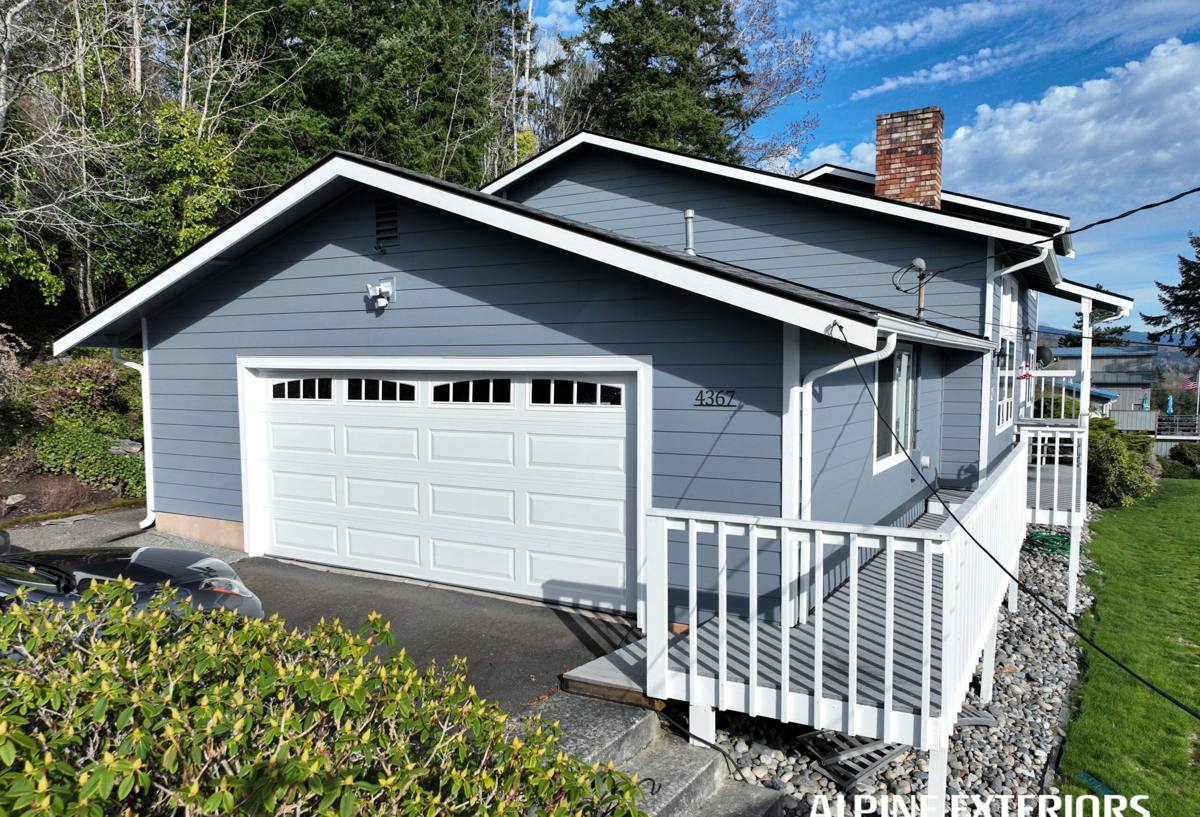
What Salt Air, Rain, and Moss Actually Do to a Deck
Salt Air
Airborne salt from the water doesn't just affect metal railings and boat hardware — it settles on every exposed surface, including decking. On wood decks it accelerates weathering and finish breakdown. On lower-grade composite boards, it can dull surface color faster than the manufacturer's stated fade tolerance and, over years, work into any exposed cut ends or fastener holes that weren't properly sealed.
Driving Rain
Rain that comes in sideways off the water doesn't just fall on a deck, it drives underneath railings, into board gaps, and against the house where the deck ties into the wall. Flashing and drainage details that would be minor on an inland deck become the difference between a dry substructure and a rotted ledger board here.
A Long Moss Season
Shaded, north-facing, or tree-covered sections of a California Creek yard stay damp for most of the year. Moss and algae need that sustained moisture, and once they get a foothold on decking they hold even more water against the board surface, which turns a cosmetic issue into a slip hazard and, eventually, a maintenance headache.
None of this means composite decking is a bad fit here — it means the build has to account for these three things from the framing up, not just at the surface.
What a Correct Composite Deck Build Involves
A composite deck is only as good as what's underneath it. The board itself gets most of the attention, but the framing, fasteners, and drainage details are what actually determine how the deck holds up through a Birch Bay winter.
- Substructure: Pressure-treated or naturally durable framing lumber, sized and spaced to the board manufacturer's specifications — composite boards typically need tighter joist spacing than wood, especially at angles or on stairs.
- Fasteners and hardware: Stainless steel or coated, corrosion-rated fasteners throughout — not just at the visible surface. Standard galvanized hardware corrodes faster in salt-exposed air and can stain composite boards from underneath.
- Ledger attachment and flashing: Proper flashing where the deck meets the house, so wind-driven rain can't work its way behind the ledger board and into the wall assembly.
- Airflow underneath: Adequate clearance and ventilation below the deck so moisture doesn't sit trapped against the framing, which matters more here than in drier parts of the state.
- Board gapping: Correct expansion gaps between boards, sized for the temperature swings and moisture cycling composite material goes through in this climate.
- Drainage at grade: Grading and, where needed, drainage systems that carry water away from footings rather than letting it pool near the base of the structure.
Skip any one of these and the composite boards themselves — even good ones — end up carrying problems they weren't designed to solve.
Choosing a Composite Board for This Climate
Not every composite product is built the same way, and the differences matter more in a salt-air, high-moisture environment than they would somewhere drier and inland. When we're speccing a deck for a California Creek property, we're weighing a few things with the homeowner:
Capped vs. Non-Capped Composite
Capped composite boards have a protective polymer shell wrapped around a wood-plastic core. That cap is what resists moisture absorption, staining, and fading. Non-capped or older-generation composite boards let more moisture into the core over time, which becomes a bigger factor with the rainfall this area gets.
Surface Texture
A wood-grain embossed or textured surface holds up better underfoot when it's wet — and with California Creek's rain patterns, a deck surface is wet more often than it's dry for a good stretch of the year. Smooth, low-texture boards can get slick faster, especially in shaded areas prone to moss and algae growth.
Color and Heat
Darker composite colors absorb more heat on the rare sunny days but also tend to show less staining and streaking from organic buildup in shaded, damp corners — a real consideration when part of the deck sits under tree cover most of the year.
We don't push one brand over another as a blanket rule. We do steer homeowners away from bargain, non-capped composite in this specific location — not because it's a bad product everywhere, but because the maintenance burden and moisture exposure it carries don't make sense for a deck that's going to sit in salt air and shade for years.
Composite, Wood, and PVC — How They Compare Here
| Factor | Pressure-Treated Wood | Capped Composite | PVC / Cellular PVC |
|---|---|---|---|
| Moisture resistance in this climate | Moderate — needs regular sealing | High | Very high |
| Moss/algae resistance | Low without frequent cleaning | Good, especially textured boards | Good |
| Salt air fading/staining | Fades and grays without upkeep | Low with quality capped product | Low |
| Upfront cost | Lowest | Mid to upper-mid | Highest |
| Ongoing maintenance | Annual cleaning/sealing | Occasional washing | Minimal |
| Typical lifespan with proper install | 10–15 years | 25–30+ years | 25–30+ years |
Wood still has a place for homeowners who want that specific look and are willing to keep up with sealing on a regular schedule. For most California Creek properties where the deck sees consistent salt air, shade, and rain, composite lands in a good middle ground of upfront cost against long-term upkeep.
Our Process for California Creek Deck Projects
- On-site walkthrough: We look at sun exposure, shade patterns, wind direction relative to the water, existing drainage, and how the deck ties into the house before recommending anything.
- Framing assessment: If this is a rebuild over an existing structure, we evaluate whether the substructure is sound enough to build on or needs to be replaced — reusing compromised framing under new composite boards just moves the problem underground.
- Material selection: We walk through board and hardware options with the actual conditions of your lot in mind, not a generic recommendation.
- Permitting: We handle the permit process through Whatcom County where required, including any setback or height considerations specific to your property.
- Build: Framing, flashing, drainage, and board installation, in that order of priority — the parts nobody sees get as much attention as the parts everybody walks on.
- Walkthrough and care guidance: Before we leave, we go over what maintenance the specific board you chose actually needs, since that varies by product.
Living With a Composite Deck Through Moss Season
Composite decking cuts down maintenance significantly compared to wood, but "low-maintenance" isn't "no-maintenance" — especially with a moss season as long as this one. A little routine care keeps a composite deck looking and performing the way it should for decades.
- Rinse or sweep off standing debris and organic buildup regularly during fall and winter, when leaf litter and damp conditions are worst.
- Wash the deck surface a couple of times a year with a soft-bristle broom and mild soap and water — avoid pressure washers on composite unless you know the manufacturer's PSI limits.
- Check that gaps between boards stay clear of trapped debris, which holds moisture against the board edges.
- Trim back overhanging branches or shrubs where you can, to cut down on the shade and organic matter that feed moss growth.
- Inspect railing posts and fastener points once a year for any early signs of corrosion or movement.
- Confirm gutters and downspouts near the deck are directing water away from the structure, not onto it.
What Affects the Cost of a Composite Deck Here
| Cost Factor | Why It Matters in California Creek |
|---|---|
| Substructure condition | Rebuilding rotted or undersized framing adds cost but is non-negotiable for a safe, long-lasting deck |
| Board grade selected | Capped, textured composite costs more upfront but carries lower fading and staining risk in salt air |
| Fastener and hardware spec | Corrosion-rated hardware costs more than standard galvanized but avoids premature staining and failure |
| Site access and grade | Sloped lots or limited access near the water can add labor time for material handling and drainage work |
| Railing and stair details | Composite railing systems and stair stringers add cost relative to a simple, single-level deck |
| Permit and inspection requirements | Whatcom County permitting adds time and a modest fee but protects you at resale and on insurance |
We'll always give you a real number for your specific project rather than a rough estimate pulled from a generic price sheet — decks vary too much lot to lot for that to be useful.
Why a Crew That Already Works California Creek Matters
Deck problems in this area tend to follow a pattern: undersized or improperly sealed framing, standard hardware that wasn't rated for salt exposure, and drainage that wasn't planned for how much rain this stretch of Whatcom County actually gets in a given year. A crew that hasn't worked waterfront and near-waterfront Birch Bay properties before doesn't always know to plan for those things up front — they find out after the fact, on someone else's deck.
We build decks throughout the Birch Bay area, and California Creek's conditions — salt exposure, shaded lots, sustained damp weather — inform the framing, hardware, and drainage decisions we make before the first board goes down. That's not a marketing point, it's just what correct work looks like for this specific location.
Get a Straight Answer on Your Deck
If you're planning a new composite deck or replacing one that's showing its age, we're happy to take a look and give you an honest read on what your property needs — no pressure, no inflated scope. Use the form below to request a free estimate, and we'll walk the site with your specific conditions in mind.