 Birch Bay Siding
 Composite Decking Built for Lummi Island's Marine Climate
Lummi Island sits out in the Salish Sea, and that changes what a deck has to put up with. Homes here get more direct salt air exposure than properties further inland in Whatcom County, along with driving rain off the water and a long stretch of gray, damp months where moss and algae get a real foothold on any horizontal surface. A deck built for a typical suburban lot doesn't always hold up the same way out here. Composite decking, installed correctly for this specific environment, is one of the more sensible ways to get a low-maintenance outdoor space that doesn't turn into a yearly project.
This page is about composite decking specifically for Lummi Island properties — not a general overview. If you're weighing whether composite makes sense for your place, or you already know you want it and just need it done right, this covers what actually matters here.
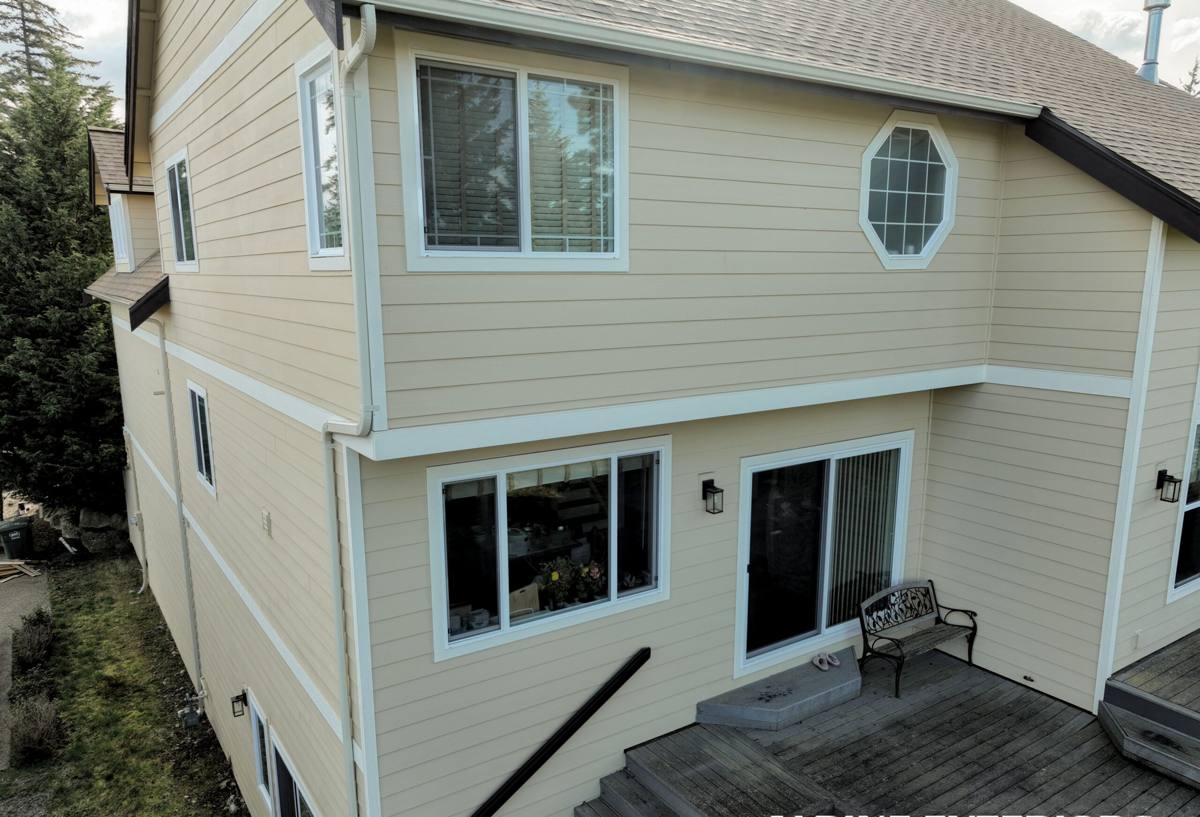
What Salt Air and Moss Season Actually Do to a Deck
Salt and Corrosion
Airborne salt doesn't just sit on the surface of a deck — it works into fasteners, hardware, and any exposed metal connections. Over time, uncoated or poorly rated fasteners corrode, stain the decking around them, and eventually weaken. This is one of the most common reasons a deck that "looks fine" from a distance turns out to have real structural issues underneath. It's also one of the easiest problems to prevent if the right materials go in from the start.
Moss, Algae, and Moisture
Whatcom County's wet season runs long, and shaded or low-airflow areas of a deck stay damp for extended stretches. That's exactly the condition moss and algae need to establish themselves. On wood decking, that moisture cycle also drives rot, cupping, and splintering. Composite boards resist moisture absorption far better than wood, but they aren't immune to surface growth — a composite deck with poor drainage or ventilation underneath can still grow moss on the board surface, especially on the shaded north side of a house.
Composite vs. Wood vs. PVC: What Actually Makes Sense Here
There's no single "best" decking material for every situation — it depends on budget, how much upkeep you want to do, and how exposed the deck is to weather. Here's how the common options stack up for a marine-climate property like this:
| Material | Maintenance | Moisture/Salt Behavior | Typical Lifespan |
|---|---|---|---|
| Pressure-treated wood | Annual staining/sealing | Absorbs moisture, prone to rot and splintering near salt air | 10-15 years with upkeep |
| Cedar | Regular sealing to hold color and resist weathering | Naturally rot-resistant but still absorbs moisture over time | 15-20 years with upkeep |
| Capped composite | Occasional washing, no staining or sealing | Resists moisture absorption; capped shell protects core from salt exposure | 25-30+ years, manufacturer-backed |
| Uncapped composite (older style) | More prone to surface staining and moisture uptake over time | Weaker performance in wet, salt-heavy conditions | 15-20 years |
| PVC decking | Low, similar to capped composite | Fully moisture-resistant, no wood fiber to absorb anything | 25-30+ years |
For most Lummi Island homes, capped composite hits the right balance — it holds up to salt air and constant moisture far better than wood without the higher price tag of full PVC systems, and it doesn't require the sealing and staining routine that wood demands every year.
What a Correct Composite Deck Install Involves
The Substructure Matters More Than the Boards
A lot of composite deck problems trace back to what's underneath the boards, not the boards themselves. In a marine environment, we pay close attention to joist spacing, proper flashing where the deck meets the house, and using a ledger board detail that keeps water from getting trapped against the structure. That last point matters more here than in drier parts of the state — trapped moisture behind a ledger board is a slow, hidden problem that shows up as rot years later.
Fasteners and Hardware
We use corrosion-resistant, marine-rated fasteners and hardware throughout — not because it's required everywhere, but because it's the right call for a property exposed to salt air. Cutting corners on hardware is one of the most common shortcuts we see on decks that were built cheap, and it's almost always the first thing to fail.
Drainage and Airflow Underneath
Composite decking needs airflow beneath the boards to shed moisture properly. On a lot with limited grading options or a lower deck height, we plan for drainage paths and, where needed, under-deck ventilation so water doesn't pool or sit stagnant under the structure. This is also where moss control starts — a deck that drains and dries out between rain events won't grow moss nearly as fast as one that stays damp underneath.
Choosing Boards, Colors, and Railing for This Environment
Board and rail choice isn't just about looks. A few things worth thinking through before picking a color and profile:
- Darker composite boards absorb more heat and can show surface wear faster in direct sun exposure areas of the property
- Lighter, mid-tone colors tend to show less pollen, dust, and light algae film between cleanings
- Grooved-edge boards (for hidden fastener systems) can trap more moisture and debris than square-edge boards if drainage underneath isn't dialed in
- Aluminum or vinyl-coated composite railing holds up better to salt air than uncoated wood or bare metal rail systems
- Picture-frame border boards (a contrasting perimeter board) add a finished look but also add board seams — worth weighing against a cleaner, simpler layout on a smaller deck
Our Process for Lummi Island Projects
Lummi Island is a ferry-access community, and we plan our work around that rather than treating it as an afterthought. Materials and equipment get staged and scheduled so crew trips are efficient, which keeps the project on a realistic timeline instead of losing days to logistics. Here's the general flow:
1. Site Visit and Assessment
We look at sun and wind exposure, existing drainage, the condition of any structure the new deck will attach to, and how the site handles moisture through the wet months. This is also where we talk through board and rail options based on what we see on-site.
2. Straightforward Estimate
You get a clear scope and price before anything starts — no vague allowances that turn into surprise add-ons partway through.
3. Build
Substructure first, with proper flashing and fastener choices for the environment, then decking and railing. We don't rush the parts that don't show once the boards are down, because those are the parts that determine whether the deck holds up.
4. Walkthrough
We go over the finished deck with you, including basic care so it stays looking good through its first few wet seasons.
Maintaining a Composite Deck in a Salt-Air, High-Moss Climate
Composite decking is low-maintenance, not no-maintenance, especially in a climate like this one. A little seasonal attention goes a long way toward keeping it looking good and functioning properly for decades:
- Rinse or sweep debris off the deck regularly, especially in fall when leaves and needles collect in corners and against railing posts
- Wash the surface a couple of times a year with a soft-bristle brush and a composite-safe cleaner to prevent algae and moss film from establishing
- Keep gutters and downspouts near the deck clear so runoff isn't dumping extra water onto or under the structure
- Check railing posts and fastener points periodically for any early signs of corrosion staining
- Trim back vegetation that's shading or crowding the deck, since shaded areas stay damp longer and grow moss faster
- Confirm under-deck vents or drainage paths stay clear of leaves, debris, and plant growth
Cost Factors for a Lummi Island Composite Deck
Pricing depends on size, board tier, railing type, substructure condition, and site access — there's no honest flat number without seeing the property. In general, capped composite decking runs higher upfront than pressure-treated wood but lower than full PVC systems, and that gap narrows considerably once you factor in years of staining and sealing that wood requires and composite doesn't. Site access and ferry logistics can be a modest factor in scheduling and staging, which is exactly why we plan for it up front rather than pricing it in as a surprise later.
Why Hire a Crew That Already Works Lummi Island
A deck built without accounting for salt air, sustained moisture, and moss growth will show its age faster than one built with those conditions in mind from the start — regardless of how good the composite boards themselves are. The substructure decisions, fastener choices, and drainage planning matter more here than in a drier, inland part of Whatcom County. Working this area regularly means we're not guessing at how a build will hold up against this specific climate — we've already worked through the access logistics and the environmental factors that matter on a ferry-served, marine-exposed property.
If you're considering composite decking for a Lummi Island property, we're happy to walk the site, talk through honest options for your budget, and give you a straightforward estimate — no pressure, no pushy sales pitch. The form below is a good place to start.