 Birch Bay Siding
 Siding Built for Cottonwood Beach's Waterfront Exposure
Homes along Cottonwood Beach sit close enough to the water that the siding on the west and north walls takes a different kind of beating than a house a few miles inland in Birch Bay proper. Salt-laden air, wind-driven rain off the Strait, and a moss season that runs most of the fall through spring all work on exterior walls year-round. We install fiber cement siding for homeowners in this immediate area, and we've built our process around what this specific stretch of Whatcom County coastline actually does to a house — not a generic siding pitch that could apply anywhere in the Pacific Northwest.
This page covers fiber cement siding specifically, for Cottonwood Beach specifically: what the local climate demands, what a correct installation looks like, how we run a project here, and why local experience matters more than it might on a typical siding job.
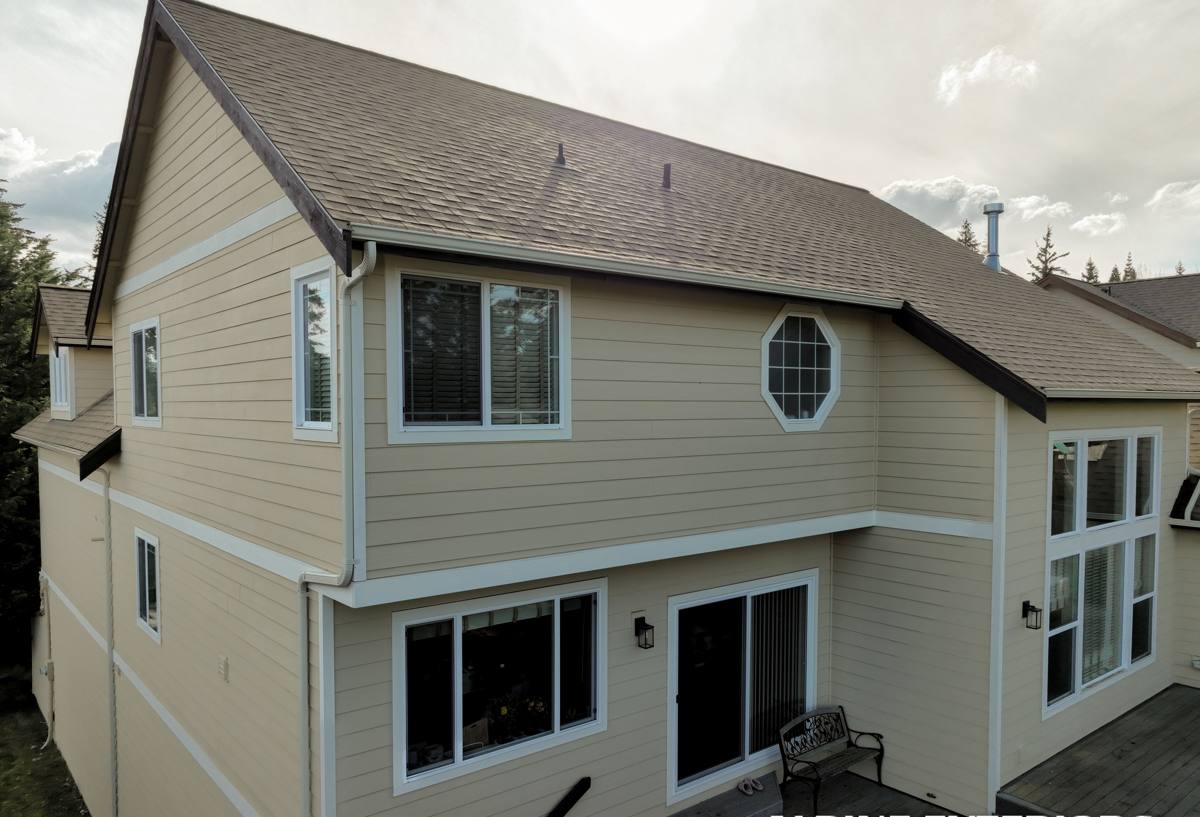
What Salt Air, Driving Rain, and Moss Season Actually Do to Siding
Salt air and metal fasteners
Airborne salt from the water doesn't just sit on the surface of a wall — it settles into every seam, fastener head, and trim joint on the exposed sides of a house. Over years, salt exposure accelerates corrosion on anything less than a fully rated fastener or flashing metal, and it will find weak points in a paint film faster than it would a few miles inland. Siding material that isn't dimensionally stable, or that relies on a field-applied paint job for its weather barrier, tends to show wear first on the walls facing the water.
Wind-driven rain at seams and penetrations
Birch Bay gets plenty of straight-down rain, but waterfront exposure adds wind-driven rain that hits siding at an angle and pushes water sideways into laps, corner joints, and anywhere trim meets siding. A siding system that depends on caulk alone to stay dry at those joints will eventually let water behind the cladding. The material itself and the flashing details underneath it matter as much as the visible surface.
A long moss season
Shaded, damp walls in this area can stay wet for extended stretches, especially north-facing sides shielded from direct sun by trees or neighboring structures. That moisture, combined with organic debris from nearby trees, creates conditions where moss and algae take hold on porous or textured surfaces. Once established, moss holds moisture against the wall and accelerates whatever degradation process is already underway underneath it.
Why We Only Install James Hardie Fiber Cement
We install James Hardie fiber cement siding exclusively — we don't offer vinyl, LP SmartSide, Cemplank, Allura, or wood siding as alternatives. That's a deliberate standard, not a sales default, and it matters more here than it would in a low-exposure location.
Fiber cement as a material category is dense, dimensionally stable, and non-combustible, which holds up better than wood-based or vinyl products against sustained moisture and salt exposure. Within that category, we standardized on Hardie specifically because of three things that matter directly for waterfront homes:
- ColorPlus factory finish — baked-on at the factory rather than field-sprayed, which gives a more consistent, weather-resistant surface than job-site painting, especially useful on walls that take direct salt spray.
- Climate-engineered HZ product lines — Hardie manufactures different formulations for different regional climate zones, rather than a single one-size-fits-all board.
- A warranty structure that transfers with the home and is backed by a large, established manufacturer, which matters on a coastal property where a future buyer will ask about the siding's condition and history.
We're not going to tell you other fiber cement brands or engineered wood products are junk — most have real strengths. But we've made a professional call that for the homes we put our name on, Hardie's finish system, formulation range, and warranty backing are worth standardizing around, and we'd rather be excellent at installing one system correctly than average at installing five.
What a Correct Installation Looks Like in This Climate
Fiber cement siding is only as good as the water management system underneath it. In a location with wind-driven rain and long wet stretches, the details that never show up in a finished photo are the ones that determine whether the siding lasts.
Flashing and drainage first
Every window head, door top, and horizontal trim transition needs proper flashing that directs water back out and down, not into the wall assembly. On waterfront-exposed walls we pay particular attention to head flashing above openings and kick-out flashing where roof lines meet siding walls, since these are the spots wind-driven rain finds first.
A drainage gap behind the cladding
A rainscreen gap or drainage wrap behind the siding gives any moisture that does get past the outer layer a path to drain and dry out, instead of sitting against the sheathing. This matters more on shaded, damp walls where things simply don't dry out as fast as they would on a sunnier, inland site.
Fastening and gapping to spec
Hardie siding has published fastener type, spacing, and placement requirements, along with minimum gaps at butt joints and trim to allow for expansion and drainage. Skipping these specs is the single most common cause of premature siding failure — cracking, buckling, or water intrusion — regardless of how good the material itself is.
Sealed, not just caulked, penetrations
Every point where something passes through the siding — a hose bib, vent, light fixture, or conduit — needs to be properly flashed or sealed as part of the water management plan, not patched with a bead of caulk after the fact.
How We Run a Cottonwood Beach Project
- On-site assessment. We look at wall-by-wall exposure — which sides face the water and prevailing wind, where existing moss or moisture staining shows up, and where the current siding or trim has already failed.
- Tear-off and sheathing check. We remove the old siding down to the sheathing and inspect for rot or moisture damage before anything new goes up. Any damaged sheathing gets addressed before we move forward — installing new siding over compromised sheathing just hides the problem.
- Water management install. House wrap or drainage plane, flashing at every opening and transition, and a drainage gap where called for, installed before a single piece of visible siding goes up.
- Hardie installation to spec. Fastener type and placement, gapping, and caulking joints follow Hardie's published installation requirements, adjusted for the wind and moisture exposure of each wall.
- Trim, caulking, and cleanup. Final trim work, paintable caulk at specified joints, and a full site cleanup so the property is left in better condition than we found it.
Fiber Cement vs. Other Common Siding Materials Near the Water
| Factor | James Hardie Fiber Cement | Vinyl | Engineered Wood (e.g. LP SmartSide) |
|---|---|---|---|
| Salt air / corrosion resistance | Strong — dense, stable material with factory finish | Can become brittle and fade faster under salt and UV exposure | Moderate — wood-based core is more moisture-sensitive over time |
| Moss and algae resistance | Good on a smooth, factory-finished surface | Textured profiles can hold moisture and organic growth | Textured surface can trap moisture, encouraging growth |
| Wind-driven rain performance | Strong when flashed and installed to spec | Depends heavily on installation; can flex and gap over time | Vulnerable if edges or cut ends aren't fully sealed |
| Fire resistance | Non-combustible | Combustible | Combustible |
| Typical finish longevity | Factory ColorPlus finish, long repaint intervals | Color is baked into the material but can chalk/fade | Field-applied or factory-primed finish, shorter repaint cycle |
Cost Factors for a Cottonwood Beach Fiber Cement Job
Every project is different, and we'll walk your specific home during a free estimate rather than quote blind. In general, these are the factors that move the price up or down on jobs in this area:
| Factor | Why it affects cost |
|---|---|
| Number of water-exposed walls | Walls facing the water or prevailing wind often need more careful flashing and drainage detailing |
| Condition of existing sheathing | Moisture-damaged sheathing found during tear-off needs repair before new siding goes on |
| Home size and wall complexity | More corners, dormers, and trim transitions mean more flashing and cutting time |
| Existing moss or staining severity | Heavier existing growth can indicate underlying moisture issues worth addressing during the project |
| Trim and accessory choices | Corner boards, trim profiles, and accent details affect both material and labor |
Maintenance Checklist for Coastal Hardie Siding
Correctly installed Hardie siding is low-maintenance, but "low" isn't "none" in a salt-air, high-moss environment. A short annual routine keeps it performing the way it should:
- Rinse salt residue and grime off exterior walls, especially water-facing sides, with a garden hose or soft wash — avoid high-pressure washing that can force water behind panels or damage caulk joints.
- Check shaded and north-facing walls each fall for early moss or algae growth and address it before it spreads.
- Inspect caulking at trim joints, window and door surrounds, and penetrations annually; recaulk any joints that have cracked or pulled away.
- Trim back trees or shrubs holding moisture against any wall section.
- Watch for any staining, bubbling, or soft spots near ground level or roof-to-wall transitions, which can indicate a flashing or drainage issue worth having checked.
Why Hiring a Crew That Already Works Cottonwood Beach Matters
Siding installation isn't a one-size-fits-all trade. A crew that's worked this stretch of Whatcom County coastline already knows which wall orientations take the worst of the wind-driven rain, how long moss season actually runs here compared to more sheltered parts of Birch Bay, and what water management details matter most on a waterfront-exposed home versus an inland one. That local pattern recognition shows up in better flashing decisions and fewer callbacks — not in anything flashy, just in a job that's built for the specific conditions your house actually faces rather than a generic climate assumption.
If you're planning a siding project on your Cottonwood Beach home, we'd be glad to take a look and put together a straightforward, no-pressure estimate. Fill out the form below and we'll follow up to schedule a time to walk the property with you.