 Birch Bay Siding
 Building New in Cottonwood Beach: What the Windows Have to Handle
Cottonwood Beach sits close enough to the water that every window on a new build is going to spend its life dealing with salt-laden air, wind-driven rain off the Strait, and the long, damp moss season that Whatcom County is known for. On a remodel or replacement job, a lot of that exposure history is already visible — stained trim, soft sheathing, failed caulk lines. On new construction, none of that exists yet. The advantage is that we get to do it right the first time, before the siding goes on and before anything is buried behind finish materials. The risk is that if the window opening, flashing, and sealing aren't done correctly at this stage, the mistakes get covered up and don't show themselves for years.
New-construction windows are built with a nailing flange that gets integrated directly into the home's water-resistive barrier (WRB) before siding is installed. That's different from a pocket or replacement window, which fits into an existing, already-clad opening. Getting the sequence right — sill pan first, then side flashing, then the window, then head flashing, then the WRB lapped correctly over the top — is what determines whether a Cottonwood Beach home stays dry through its first winter storm or starts showing water intrusion within a year or two.
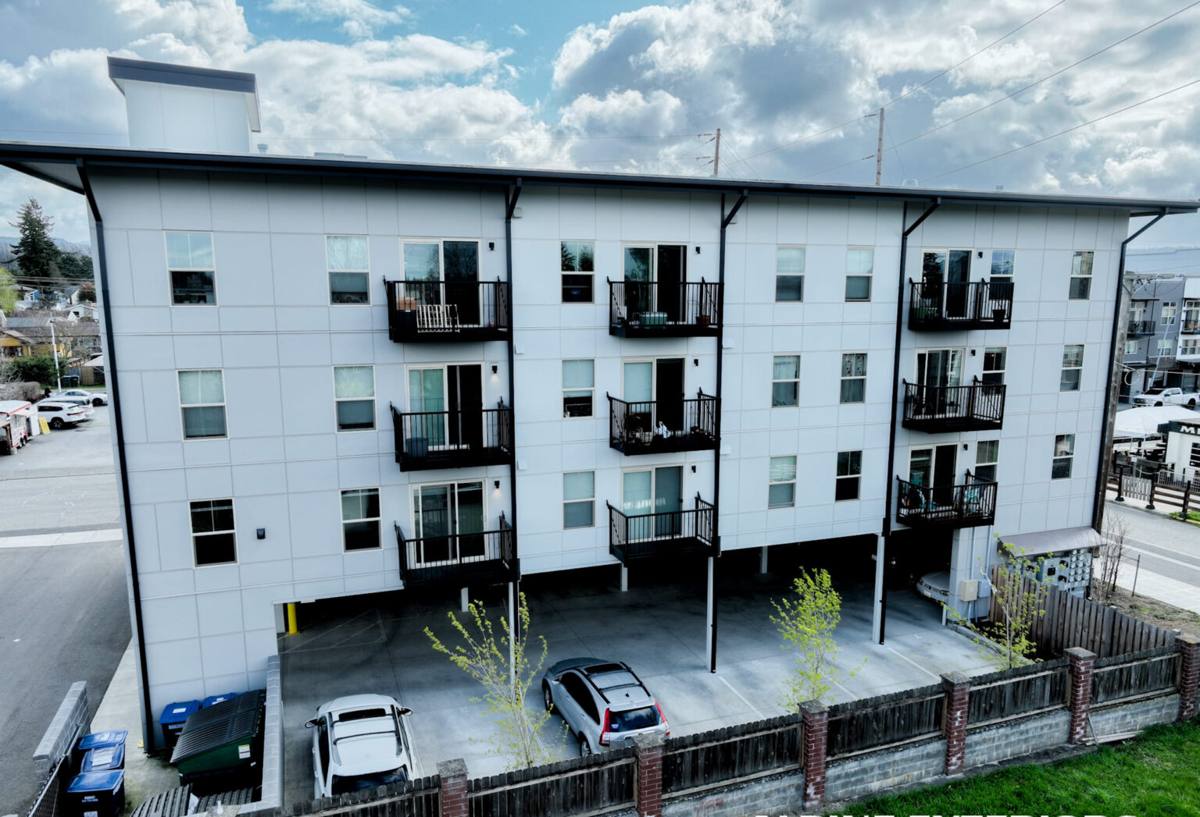
Why the Marine Environment Changes the Job
A window opening 20 miles inland can tolerate a few small shortcuts that a window opening a few blocks from Birch Bay simply can't. Three things specific to this area drive how we approach every new-construction window install here:
- Salt air accelerates corrosion on unprotected fasteners, low-grade flashing, and cheap hardware — we spec corrosion-resistant fasteners and flashing tape rated for coastal exposure.
- Driving rain during winter storms pushes water sideways and upward under wind pressure, so flashing has to be lapped and sealed to shed water in every direction, not just downward.
- Extended damp and moss season means any spot where water can pool or wood can stay wet longer than a day or two becomes a long-term rot and mold risk — sill pans and back-slope details matter more here than in drier parts of the state.
None of this means Cottonwood Beach needs exotic materials. It means ordinary details — a sill pan, a properly lapped WRB, the right sealant in the right place — actually have to be done, not just specified on paper.
What a Correct New-Construction Window Install Involves
On framing-stage or near-final-stage new builds, our sequence for each opening looks like this:
- Verify the rough opening is square, level, and sized correctly to the window unit's specifications — undersized or racked openings are the single most common cause of installation problems we find.
- Install a sloped sill pan so any water that reaches the sill drains back out, not into the framing below.
- Flash the sides and head in the correct shingle-lap order so water sheds down and out over each layer, never trapped behind it.
- Set the window plumb, level, and square, then fasten through the nailing flange per the manufacturer's pattern — under- or over-fastening both cause problems later.
- Seal and tape the flange into the WRB with a continuous, compatible air and water seal — mixing incompatible tapes and sealants is a common cause of early flashing failure.
- Insulate the gap between the window frame and rough opening with a low-expansion foam or backer rod and sealant — never packed rigid, which can bow the frame.
- Confirm interior and exterior trim details won't trap water against the window unit once siding and finish work are complete.
Every one of these steps is inspectable at the time it's done and essentially invisible once the wall is closed up. That's why we document flashing and sealing details as we go, so there's a record of what's behind the finish surfaces.
Coordinating With the Builder's Schedule
New-construction window work has to land at the right point in the framing sequence — too early and the opening isn't ready; too late and it holds up siding, insulation, and drywall crews behind us. On Cottonwood Beach jobs we coordinate directly with the general contractor or owner-builder's timeline so window installation doesn't become the bottleneck on the project.
Frame Materials That Hold Up Near the Water
Homeowners building in Cottonwood Beach usually ask us to weigh in on frame material, and the honest answer depends on budget, maintenance appetite, and how exposed the home's elevations are to wind and salt spray.
| Material | Salt & Moisture Resistance | Maintenance | Where It Fits |
|---|---|---|---|
| Vinyl | Good — won't rot or corrode; UV-stable formulations hold color well | Low — occasional rinse to clear salt film | Most common choice for full-house new builds on a set budget |
| Fiberglass | Very good — dimensionally stable in temperature swings, resists warping | Low | Homes on more exposed elevations or with larger window units |
| Wood-clad | Depends heavily on cladding integrity and joint sealing | Higher — cladding seams and any exposed wood need regular inspection | Homeowners prioritizing a specific interior wood look, aware of the added upkeep |
We don't push one material as universally correct. What matters more than the frame material itself is whether the glazing package and installation match the exposure the window will actually see — a south or west-facing wall catching direct weather off the water needs the same careful flashing regardless of frame choice.
Glass Packages Worth Considering
For new construction in this area, dual-pane units with a low-E coating and argon gas fill are standard practice — they cut down on both heat loss and condensation risk, which matters given how much moisture is in the air here for months at a time. Homeowners on more exposed lots sometimes ask about upgraded coatings or laminated glass for additional wind and impact resistance; that's a reasonable option to discuss based on the specific lot, not something every home needs.
What This Typically Costs
New-construction window pricing depends on more variables than a simple per-window number can capture. The factors that move the price most on Cottonwood Beach jobs:
| Factor | Why It Matters | Typical Effect on Cost |
|---|---|---|
| Number and size of openings | Larger units and more openings mean more material and labor | Medium to high |
| Frame material | Vinyl, fiberglass, and wood-clad carry different unit costs | Medium |
| Glass package | Upgraded coatings, laminated or impact-rated glass add cost per unit | Low to medium |
| Exposure and elevation | Walls facing direct wind and rain need more careful (and time-intensive) flashing work | Low to medium |
| Access and building stage | Coordinating around scaffolding, other trades, or tight schedules affects labor time | Low |
We give a written, itemized estimate after walking the plans or the framed openings — we don't quote new-construction window work off a floor plan alone, since actual opening sizes and site conditions always affect the number.
Mistakes We Watch For on New Builds Near the Water
Most of the water problems we get called to fix on newer Whatcom County homes trace back to a small number of repeatable mistakes made during the original install. On Cottonwood Beach jobs specifically, we check for:
- No sill pan, or a sill pan that isn't sloped to drain
- WRB lapped in the wrong order over the flashing, so water tracks behind it instead of over it
- Incompatible tape or sealant chemistries used together, which can fail to bond properly
- Nailing flange fastened with the wrong pattern or spacing, leaving gaps water can find
- Rigid foam packed into the shim space, bowing the frame out of square
- Exterior trim or siding detail that directs runoff toward the window instead of away from it
- Missing or undersized weep paths at the sill, so any water that does get in has nowhere to go
Every item on that list is easy to get right and easy to get wrong — the difference is almost entirely about whether the crew installing the window has done it correctly, repeatedly, on homes exposed to this specific climate.
Why a Crew That Already Works Cottonwood Beach Matters
A window installed correctly in a drier, more sheltered part of Whatcom County can still fail on a lot that takes direct wind and rain off the water, because the flashing and sealing details that are "good enough" inland aren't always sufficient here. Working regularly in Cottonwood Beach and the broader Birch Bay area means we already know which elevations tend to take the worst weather, how quickly moss and algae establish themselves on north-facing trim, and what level of flashing detail actually holds up through a full winter storm season — not just what passes a rough inspection.
That local track record also matters for coordination. New-construction window work touches framing, siding, and sometimes trim crews, and knowing how other trades in this area typically sequence their work helps keep a build on schedule instead of creating conflicts at the wall.
After Move-In: What Keeps New Windows Performing
Correctly installed new-construction windows in this climate need very little upkeep, but a few habits extend their life:
- Rinse salt film off exterior frames and glass periodically, especially on wind-exposed elevations
- Keep gutters and downspouts clear so roof runoff doesn't sheet down across window heads
- Check exterior caulk lines at trim joints annually — sealant is a maintenance item, not a lifetime one
- Clear moss or algae buildup from sills and trim before it holds moisture against the surface
None of this is unusual homeowner work — it's the same kind of seasonal check most people already do for gutters and roofs, just extended to the windows.
If you're building or finishing a home in Cottonwood Beach and want a straight answer on what your window openings need, we're happy to take a look at the plans or the framed structure and put together a free, no-pressure estimate — just fill out the form below.