 Birch Bay Siding
 Building a Deck That Holds Up in Custer
Custer sits close enough to the water that every deck built out here deals with the same three things year-round: salt-laden air blowing off the bay, driving rain that comes in sideways more often than straight down, and a moss season that can run from October clear through April. A deck design that works fine in a dry inland climate will show problems here within a few seasons — soft spots at the ledger, black streaking on the boards, rust bleeding from fasteners, and railings that loosen because the wood underneath has started to swell and shrink with every wet-dry cycle.
We build custom decks specifically for this environment. That means the material choices, the fastener spec, the framing details, and the drainage plan are all picked with Custer's weather in mind, not just pulled from a generic build sheet. Whether you're planning a simple ground-level deck off the back door or a larger elevated structure for entertaining, the goal is the same: something that still looks and performs well after a decade of Whatcom County winters.
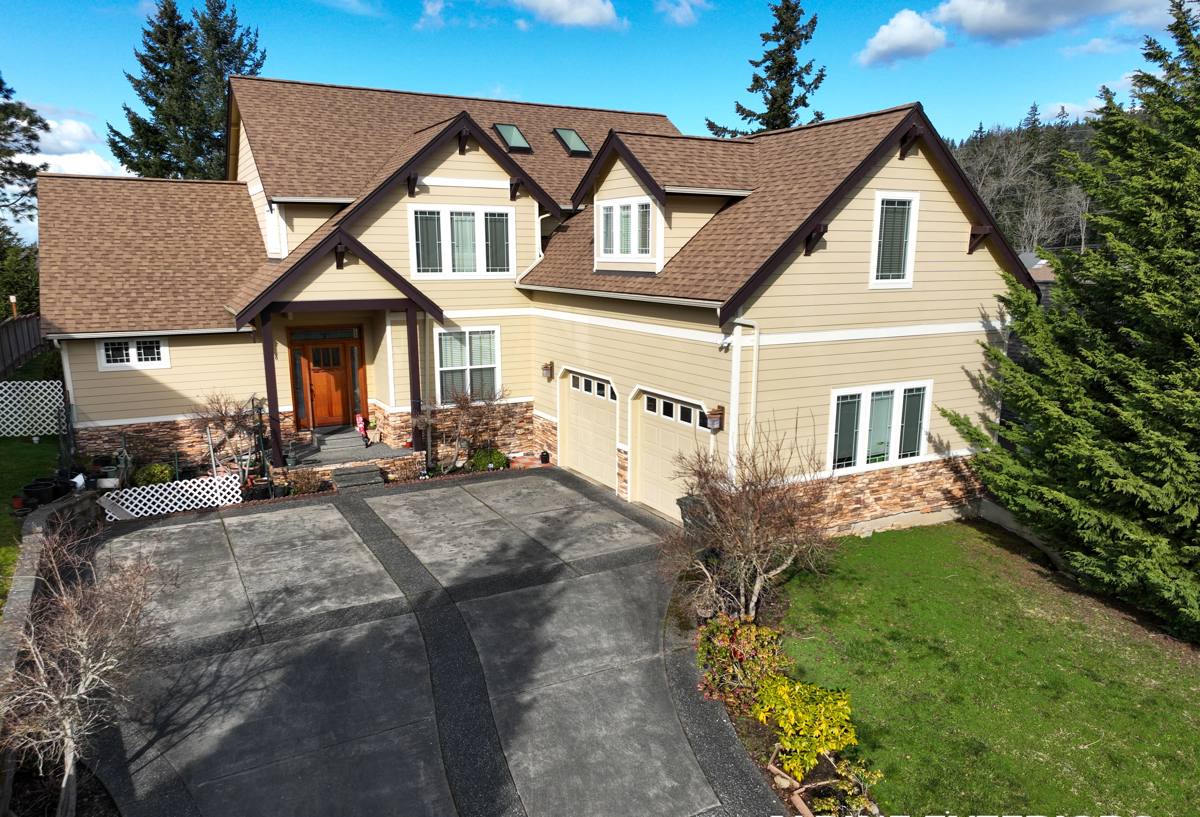
What Custer's Climate Actually Does to a Deck
It helps to understand the specific ways this stretch of coastline wears down outdoor structures, because it changes what "good work" looks like here versus somewhere drier.
Salt Air and Metal
Airborne salt accelerates corrosion on anything that isn't rated for a marine or coastal environment. Standard electro-galvanized screws, joist hangers, and post bases can start showing rust bleed within a couple of years this close to the water. That rust doesn't stay cosmetic — it weakens the connection over time.
Driving Rain
Wind-driven rain gets pushed into places a calm rain never reaches: under railing caps, behind fascia boards, into the seam where a deck meets the house. Flashing details that would be optional in a sheltered yard are not optional here.
Moss and Sustained Dampness
Low winter sun angles and long stretches of overcast, damp weather let moss and algae take hold on any decking surface that doesn't drain and dry quickly. Beyond the slip hazard, trapped moisture under moss growth is one of the more common causes of premature decay in both wood and the top layer of some composite products.
Choosing the Right Decking Material for This Area
There isn't one universal "best" decking material — there's a best material for a given budget, maintenance appetite, and exposure. Here's how the common options actually perform in a Custer setting.
| Material | How it handles this climate | Maintenance | Rough lifespan here |
|---|---|---|---|
| Pressure-treated fir/hem-fir | Affordable, but needs consistent sealing to resist moss and checking in coastal damp | Annual cleaning, re-sealing every 1-2 years | 10-15 years with upkeep |
| Cedar | Naturally rot-resistant and handles moisture well, but greys and needs care to keep its color | Cleaning plus oil or stain every 1-2 years | 15-20 years with upkeep |
| Composite (capped) | Resists moisture absorption and moss staining better than wood; surface doesn't need sealing | Periodic washing, no staining/sealing | 25+ years, manufacturer-backed |
| PVC decking | Fully synthetic, sheds water and resists staining well; can be more slick when wet if surface texture is low | Occasional washing | 25+ years, manufacturer-backed |
We're honest with clients that composite and PVC cost more up front but remove the sealing and staining cycle entirely, which matters in a climate where a missed maintenance year shows up fast. Wood decks aren't wrong for Custer — plenty of homeowners like the look and don't mind the upkeep — but we make sure clients know what they're signing up for maintenance-wise before we build, not after.
Framing and Structure: The Part You Don't See
A deck's surface material gets all the attention, but the framing underneath is what determines whether it's still solid in fifteen years. In a coastal climate, a few details matter more than usual:
- Ledger flashing — the connection where the deck attaches to the house is the single most common failure point on wood decks anywhere, and driving rain makes it worse here. Proper metal flashing with correct water-shedding overlap keeps moisture out of the rim joist and wall framing.
- Joist protection — capping or wrapping joist tops reduces the standing water that leads to rot at fastener penetrations, especially under composite decking where the joist stays damp longer than the wood itself.
- Footings sized for saturated soil — Whatcom County soil holds a lot of water through the winter; footings need to be sized and set to code depth so they don't heave or settle with seasonal freeze-thaw and moisture swings.
- Post-to-beam and beam-to-joist hardware — this is where corrosion-resistant fasteners matter most, since these connections carry structural load and are hard to inspect once the deck is finished.
Fasteners and Hardware Rated for Coastal Use
This is one area where cutting a corner doesn't show up for a few years — and then shows up all at once. For any deck within reach of salt air, we spec stainless steel or heavy hot-dip galvanized fasteners and connectors rather than standard electro-galvanized hardware. The cost difference is small relative to the whole project; the difference in how the hardware holds up is not small. We also pay attention to how dissimilar metals interact — some fastener and flashing combinations corrode faster when they're in contact with certain composite or treated-wood chemistries, so matching hardware to material is part of the spec, not an afterthought.
Railings
Railing posts and their connections take a lot of wind and rain exposure since they're the tallest, most exposed part of the structure. Loose railings are one of the most common deck complaints we hear from homeowners with older decks in this area, and it almost always traces back to fasteners or post connections that weren't rated for the environment.
Drainage, Airflow, and Keeping Moss Off
Moss doesn't grow because a deck is old — it grows because a surface stays damp longer than it should. A few build decisions make a real difference over the life of the deck:
- Correct board spacing so water drains through rather than pooling on the surface
- Slight slope away from the house so water sheds instead of collecting at the ledger
- Open airflow underneath elevated decks so the underside can dry out between storms
- Keeping decking boards clear of overhanging vegetation where practical, since shaded, damp areas moss first
None of this eliminates the need for occasional cleaning — moss will find a foothold on any exterior surface in this climate eventually — but a well-drained deck needs a lot less scrubbing and holds up better between cleanings than one that was framed without drainage in mind.
Our Process for a Custom Deck in Custer
- On-site assessment — we look at the site's exposure, sun/shade pattern, existing drainage, and how the deck will connect to the house before recommending materials.
- Design and material selection — we walk through the tradeoffs in plain terms: upfront cost versus long-term maintenance, appearance versus durability, so the decision fits your budget and how much upkeep you actually want to do.
- Permitting — we handle the paperwork with Whatcom County where a permit is required based on the deck's height and size.
- Build — framing, flashing, and structural connections go in first and get checked before decking and railings go on top.
- Final walkthrough — we go over the finished deck with you, including what maintenance (if any) the chosen material needs going forward.
Permits and Local Considerations in Whatcom County
Most elevated decks and many ground-level decks over a certain size require a building permit in Whatcom County, and setback requirements can affect how close a deck can sit to a property line, depending on the parcel. Requirements vary by specific site and structure, so we confirm what applies to your property as part of the design phase rather than guessing. Handling this correctly up front avoids delays and rework later.
Maintenance Checklist for Custer Homeowners
Whatever material you choose, a few habits go a long way in this climate:
- Sweep off leaves and debris regularly, especially going into fall when moss growth accelerates
- Rinse the surface a few times a year to clear salt residue and organic buildup before it stains or grows moss
- Check railing posts and stair connections annually for looseness, particularly after winter storms
- Reseal or restain wood decking on the schedule appropriate to the product — don't let it go past due in this climate
- Clear gutters and downspouts near the deck so roof runoff isn't dumping extra water onto or near the structure
- Keep an eye on the ledger area where the deck meets the house — it's the hardest spot to inspect and the most consequential if it fails
Why Local Experience Matters for This Job
Deck building isn't complicated in the abstract, but building one that's still tight, dry, and moss-free after ten Whatcom County winters takes knowing how this specific climate behaves — how far salt air travels inland, which fastener grades actually hold up, where driving rain finds the gaps other builders miss. A crew that's built decks elsewhere in the county has already made the mistakes worth learning from and adjusted the spec accordingly, so your deck doesn't have to be the one that teaches that lesson.
If you're planning a new deck or replacing one that's showing its age, we'd be glad to take a look at your property and put together a straightforward estimate — no pressure, no obligation. Use the form below to get started.