 Birch Bay Siding
 Custer Sits Right in the Path of Birch Bay's Toughest Weather
Custer doesn't get the same postcard attention as the Birch Bay waterfront, but it takes the same weather. Moist marine air moves inland off the bay, wind-driven rain comes in sideways during winter storms, and the shaded, tree-lined lots common in this part of Whatcom County stay damp long after a storm has passed. That combination — salt-tinged air, saturating rain, and slow-drying shade — is exactly the environment that separates siding that lasts thirty years from siding that starts failing in eight or ten.
We install fiber cement siding for homes throughout Custer and the surrounding Birch Bay area, and we only install one brand: James Hardie. This page covers what that actually means for a Custer home — not generic siding advice, but what correct fiber cement installation looks like when the job has to hold up to this specific stretch of Whatcom County coastline.
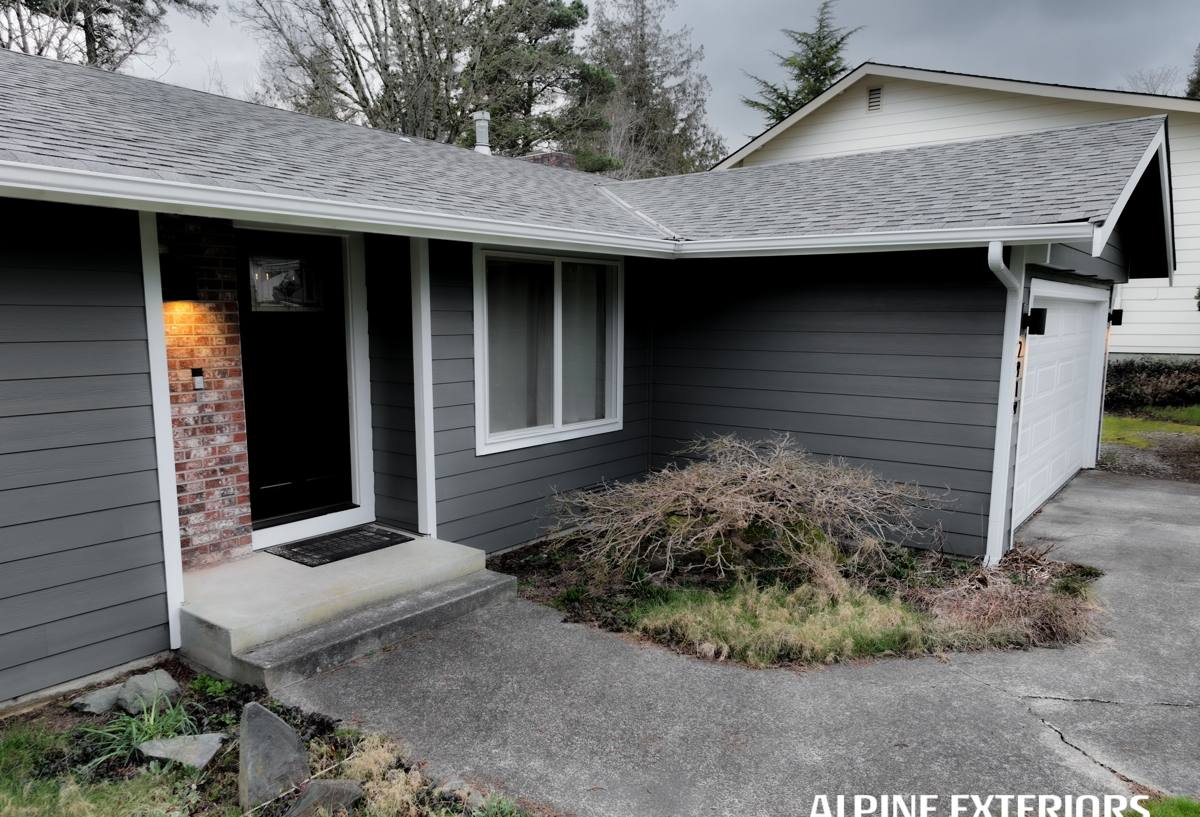
Why Ordinary Siding Struggles Here
Salt Air and Slow-Drying Surfaces
Homes a mile or two off Birch Bay still pick up salt-laden air carried inland on prevailing winds. Salt accelerates corrosion of fasteners and metal trim, and it can leave a fine residue on painted surfaces that holds moisture against the substrate. Wood-based products — cedar, primed spruce, and engineered wood siding — are especially vulnerable, because any crack in the factory coating gives salt-humid air a direct path to raw wood fiber.
Driving Rain, Not Just Rain
Whatcom County gets a lot of rain, but the issue for siding isn't total rainfall — it's wind-driven rain hitting a wall horizontally instead of falling straight down. That kind of weather forces water into laps, seams, butt joints, and anywhere flashing or caulking is even slightly off. A siding system that depends on perfect, unbroken paint film to stay watertight will eventually lose that fight.
Moss and Prolonged Dampness
Custer's mix of mature trees and marine humidity means many homes stay shaded and damp well into the afternoon, even on clear days. That's a long moss and algae season. Moss holds moisture directly against the wall surface for extended stretches, and on organic siding materials that sustained dampness is what leads to rot, delamination, and swelling at the edges — problems that show up first at butt joints and bottom corners.
What a Correct Fiber Cement Job Looks Like in Custer
Fiber cement itself is a stable, non-combustible material made from cement, sand, and cellulose fiber. It does not absorb water the way wood does and it does not feed moss the way wood fiber does. But the material is only half the equation — installation quality is what determines whether a Custer home actually gets 30+ years out of it. Given the climate here, we pay particular attention to:
- Rainscreen gap or proper furring: a small airspace behind the siding lets any moisture that does get behind the cladding dry out instead of sitting against the sheathing.
- Flashing at every horizontal transition: window heads, roof-to-wall intersections, and deck ledgers are the first places wind-driven rain finds a way in if flashing is skipped or undersized.
- Correct fastener placement and type: James Hardie specifies exact nailing patterns and corrosion-resistant fasteners; salt-air exposure makes using the right fastener non-negotiable, not optional.
- Factory-finished ColorPlus coating: a baked-on finish applied under controlled conditions holds up to UV and moisture cycling far better than field-applied paint, which is especially relevant given how often job-site painting gets rained on before it cures in this climate.
- Proper caulking and joint treatment: butt joints and trim intersections are sealed per manufacturer spec, not just caulked and hoped for.
Skip any one of these and you can still end up with moisture problems — even with a good base material. That's why we treat installation procedure as seriously as product selection.
Why We Install Only James Hardie
We don't install LP SmartSide, vinyl, Cemplank, Allura, primed spruce, or cedar. That's a deliberate standard, not a lack of options. Each of those products has legitimate strengths, but each also comes with a trade-off — moisture sensitivity, appearance limitations, installation forgiveness, or warranty structure — that we're not willing to build our reputation on in a climate like this one. James Hardie's fiber cement is engineered specifically for regional moisture conditions, doesn't require the same maintenance vigilance as wood-based alternatives, resists moss and algae growth better than porous surfaces, and carries a strong transferable warranty backed by decades of field performance in wet coastal climates similar to Birch Bay. Standardizing on one product line also means our crews install it correctly every time, rather than switching techniques and details between five different systems.
Choosing the Right Hardie Product Line for a Custer Home
James Hardie makes climate-engineered product lines (HZ5 for the Pacific Northwest's wetter, cooler conditions), and several plank and panel profiles. For most Custer homes, the choice comes down to look and wall configuration rather than performance — HZ5 is the correct base product either way.
| Product | Best Use | Look |
|---|---|---|
| HardiePlank lap siding | Most single-family homes, traditional exteriors | Classic horizontal lap, several width and texture options |
| HardiePanel vertical siding | Accent walls, gables, modern or farmhouse styles | Clean vertical lines, often paired with board-and-batten trim |
| HardieShingle | Accent gables, Craftsman and cottage-style homes | Staggered or straight-edge shingle look without wood upkeep |
| HardieTrim | Corners, fascia, window and door trim | Matches plank or panel siding for a finished, consistent exterior |
Our Process, Start to Finish
1. On-Site Assessment
We walk the exterior, check existing siding and sheathing condition, look at drainage around the foundation, and note anything specific to the lot — shade patterns, tree cover, and exposure to prevailing wind and rain direction.
2. Tear-Off and Sheathing Check
Old siding comes off and we inspect the sheathing underneath. In a climate like Custer's, this step matters — hidden moisture damage behind old wood or vinyl siding is common enough that we don't skip it, and any compromised sheathing gets addressed before new siding goes on.
3. Weather Barrier and Rainscreen
A proper water-resistive barrier goes down first, followed by furring strips or a rainscreen product to create a drainage and drying gap behind the new siding.
4. Flashing and Trim
Flashing is installed at every window, door, and horizontal transition before siding goes up around it — not caulked in as an afterthought.
5. Siding Installation
HardiePlank, panel, or shingle goes up per James Hardie's fastening and clearance specifications, with attention to butt joint placement and consistent reveal.
6. Final Detailing and Walkthrough
Caulking, touch-up, and a final walkthrough so you know what was done and what to expect from the finish over the coming years.
What Fiber Cement Siding Costs to Install in Custer
Costs vary by home size, siding profile, trim complexity, and how much tear-off and repair work is needed underneath the old siding. Broadly, homeowners should expect fiber cement installation to run higher than vinyl and comparable to or somewhat above engineered wood siding, reflecting the material cost, the labor involved in correct installation, and the longevity you're buying into. The factors that move the number most are below.
| Factor | Why It Affects Cost |
|---|---|
| Home size and wall complexity | More square footage and more corners, gables, and dormers mean more cutting and trim work |
| Existing siding removal | Tear-off of old wood, vinyl, or damaged material adds labor before installation starts |
| Sheathing repair | Rot or moisture damage found during tear-off needs to be fixed before new siding goes on |
| Product profile | Lap, panel, and shingle styles differ in material and installation time |
| Color and finish | Factory ColorPlus finishes vs. field painting affect both material cost and long-term upkeep |
| Rainscreen detailing | Furring and drainage gap installation add labor but pay off in moisture performance |
We provide a written, itemized estimate after seeing the home in person — there's no way to price this kind of work accurately without walking the exterior first.
Maintaining Fiber Cement Siding in a Marine Climate
One of the reasons we standardized on James Hardie is that it asks a lot less of homeowners than wood-based alternatives, but "low-maintenance" doesn't mean "no-maintenance" — especially with Custer's moss season and salt air. A simple annual routine covers most of it:
- Rinse siding down once or twice a year to clear salt residue, pollen, and moss spores before they take hold
- Check caulking at trim joints and window edges for cracking or separation
- Trim back tree branches and shrubs that keep sections of wall shaded and damp
- Clear gutters and downspouts so water isn't sheeting down the wall face
- Look at south- and west-facing walls for early moss growth, since those catch the most wind-driven moisture in this area
- Address any impact damage or chipped paint promptly rather than letting it sit through a wet season
Why Hiring a Crew That Already Works Custer Matters
Fiber cement siding is forgiving of the climate but not forgiving of shortcuts. A crew that hasn't worked much in Whatcom County's marine environment may not think twice about skipping a rainscreen gap, under-flashing a window, or using standard fasteners instead of corrosion-resistant ones — details that matter far more here than they would in a drier inland climate. We work on homes throughout Birch Bay and Custer regularly, so the flashing details, fastener choices, and drainage planning that this climate demands are standard practice for us, not an upsell.
If you're weighing siding options for a home in Custer, we're happy to take a look and give you an honest read on what your exterior needs. Reach out for a free, no-pressure estimate — we'll walk the home, answer your questions, and give you a straightforward assessment either way.