 Birch Bay Siding
 Metal Roofing Built for Custer's Coastal Weather
Custer sits close enough to Birch Bay and the Strait of Georgia that homes here take on a specific kind of weather punishment: salt-laden air blowing in off the water, long stretches of driving rain through fall and winter, and enough shade and moisture to keep moss growing nearly year-round. A roof that would hold up fine twenty miles inland can start showing problems in Custer within a few seasons if it wasn't chosen or installed with this environment in mind. Metal roofing, done correctly, is one of the strongest answers to that combination — but "done correctly" is doing a lot of work in that sentence, and it's worth understanding what that actually means before you sign a contract.
This page focuses specifically on metal roofing for Custer properties — what the local climate demands, what a proper installation involves, and how our process works from the first estimate to the final walkthrough.
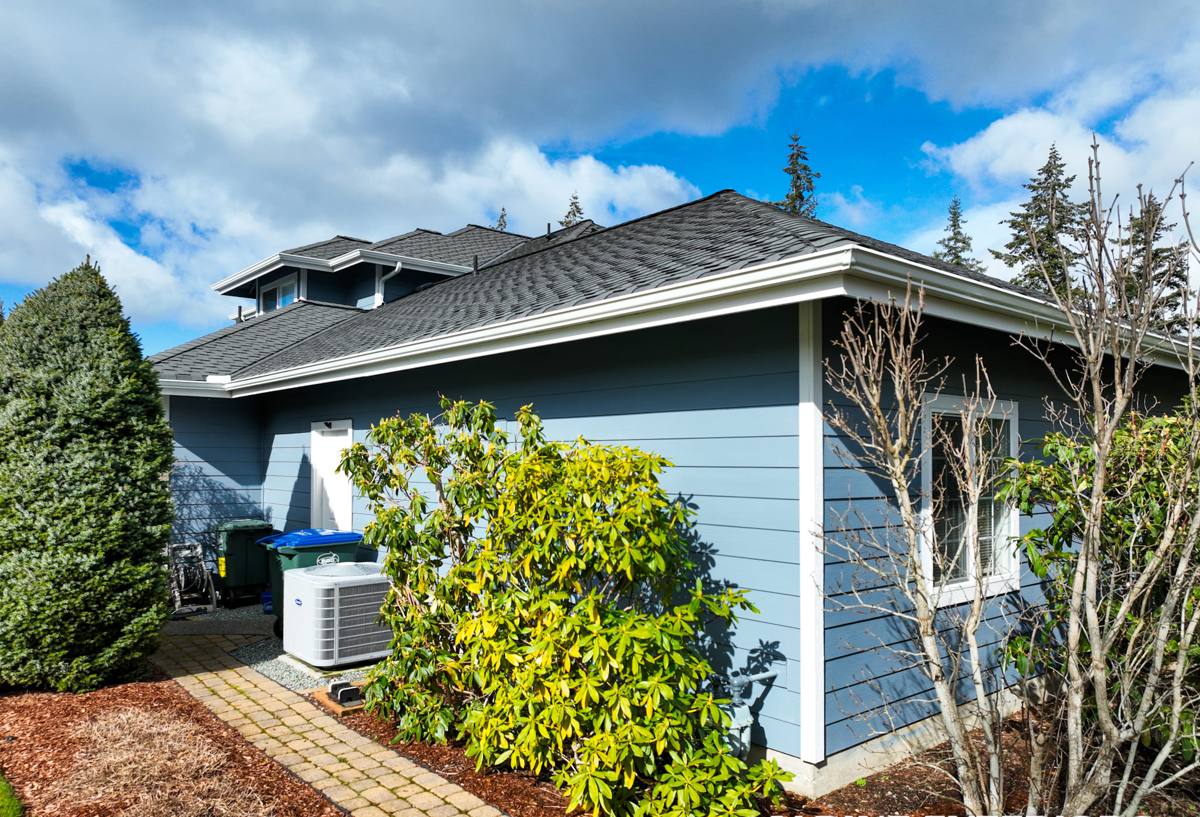
What Salt Air, Rain, and Moss Actually Do to a Roof
Each of these three factors attacks a roof differently, and understanding the mechanism helps explain why some materials and installation shortcuts fail faster here than they would elsewhere in Whatcom County.
Salt Air
Airborne salt is corrosive to bare or poorly coated metal, and it accelerates the breakdown of exposed fasteners, flashing seams, and cut edges where protective coatings have been compromised. Homes closer to the water get hit hardest, but Custer properties a mile or more inland still see measurable salt exposure carried on prevailing winds off Birch Bay.
Driving Rain
Wind-driven rain doesn't just fall straight down — it gets pushed sideways and upward under laps, around penetrations, and into any gap that a calmer climate might tolerate. This is why fastener pattern, panel overlap, and flashing detail work matter more here than the panel material itself.
Moss and Sustained Moisture
Shaded roof sections and north-facing slopes in this area rarely dry out fully between rain events. Moss and organic debris hold moisture against roofing materials, and on the wrong substrate that trapped moisture leads to rot, corrosion, or coating failure long before the roof's rated lifespan is up.
Why Metal Holds Up Well Here — When It's Installed Right
Metal roofing has real advantages for this climate: it sheds water fast, doesn't absorb moisture the way organic materials do, and gives moss far less to grab onto compared to shingle or wood roofing. It also handles wind-driven rain better than most materials when the seams and laps are done correctly, because water has fewer places to pool or wick backward.
None of that is automatic, though. A metal roof is only as good as its coating system, its fastening method, and the flashing detail around every valley, chimney, and vent. We've been called out to fix metal roofs that were technically installed but not installed for this environment — under-driven fasteners, mismatched metals causing galvanic corrosion, or flashing that wasn't lapped correctly for the direction our rain actually comes from. Getting it right the first time costs less than fixing it later.
Choosing the Right Metal Roofing System for a Custer Home
Not every metal roofing system is a good fit for this climate, and the differences matter more than most homeowners expect. Here's how the common options compare for a coastal Whatcom County property.
| System | Coastal Suitability | Key Trade-Off |
|---|---|---|
| Standing seam (concealed fastener) | Excellent | Higher upfront cost, but no exposed fasteners for salt air or water to work on over time |
| Exposed-fastener panels | Good, with proper gaskets and maintenance | Lower cost, but fastener gaskets and washers age and need periodic inspection |
| Steel with quality paint/coating system | Very good | Coating quality varies widely by manufacturer — this is where corner-cutting shows up first |
| Uncoated or minimally coated galvanized | Poor near salt air | We don't recommend this for Custer properties within reach of coastal air |
| Aluminum | Very good, especially very close to the water | Naturally corrosion-resistant, though typically a higher material cost than steel |
For most Custer homes, we steer people toward standing seam or a well-coated steel panel system, matched to the home's exposure and roof geometry. Where a home sits close enough to Birch Bay to catch heavier salt air, aluminum or a premium coating system earns its extra cost.
Fasteners and Flashing Metal Matter Too
A great panel system can still fail early if the fasteners, flashing, and trim aren't compatible metals and coatings. Mixing incompatible metals in a coastal, wet environment can set up galvanic corrosion at the contact points — a detail that's easy to overlook and expensive to ignore. We match fastener and flashing metal to the panel system on every job, not just to what's on hand.
What a Correct Metal Roof Installation Includes
A metal roof is a system, not just a layer of panels. For Custer's climate, we treat every one of these layers as load-bearing to the roof's long-term performance:
- Underlayment: A synthetic, high-temperature underlayment rated for the moisture exposure this area sees, installed as a continuous water barrier beneath the panels.
- Ice and water shield at vulnerable points: Valleys, eaves, and penetrations get additional self-adhered membrane protection where wind-driven rain is most likely to find a way in.
- Fastening pattern: Fastener spacing and torque set to the panel manufacturer's wind-load specification, not a generic pattern.
- Flashing detail: Custom-formed flashing at valleys, chimneys, skylights, and wall intersections, lapped in the correct direction for prevailing wind and rain.
- Ventilation: Proper intake and exhaust airflow so moisture doesn't get trapped under the roof deck, which matters as much for metal roofs as any other type.
- Edge and trim work: Drip edge, rake trim, and ridge caps sized and sealed to shed water away from the structure, not just visually finished.
Skipping or shortcutting any one of these doesn't show up on day one — it shows up two or three winters later, usually as a leak that traces back to a detail that was never visible after the panels went on.
Our Process for Custer Metal Roofing Projects
We keep the process straightforward and communicate at every stage, because most of the frustration homeowners describe with past roofing jobs comes from not knowing what's happening or why.
- On-site assessment: We inspect the existing roof deck, ventilation, flashing points, and any moss or moisture damage before quoting anything.
- System recommendation: Based on the home's exposure to salt air and rain direction, we recommend a panel system, coating, and fastening approach — with honest trade-offs explained, not just the most expensive option pushed.
- Written estimate: A clear scope of work and price range, so there are no surprise line items mid-project.
- Deck prep and repair: Any rot, soft decking, or damaged sheathing found during tear-off gets addressed before a single panel goes down — this is non-negotiable for a roof expected to last decades.
- Installation: Underlayment, flashing, panels, and trim installed to manufacturer specification and matched to Custer's wind and rain patterns.
- Final walkthrough: We walk the finished roof and site with you, confirm cleanup, and go over basic maintenance expectations.
Maintenance That Keeps a Custer Metal Roof Performing
Metal roofing is low-maintenance compared to most alternatives, but "low" isn't "none" — especially with moss pressure and salt air working against it year-round. A short annual checklist goes a long way:
- Clear debris and organic buildup from valleys and low-slope sections where moss tends to establish first.
- Check gutters and downspouts for blockages that can back water up under eave flashing.
- Look for any fastener heads backing out or gasket washers showing wear on exposed-fastener systems.
- Inspect flashing around chimneys, vents, and skylights for sealant that's cracked or pulled away.
- Rinse accumulated salt residue from surfaces after long dry spells, particularly on homes closer to the water.
- Trim back overhanging branches that keep sections of roof shaded and damp longer than the rest.
What Metal Roofing Costs Depend On
We're not going to quote a number here that doesn't mean anything without seeing your roof, but these are the factors that actually move the price on a Custer metal roofing project:
| Factor | How It Affects Cost |
|---|---|
| Panel system type | Standing seam runs higher than exposed-fastener panels due to material and labor complexity |
| Roof complexity | Valleys, dormers, and multiple roof planes add flashing and labor time |
| Deck condition | Rot or damage found during tear-off adds repair scope before installation can proceed |
| Coating/material grade | Higher-grade coatings and aluminum cost more upfront but reduce long-term maintenance near salt air |
| Tear-off vs. overlay | Full tear-off costs more than overlay but is usually the right call on an older or moisture-damaged roof |
| Access and site conditions | Steep pitches, tree cover, or limited equipment access can add labor time |
We walk through these factors with you during the on-site estimate so the final number reflects your actual roof, not a generic average.
Why a Crew That Already Works in Custer Matters
A roofing crew that regularly works Birch Bay and the surrounding Custer area already knows which details fail first in this specific climate, because we've seen the callbacks other jobs generate. That's not a small thing — it means fewer surprises in the estimate, fastening and flashing choices that account for our actual wind and rain direction, and a realistic sense of how a given roof's exposure will hold up over the years, not just how it looks on installation day. Local familiarity with Whatcom County permitting and inspection expectations also keeps the project moving without avoidable delays.
If you're weighing a metal roof for a Custer property, we're happy to take a look and give you an honest read on what your specific roof needs — no pressure, no inflated urgency. Reach out for a free estimate and we'll walk the roof with you and talk through your options in plain terms.