 Birch Bay Siding
 Siding Installation in Custer: A Job That Has to Answer to the Weather
Custer sits just inland from Birch Bay in Whatcom County, close enough to the water that homes here still catch a steady dose of salt-tinged marine air, and far enough from town that a lot of the neighborhood is open to wind coming straight off the Strait of Georgia. It's a mix of older farmhouses, mid-century ranch homes, and newer builds spread across larger lots, many with fewer mature trees to break the wind than you'd find further inland toward Ferndale or Lynden. That openness matters more than people expect when it comes to siding. A wall that would stay relatively dry in a sheltered subdivision can take direct, driving rain here, and salt air plus a long moss season do their own separate damage on top of that. Siding installation in Custer isn't a generic job — it's a job that has to be planned around this specific stretch of Whatcom County weather from the first nail.
We install James Hardie fiber cement siding exclusively, and we work Custer and the Birch Bay area regularly enough to know which walls on which types of homes take the worst of the exposure. This page is about siding installation specifically — what the climate demands, what a correct installation actually involves, and why the details matter more here than they would somewhere drier and more sheltered.
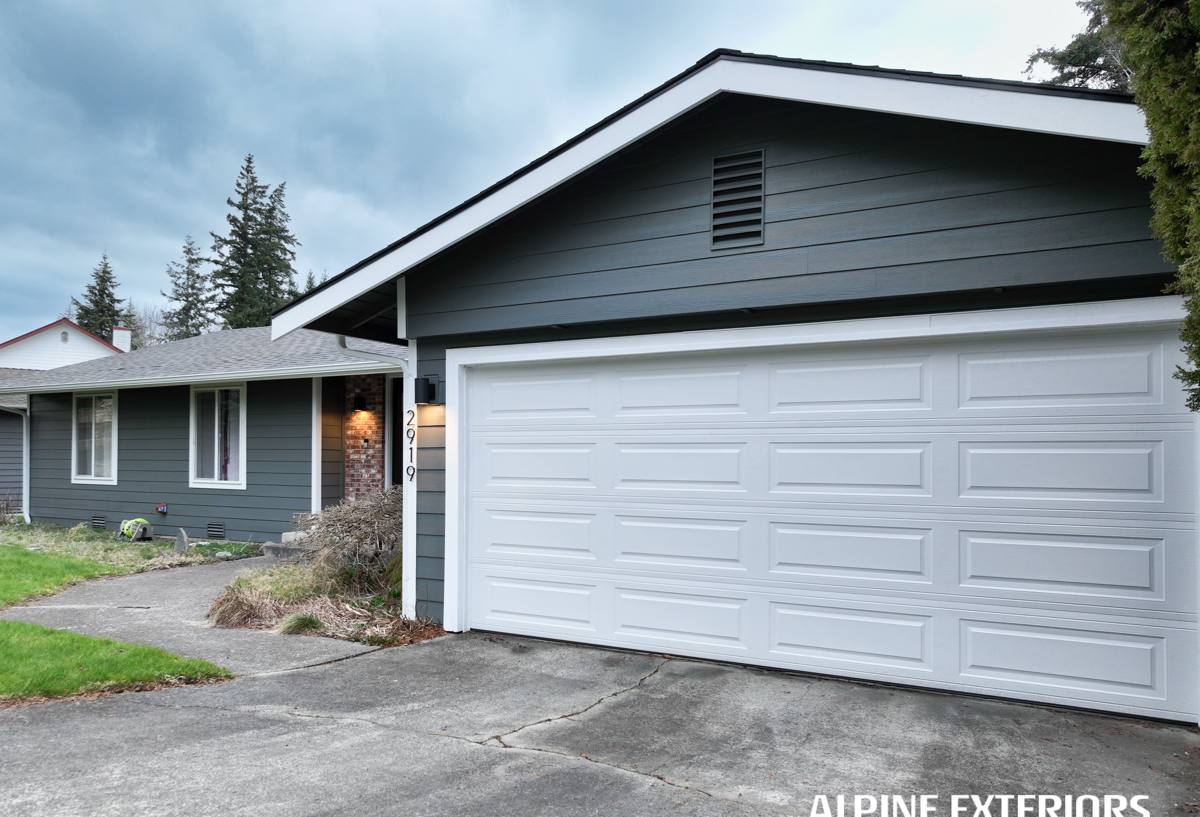
What Salt Air, Driving Rain, and Moss Season Actually Do to Siding
Salt-Tinged Marine Air
Air moving inland off the Strait of Georgia and Birch Bay carries a mild salt content that spreads well beyond the immediate shoreline, and Custer sits close enough to feel it on a regular basis. Over years, that salt exposure accelerates corrosion in exposed fasteners and metal trim, and it works on any siding finish that isn't built to resist it — chalking, fading, or a coating that breaks down faster than the manufacturer's published lifespan would suggest. It's a slow process, which is exactly why it gets missed until a homeowner is looking at a siding job ten years earlier than they expected to.
Driving Rain and Wind Exposure
Custer's more open lots mean less windbreak than a densely wooded or tightly built neighborhood, so storms coming off the water tend to drive rain into walls with more force here than they would somewhere more sheltered. That matters because siding isn't actually waterproof on its own — it's one layer in a drainage system that's supposed to shed the bulk of the water and let anything that gets behind the cladding drain and dry out. Wind-driven rain pushes water into laps, joints, and penetrations harder and more often, which means those details have to be built correctly the first time. A wall that faces the prevailing weather needs the same attention as a west-facing wall on the coast, even though Custer isn't technically beachfront.
A Long Moss and Mildew Season
Between marine humidity and Whatcom County's normal rainfall pattern, Custer doesn't get long, reliable dry stretches for much of the year. That's the exact condition moss, algae, and mildew need to get established, and it shows up first on north-facing walls, shaded siding runs, and anywhere water sits instead of running off. Siding materials that hold moisture at the surface rather than shedding it stay damp longer through that window and give organic growth more time to take hold before the next dry spell finally arrives.
What a Correct Siding Installation Actually Involves
A siding job is really a water management system, and most of what determines whether it holds up in Custer's climate happens before a single piece of visible siding goes up.
Weather-Resistive Barrier and Drainage Plane
Behind the siding, a properly lapped weather-resistive barrier — installed shingle-style so water drains downward and out rather than behind the wall — is the first line of defense. On a wall taking regular wind-driven rain, gaps or backwards laps here are the kind of mistake that doesn't show up for a few years, and then shows up as a bigger problem than it should have been.
Flashing at Every Penetration
Windows, doors, hose bibs, vents, and any other penetration through the wall need flashing that ties correctly into the drainage plane behind it. This is where the majority of siding-related water intrusion actually starts, not in the field of the siding itself. It's also the detail that's easiest to rush and hardest to inspect once the siding is up, which is exactly why it deserves the most attention during installation, not afterward.
Fastening and Clearances
Fiber cement siding needs the correct fastener type, length, and spacing, driven to the manufacturer's specification rather than "close enough." It also needs proper clearance from grade, roofline, and any horizontal surface like a deck or patio, so water has somewhere to go instead of wicking up into the bottom edge of the siding. On an open, wind-exposed lot in Custer, corner and edge fastening in particular has to be done to spec, since those are the areas that see the highest uplift and stress in a storm.
Joint and Seam Detailing
Every horizontal and vertical joint in a fiber cement installation needs to be sealed, lapped, or backed correctly, per the manufacturer's published details. On a home taking regular driving rain, a joint that's caulked instead of properly detailed, or a lap that's a half-inch short of spec, becomes the first place water finds its way in.
Why We Install Only James Hardie Fiber Cement
We used to install a wider range of siding products. Over years of doing installation and repair work throughout Whatcom County, including plenty of jobs right here around Custer and Birch Bay, we narrowed that list down to one system we're willing to fully stand behind.
- Non-combustible core: Fiber cement doesn't feed a fire the way wood-based siding products can, which matters for both safety and, often, homeowners insurance.
- Factory-applied ColorPlus finish: The color is baked on under controlled factory conditions instead of applied on-site, which holds up better against salt-tinged marine air and repeated wet-dry cycling than field-applied paint or stain.
- Climate-engineered HZ product lines: Hardie's HZ5 formulation is built specifically for regions with heavy moisture exposure and freeze-thaw cycling, which describes Custer's climate more accurately than a formulation built for a hot, dry market.
- Dimensional stability: Fiber cement doesn't swell, cup, or warp the way engineered wood products can after repeated wetting, which matters on walls that stay damp longer through Custer's moss season.
- A strong, transferable warranty: Hardie backs correctly installed siding with one of the more substantial warranty structures in the industry, and that warranty follows the house if it's sold.
We don't install LP SmartSide, vinyl siding, Cemplank, Allura, primed spruce, or cedar. Each of those products has a place in the broader market, and plenty of homeowners elsewhere are satisfied with them. But for the specific combination of salt air, driving rain, and a long moss season that Custer deals with, we've made a professional decision to install one system we can fully stand behind rather than offer a lower-cost option that quietly shifts long-term moisture risk and maintenance work back onto the homeowner.
What Correct Hardie Installation Requires
Fiber cement only performs the way it's engineered to when it's installed to Hardie's published specifications — the right HZ formulation for this climate zone, correct fastener type and spacing, proper clearances, and drainage detailing that matches the wall assembly. A quality product installed loosely will still develop moisture problems on an exposed Custer wall. The material and the installation have to both be right.
Comparing Siding Materials for a Custer Home
| Material | Behavior in Salt Air and Driving Rain | Moss/Mildew Resistance | Typical Longevity Here |
|---|---|---|---|
| James Hardie fiber cement | Dimensionally stable; factory finish resists salt exposure and moisture intrusion | Sheds moisture rather than absorbing it, slowing surface growth | 30+ years with correct installation |
| Vinyl siding | Panels can flex and open at seams under sustained wind-driven rain | Seams and laps stay damp longer, giving growth more time to establish | Variable; shorter on directly wind-exposed walls |
| LP SmartSide / engineered wood | Wood-based core is sensitive at cut edges and joints if sealing isn't perfect | Moderate; edge sealing is critical in a long damp season | Depends heavily on installation quality and upkeep |
| Cedar / primed wood | Absorbs and releases moisture readily under repeated wetting | Needs regular cleaning and refinishing to resist growth | Shorter without disciplined, ongoing maintenance |
Our Siding Installation Process
- An on-site walk of the home, checking exposure wall by wall — a wind-facing wall in Custer often needs different attention than a sheltered rear elevation on the same house.
- Inspection of the existing wall assembly and sheathing once old siding is removed, since hidden moisture damage sometimes only shows up at that point.
- Installation of a correctly lapped weather-resistive barrier and drainage plane before any siding goes up.
- Flashing installed at every window, door, and penetration, tied properly into the drainage plane behind it.
- James Hardie fiber cement installed to manufacturer spec — correct HZ formulation, fastening, clearances, and joint detailing.
- A final walk-through covering what was done and what ongoing maintenance, if any, the homeowner should expect.
Signs Your Current Siding Is Already Behind
A lot of Custer homeowners call us after noticing something specific, not because they were shopping for new siding. These are the signs worth paying attention to:
- Soft or spongy spots when you press on the siding, especially near the bottom courses or corners
- Persistent moss or dark staining on north-facing or shaded walls that comes back quickly after cleaning
- Paint or finish that's chalking, peeling, or fading noticeably faster on wind-exposed elevations than sheltered ones
- Visible gaps, warping, or separation at joints and corners
- Interior signs — a musty smell, peeling interior paint, or a damp spot on a wall that shares an exterior with a heavily exposed side of the house
Why a Crew That Already Works Custer Matters
Custer isn't a uniform neighborhood exposure-wise. A home on a wide-open lot facing the prevailing wind off the Strait needs different flashing and drainage attention than a similar home a half-mile away with more tree cover or a more sheltered orientation. A crew that installs siding around Custer and Birch Bay regularly already has a feel for that variation — which walls need extra care, which details matter most in this specific mix of salt air, driving rain, and a long moss season, and where past installations in the area have gone wrong when those details were skipped. That local judgment is the difference between a siding job that looks good for a season and one that's still performing correctly fifteen or twenty years out.
A Short Checklist Before Hiring for Siding Work in Custer
- Ask what siding material they install and why, and whether it comes with a written, transferable warranty
- Confirm current Washington contractor licensing and active liability insurance
- Ask specifically how they handle flashing and drainage detailing on wind-exposed walls, not just general installation
- Ask about recent experience with homes in Custer or Birch Bay specifically, not just general Whatcom County work
- Get a clear, written scope of work and installation timeline before signing anything
Get a Straight Answer on Your Siding
If you're weighing options for new siding on a Custer property — whether it's a full replacement or you're trying to figure out how much life is left in what's already on the house — we're happy to walk the exterior with you and give an honest read on what it actually needs. Reach out below for a free, no-pressure estimate.