 Birch Bay Siding
 Building Decks for Marietta's Coastal Conditions
Marietta sits close to the water along the Birch Bay shoreline in Whatcom County, and that location shapes what a deck has to survive here. Salt-laden air off the bay, driving rain that comes in sideways during winter storms, and a moss season that can run from October through April all put real stress on outdoor wood structures. A deck built to a generic spec sheet, without accounting for those conditions, tends to show problems within a few years — soft spots, corroded hardware, slick moss-covered boards, and railings that loosen well before their time.
We build and replace decks for homeowners in Marietta and the surrounding Birch Bay area, and the approach we use here is different from what we'd use inland. It starts with understanding what the local climate actually does to a structure over time, not just what looks good on the day it's finished. This page covers what a deck built for this specific stretch of Whatcom County coastline needs to hold up, what our process looks like, and how to think about the trade-offs between materials.
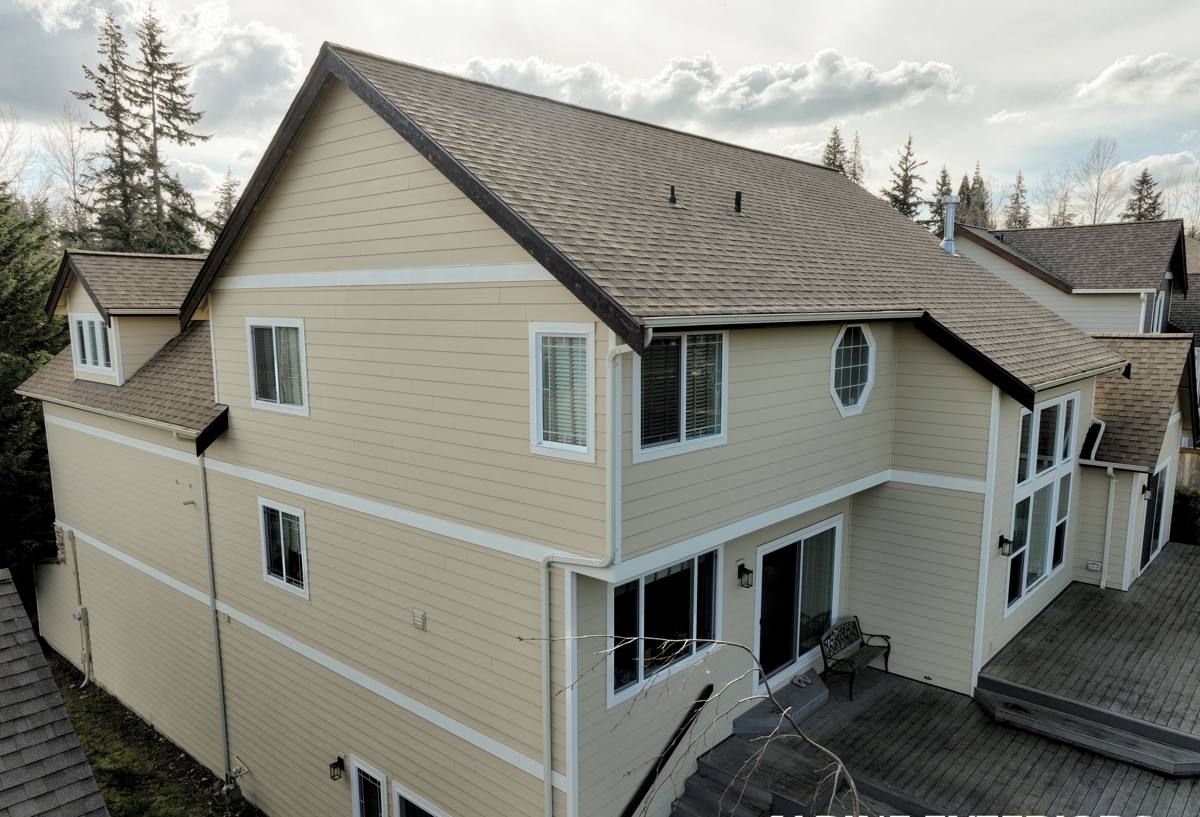
What Marietta's Climate Demands From a Deck
Salt Air and Metal Hardware
Homes closer to the shoreline take on airborne salt that accelerates corrosion in fasteners, joist hangers, and railing hardware. Standard galvanized fasteners can start rusting and staining the decking within a few seasons in this environment. We spec stainless steel or heavy-duty coated fasteners rated for coastal exposure on every Marietta project, because replacing a handful of screws is cheap — pulling up boards to fix a rusted-out ledger connection is not.
Driving Rain and Hidden Water Damage
Winter storms off the bay don't just fall straight down — wind-driven rain gets pushed under railings, into ledger board connections, and behind fascia boards. Any gap in flashing or a poorly sealed ledger attachment becomes a slow leak that rots framing from the inside, often well before it's visible from the surface. By the time staining or soft spots show up on top, the damage underneath is usually further along than it looks.
Moss, Shade, and Slip Hazards
Many lots in and around Marietta have mature tree cover or sit in the shadow of neighboring structures, which keeps decking surfaces damp longer after rain than an open, sunny lot would. That's exactly the condition moss and algae need to take hold. Once moss gets established in the grain of wood decking, it holds moisture against the boards and makes the surface dangerously slick — a real slip hazard on stairs and landings, and one of the more common reasons we get called out to look at an existing deck.
Decking Material Options, Compared for This Environment
There's no single right material for every deck — it depends on budget, how much upkeep the homeowner wants to take on, and how exposed the site is to wind, rain, and shade. Here's how the common options hold up specifically under Birch Bay and Whatcom County coastal conditions, not just in general terms.
| Material | Moisture & Moss Resistance | Maintenance | Typical Lifespan |
|---|---|---|---|
| Pressure-treated fir/hem-fir | Fair — needs sealing to perform | Annual cleaning and re-sealing | 10-15 years with upkeep |
| Cedar | Good natural rot resistance, still needs sealing | Sealing every 1-2 years, moss cleaning | 15-20 years with upkeep |
| Composite decking | Very good — won't rot, but moss can still form on the surface film | Periodic washing, no sealing | 25+ years |
| PVC/capped composite | Excellent — fully moisture-sealed board | Occasional washing | 25-30+ years |
Composite and PVC boards cost more up front but remove the annual sealing cycle that wood requires — a real consideration for homeowners who don't want a yearly maintenance task on a shaded, moss-prone lot. Wood decking costs less initially and can look excellent, but it only performs as advertised if the sealing and cleaning schedule actually happens every year without skipping seasons. We'll walk through the honest trade-offs for your specific site and budget rather than push one product line over another.
What a Correctly Built Deck Involves Here
Footings Sized for Wet Ground
Whatcom County's wetter soil conditions mean footings need to be sized and set below frost depth with proper drainage around them, not just poured to the minimum the code allows. Undersized or shallow footings are one of the more common causes of deck movement and settling we see when we're called out to replace older structures in this area.
Ledger Attachment and Flashing
Where a deck attaches to the house is the single most common source of hidden water damage on any deck, not just in coastal climates — but the risk is higher here because of how much sustained rain the structure sees. Correct flashing, installed so water sheds outward and never behind the siding, combined with proper structural fasteners at the ledger board, is not optional in a climate that gets sustained driving rain for months at a time.
Airflow Underneath the Deck
Low decks or decks built close to grade without adequate ventilation trap moisture underneath, which speeds up rot in framing and gives moss and mildew a place to spread upward into the boards from below. We build in clearance and, where the site allows it, drainage paths that keep air moving under the structure so it can actually dry out between storms.
Railings, Stairs, and Whatcom County Code
Any deck more than thirty inches off grade needs a compliant guardrail, and stairs need proper rise, run, and handrail requirements met before final inspection. Whatcom County permitting applies to most new decks and many deck replacements, and skipping that step can create real problems later — from failed home inspections at resale to complications with insurance after a structural issue. We handle the permit process as part of the job rather than leaving it for the homeowner to sort out on their own.
Wind Exposure and Railing Design
On elevated lots or sites with more direct wind exposure off the water, railing choice matters beyond code minimums. Solid or heavily infilled railings catch wind load in a way a spaced-baluster or cable-rail design won't, which affects how the structure is engineered and fastened. We factor that into the design rather than treating railings as a purely cosmetic choice.
What Affects the Cost of a Deck in Marietta
Deck cost depends on more than square footage. Here are the main factors we weigh when scoping a project:
| Factor | How It Affects Cost |
|---|---|
| Decking material | Usually the single biggest cost driver — wood costs less up front, composite and PVC cost more but reduce upkeep |
| Elevation and stairs | Raised decks and multiple stair runs add framing, railing, and engineering complexity |
| Site access | Difficult equipment or material access for the crew adds labor time |
| Ground conditions | Slopes, drainage issues, or soft soil can require extra footing work |
| Railing style | Cable, glass, or custom infill costs more than standard baluster railing |
A simple ground-level deck on an accessible, flat lot costs less than a raised deck over a slope with multiple stair runs, regardless of what decking material is chosen. We won't quote a price without seeing the site, but we can give you a realistic range once we understand the scope.
Our Process for a Marietta Deck Project
Site Visit and Design
We start on-site, looking at sun exposure, drainage, the existing structure if this is a replacement, and how the deck will actually get used — entertaining, grilling, direct yard access, whatever the household needs. That shapes material recommendations and layout, not the other way around.
Permitting
We prepare and submit what Whatcom County requires for the scope of work, and we don't start framing until that's cleared. Trying to skip this step to save time almost always costs more later.
Build and Final Walkthrough
Framing, ledger and flashing work, decking, and railings are installed in sequence with inspections at the required stages. Before we consider the job finished, we walk the deck with the homeowner, check every railing and stair for solid attachment, and go over the maintenance schedule for whatever material was installed.
Every Marietta deck project we take on includes:
- An on-site assessment of drainage, shade, and wind exposure specific to the lot
- Material recommendations with honest maintenance trade-offs, not a one-size push
- Stainless or coastal-rated fasteners and hardware throughout
- Correct flashing at every ledger and house attachment point
- Footings sized and set for local soil and frost conditions
- Code-compliant railings and stairs, permitted through Whatcom County
- A final walkthrough before we call the job done
Maintaining a Deck Through Birch Bay's Moss Season
Even the best-built deck needs some seasonal attention in this climate. A little consistency goes a long way toward avoiding the slick, green buildup that shows up on shaded decks every fall and winter in this part of Whatcom County.
- Sweep leaves and debris off the deck regularly in fall — trapped organic matter feeds moss
- Clean the surface with a deck-safe cleaner at least once a year, more often on heavily shaded areas
- Check and clear gaps between boards so water and debris don't sit and pack in
- Reseal wood decking on the schedule the product actually requires, not just when it looks dry
- Inspect fasteners and railing connections yearly for rust or looseness, especially closer to the shoreline
- Address moss at the first sign of it rather than waiting until it's established in the grain
Composite and PVC decking cut down on most of these tasks, but even those benefit from an occasional wash to keep moss spores from settling into the surface texture and getting a foothold.
Why Hire a Crew That Already Works in Marietta
A deck built to a spec that works fine in a drier inland climate can underperform here within a few years. Crews who regularly work Birch Bay and the surrounding Whatcom County coastline already know which fastener grades actually hold up, how to detail flashing for wind-driven rain, and which lots need extra attention to drainage and airflow because of shade and moss exposure. That local experience shows up in fewer callbacks and a deck that's still solid a decade or more after it was built, not just on the day it was finished.
If you're planning a new deck or need to replace one that's showing its age, we're glad to take a look and give you a straightforward assessment — no pressure, no inflated scope. Reach out for a free estimate using the form below, and we'll walk the site with you and talk through what actually makes sense for your home in Marietta.