 Birch Bay Siding
 Why Birch Bay Village Windows Take More Abuse Than Most
Birch Bay Village sits close enough to the water that salt air is part of daily life, not an occasional nuisance. That air carries fine salt particles that settle on glass, frames, and hardware, and it doesn't take a storm to do it — a steady onshore breeze is enough over a season. Add Whatcom County's long stretch of driving rain each fall and winter, plus the shaded, damp conditions that keep moss and algae established on north-facing walls and rooflines for months at a time, and you have a window assembly that's under more sustained stress than the same product would see twenty miles inland.
None of this means windows fail quickly here. It means the details that don't matter much in a dry climate — frame material, flashing sequence, sealant choice, weep path design — matter a lot in Birch Bay Village. A window that's a fine product on paper can still perform poorly if it's installed without those details accounted for.
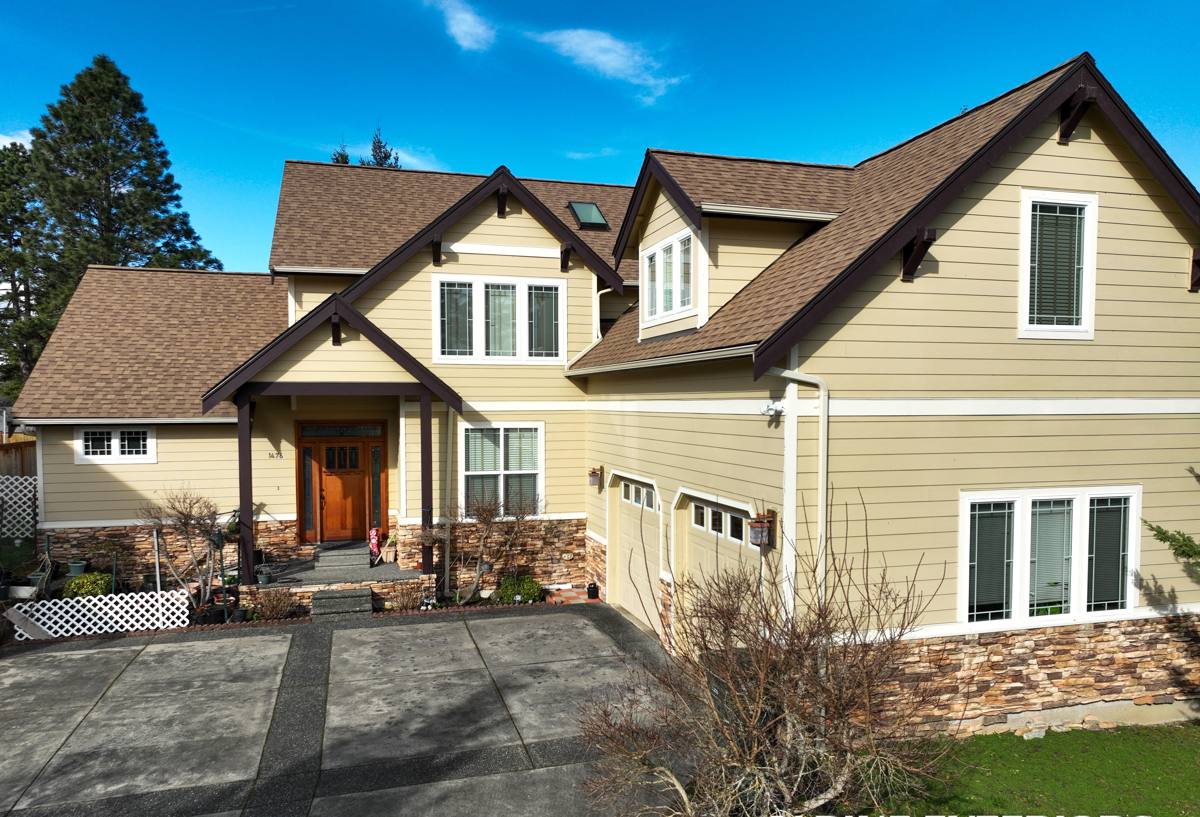
What Salt Air and Driving Rain Actually Do Over Time
Salt and Hardware
Salt-laden air accelerates corrosion on exposed fasteners, hinges, balance systems, and lower-quality cladding. It also leaves a film on glass and frames that, left alone, etches into finishes over years. Window lines and hardware rated for coastal exposure hold up; ones that aren't rated for it can show pitting, sticking sashes, or discoloration well before the glass unit itself has a problem.
Driving Rain and Water Intrusion
Wind-driven rain doesn't just hit a window head-on — it gets pushed sideways and upward into gaps that would stay dry in calmer weather. A window opening that's flashed and sealed correctly sheds that water back out. One that isn't will eventually let moisture behind the frame, into the wall cavity, or under the sill — and by the time that shows up as a stain or soft spot inside, the damage has usually been building for a while.
Moss and Constant Dampness
Birch Bay's tree cover and marine layer keep shaded exterior surfaces damp for long stretches, which is exactly what moss and algae need to take hold. On windows, that shows up most on wood sills, wood-clad frames, and trim that doesn't dry out between rain events. Sustained dampness is also what turns a minor caulk failure into rot, because trapped moisture against wood doesn't get a chance to dry before the next system rolls through.
What a Correct Custom Window Installation Involves
"Custom" windows means the unit is built to the actual opening and the actual conditions of the house, rather than forcing a stock size to fit. In Birch Bay Village, where a fair number of homes are older or have settled slightly over the decades, that matters as much as the window itself.
Accurate Measurement and Opening Prep
Openings on older homes are rarely perfectly square. A correct job means measuring each opening individually — width, height, and diagonal — and checking the sheathing and framing underneath for rot or soft spots before a new window ever goes in. Skipping this step is how a brand-new window ends up installed against a compromised opening.
Flashing and Water Management
This is the step that determines whether wind-driven rain stays outside. Correct flashing overlaps in the right order — sill pan first, then side flashing, then head flashing — so water is always directed down and out, never trapped behind the assembly. In a driving-rain climate, this sequence isn't optional detail work; it's the difference between a window that lasts decades and one that causes a wall repair five years in.
Sealant and Weep Paths
Exterior sealant needs to be rated for UV and moisture exposure, and interior air sealing needs to be separate from exterior water management — the two shouldn't be combined into one bead of caulk and called done. Weep holes in the sill need to stay clear so any water that does get into the frame track has somewhere to go.
Frame Material Comparison for Coastal Whatcom County Conditions
| Material | Salt Air Resistance | Moisture Behavior | Maintenance |
|---|---|---|---|
| Vinyl | Good — won't corrode or rust | Doesn't absorb water; seams are the weak point | Low — occasional cleaning |
| Fiberglass | Very good — stable in salt exposure | Minimal expansion/contraction, sheds water well | Low |
| Wood / Wood-Clad | Fair — cladding protects the core if intact | Vulnerable where cladding is breached or caulk fails | Higher — needs monitoring in damp, shaded areas |
| Aluminum (non-thermally broken) | Poor to fair — prone to corrosion and condensation | Conducts cold, encourages interior condensation | Moderate to high |
We don't push any single material on every home. A well-detailed wood-clad window can perform fine in Birch Bay Village if it's sited away from constant spray and maintained. But we're honest about the trade-off: materials with lower moisture tolerance need more attention in this climate, not less, and we'll tell you that up front rather than after installation.
Our Process for a Birch Bay Village Window Project
- On-site assessment — we look at each opening, check for existing water damage or rot, and note exposure (which walls take direct wind and rain versus which are sheltered).
- Custom measurement and product selection — units are built to the actual opening, with material and glazing recommendations based on that wall's exposure, not a one-size answer for the whole house.
- Removal and opening inspection — old windows come out carefully so we can inspect sheathing and framing before anything new goes in. Any rot or damage gets addressed before installation, not covered over.
- Flashing, setting, and sealing — sill pan, side and head flashing, and exterior/interior sealing done in the correct order for wind-driven rain.
- Final check — operation, weep paths, and exterior finish work confirmed before we consider the job done.
Sizing and Odd Openings in Older Birch Bay Village Homes
A number of homes in this area weren't built with modern standard window sizes, and additions or past remodels sometimes introduced openings that don't match any off-the-shelf unit. Custom windows solve this the right way — built to the opening — rather than the common shortcut of resizing the opening to fit a stock window, which usually means cutting into framing or trim that didn't need to be touched. If your home has an arched opening, an oversized picture window, or a slightly out-of-square frame from decades of settling, that's a custom-build conversation, not a special order.
Cost Factors Homeowners Should Understand
| Factor | Why It Affects Price |
|---|---|
| Frame material | Fiberglass and higher-grade vinyl generally cost more upfront than basic vinyl or aluminum, but hold up longer against salt exposure |
| Glazing package | Double vs. triple pane, and Low-E coatings, affect both cost and how well the window manages condensation and heat loss |
| Opening condition | Rot or framing repair discovered during removal adds cost but should never be skipped in this climate |
| Custom sizing/shape | Non-standard openings and specialty shapes (arched, oversized, angled) cost more than stock sizes |
| Number of exposed elevations | Windows on the side of the house that takes direct wind and rain may warrant a higher-spec product than sheltered elevations |
We'll walk through these factors specific to your home during the estimate — there's no reason to pay for triple-pane, high-spec glazing on a sheltered back wall if a solid double-pane unit does the job there, while it might be worth the upgrade on the side that takes the weather head-on.
Maintenance That Actually Matters in This Climate
- Rinse salt film off exterior glass and frames periodically, especially after dry, windy stretches followed by rain
- Check weep holes along the sill for debris or moss buildup at least once a year
- Inspect exterior caulk lines each fall before the wet season sets in — hairline gaps are easier to catch early than after water gets behind the frame
- Keep gutters and downspouts clear so runoff isn't sheeting directly across window openings
- Watch shaded, north-facing sills and trim for moss or algae and clean it off before it holds moisture against the surface
- Test operation of sashes and locks once a year — salt air can stiffen hardware before it visibly corrodes
Why a Crew That Already Works Birch Bay Village Makes a Difference
Window installation isn't a generic skill that transfers identically everywhere. A crew that already does this work in Birch Bay Village has seen how specific streets and elevations handle wind-driven rain, which older homes tend to have out-of-square openings, and how quickly moss reestablishes on shaded siding and trim in this particular pocket of Whatcom County. That's not something you can fully substitute with a general install checklist — it comes from doing the work here repeatedly and seeing what holds up and what doesn't.
It also means we're not guessing at material recommendations. When we suggest a fiberglass frame over standard aluminum for a wall that takes direct salt spray, or flag that a particular sill detail needs extra attention, it's based on what actually happens to windows in this environment over time, not a generic sales pitch.
Get a Straight Answer for Your Home
If you're dealing with drafty, foggy, or hard-to-operate windows in Birch Bay Village, or you're planning ahead of the wet season, we're happy to take a look and give you an honest read on what your home actually needs — no pressure, no upsell on materials your home doesn't require. Use the form below to request a free estimate.